
Bipolar disorder is a long-term mental health condition that involves episodes of mania, hypomania, and depression. These episodes affect moods, energy levels, sleep patterns, thinking patterns, behaviors, and functioning.
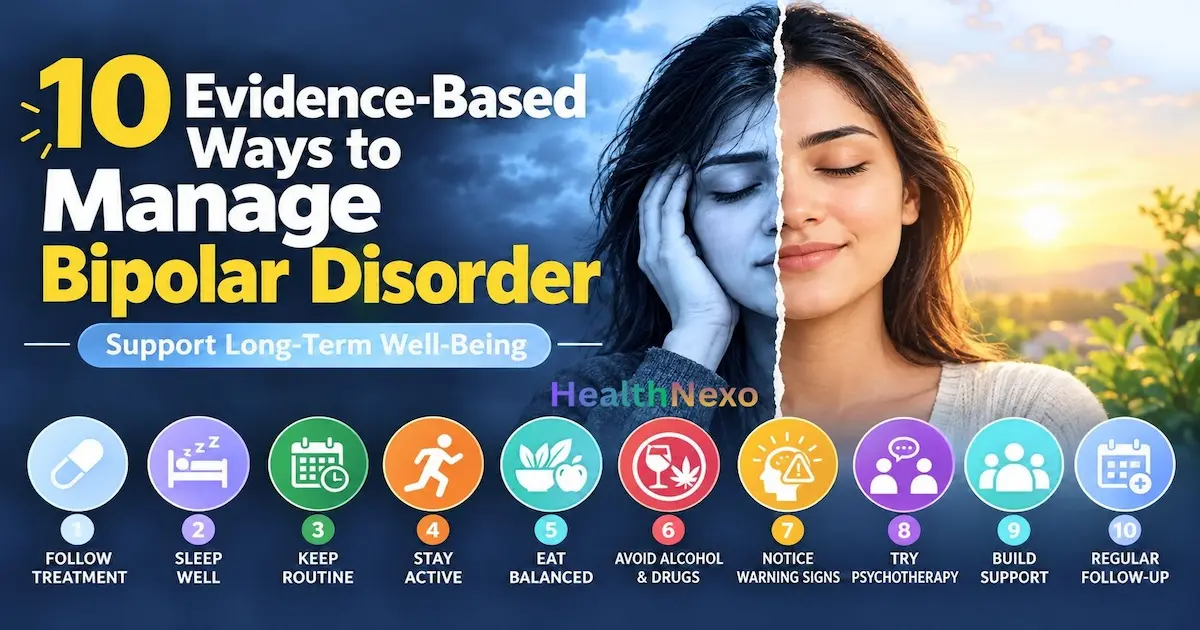
The ways to manage bipolar disorder generally involve prescribed treatment, psychotherapy, regular sleep and daily routines, healthy lifestyle habits, monitoring for early mood changes, and ongoing professional support. The treatment is personalized and could vary depending on the severity of the symptoms, effectiveness of treatment, and side effects.
This article will go through 10 Evidence-Based Ways to Manage Bipolar Disorder so they can avoid extreme moods.
Important: Lifestyle changes can support bipolar disorder treatment but should not replace prescribed care. Never stop or change psychiatric medication without medical guidance.
Quick Summary
- Follow prescribed treatment consistently.
- Maintain regular sleep and daily routines.
- Stay physically active and follow a balanced diet.
- Avoid recreational drug use and reduce or avoid alcohol consumption.
- Learn personal triggers and early warning signs.
- Continue psychotherapy when recommended.
- Maintain supportive relationships.
- Attend regular follow-up appointments.
- Seek urgent help for severe symptoms or safety concerns.
Understanding Bipolar Disorder
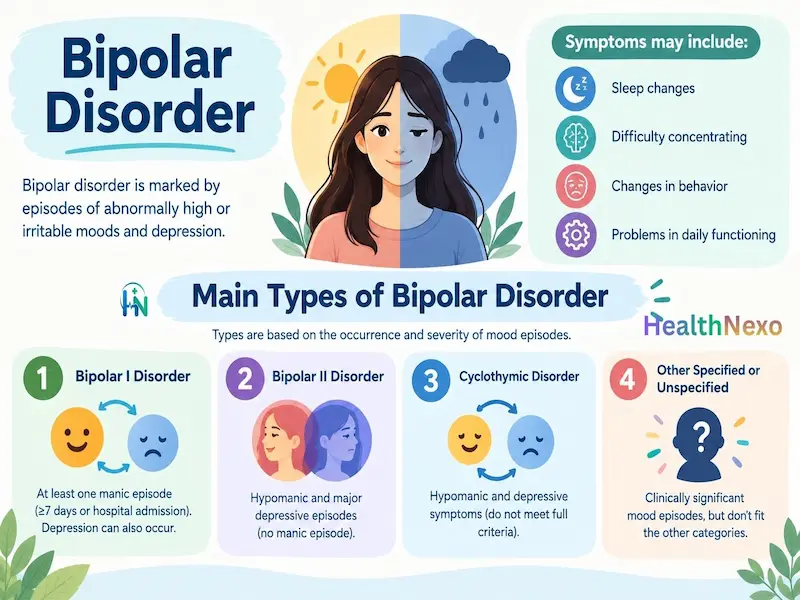
Bipolar disorder is defined by episodes of abnormally high or irritable moods and hyperactivity, along with episodes of depression. The symptoms may range in their intensity and could also interfere with sleep, concentration, behavior, and other areas of life.
Main Types of Bipolar Disorder
The various types of bipolar disorder are differentiated based on the occurrence of mood episodes and their severity.
1. Bipolar I Disorder: It is marked by the presence of at least one manic episode lasting for a minimum of 7 days or needing admission to the hospital. Episodes of depression can be present too.
2. Bipolar II Disorder: It consists of hypomanic and major depressive episodes without a manic episode.
3. Cyclothymic Disorder: Hypomanic and depressive symptoms which do not fit into the categories of hypomanic or major depressive episodes.
4. Other Specified or Unspecified Bipolar Disorders: Presence of mood episodes which are clinically significant but do not fit into the other categories of bipolar disorder.
Clinical assessment by a health care professional is needed to diagnose the problem.
Common causes of bipolar disorder
Bipolar disorder can develop through a combination of different factors. It probably involves a number of different causes. Some of these might include:
- Genetics: A family history might make someone more prone.
- Brain biology: Differences in brain structure and function may contribute to bipolar disorder.
- Sleep disturbance: Problems with sleeping might have an effect.
- Stress: Stress or trauma could combine with other risk factors.
- Substance use: Alcohol or recreational drugs may interfere with mood stability and make treatment more challenging.
Bipolar disorder likely results from a combination of genetic, biological, environmental, and other factors. There is no specific blood test used to diagnose bipolar disorder. Diagnosis is based on symptoms, medical history, and clinical assessment.
Early Symptoms of Bipolar Disorder
Early symptoms can vary considerably between individuals. Possible warning signs include:
- Significant changes in mood or irritability
- A reduced need for sleep or significant changes in sleep patterns
- Increased energy or activity
- Rapid speech or racing thoughts
- Difficulty concentrating
- Increased impulsivity or risky behavior
- Marked irritability
- Loss of interest in usual activities
- Changes in appetite, energy, or social behavior
The symptoms described above are not unique to bipolar disorder, as they can be caused by other illnesses as well. Professional evaluation is required in order to diagnose the illness.
10 Ways to Manage Bipolar Disorder
Treatment of bipolar disorder involves a lifelong approach. Evidence-based management may include medication, psychotherapy, regular sleep and routines, healthy lifestyle habits, and monitoring for early warning signs.
1. Follow the Treatment Plan Consistently
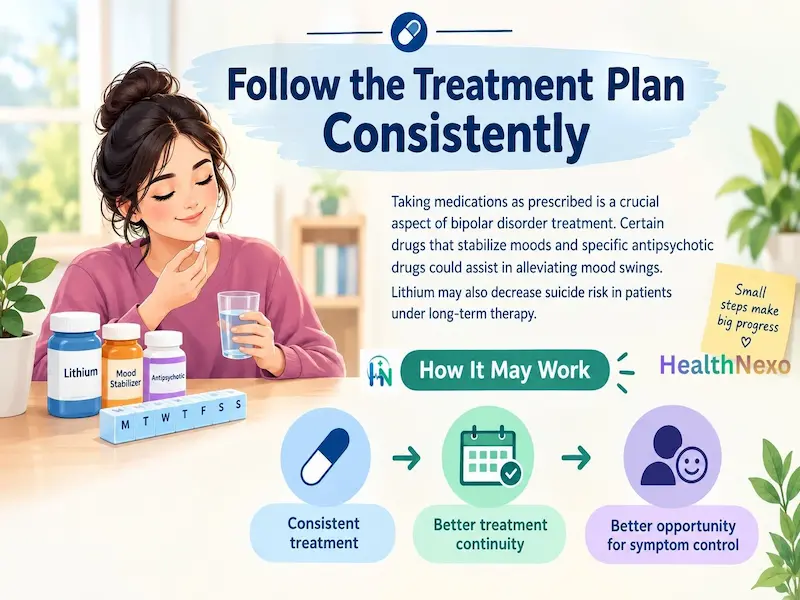
Taking medications as prescribed is a crucial aspect of bipolar disorder treatment. Certain drugs that stabilize moods and specific antipsychotic drugs could assist in alleviating the seriousness of mood swings. Lithium may also decrease suicide risk in patients under long-term therapy.
How It May Work: Consistent treatment → Better treatment continuity → Better opportunity for symptom control
A 2016 systematic review included 24 adherence-intervention studies, with 18 providing data for meta-analysis. Adherence-support interventions were associated with higher odds of medication adherence than control interventions (pooled OR 2.27; 95% CI 1.45–3.56).
Never stop, restart, or change psychiatric medication without discussing it with the treating clinician.
2. Maintain a Regular Sleep Schedule
Sleep and biological rhythms are intimately linked to bipolar disorder. There can be disruptions in sleep and biological rhythms in conjunction with mood disturbances.
How It May Work: Irregular sleep → Circadian disruption → Altered biological rhythms → Potentially greater mood instability
Based on the systematic review of 42 different studies with 3,432 patients diagnosed with bipolar disorder, disruptions in circadian rhythms were found, along with a higher frequency of evening chronotype. The connection between circadian rhythms and the presence of mood symptoms is very complex.
A decreased need for sleep combined with high energy, fast talking, racing thoughts, or impulsivity are early signs of either mania or hypomania. Try to have a regular sleep pattern and notify your healthcare provider about any substantial sleep disturbances.
3. Keep a Structured Daily Routine
The regularity of sleeping, eating, taking medications, working, exercising, and engaging socially might facilitate consistent body and social rhythms. This concept is the core of interpersonal and social rhythm therapy (IPSRT), which aims to ensure stability in daily and sleeping routines.
How It May Work: Stable daily routine → More consistent rhythms → Less disruption → Potentially better mood stability
Consistency is generally more important than creating a complicated schedule.
4. Regular Exercise for Mood and Overall Health
Regular physical activity supports physical health and may also benefit depressive and anxiety symptoms in people with bipolar disorder.
How It May Work: Physical activity → Better physical and psychological well-being → Potentially fewer depressive and anxiety symptoms
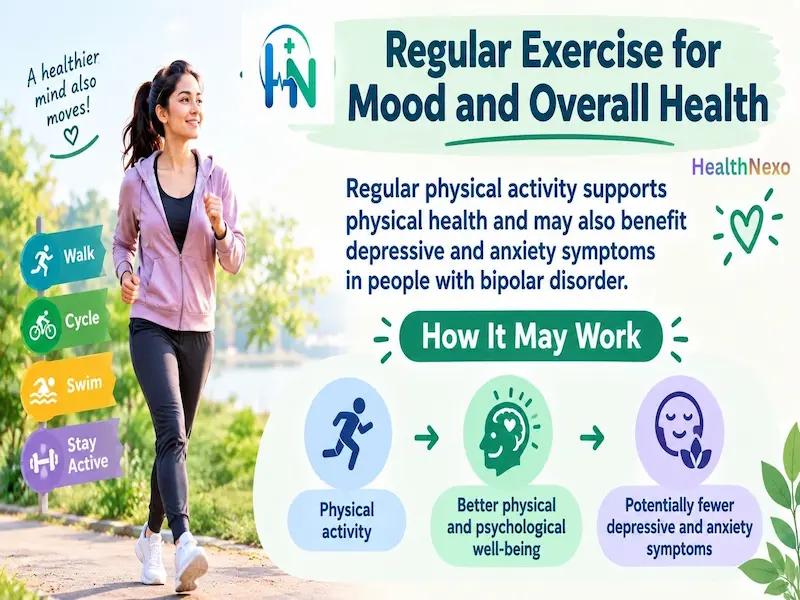
According to the systematic review and meta-analysis conducted in 2025, involving 7 randomized controlled trials of 576 patients with bipolar disorder, there was a statistically significant effect of exercise on depression and anxiety. The effect on mania was not statistically significant, while the quality of evidence was low.
Walking, cycling, swimming, and other suitable forms of physical activity can complement standard bipolar disorder treatment.
5. Nutrition for Brain Health and Mood Stability
Balanced nutrition promotes cardiac, metabolic, and general physiological wellness. This is especially pertinent to the fact that some of the drugs used in treating bipolar disorder might impact body weight and metabolism.
How It May Work: Balanced nutrition → Better overall health → Supports physical well-being → Complements long-term treatment

In 2023, a systematic review was performed on six aspects of the lifestyle of patients with bipolar disorder, namely, diet, physical activity, sleep patterns, drug and alcohol abuse, stress reduction, and interpersonal relationships.
There is no particular type of diet that can act as an alternative to regular therapy for bipolar disorder. It is recommended to consult a healthcare provider before using any supplements or herbal products.
6. Avoid Alcohol and Recreational Drugs
Avoiding recreational drugs and limiting or avoiding alcohol may reduce treatment-related difficulties and support mood stability.
How It May Work: Alcohol or drug exposure → Sleep and behavioral disruption → Greater treatment difficulties → Potentially greater mood instability
According to a systematic review and meta-analysis conducted in 2023 on 20 studies comprising 32,886 adults suffering from bipolar disorder, 29% of them had alcohol use disorder. As per a meta-analysis in 2026, cannabis and alcohol use disorders were linked to poor medication compliance. These studies establish correlation and not causation.
Let your healthcare provider know about alcohol, recreational drugs, tobacco, caffeine, and nonprescribed medication as they could influence your treatment plan.
7. Recognize Early Warning Signs
Recognition of mood changes early enough might help patients and practitioners react before the situation becomes too serious.
How It May Work: Early symptom changes → Recognition → Earlier clinical support → Potentially less severe episodes
Some of the common warning signs for mania or hypomania may be reduced need for sleep, increased energy/activity level, rapid speech/thought process, irritability, impulsiveness, and risk-taking behavior.
As per the recommendation by NICE, it is advisable to have a personalized relapse plan that includes identifying the early warning signs, triggers, coping mechanisms, and what steps to take if there are any relapses. It is also useful to maintain a mood diary.
8. Consider Evidence-Based Psychotherapy
Psychotherapy may enhance drug therapy and is also a significant component of the management of bipolar disorder. Some forms of psychotherapy used include cognitive behavior therapy, interpersonal and social rhythm therapy, family-focused therapy, and psychoeducation.
How It May Work: Psychotherapy → Better symptom awareness and coping → Improved treatment engagement → Earlier recognition of mood changes
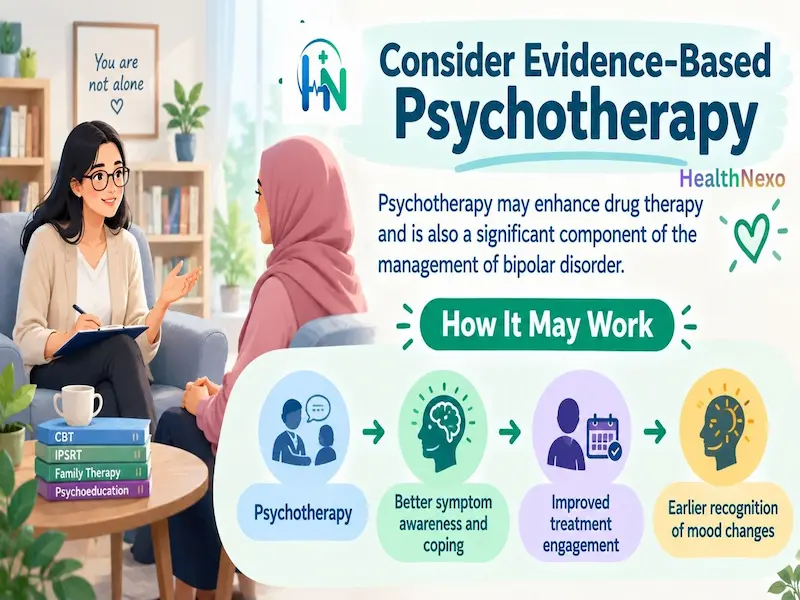
In a STEP-BD trial involving 293 people with bipolar depression, intensive psychotherapy added to medication was associated with higher one-year recovery rates than brief collaborative care (64% vs. 52%). Group psychoeducation therapy was shown in a meta-analysis to have lower rates of relapse than control (OR 0.43; 95% CI 0.28–0.62).
The choice of psychotherapy should consider symptoms, treatment phase, clinical needs, and individual preferences.
9. Build a Strong Support Network
Family members, trusted friends, therapists, and healthcare professionals can provide practical and emotional support and may help identify changes that a person does not recognize early.
How It May Work: Social support → Better communication and monitoring → Earlier recognition → More timely care

A study done on 94 people suffering from stable bipolar disorder showed that people who experienced relapse had lower social support. Nevertheless, this is just an observation that does not mean that low social support triggers relapse.
Given the consent of the individual, relatives can help with education, relapse planning, and communication with professionals.
10. Attend Regular Follow-Up and Monitor Treatment
Bipolar disorder is usually a lifelong illness; therefore, the need for treatment may vary over time. Follow-up enables clinicians to evaluate symptoms of mood disorders, sleeping habits, medication efficacy, possible side effects, physical well-being, substance abuse, compliance with treatment, and other issues.
How It May Work: Regular monitoring → Earlier detection of changes → Timely treatment adjustment → Better long-term management
Lithium treatment requires regular monitoring of blood lithium levels, kidney function, thyroid function, electrolytes, and other relevant physical-health measures. Certain antipsychotics can necessitate monitoring of weight, blood pressure, blood glucose or HbA1c, and lipid profiles due to possible effects on metabolism.
Inform your healthcare provider about any mood, sleep, behavioral, or drug-tolerance changes you have observed.
Treatment Approaches for Bipolar Disorder
The primary line of evidence-based treatment of bipolar disorder is medication. The science behind this approach is to correct the imbalance of chemicals in the brain and to keep manic and depressed phases of bipolar disorder.
1. Mood stabilizers (first-line)
The role of a mood stabilizer is to keep the bipolar person stable by normalizing their extreme mood swings. A mood stabilizer is believed to keep the person from having a mania or depression by keeping the range of a manic episode at a normal level. Lithium is a mood stabilizer that has been most studied and shows that it reduces recurrence and rate of suicide.
Examples:
- Lithium (most studied, reduces risk of relapse)
- Valproate (Divalproex sodium)
- Lamotrigine
- Carbamazepine
2. Antipsychotic medications
Depending on the specific medicine and clinical situation, antipsychotics may be used for mania, bipolar depression, or relapse prevention.
Examples: Olanzapine, Quetiapine, Risperidone, andAripiprazole
3. Antidepressants (use with caution)
Can be prescribed for bipolar depression but used only under close psychiatric supervision. They are typically combined with mood stabilizers to reduce the risk of triggering mania.
Note:
- Often combined with a mood stabilizer
- Can sometimes induce a manic episode if used alone
4. Benzodiazepines (short-term use only)
Sometimes prescribed for the symptoms of:
- Severe anxiety
- Insomnia with a mood episode
- Agitation
Examples: Lorazepam, and Clonazepam
These drugs are often taken only in short-term periods to help with specific issues because of the dependency that can develop.
5. Long-term medication
Bipolar disorder is a chronic illness and treatment with medication is often long-term.
Principles include:
- Take medication consistently.
- Never stop the medication suddenly or without physician approval.
- Regular blood tests will often be needed (particularly for lithium).
- Monitor side effects with the psychiatrist.
Key principles include: Take Medication as Prescribed → Attend Follow-Up → Monitor Side Effects & Mood Changes → Seek Medical Guidance Before Any Change → Support Long-Term Stability
Urgent Help for Bipolar Disorder
It is crucial to seek immediate professional evaluation in case of intense bipolar symptoms, especially during intense manic or depressive episodes, and in cases where there are psychotic features, or danger to the individual and/or others. Urgent warning signs include:
- Suicidal or self-harm thoughts
- Severe confusion
- Hallucinations or delusions
- Extreme agitation
- Dangerous or severely impulsive behavior
- Several nights of very little sleep with marked behavioral changes
- Inability to care for basic needs
- A serious risk of harm to self or others
If there is an immediate danger, contact local emergency services or go to the nearest emergency department.
Final Thoughts
Bipolar disorder is a long-term condition, but appropriate treatment can help many people manage symptoms and maintain daily functioning. Effective ways to manage bipolar disorder may include prescribed medication, psychotherapy, regular sleep and routines, physical activity, healthy eating, mood monitoring, social support, and ongoing professional follow-up.
Lifestyle measures can support treatment but should not replace professional care. Severe mood changes, psychotic symptoms, or thoughts of self-harm require prompt professional or emergency support.
Frequently Asked Questions (FAQs)
Q1. What are the main ways to manage bipolar disorder?
Management is individualized and may include prescribed medication, psychotherapy, regular sleep and routines, healthy lifestyle habits, mood monitoring, social support, and regular follow-up with a mental health professional.
Q2. Can lifestyle changes manage bipolar disorder?
Healthy lifestyle habits can support mood stability and overall health, but they should not replace prescribed treatment when medication or other professional care is needed.
Q3. Can people with bipolar disorder maintain daily activities?
Many people can maintain relationships, work, education, and other daily activities with appropriate long-term treatment and support. Individual experiences vary.
Q4. Should bipolar medication be stopped when symptoms improve?
No. Medication should not be stopped or changed without medical guidance because abrupt or unsupervised changes can increase the risk of symptom recurrence.
Q5. Can bipolar disorder cause hallucinations?
Severe manic or depressive episodes can sometimes involve psychotic symptoms, including hallucinations or delusions. These symptoms require prompt professional assessment.
Medical Disclaimer
This article is for educational and informational purposes only and is not to be used as a substitute for professional medical or psychiatric advice, diagnosis, or treatment. Individualized assessment and treatment should be conducted for bipolar disorder. Do not modify your treatment regimen without consulting your doctor.
References
- National Institute of Mental Health. Bipolar Disorder. NIMH
- Bipolar Disorder: Assessment and Management (CG185). NICE Guideline CG185
- MacDonald L, et al. Medication Adherence in Bipolar Disorder: Systematic Review and Meta-Analysis. J Affect Disord. 2016;194:202–221. PubMed
- Melo MCA, et al. Chronotype and Circadian Rhythm in Bipolar Disorder: A Systematic Review. Sleep Med Rev. 2017;34:46–58. PubMed
- Li X, et al. Exercise Interventions in Bipolar Disorder: Systematic Review and Meta-Analysis. Front Psychiatry. 2025. PubMed
- Simjanoski M, et al. Lifestyle Interventions for Bipolar Disorders: Systematic Review and Meta-Analysis. Neurosci Biobehav Rev. 2023;152:105257. PubMed
- Miklowitz DJ, et al. Adjunctive Psychotherapy for Bipolar Disorder: Systematic Review and Component Network Meta-analysis. JAMA Psychiatry. 2021;78(2):141–150. PubMed
- Tan MK, et al. Group CBT and Psychoeducation for Bipolar Disorder: Meta-Analysis. 2022;10(11):2288. PubMed
- National Institute of Mental Health. STEP-BD Depression Psychosocial Treatment Trial. NIMH
- Alcohol Use Disorder in Bipolar Disorder: A Systematic Review and Meta-Analysis. PubMed
- Substance Use Disorders and Medication Adherence in Bipolar Disorder: Meta-Analysis. PubMed
- Social Support and Relapse in Bipolar Disorder. PubMed
Tags:

Md. Rakibul Hasan, BSc (Hons), MS (Thesis)
Biochemistry & Molecular Biology, University of Chittagong, Bangladesh
Senior Biochemist | Health Content Writer | Evidence-Informed Health Information Creator
Popular Diagnostic Centre Limited, Bangladesh.
He specializes in clinical biochemistry, laboratory diagnostics, and medical testing. Alongside his professional work, he is actively involved in health education and scientific communication.
As a Health Content Writer and Research-Based Health Information Creator, he simplifies complex medical and biochemical topics into clear, evidence-informed, and reader-friendly health information.



1 thought on “10 Evidence-Based Ways to Manage Bipolar Disorder and Support Long-Term Well-Being”