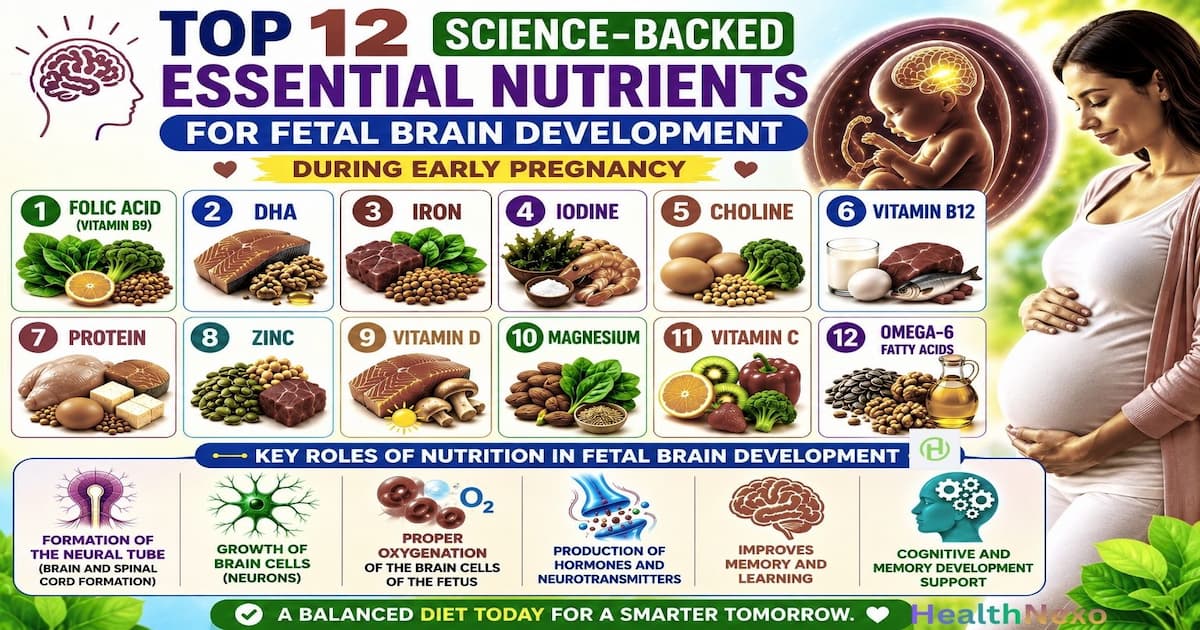
The first trimester is the most important stage of pregnancy for your baby’s brain development. During this period, proper nutrition provides the essential nutrients for fetal brain development during early pregnancy. The baby’s brain begins to form rapidly, making a healthy and balanced diet crucial for supporting cognitive growth and overall development.
It occurs through several biological processes, such as neurulation, neurogenesis, and synaptogenesis. Deficient nutrition can lead to changes in brain structure and also limit the number of neurons that develop. Research has shown that the developing fetal brain requires specific nutrients in adequate amounts.
In this article, the author explains 12 top scientific proven nutrients, along with their functions, mechanism of action in the body, recommended daily allowance, and the best dietary sources of these nutrients.
Medical Disclaimer: The information provided is for educational purposes only. Pregnant women should not take this as a substitute for medical advice and consultation with an experienced doctor.
Importance of Nutrition in Fetal Brain Development
Optimal nutrition from the start helps to build a strong foundation for your baby’s brain. Since brain development happens rapidly in pregnancy – especially in the first trimester when your baby’s brain forms – it’s vital that you get key nutrients such as choline, protein, folate, iodine, iron, and DHA at this critical stage.
Key Roles of Nutrition in Fetal Brain Development:
- Formation of the neural tube (brain and spinal cord formation)
- Growth of brain cells (neurons)
- Proper oxygenation of the brain cells of the fetus
- Production of hormones and neurotransmitters
- Improves memory and learning
- Cognitive and memory development support
According to the World Health Organization (WHO), good maternal nutrition greatly reduces the chances of neural tube defects as well as other developmental issues.
Signs of Nutrient Deficiency during Pregnancy
Common signs of nutrient deficiencies during pregnancy include:
- Persistent fatigue and weakness
- Pale skin and dizziness
- Frequent headaches
- Muscle cramps
- Poor concentration or memory problems
- Tingling or numbness in hands and feet
- Frequent infections
- Hair loss and brittle nails
- Mood changes and irritability
- Poor fetal growth and development
If you’re experiencing some of the above symptoms on a regular basis, please see your healthcare provider for further evaluation and nutrition guidance.
12 Essential Nutrients for Fetal Brain Development during Early Pregnancy
The nutrients needed for the brain development of the fetus during the early stages of pregnancy are extremely essential, particularly at the time when the baby’s brain develops rapidly. Essential nutrients include folate, DHA, iron, iodine, choline, and vitamins. This section discusses 12 Science-Backed Essential Nutrients for Fetal Brain Development During Early Pregnancy.
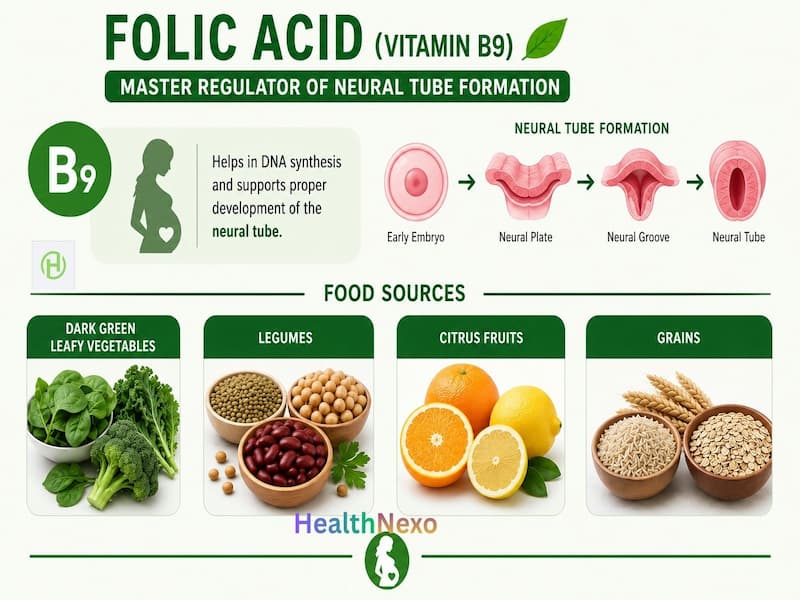
1. Folic Acid (Vitamin B9) – Master Regulator of Neural Tube Formation
Folic acid is the most important micro-nutrient in early pregnancy because it helps in the formation of a neural tube in the first 28 days following conception. It is folate that acts as the methyl group donor and is required for the synthesis of DNA. Taking adequate amounts of folic acid prior to and during pregnancy can help in preventing NTD like anencephaly and spina bifida.
Scientific Role:
- Essential for neural tube closure
- Supports DNA replication and methylation
- Promotes rapid neuronal cell division
- Prevents congenital brain defects
Recommended Dosage: 400–600 mcg per day (minimum) (pre & during pregnancy)
Food Sources:
- Dark green leafy vegetables (spinach, kale, broccoli)
- Legumes (lentils, chickpeas, beans)
- Citrus fruits (orange, lemon)
- Grains
The WHO recommends folic acid supplementation before conception and early pregnancy to reduce neural tube defects.
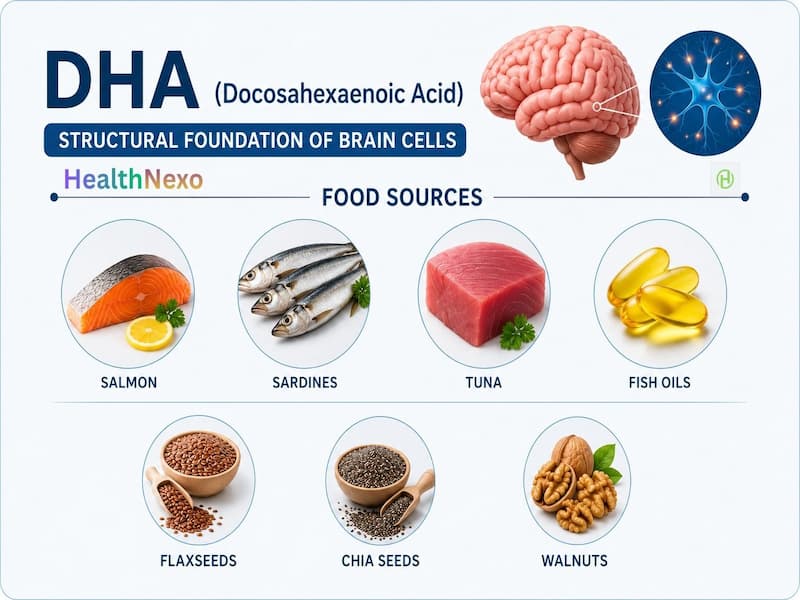
2. DHA (Docosahexaenoic Acid) – Structural Foundation of Brain Cells
DHA is an omega-3 fatty acid that forms a critical part of the brain and retina structure. DHA is one of the most abundant omega-3 fatty acids in the brain and a major structural component of neuronal membranes. DHA plays an instrumental role in synaptic plasticity, the process of learning and memory.
Mechanism of Action:
- Constructs neuron cell membranes
- Improves synaptic communication
- Facilitates development of visual cortex
- Encourages brain plasticity
Recommended Dosage: 200-300 mg DHA per day
Food Sources:
- Salmon
- Sardines
- Tuna
- Fish oils (safe during pregnancy)
- Flaxseeds (precursor of ALA)
- Chia seeds
- Walnuts
According to the American Pregnancy Association, DHA is very important for fetal eye development and fetal brain.
3. Iron – Oxygen Transport and Brain Energy Support
Iron is required for carrying oxygen through hemoglobin and in the oxygenation of the fetal brain. Iron contributes to the proper functioning of the brain because it helps in making the neurotransmitters such as serotonin and dopamine, which contribute to one’s mood and cognitive function.
Scientific Role:
- Support for the fetal brain’s oxygen supply
- Regulation of neurotransmitter synthesis
- Provide support for brain metabolism
- Contribute to prevention of maternal anemia.
Recommended intake: 27 milligrams per day in pregnant women.
Iron sources:
- Red meat (moderation)
- liver
- spinach and beetroot
- beans and legumes.
4. Iodine – Thyroid Hormone and Brain Maturation Regulator
It is important for the production of thyroid hormones (T3 and T4) responsible for proper brain development, neuronal migration, and myelination. The hormones are necessary for the fetus during the first trimester as it lacks a functioning thyroid gland.
Scientific Role:
- Regulates brain maturation
- Helps in neuronal differentiation
- Stimulates myelination
- Prevents mental retardation
Recommended Dose: 220 mcg per day
Food Sources:
- Iodized salt
- Dairy products (milk, yogurt)
- Eggs
- Sea fish and seafood
According to WHO, deficiency of iodine during pregnancy may lower the child’s IQ significantly.
5. Choline – Memory Formation and Cognitive Programming Nutrient
Choline is essential for healthy brain development and cognitive function. Choline can be vital to early child development and is involved in creating a substance known as acetylcholine which is used by the brain for learning and memory. Choline is also involved in assisting the brain to function efficiently
Scientific Role:
- Brain cell membrane formation
- Memory and learning (hippocampus)
- Gene expression control (epigenetics)
- Neural tube formation
Recommended Dose: 450 mg per day during pregnancy
Food Sources:
- Egg yolk (richest source)
- Liver
- Soybeans
- Fish and poultry
The National Institutes of Health (NIH) has found choline is very important during fetal brain development.
6. Vitamin B12 – Myelin Formation and Nerve Protection
Your body uses this vitamin and folate as an integral part of its function when synthesizing DNA and creating your developing brain. This is because it provides help for the generation of the protein, myelin, which wraps and guards nerve fibers.
Health Benefits during Pregnancy:
- Favors myelin sheath formation
- Helps prevent neural damage
- Increases speed of brain signals
- Combines with folate in cell division
Recommended Dose: 2.6 mcg per day
Food Sources:
- Meat and fish
- Eggs
- Milk and dairy
- Fortified plant-based milk
The NIH Office of Dietary Supplements states B12 deficiency may lead to damage to brain nerves during pregnancy.
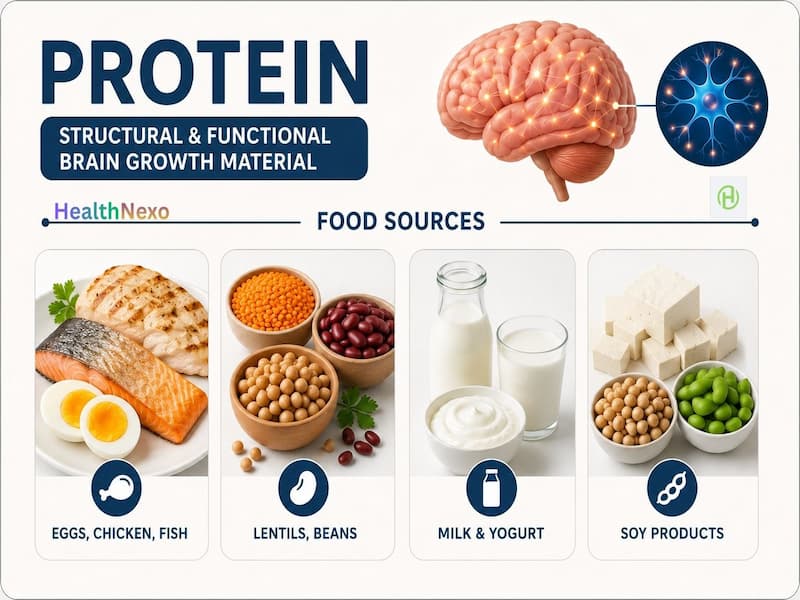
7. Protein – Structural and Functional Brain Growth Material
These nutrients help the body produce various essential compounds, including hormones, enzymes, and neurotransmitters, along with developing the brain itself. The body produces protein at an extremely fast rate, especially within the central nervous system as the baby develops.
Scientific Role:
- Forms neurons and brain tissues
- Facilitates neurotransmitter formation
- Promotes enzyme synthesis
- Facilitates fetal development
Recommended Dose: ~71 grams per day
Food Sources:
- Eggs, chicken, fish
- Lentils, beans
- Milk and yogurt
- Soy products
Key Insight: When protein is missing during pregnancy, it may increase the risk of low birth weight as well as low brain volume.
8. Zinc – Neurogenesis and DNA Synthesis Activator
Zinc is a vital component of cell division and brain development, it particularly plays an important role during fetal embryonic development.
Scientific Role:
- Supports neurogenesis
- Aids DNA and RNA synthesis
- Regulates brain signaling pathways
- Strengthens fetal immunity
Recommended Dose: 11–12 mg per day
Food Sources:
- Meat and seafood
- Pumpkin seeds
- Nuts
- Whole grains
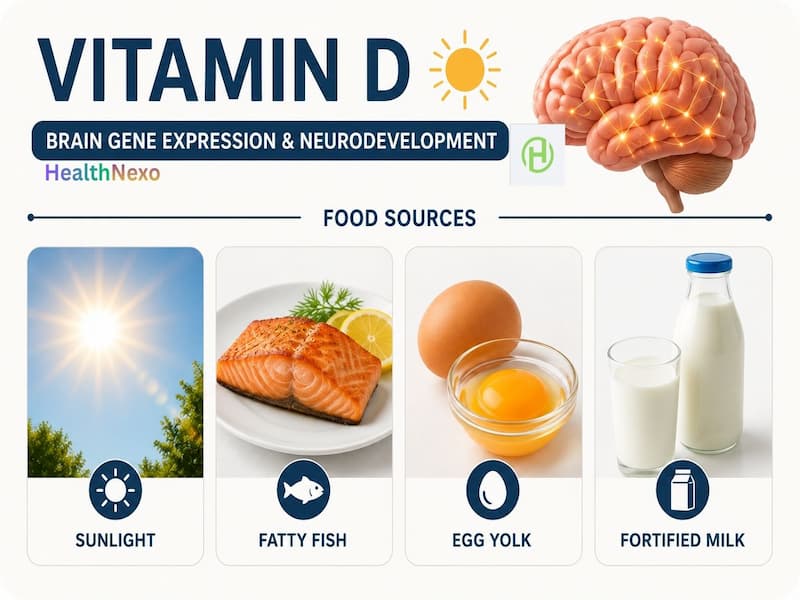
9. Vitamin D – Brain Gene Expression and Neurodevelopments
Vitamin D has a strong effect on brain activity. It works like a special brain-supporting hormone that may help control gene activity and support the growth of brain cells.
Why It Matters:
- Regulates brain development genes
- Supports neuron growth
- Influences mood and cognition
- Reduces neurodevelopmental risks
Recommended Dose: 600 IU (15 mcg) per day
Food Sources:
- Sunlight exposure
- Fatty fish
- Egg yolk
- Fortified milk
Recent findings indicate that sufficient vitamin D levels in the mother could aid in brain development and prevent neurodevelopmental diseases.
10. Magnesium – Neurotransmitter and Electrical Stability Regulator
The element magnesium participates in over 300 biochemical reactions in the body. It also plays a role in the proper functioning of the brain because it contributes to brain electrical reactions.
Evidence-Based Benefits:
- Regulates neurotransmitter balance
- Supports nerve signaling
- Reduces neural excitability
- Improves stress regulation
Recommended Dose: 350–360 mg per day
Food Sources:
- Nuts and seeds
- Whole grains
- Spinach
- Bananas
Magnesium is known to be involved in the proper transmission of nerve impulses and could promote proper neurological development during the embryonic stage.
11. Vitamin C – Neuroprotective Antioxidant Barrier
Vitamin C helps protect developing neurons from oxidative damage and assists in producing collagen.
Scientific Function:
- Neutralizes free radicals
- Supports brain tissue structure
- Enhances iron absorption
- Protects neuronal integrity
Recommended Dose: 85 mg per day
Food Sources:
- Oranges and lemons
- Guava (very high content)
- Strawberries
- Bell peppers
12. Omega-6 Fatty Acids – Brain Cell Structural Components
The omega-6 fatty acids play a crucial role in the structure of brain cell membranes and function most effectively when in a balanced state along with omega-3 fats.
Scientific Function:
- Contributes to the normal structure of brain cell membranes
- Helps with growth signaling pathways
- Regulates lipid balance in the brain tissues
Suggested Dosage: Approximately 13 grams per day (adequate intake)
Sources:
- Vegetable oils
- Nuts and seeds
- Eggs
According to scientific research, the omega-6 fatty acids are important components of the brain cell membranes and assist in the development of the brain during pregnancy.
Nutrient Summary Table for Fetal Brain Development
| Nutrient | Main Brain Function | Recommended Daily Intake | Best Food Sources |
| Folic Acid (B9) | Neural tube formation, DNA synthesis | 400–600 mcg | Spinach, lentils, oranges, beans |
| DHA (Omega-3) | Brain cell structure, memory, vision | 200–300 mg | Salmon, sardines, fish oil, walnuts |
| Iron | Oxygen supply to fetal brain | 27 mg | Red meat, spinach, beans, beetroot |
| Iodine | Thyroid hormone & brain maturation | 220 mcg | Iodized salt, milk, eggs, seafood |
| Choline | Memory formation & brain development | 450 mg | Egg yolk, liver, soybeans |
| Vitamin B12 | Myelin formation & nerve protection | 2.6 mcg | Meat, fish, eggs, dairy |
| Protein | Brain tissue & neurotransmitter growth | ~71 g | Chicken, fish, lentils, dairy |
| Zinc | DNA synthesis & neurogenesis | 11–12 mg | Meat, nuts, seeds, whole grains |
| Vitamin D | Brain gene regulation | 600 IU (15 mcg) | Sunlight, fish, egg yolk |
| Magnesium | Nerve signaling & brain stability | 350–360 mg | Nuts, seeds, spinach, bananas |
| Vitamin C | Antioxidant protection of neurons | 85 mg | Orange, guava, strawberries |
| Omega-6 Fatty Acids | Brain cell membrane structure | ~13 g | Vegetable oils, nuts, eggs |
Supplement Guidance for Fetal Brain Development
Your health care professional may suggest some supplements in the first trimester to aid your baby’s brain development and cover heightened nutritional needs. Always take these supplements as recommended by your doctor.
1. Folic Acid Supplements: Help build the neural tube and early brain development.
- Examples: Folic acid tablets (400–600 mcg)
2. Iron Supplements: Help supply oxygen to the baby and prevent mother’s anemia, which is necessary for the baby’s brain development.
- Examples: Ferrous sulfate or common iron supplements
3. DHA (Omega-3) Supplements: Help build brain cells, visual ability, and intelligence of the fetus.
- Examples: Omega-3 DHA Fish Oil supplements
4. Iodine Supplements: Necessary to synthesize thyroid hormones that help in brain development.
- Examples: Potassium Iodide/Iodine Supplements
5. Prenatal Mufti Vitamin Supplements: All necessary vitamins and minerals are present in these supplements.
- Examples: Prenatal Mufti Vitamin Supplements (Folic Acid, Iron, Iodine, DHA, etc.)
Safety Note
- Consult your physician before taking them
- Never exceed the recommended dose
- They should complement your balanced diet.
- May differ in potency from one supplement to another.
Final Thoughts
Early pregnancy is the most crucial stage in nutrients for fetal brain development during early pregnancy. This is the period where the brain, spinal cord, and neural circuits begin developing very fast. Maternal nutrition ensures healthy neuron development and proper formation of brain structures.
In addition, it promotes the long-term cognitive and emotional well-being of the child. The scientific studies show that fetal brain development is dependent on the balance of nutrients as a whole. Essential nutrients such as folate, DHA, iron, iodine, choline, vitamin B12, proteins, zinc, vitamin D, magnesium, vitamin C, and essential fats are needed for optimal functioning.
They help in making the neural tube, brain cell formation, oxygen circulation and connection formation in the brain. Deficiencies in key nutrients during pregnancy may negatively affect fetal brain growth, cognitive development, and long-term neurological health. In that sense, the right prenatal nutrition must also be a huge part in forming the fetus’ brain.
Frequently Asked Questions (FAQs)
Q1. What are the most important nutrients for fetal brain development during early pregnancy?
Essential micronutrients like folic acid, DHA, iron, iodine, choline, vitamin B12, protein, zinc, vitamin D, magnesium and vitamin C, are crucial. These will help in forming all important brain cells and neural tube cells for future lifetime brain performance.
Q2. Why is folic acid important for fetal brain development?
This also aids in the development of the neural tube that forms the brain and the spinal cord, which is vital in cell multiplication. And it also helps in the synthesis of DNA that cells create.
Q3. Can nutrient deficiencies affect a baby’s brain development?
Yes, deficiency of vital nutrients such as folic acid, iodine, iron, and DHA in the early stages of pregnancy in the mother can negatively affect fetal brain development.
Q4. Is prenatal supplementation necessary during pregnancy?
Usually, prenatal supplementation is advised due to the additional requirements for nutrients. Such supplements as folic acid, iron, iodine, and DHA are some of those used.
 Medical Disclaimer
 Medical Disclaimer
The information provided in this article is for educational and informational purposes only. It is not intended to be a substitute for professional medical advice, diagnosis, or treatment. Always consult a qualified healthcare professional before making any medical decisions, starting any treatment, or changing your current healthcare plan.

Md. Rakibul Hasan, BSc (Hons), MS (Thesis)
Biochemistry & Molecular Biology, University of Chittagong, Bangladesh
Senior Biochemist | Health Content Writer | Evidence-Informed Health Information Creator
Popular Diagnostic Centre Limited, Bangladesh.
He specializes in clinical biochemistry, laboratory diagnostics, and medical testing. Alongside his professional work, he is actively involved in health education and scientific communication.
As a Health Content Writer and Research-Based Health Information Creator, he simplifies complex medical and biochemical topics into clear, evidence-informed, and reader-friendly health information.