Feeling stressed or mentally overwhelmed is common. Although food is never meant to take the place of treatment from professionals for anxiety and depression, having healthy foods that promote peace of mind in your diet can be beneficial.
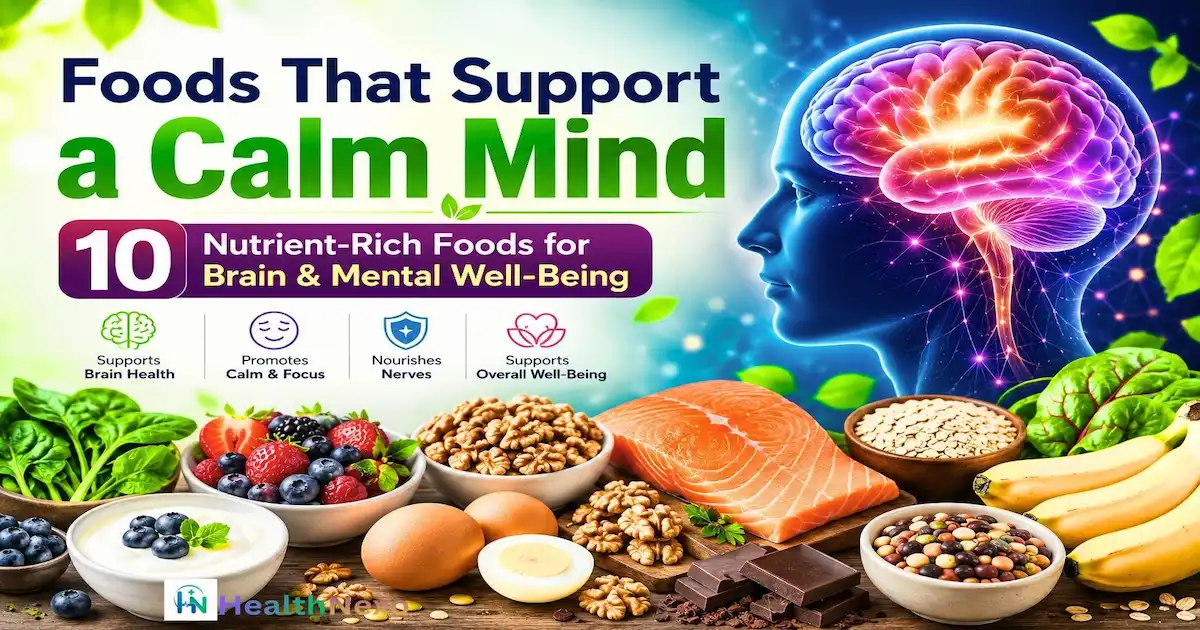
Fatty fish, walnuts, whole grains, leafy greens, eggs, yogurt, berries, bananas, beans, lentils, and dark chocolate provide nutrients that support brain, nervous-system, digestive, and overall health. No single food has a proven immediate calming effect. Sleep, exercise, stress management, social connection, and overall diet quality also influence mental well-being.
In this article, discover 10 foods that support a calm mind, their key nutrients, health benefits, and easy ways to add them to your diet.
Key Takeaways
- There is no magic food that can treat any sort of stress, anxiety, or depression.
- Omega-3 fatty acids, magnesium, B vitamins, protein, fiber, and plant compounds play important roles in normal brain and nervous-system function.
- Fiber and fermented foods may influence the gut-brain axis, but research in this area is still developing.
- A Mediterranean-style dietary pattern emphasizes vegetables, fruits, whole grains, legumes, nuts, seeds, fish, and minimally processed foods and has been associated with better mental-health outcomes.
- A nutritious diet works best alongside adequate sleep, regular physical activity, healthy relationships, stress management, and professional care when needed.
- Think variety + balance + overall diet quality, rather than looking for one “calming food.”
Factors That Can Affect Mood and Stress Levels
Mood and stress can be influenced by many physical, psychological, social, and lifestyle factors. Common contributors include:
- Poor-quality or insufficient sleep or insomnia
- Ongoing personal or work-related stress
- An unbalanced or nutrient-poor diet
- Excessive caffeine intake
- Excessive alcohol consumption
- Physical inactivity
- Social isolation
- Major life changes or stressful events
- Certain medications
- Underlying medical conditions
- Anxiety, depression, or other mental-health conditions
Nutrition is only one part of mental well-being. Persistent anxiety, depression, severe stress, or significant changes in mood should be discussed with a qualified healthcare professional.
The Link Between Food and Mental Health
The brain requires a continuous supply of energy and nutrients to support normal cellular activity, neurotransmitter-related processes, nerve signaling, and other biological functions. A varied diet can help provide nutrients involved in these processes.
Important Nutrients for Brain and Overall Health
- Omega-3 fatty acids: EPA and DHA are important fatty acids of omega 3 series that help keep the cell membrane functional.
- B vitamins: Several B vitamins help with energy metabolism and normal nervous-system function.
- Magnesium: Magnesium contributes to normal muscle and nervous-system function and numerous cellular reactions.
- Protein: Protein provides amino acids needed for growth, tissue maintenance, and many biological processes.
- Fiber: Fiber supports normal digestion and provides fuel for beneficial gut microorganisms.
- Polyphenols: These plant compounds can contribute to antioxidant defenses and cellular signaling.
The Bigger Picture
- Balanced diet → Diverse nutrient intake → Support for normal brain, digestive, and overall health
This does not mean that eating a particular food will immediately make someone feel calm.
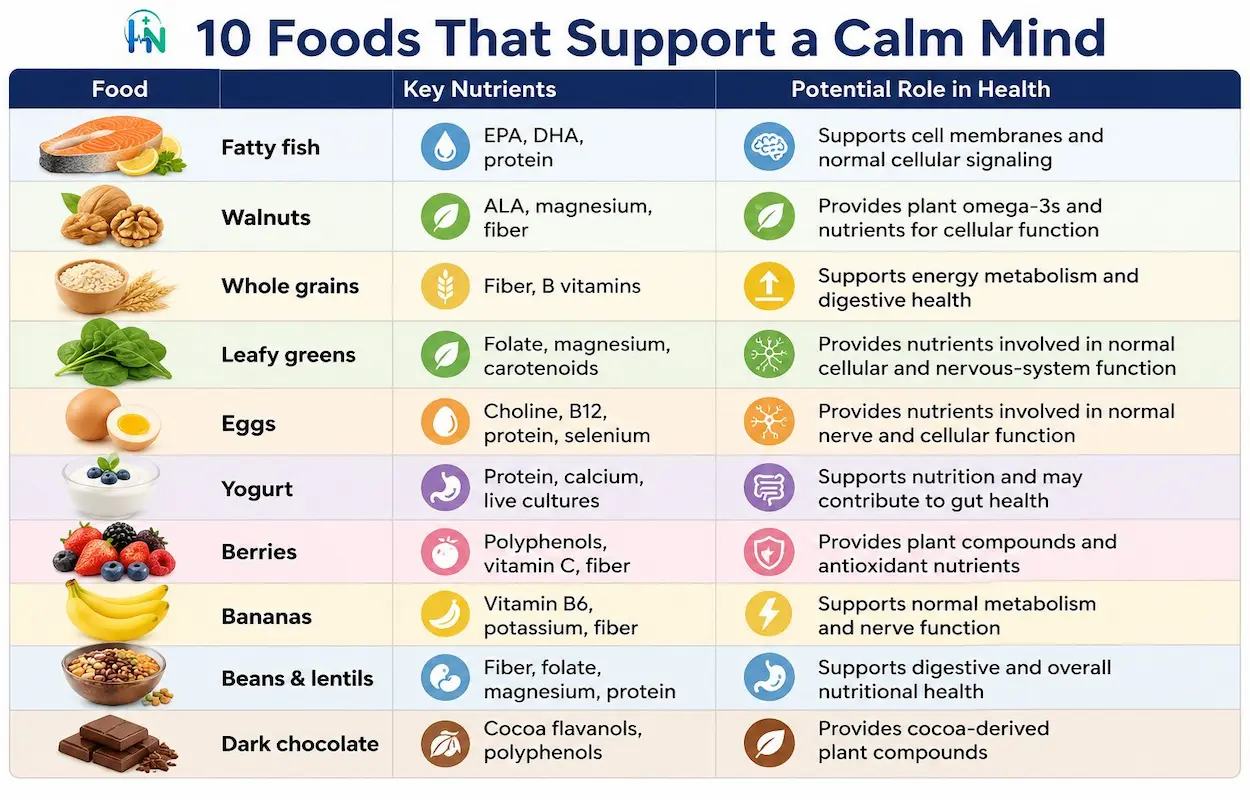
10 Foods That Support a Calm Mind
These foods are not treatments for anxiety or depression; they simply provide nutrients that may support overall health. Instead, they provide nutrients that support normal brain, nervous-system, metabolic, and digestive functions.
Quick Summary: 10 Foods That Support a Calm Mind
1. Fatty Fish for Omega-3 Fatty Acids
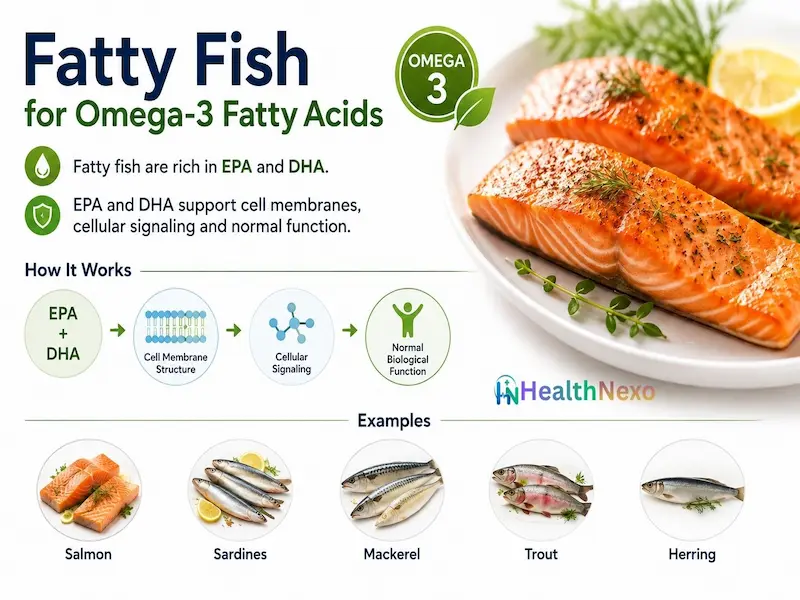
Omega-3 fatty acids are abundant in fatty fishes, including eicosapentaenoic acid (EPA) and docosahexaenoic acid (DHA). Omega-3 fatty acids maintain cell membrane structure and function. They are particularly important nutrients in a healthy diet.
How It Works
- EPA + DHA → Cell membrane structure + cellular signaling → Normal biological function
Examples: Salmon, Sardines, Mackerel, Trout, and Herring
Easy Tip: Try grilled or baked fish with vegetables and brown rice or another whole grain.
What the Evidence Says
There have been many studies on the use of omega-3 fatty acids for mental disorders, but it has never been proven that fish can cure anxiety or depression. Research on omega-3 supplementation also remains mixed, so fatty fish should be viewed as part of an overall healthy eating pattern rather than a mental-health treatment.
2. Walnuts for Plant-Based Omega-3s
Walnuts provide alpha-linolenic acid (ALA), a plant-based omega-3 fatty acid, along with magnesium, fiber, protein, and other nutrients. The body can convert ALA into EPA and DHA, but only in small amounts. Therefore, walnuts should not be considered a nutritional equivalent of fatty fish.
How It Works
- ALA + magnesium + other nutrients → Normal cellular function → Nutritional support for brain health
Easy Tip:
Add a small handful of walnuts to: Oatmeal, Plain yogurt, Fruit, Salads, and Whole-grain cereals
What the Evidence Says
Walnuts provide several nutrients relevant to overall health, but evidence that walnuts specifically reduce stress or improve mood is not strong enough to make that claim.
3. Whole Grains for Fiber and Nutrient Density
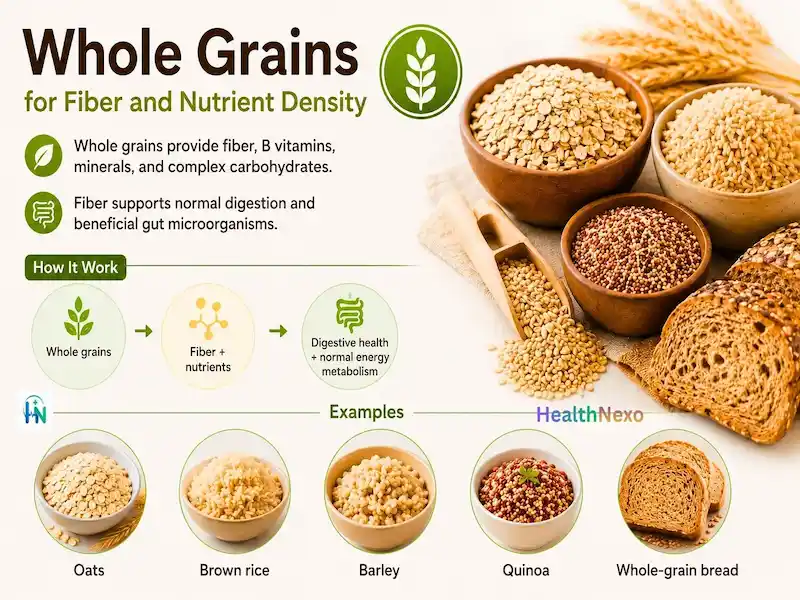
Whole grains such as oats, barley, brown rice, and quinoa provide fiber, B vitamins, minerals, and complex carbohydrates. Fiber also supports normal digestion and provides a substrate for beneficial gut microorganisms.
How It Work
- Whole grains → Fiber + nutrients → Digestive health + normal energy metabolism
Examples: Oats, Brown rice, Barley, Quinoa, and Whole-grain bread
Easy Tip:
- Choose whole-grain foods more often instead of refined grain products.
- For example, replace white rice with brown rice or mix whole grains into your regular meals.
What the Evidence Says
Whole grains and dietary fiber are important components of a nutritious dietary pattern. Their specific effects on mood and stress are still being studied.
4. Leafy Greens for Folate and Magnesium
Leafy green vegetables provide nutrients such as folate, magnesium, vitamin K, carotenoids, and fiber. These nutrients contribute to normal cellular, metabolic, and nervous-system functions.
How It Works
- Folate + magnesium + plant compounds → Normal cellular processes → Support for overall health
Examples: Spinach, Kale, Mustard greens, Collard greens, and Swiss chard
Easy Tip:
Add leafy greens to: Salads, Soups, Curries, Omelets, Rice dishes, and Stir-fries
What the Evidence Says
Leafy greens are nutrient-dense foods that support overall health, but evidence that eating leafy greens directly produces a calming or antidepressant effect is limited.
5. Eggs for Choline and B Vitamins
Eggs provide high-quality protein, choline, vitamin B12, selenium, and other nutrients. Choline is used by the body to produce acetylcholine, a neurotransmitter involved in normal nerve signaling and many other physiological processes.
How It Works
- Choline → Acetylcholine production → Normal nerve signaling
Easy Tip
Pair eggs with vegetables and whole grains for a balanced meal. For example: Eggs + spinach + whole-grain toast
What the Evidence Says
Eggs provide nutrients that are important for normal nervous-system and cellular function. However, eating eggs should not be described as a treatment for anxiety, stress, or depression.
6. Yogurt and Fermented Foods for Gut Health
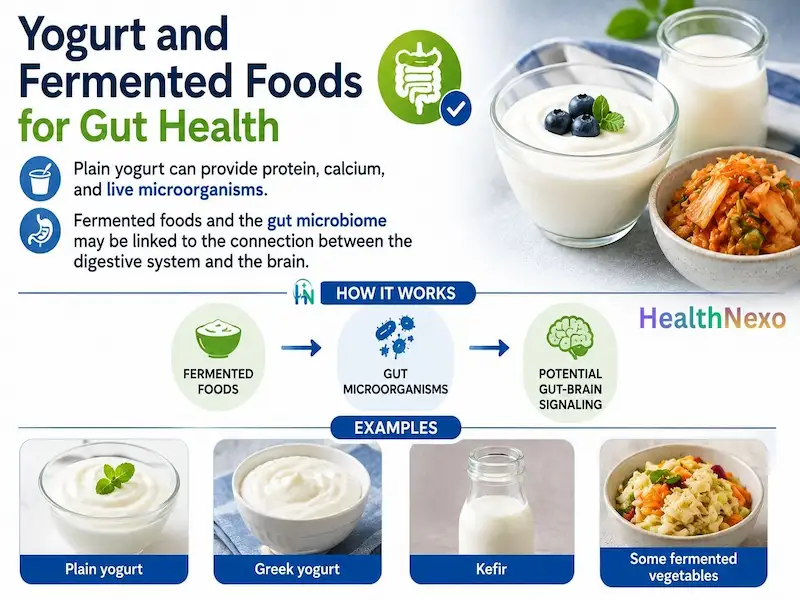
Plain yogurt can provide protein, calcium, and live microorganisms, depending on the product. Fermented foods and the gut microbiome have attracted considerable research interest because of the potential relationship between the digestive system and the brain.
How It Works
- Fermented foods → Gut microorganisms → Potential gut-brain signaling
Examples: Plain yogurt, Greek yogurt, Kefir, and Some fermented vegetables
Easy Tip
Choose unsweetened or low-added-sugar yogurt and add: Berries, Oats, Walnuts, and Chia seeds
What the Evidence Says
Research into probiotics, fermented foods, the gut microbiome, and the gut-brain axis is promising but still developing. It is too early to claim that yogurt or fermented foods directly reduce anxiety or stress.
7. Berries for Polyphenols and Fiber
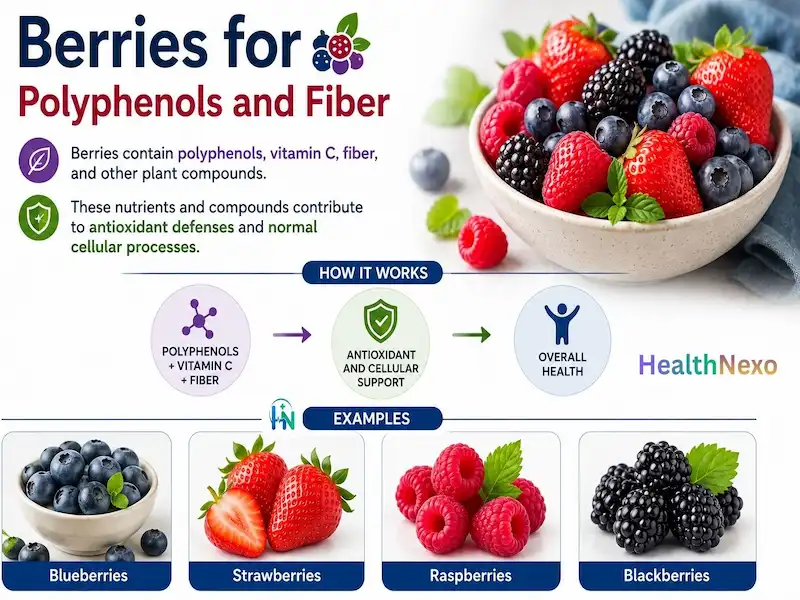
Berries contain polyphenols, vitamin C, fiber, and other plant compounds. These nutrients and compounds contribute to antioxidant defenses and normal cellular processes.
How It Works
- Polyphenols + vitamin C + fiber → Antioxidant and cellular support → Overall health
Examples: Blueberries, Strawberries, Raspberries, and Blackberries
Easy Tip
Add fresh or frozen berries to: Oatmeal, Yogurt, Smoothies, and Whole-grain cereal
What the Evidence Says
Berries are nutrient-dense fruits that fit well into a healthy dietary pattern. However, current evidence does not justify claiming that berries directly reduce anxiety or stress.
8. Bananas for Vitamin B6 and Potassium
Bananas provide vitamin B6, potassium, carbohydrates, and fiber. Vitamin B6 is involved in numerous enzyme reactions, including processes related to normal protein metabolism and nervous-system function.
How It Works
- Vitamin B6 → Enzyme activity → Normal metabolic and nervous-system functions
Easy Tip:
Enjoy a banana with: Plain yogurt, Oatmeal, Peanut butter, Walnuts, and Other nuts or seeds
What the Evidence Says
Bananas can contribute useful nutrients to a balanced diet, but there is no strong evidence that eating bananas specifically reduces stress or anxiety.
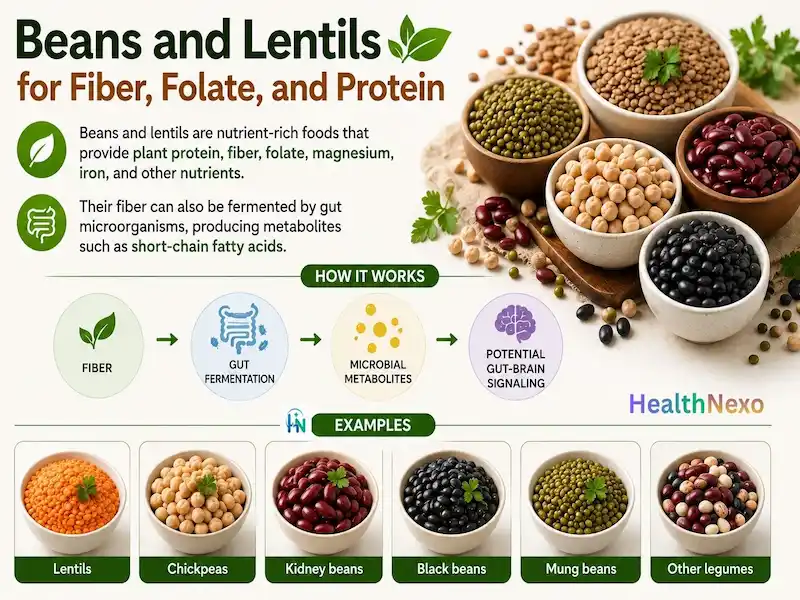
9. Beans and Lentils for Fiber, Folate, and Protein
Beans and lentils are nutrient-rich foods that provide plant protein, fiber, folate, magnesium, iron, and other nutrients. Their fiber can also be fermented by gut microorganisms, producing metabolites such as short-chain fatty acids.
How It Works
- Fiber → Gut fermentation → Microbial metabolites → Potential gut-brain signaling
Examples: Lentils, Chickpeas, Kidney beans, Black beans, Mung beans, and Other legumes
Easy Tip
Add beans or lentils to: Soups, Curries, Salads, Rice dishes, and Whole-grain meals
What the Evidence Says
Legumes are an important part of many healthy dietary patterns and provide several nutrients important for overall health. Their specific effects on mental well-being require further research.
10. Dark Chocolate for Cocoa Flavanols
Dark chocolate with a relatively high cocoa content contains cocoa flavanols and other polyphenols. These plant compounds have been studied for their potential effects on vascular and cellular function.
How It Works
- Cocoa flavanols → Vascular and cellular signaling → Potential physiological benefits
Easy Tip
If you enjoy dark chocolate, choose a small portion and check the nutrition label for added sugar and calories.
What the Evidence Says
Cocoa flavanols are being studied for cardiovascular, vascular, and cognitive effects. However, dark chocolate should not be presented as a proven treatment for stress, anxiety, or depression.
Why the Overall Dietary Pattern Matters
One food rarely determines the quality of a person’s diet. The overall dietary pattern matters much more. A Mediterranean-style eating pattern typically emphasizes:
- Vegetables
- Fruits
- Whole grains
- Beans and lentils
- Nuts and seeds
- Fish
- Healthy fats
- Minimally processed foods
Recent systematic evidence has found associations between Mediterranean-style dietary patterns and better mental-health outcomes, including depressive symptoms and some measures of well-being. However, researchers continue to investigate causality and the most effective dietary strategies.
This approach also aligns with broader dietary guidance emphasizing nutrient-dense whole foods while limiting highly processed foods and foods high in added sugars.
The Bigger Picture
- Balanced dietary pattern → Greater nutrient variety → Support for brain, digestive, and overall health
A Simple Daily Eating Pattern
You do not need a special “calming diet.” Instead, aim for variety across your meals.
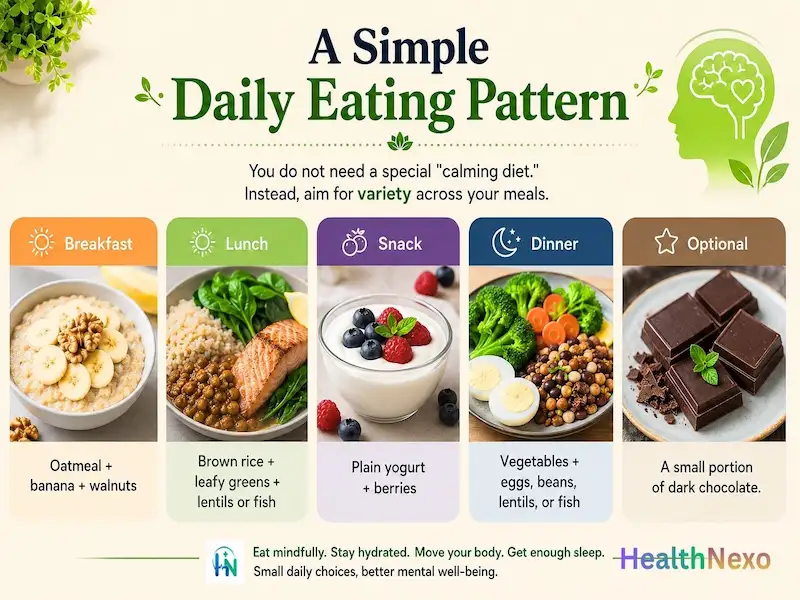
This type of eating pattern can provide protein, healthy fats, fiber, vitamins, minerals, omega-3 fatty acids, and plant compounds.
Why This Eating Pattern May Be Helpful
The goal is not to create a “calming diet.” Instead, a diverse dietary pattern helps ensure that the body receives a broad range of nutrients needed for:
- Normal brain function
- Nervous-system function
- Energy metabolism
- Digestive health
- Cellular maintenance
- Overall physical health
Nutrient variety—not one specific food—is the key principle.
Foods and Habits to Moderate
For overall health, consider limiting excessive intake of:
- Highly processed foods
- Foods high in added sugar
- Excessive caffeine
- Large amounts of refined carbohydrates
- Excessive alcohol
The goal is balance rather than complete avoidance.
Watch Your Caffeine Intake
- Caffeine affects people differently. Higher intakes may contribute to restlessness, sleep problems, or feelings of anxiety in some individuals.
- If caffeine seems to make you feel more anxious or interferes with sleep, consider reducing your intake, particularly later in the day.
- Good sleep is an important part of mental well-being, so avoiding caffeine close to bedtime may be helpful for people who are sensitive to its effects.
What the Evidence Really Says
One of the most important distinctions in nutrition is the difference between a nutrient’s biological function and a food’s clinical effect.
For example:
- Omega-3 → important biological functions → Supports normal physiology
This does not automatically mean:
- Eating fish → immediate calming effect
Similarly:
- Magnesium → important cellular and nervous-system functions
Does not mean:
- Eating spinach → immediate anxiety relief
Nutrition is complex, and mental health is influenced by biological, psychological, social, and environmental factors.
Therefore, it is more accurate to describe these foods as nutrient-rich foods that support normal brain and overall health, rather than “foods that cure anxiety” or “foods that eliminate stress.”
Final Takeaway
There is no “magic” calming food.
Foods That Support a Calm Mind can provide important nutrients for normal brain, nervous-system, digestive, and overall health. Consumption of a healthy diet containing fatty fish, nuts, whole grains, green vegetables, eggs, yoghurt, fruits, bananas, legumes, and beans can provide good nutritional intake. Mediterranean diet can have positive effects on mental health, but diet alone cannot be a substitute for professional treatment for anxiety, depression, and other mental disorders.
Remember:
- Variety + Balance + Nutrient Density + Healthy Lifestyle > One “Calming Food”
However, good sleep, exercise, social interaction, handling stress, and proper professional intervention are other aspects that contribute to psychological well-being.
Frequently Asked Questions (FAQs)
Q1. What foods support a calm mind?
Fatty fish, walnuts, whole grains, leafy greens, eggs, yogurt, berries, bananas, beans, and lentils provide nutrients that support normal brain, nervous system, digestive, and overall health.
Q2. Can food reduce stress or anxiety?
A healthy dietary pattern may contribute to overall mental well-being, but no single food is a proven treatment for anxiety or immediate stress relief. If anxiety continues, it’s a good idea to speak with a healthcare professional.
Q3. Which foods are rich in omega-3 fatty acids?
Salmon, sardines, mackerel, trout, and herring provide the long-chain omega-3 fatty acids EPA and DHA. Walnuts provide ALA, a plant-based omega-3 fatty acid.
Q4. How does diet affect brain health?
Food provides nutrients involved in energy metabolism, cell membranes, cellular signaling, neurotransmitter-related processes, nervous-system function, and digestive health.
Q5. Can a Mediterranean-style diet support mental health?
Evidence suggests that Mediterranean-style dietary patterns are associated with better mental-health outcomes, and some randomized trials have reported improvements in depressive symptoms. However, the evidence is not strong enough to consider the diet a standalone treatment for mental-health disorders.
Q6. Is dark chocolate good for a calm mind?
Dark chocolate can provide cocoa flavanols and polyphenols, but it has not been established as a treatment for stress or anxiety. Choose modest portions and consider products with higher cocoa content and less added sugar.
Q7. Are bananas good for brain health?
Bananas provide vitamin B6, potassium, carbohydrates, and fiber. Vitamin B6 contributes to normal biochemical and nervous-system functions, but bananas are not a proven treatment for stress or anxiety.
Q8. Do fermented foods affect the gut-brain connection?
Yogurt, kefir, and other fermented foods are being studied for their potential effects on the gut microbiome and gut-brain communication. The science is still developing, so stronger evidence is needed before making specific mental-health claims.
Medical Disclaimer
This is an informative article only. This article cannot be used for diagnosing, treating, curing, or preventing any psychological or psychiatric illness including anxiety and depression. A single food item cannot be a substitute for medical help. If you suffer from anxiety, depression, stress, or mood changes that affect your day-to-day activities, then seek immediate medical attention.
References
- Jacka FN, et al. BMC Medicine. 2017.
- Cryan JF, et al. Physiological Reviews. 2019.
- Lassale C, et al. Molecular Psychiatry. 2019.
- Gómez-Pinilla F. Nature Reviews Neuroscience. 2008.
- Swanson D, Block R, Mousa SA. Advances in Nutrition. 2012.
- Bizzozero-Peroni B, et al. Nutrition Reviews. 2025.
Tags:

Md. Rakibul Hasan, BSc (Hons), MS (Thesis)
Biochemistry & Molecular Biology, University of Chittagong, Bangladesh
Senior Biochemist | Health Content Writer | Evidence-Informed Health Information Creator
Popular Diagnostic Centre Limited, Bangladesh.
He specializes in clinical biochemistry, laboratory diagnostics, and medical testing. Alongside his professional work, he is actively involved in health education and scientific communication.
As a Health Content Writer and Research-Based Health Information Creator, he simplifies complex medical and biochemical topics into clear, evidence-informed, and reader-friendly health information.