
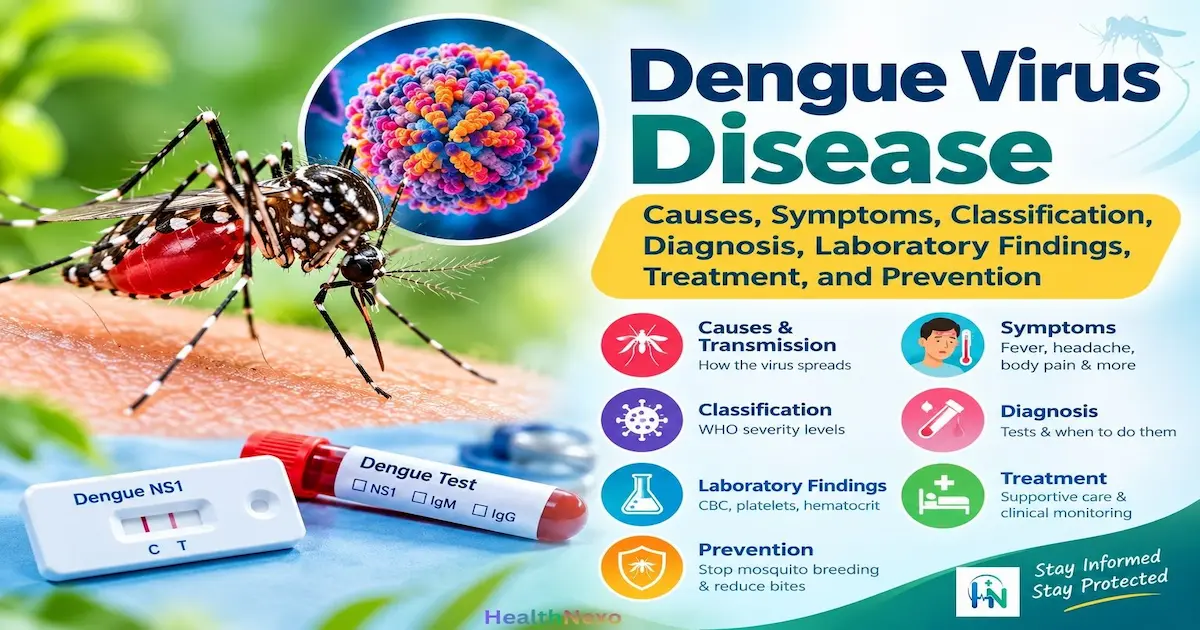
Dengue virus disease is an infection caused by the dengue virus that spreads to humans mainly through bites from infected Aedes mosquitoes. Dengue occurs in tropical and subtropical regions worldwide, including Bangladesh. Its severity ranges from a mild fever to severe disease that can cause plasma leakage, serious bleeding, shock, or organ damage. Early recognition is essential because complications may develop as the fever subsides, typically during the critical phase. Laboratory tests help confirm the infection and monitor changes that may indicate complications.
This article reviews the causes, transmission, symptoms, WHO classification, diagnostic tests, laboratory findings, treatment, and prevention of dengue virus disease.
Quick Summary
- Cause: Dengue virus exists in four main serotypes: DENV-1, DENV-2, DENV-3, and DENV-4.
- Transmission: The infection spreads primarily through bites from infected female Aedes mosquitoes.
- Common Symptoms: Typical symptoms include fever, headache, pain behind the eyes, muscle and joint aches, nausea, and skin rash.
- Warning signs: Severe abdominal pain, persistent vomiting, mucosal bleeding, fluid accumulation, and lethargy or restlessness.
- Diagnosis: RT-PCR/NAAT, NS1 antigen, or IgM antibody testing, selected according to the day of illness.
- Laboratory monitoring: Complete blood count (CBC), platelet count, hematocrit, and additional tests when clinically indicated.
- Treatment: Dengue management focuses on adequate fluid intake, rest, and medical monitoring to detect complications early.
- Prevention: Eliminate mosquito breeding sites and reduce exposure to mosquito bites.
Causes of Dengue Virus Disease
Dengue virus disease is caused by the dengue virus (DENV), an enveloped, positive-sense, single-stranded RNA virus belonging to the family Flaviviridae and genus Orthoflavivirus. Dengue virus occurs in four distinct serotypes—DENV-1, DENV-2, DENV-3, and DENV-4. Infection with any of these types can lead to mild symptoms or develop into severe dengue. Dengue spreads primarily through bites from infected female Aedes aegypti mosquitoes. The dengue virus can also be spread by infected Aedes albopictus mosquitoes.
- Mosquito breeding sites: Water-filled containers in and around homes, discarded tires, flowerpots, and other places where stagnant water collects can support mosquito breeding. These sites do not directly cause dengue but may increase transmission by allowing mosquito populations to grow.
Disease severity depends on several factors, including the infecting serotype, previous dengue infection, the host’s immune response, and individual health factors.
Immunity and Repeat Infection of Dengue Virus Disease
After recovering from dengue, a person usually develops long-lasting immunity to the infecting serotype, but remains susceptible to infection from the other three serotypes. A subsequent infection with a different serotype may increase the risk of severe dengue in some individuals. One proposed mechanism is antibody-dependent enhancement (ADE), in which certain pre-existing antibodies may facilitate viral entry into susceptible cells under specific conditions.
A 2021 systematic review and meta-analysis reported associations between secondary dengue infection and severe disease (OR 3.23; 95% CI 2.28–4.57). Pre-existing diabetes and renal disease were also associated with severe dengue. These population-level findings do not predict an individual’s outcome, and severe dengue can also occur during a primary infection.
Dengue Transmission and Mosquito Vectors
Dengue is transmitted primarily by infected female Aedes aegypti mosquitoes. Mosquitoes become infected when they feed on the blood of a person with dengue virus circulating in the bloodstream. The virus then multiplies inside the mosquito and reaches its salivary glands, allowing transmission to another person through a subsequent bite. Common mosquito breeding sites include:
- Uncovered water-storage tanks and buckets.
- Discarded tires, bottles, cans, and other water-holding containers.
- Flowerpots and plant trays.
- Gutters and drains where water accumulates.
- Containers that collect rainwater.
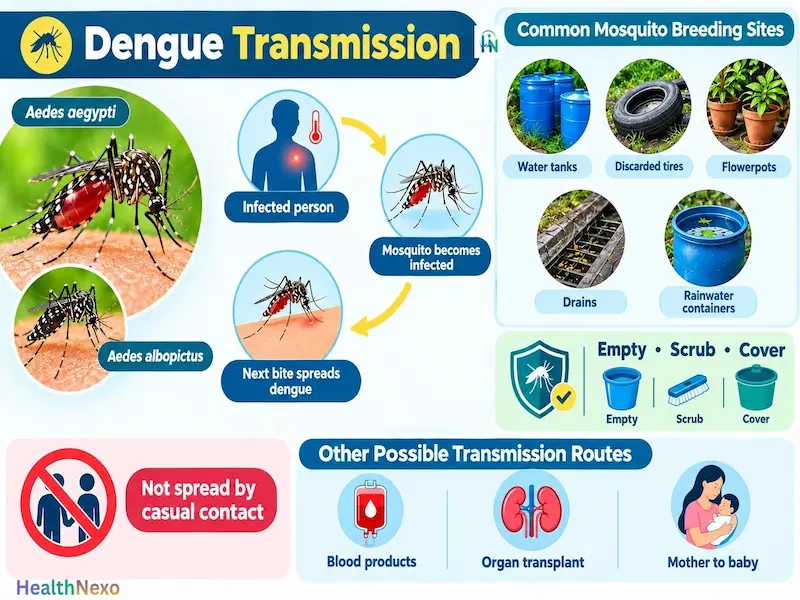
These breeding sites support mosquito reproduction and can increase the risk of dengue transmission. Regularly emptying, cleaning, or covering water-holding containers helps reduce mosquito breeding. Dengue does not usually spread through casual person-to-person contact, such as touching or eating together. Less common routes of transmission include infected blood products, organ transplantation, and transmission from an infected mother to her child.
Pathogenesis of Dengue Virus Disease
Dengue pathogenesis involves viral replication, host immune responses, changes in vascular permeability, thrombocytopenia, and, in severe cases, organ dysfunction.
- Virus replication and inflammation: As a result of the infection, the immune response takes place, and such symptoms as fever, headache, muscle pain, and tiredness appear.
- Increased vascular permeability: Increased permeability of blood vessels occurs temporarily as a result of which plasma moves out of the bloodstream and goes into the interstitial space of susceptible persons. Due to great losses of fluids from the blood vessels, blood volume decreases, causing hemoconcentration, hypotension, shock, or respiratory failure.
- Thrombocytopenia: Low levels of platelet production, immune-mediated destruction of platelets, and platelet consumption can occur, leading to thrombocytopenia.
- Organ dysfunction: Dengue may cause dysfunction of the liver, kidney, heart, and brain.
Clinical outcome depends on fluid leakage from blood vessels, hemorrhage, and organ dysfunction, as well as the response of the patient to treatment.
Clinical Features and Symptoms of Dengue Virus Disease
Symptoms usually manifest between 4 and 10 days post infection, but this is variable. Individuals infected do not show any symptoms at all; however, some suffer from a serious febrile disease. Common symptoms are:
- Sudden high fever.
- Severe headache.
- Pain behind the eyes.
- Muscle and joint pain.
- Nausea or vomiting.
- Skin rash.
- Loss of appetite.
- Weakness and fatigue.
- Minor bleeding, for example, nosebleeds and gum bleeding, is sometimes seen in some people.
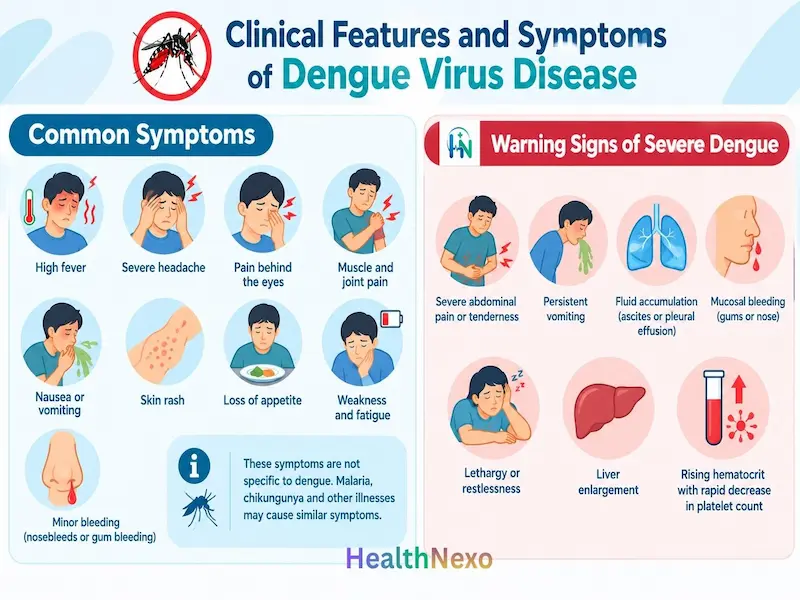
This is not specific only to dengue. Malaria, chikungunya, and several other infections can cause symptoms similar to those of dengue. Therefore, medical assessment and appropriate diagnostic tests for dengue are important for identifying the underlying cause.
Warning Signs of Severe Dengue
Warning signs may develop as the fever subsides, usually during days 3–7 of illness. These signs indicate an increased risk of progression to severe dengue and require prompt medical assessment. Common warning signs include:
- Severe abdominal pain or tenderness.
- Persistent vomiting.
- Fluid buildup in the abdomen (ascites) or around the lungs (pleural effusion)
- Mucosal bleeding, including bleeding from the gums or nose.
- Lethargy or restlessness.
- Liver enlargement.
- A rising hematocrit accompanied by a rapid decrease in platelet count.
Critical Phase of Dengue
The critical phase typically begins around defervescence, when the fever decreases, and generally lasts 24–48 hours. Increased vascular permeability can cause plasma leakage, reducing circulating blood volume and potentially leading to shock or respiratory distress.
Seek emergency medical care for breathing difficulty, cold or clammy skin, fainting, confusion, markedly reduced urine output, or significant bleeding. A decrease in fever does not necessarily indicate recovery, and treatment should not be delayed while waiting for platelet results.
WHO Classification of Dengue Virus Disease
The World Health Organization (WHO) classifies symptomatic dengue into three categories:
1. Dengue Without Warning Signs
Patients may have fever, nausea, rash, body aches, or leukopenia without warning signs. Outpatient management may be appropriate when the patient is clinically stable, can maintain oral hydration, has adequate urine output, and can return for follow-up.
2. Dengue With Warning Signs
Warning signs include severe abdominal pain, persistent vomiting, mucosal bleeding, fluid accumulation, lethargy or restlessness, liver enlargement, and a rising hematocrit with a rapid decrease in platelet count. These patients require prompt clinical assessment and close monitoring; hospital admission is generally recommended according to clinical status and risk factors.
3. Severe Dengue
Severe dengue may involve one or more of the following complications:
- Significant plasma leakage leading to shock or fluid buildup that causes breathing difficulties.
- Severe bleeding.
- Severe organ impairment, such as significant liver injury, impaired consciousness, or cardiac involvement.
Severe dengue is a medical emergency. Management decisions should be based on clinical condition, evidence of plasma leakage or bleeding, and organ involvement—not platelet count alone.
Laboratory Findings in Dengue
Laboratory tests help support dengue diagnosis, monitor disease progression, and identify complications. Results should be interpreted according to the day of illness, hydration status, clinical findings, and changes in serial measurements.
Complete Blood Count (CBC)
CBC helps monitor white blood cell count, platelet count, and hematocrit.
- White blood cells: Leukopenia is common in dengue but is not specific to the infection.
- Platelets: Thrombocytopenia may develop or worsen during illness. A low platelet count alone does not confirm dengue or establish disease severity.
- Hematocrit: A rising hematocrit may indicate hemoconcentration due to plasma leakage. Dehydration can also increase hematocrit, while bleeding or fluid administration may lower it.
Serial measurements are more informative than isolated results. A rising hematocrit accompanied by a rapid platelet decline may suggest plasma leakage, particularly when the clinical condition deteriorates.
Liver Function Tests
AST and ALT may be elevated in dengue, with AST often higher than ALT. A 2021 systematic review and meta-analysis found that higher AST and lower platelet counts were associated with severe dengue in early illness. However, study limitations affect their predictive value. Neither finding alone reliably predicts an individual patient’s outcome. To learn more about liver health assessment, explore these liver function tests and other diagnostic methods used to evaluate liver disease.
Renal Function and Other Investigations
Creatinine, urea, and electrolytes may be assessed when dehydration, reduced urine output, shock, or kidney injury are suspected. Learn more about the tests used for early kidney disease diagnosis and how they help evaluate kidney health. Additional investigations depend on clinical findings and may include:
- Coagulation tests (PT/INR and aPTT): When significant bleeding or a coagulation disorder is suspected.
- Blood glucose: When clinically indicated.
- Blood grouping and crossmatching: When significant bleeding may require transfusion.
- Lactate: In selected patients with suspected impaired tissue perfusion or shock.
- ECG or imaging: When cardiac involvement or other complications are suspected.
Not every patient requires all these tests. Investigation and monitoring should be guided by clinical condition, disease severity, and the suspected complications.
Diagnostic Tests for Dengue Virus Disease
The choice of diagnostic tests depends on the time since symptom onset, test availability, and clinical findings. Tests for dengue virus disease may detect viral RNA, viral antigens, or antibodies produced by the immune system. Using the appropriate test at the right stage of illness improves diagnostic accuracy.
1. Dengue RT-PCR and Other NAATs
Nucleic acid amplification tests (NAATs), including reverse transcription polymerase chain reaction (RT-PCR), detect dengue viral RNA in clinical samples. These tests are most useful during the first seven days after symptom onset, when the virus is usually detectable in the blood.
A positive NAAT confirms acute dengue infection, and molecular testing can identify the infecting serotype. However, a negative result does not rule out dengue, particularly if the sample is collected late in the illness or viral levels have declined.
2. Dengue NS1 Antigen Test
The dengue NS1 antigen test detects the non-structural protein 1 produced during dengue virus infection. It is particularly useful during the acute phase, especially within the first seven days after symptom onset.
A positive NS1 result supports the diagnosis of acute dengue infection, but the test does not identify the infecting serotype. A negative result does not exclude dengue, as sensitivity may vary with the timing of testing, the test method, and whether the patient has had a previous dengue infection.
3. Dengue IgM Antibody Test
Dengue-specific IgM antibodies usually become detectable around days 4–5 after symptom onset, although the timing varies among individuals. IgM testing becomes increasingly useful as the illness progresses and is the primary diagnostic test after day 7 in many clinical settings.
A positive IgM result generally suggests a presumptive recent dengue infection. However, cross-reactivity with antibodies to other flaviviruses can affect interpretation. Results should be assessed alongside the patient’s symptoms, illness duration, and other test findings.
4. Dengue IgG Antibody Test
A single dengue IgG result is not recommended for diagnosing acute dengue infection because IgG may remain detectable long after a previous infection and can cross-react with antibodies to other flaviviruses.
In selected cases, paired serum samples showing a significant change in antibody levels may help assess infection. However, interpretation can be complicated by previous dengue infections, vaccination, and exposure to related flaviviruses. IgG results should therefore be interpreted in the appropriate clinical context.
Dengue Testing by Stage of Illness
During the first 7 days: The CDC recommends either a NAAT (RT-PCR) test with an IgM antibody test or an NS1 antigen test with an IgM antibody test.
After day 7: An IgM antibody test is generally recommended. Additional testing may be considered if results are negative or inconclusive despite suspected dengue.
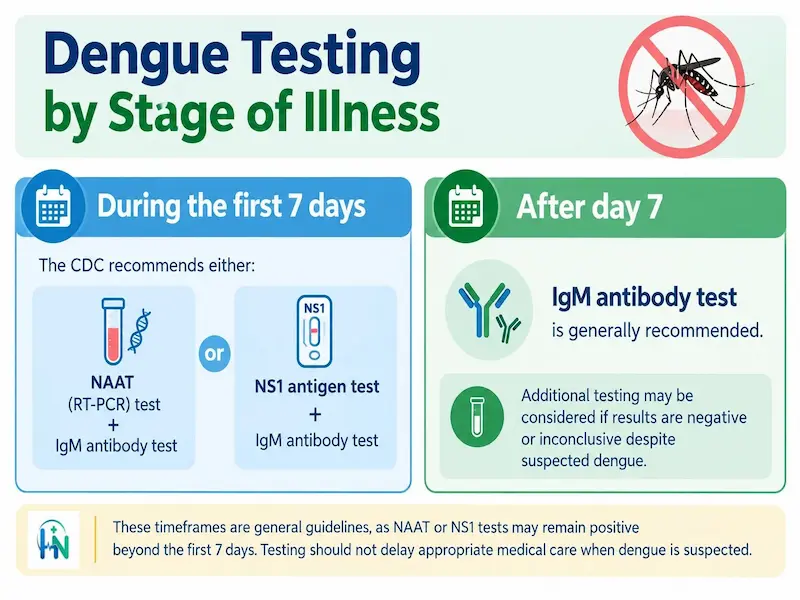
These timeframes are general guidelines, as NAAT or NS1 tests may remain positive beyond the first 7 days. Testing should not delay appropriate medical care when dengue is suspected.
Treatment of Dengue Virus Disease
There is no antiviral drug available as the standard medication for the treatment of dengue infection. The treatment is symptomatic and involves the maintenance of circulation, hydration, and monitoring for danger signals.
1. Hydration and Fluid Management
Patients who can drink safely should maintain adequate oral fluid intake. Intravenous (IV) fluids may be needed if a patient cannot drink enough fluids or shows signs of fluid leakage or poor circulation.
IV fluid type, rate, and duration should be determined by a healthcare professional according to vital signs, urine output, hematocrit trends, and response to treatment. Frequent reassessment is essential because both inadequate hydration and fluid overload can cause complications. Patients with heart or kidney disease may require particularly careful fluid management.
2. Fever and Pain Management
Paracetamol (acetaminophen) may be used to relieve fever and pain in patients with dengue, following recommended dosing instructions. Aspirin and nonsteroidal anti-inflammatory drugs (NSAIDs), such as ibuprofen, should generally be avoided because they may increase the risk of bleeding. Corticosteroids are not routinely recommended for dengue treatment unless they are indicated for another medical condition.
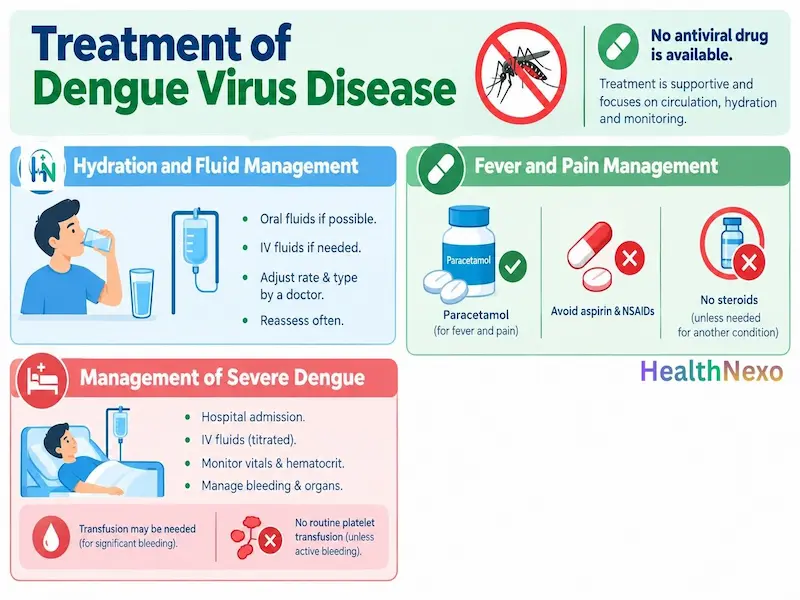
3. Management of Severe Dengue
Management of severe dengue needs urgent admission to the hospital and careful observation. Management options will include appropriately titrated intravenous crystalloid fluid, periodic examination of circulatory status and hematocrit, management of bleeding and support of organs where necessary.
Blood transfusion may be required for clinically significant bleeding, depending on the patient’s condition. Routine prophylactic platelet transfusion is not recommended solely because the platelet count is low in the absence of active bleeding. The 2025 WHO guideline suggests against prophylactic platelet transfusion in patients with severe arboviral disease and thrombocytopenia without active bleeding; the certainty of evidence is low.
The type, quantity, and rate of intravenous fluids as well as transfusion requirements need to be decided by health professionals.
Prevention and Control of Dengue virus Disease
Dengue disease control is attained through limiting breeding areas of mosquitoes, avoidance of exposure to mosquitoes carrying the disease, and vector control measures carried out in the community.
- Elimination of Mosquito Breeding Sites
- Empty all water-holding containers.
- Make sure water storage tanks are covered.
- Remove old tires, tin cans and other containers holding rain water.
- Ensure that gutters and drains do not hold water.
- Adhere to mosquito control measures as advised by local health authorities.
- Reducing Exposure to Mosquitoes
- Apply mosquito repellents as instructed.
- Wear clothing that exposes minimal skin.
- Ensure that door and window screens are installed.
- Utilize mosquito nets where necessary.
- Take more caution during peak mosquito periods.
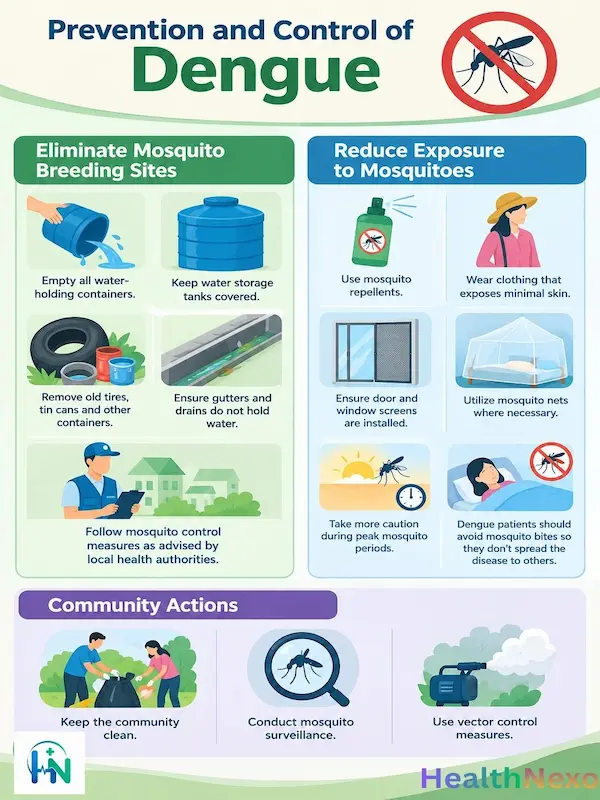
The patients who are infected by dengue fever must also ensure that they do not get bitten by mosquitoes because they might transmit the disease to other people. Community cleanliness, mosquito surveillance, and vector control are measures that can be used for prevention purposes.
Dengue Vaccination
The WHO recommends Qdenga (TAK-003) for children aged 6–16 years in areas with high dengue transmission. The vaccine is given in two doses, three months apart, but it does not prevent every infection.
Key points:
- Eligibility: Depends on national guidelines, local approval, and individual health factors.
- Precautions: Qdenga is not recommended during pregnancy, breastfeeding, or certain immunodeficiency conditions.
- Prevention: Vaccination should complement mosquito control and bite-prevention measures.
- Dengvaxia: Has different eligibility requirements because vaccination of people without previous dengue infection may increase the risk of severe disease during a later infection. The manufacturer discontinued it due to limited global demand, according to the CDC.
Consult a qualified healthcare professional and follow current national vaccination guidance before making a vaccination decision.
Final Thoughts
Management and diagnosis of dengue virus disease requires prompt and careful actions. Laboratory results such as low platelets and elevated hematocrit levels have to be considered in relation to the presentation and stage of the infection. Early detection of symptoms, avoiding drugs that induce bleeding, and avoiding mosquito bites are just a few of the methods to avoid complications. Reduction of fever does not equate to cure.
Frequently Asked Questions (FAQs)
Q1. What is dengue virus disease?
Dengue virus infection occurs when the dengue virus enters the body, usually through the bite of an infected mosquito. The disease can be mild or serious depending on whether there is leakage of blood, bleeding, or organ damage.
Q2. What are the early symptoms of dengue?
Some common symptoms include fever, headache, pain in the eyes, body ache, nausea, and rashes. Severe stomach ache, constant vomiting, bleeding, and drowsiness must not be ignored and require immediate medical attention.
Q3. Which test is used to diagnose dengue?
In the first week, the test usually includes NAAT, like RT-PCR, along with IgM, or NS1 Antigen along with IgM. For the seventh day, the testing for IgM becomes the standard procedure. The choice of the test is based on various factors.
Q4. Does a low platelet count confirm dengue or indicate severe disease?
No. A low platelet count is often seen in dengue, but it does not prove that a person is infected with it nor does it alone establish the severity of the disease.
Q5. How is dengue treated and prevented?
Dengue is managed with appropriate hydration, paracetamol for fever and pain when suitable, and clinical monitoring. Aspirin and NSAIDs such as ibuprofen should generally be avoided. Prevention includes eliminating mosquito breeding sites, using repellents, and reducing exposure to mosquito bites.
References
- World Health Organization. WHO Guidelines for Clinical Management of Arboviral Diseases: Dengue, Chikungunya, Zika and Yellow Fever. 2025.
- World Health Organization. Dengue and Severe Dengue.
- Centers for Disease Control and Prevention. Clinical Testing Guidance for Dengue.
- Centers for Disease Control and Prevention. Clinical Signs and Symptoms of Dengue.
- Centers for Disease Control and Prevention. Clinical Care of Dengue.
- Tsheten T, Clements ACA, Gray DJ, et al. Clinical predictors of severe dengue: a systematic review and meta-analysis. Infectious Diseases of Poverty. 2021;10:123. https://doi.org/10.1186/s40249-021-00908-2
- Thach TQ, Eisa HG, Hmeda AB, et al. Predictive markers for the early prognosis of dengue severity: a systematic review and meta-analysis. PLOS Neglected Tropical Diseases. 2021;15(10). https://doi.org/10.1371/journal.pntd.0009808
Medical Disclaimer
This content is intended for general educational purposes and should not be considered a substitute for advice, diagnosis, or treatment from a qualified healthcare professional. Dengue symptoms and severity can vary, so consult a qualified healthcare professional for appropriate evaluation and care. Get immediate medical care if dengue warning signs appear. Do not postpone seeking professional help because of anything you read in this article.

Md. Rakibul Hasan, BSc (Hons), MS (Thesis)
Biochemistry & Molecular Biology, University of Chittagong, Bangladesh
Senior Biochemist | Health Content Writer | Evidence-Informed Health Information Creator
Popular Diagnostic Centre Limited, Bangladesh.
He specializes in clinical biochemistry, laboratory diagnostics, and medical testing. Alongside his professional work, he is actively involved in health education and scientific communication.
As a Health Content Writer and Research-Based Health Information Creator, he simplifies complex medical and biochemical topics into clear, evidence-informed, and reader-friendly health information.




Very good article