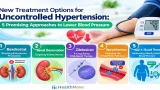
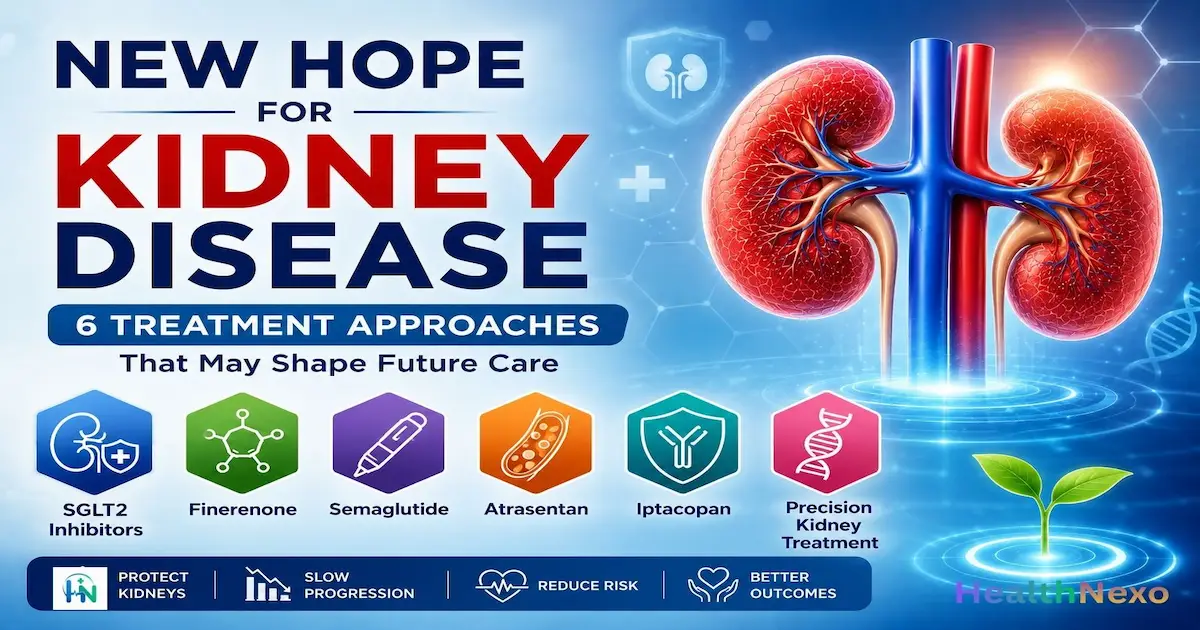
New hope for kidney disease is emerging as researchers explore more targeted approaches to kidney disease treatment. Research is currently underway on the various biological mechanisms associated with kidney damage, inflammation, and fibrosis. Scientists are going beyond just focusing on the control of blood pressure and blood sugar.
Some recent research has focused on SGLT2 inhibitors, finerenone, GLP-1 receptor agonists, endothelin-An antagonist, and complement inhibitors. These treatments are not cures and might be appropriate only for selected patients, but they represent additional treatment choices for kidney disease patients.
Key Takeaways
- Therapy for kidney disease has become more targeted at specific biological pathways.
- The use of SGLT2 inhibitors has provided kidney advantages in various CKD patient groups.
- In the FLOW study, semaglutide was associated with a 24% reduction in the primary renal endpoint.
- Finerenone is aimed at the mineralocorticoid receptor signaling that promotes inflammation and fibrosis.
- Pathways like endothelin and complement are studied for treatment of particular kidney diseases.
- In the phase 3 trial in 2026, iptacopan was found to slow down the rate of decline in eGFR in IgA nephropathy patients.
- This does not constitute a cure for kidney disease.
Why Kidney Disease Treatment Is Changing
CKD is brought about by diabetes, high blood pressure, autoimmune disorders, inherited conditions, and many others. Progressive kidney damage may involve:
- Glomerular injury → protein leakage → inflammation → fibrosis → nephron loss → declining kidney function
With increasing knowledge, there is now the ability to create treatment options that prevent diseases from happening. The current KDIGO guidelines call for the use of SGLT2 inhibitors and nonsteroidal mineralocorticoid receptor antagonists for certain patients with type 2 diabetes and CKD.
6 Treatment Approaches Offering New Hope for Kidney Disease
New treatments are being investigated by scientists who might offer hope to people suffering from kidney disease. They can help safeguard kidney function and prevent the progress of the Kidney disease.
1. SGLT2 Inhibitors: A Kidney-Protective Approach
The SGLT2 inhibitors were initially designed to reduce blood glucose levels. Clinical studies have also confirmed renal and cardiovascular benefits in multiple CKD patient groups.
Possible Mechanism
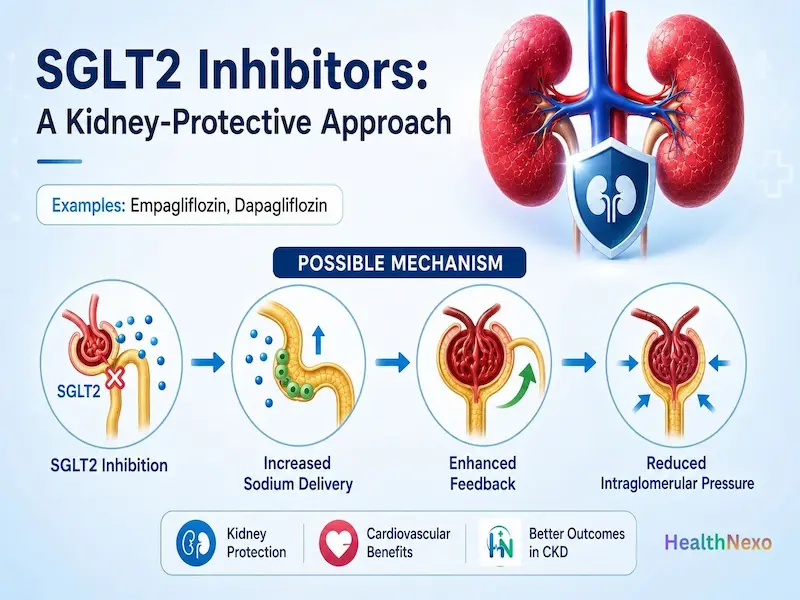
SGLT2 inhibition increases sodium delivery to the macula densa and can enhance tubuloglomerular feedback:
- SGLT2 inhibition → increased sodium delivery → enhanced feedback → reduced intraglomerular pressure
Lower intraglomerular pressure may reduce stress on the glomerular filtration barrier.
Examples: Empagliflozin, dapagliflozin
Research Evidence
EMPA-KIDNEY was a study involving 6,609 people with CKD. In a median follow-up period of 2 years, the primary endpoint of kidney disease progression or cardiovascular mortality was observed in:
- 13.1% with empagliflozin
- 16.9% with placebo
- HR 0.72 (95% CI, 0.64–0.82; P<0.001)
These results suggest the use of SGLT2 inhibitors to protect kidneys of suitable CKD patients.
Limitation: SGLT2 inhibitors are not suitable for all people, and they must be chosen on the basis of things like eGFR, albuminuria and diseases present.
2. Finerenone: Targeting Mineralocorticoid-Receptor Signaling
Finerenone is a mineralocorticoid receptor non-steroidal blocker for adult patients with type 2 diabetes and CKD.
Possible Mechanism
Excess mineralocorticoid-receptor signaling may contribute to:
- Inflammation
- Oxidative stress
- Fibrosis
- Vascular dysfunction
Finerenone acts on the mineralocorticoid receptor and may decrease signaling associated with these processes.
Research Evidence
The FIDELIO-DKD study involved 5,734 patients with type 2 diabetes mellitus and CKD. The primary renal event was experienced during a median follow-up of 2.6 years by:
- 17.8% with finerenone
- 21.1% with placebo
- HR 0.82 (95% CI, 0.73–0.93; P=0.001)
The main endpoint was end-stage kidney disease, reduction of ≥40% in eGFR, or kidney death. These results make a case for the use of finerenone as an approach in certain patients who have diabetes and CKD. This therapy will work for only some types of kidney disease and not all.
Important Consideration: Finerenone increases serum potassium levels. Proper patient selection and monitoring of potassium levels are, therefore, important.
3. Semaglutide: New Evidence for Kidney Benefits
Semaglutide is one such GLP-1 receptor agonist that is employed in the treatment of Type 2 diabetes mellitus and obesity. Renal effects associated with Semaglutide have been an important subject of clinical research.
What Did the FLOW Trial Find?
The FLOW study consisted of 3,533 patients suffering from type 2 diabetes and CKD. After a median follow-up period of about 3.4 years, the composite renal endpoint event rate was:
- 331 participants receiving semaglutide
- 410 receiving placebo
Semaglutide was associated with a 24% lower relative risk of the primary composite kidney outcome.
- HR 0.76 (95% CI, 0.66–0.88; P=0.0003)
The annual decline in eGFR was also slower by approximately 1.16 mL/min/1.73 m² per year.
Possible Mechanism or Potential effects may involve:
- GLP-1 receptor activation → metabolic effects + weight reduction + cardiovascular effects + possible changes in inflammation and renal hemodynamics
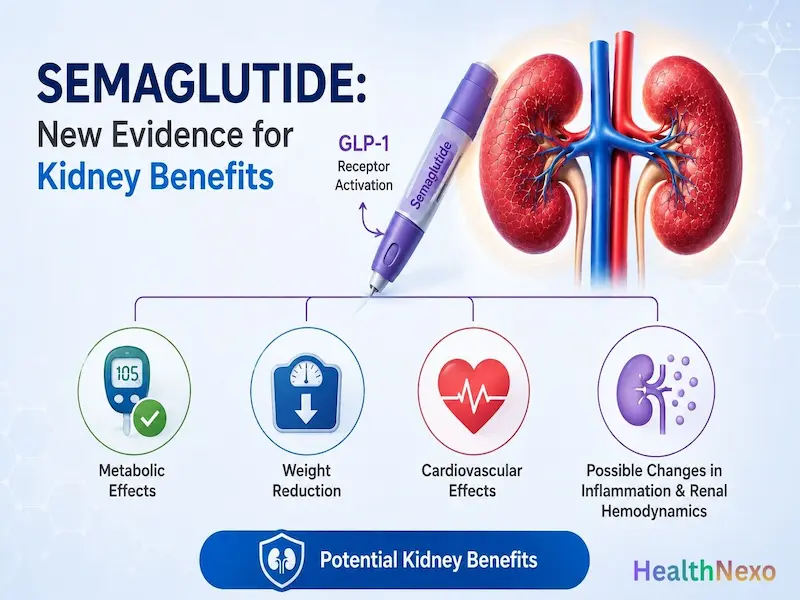
The exact process which leads to these beneficial effects on the kidney remains unknown.
4. Atrasentan: Targeting the Endothelin Pathway
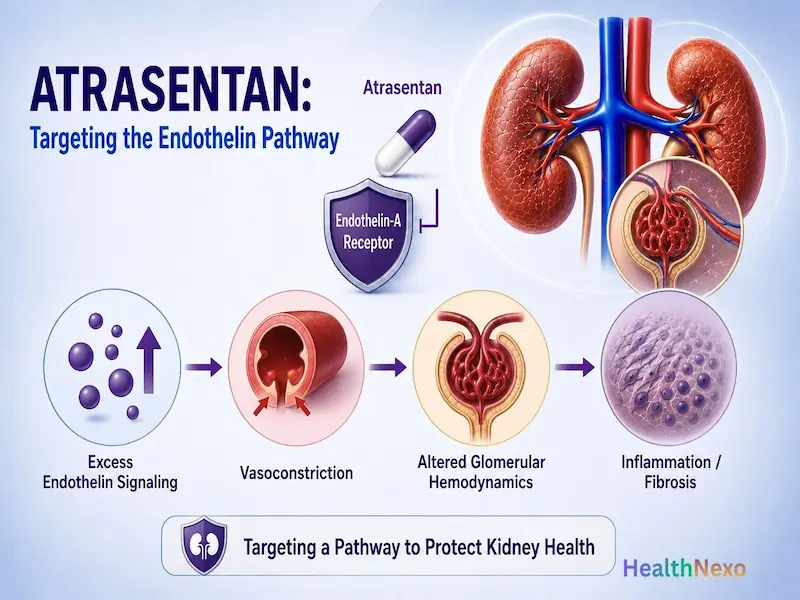
The effect of atrasentan is specific for the endothelin-A receptor. Endothelin has attracted considerable interest because of its potential role in vasculopathy, inflammation, and fibrosis.
Why Is This Pathway Being Studied?
A proposed pathway is:
- Excess endothelin signaling → vasoconstriction → altered glomerular hemodynamics → inflammation/fibrosis
What Did the ALIGN Trial Show?
The ALIGN trial studied atrasentan in adults with IgA nephropathy and significant proteinuria. Among the first 270 participants assessed at week 36, the urinary protein-to-creatinine ratio changed by:
- 38.1% with atrasentan
- 3.1% with placebo
The between-group difference was approximately −36 percentage points.
Proteinuria is a significant indicator linked to kidney damage and the progression of disease. But a decline in proteinuria does not necessarily mean that the therapy prevents kidney failure. Long-term kidney function and safety are still important considerations for assessing the efficacy of endothelin-blocking therapies.
5. Iptacopan: Targeting Complement Activation in IgA Nephropathy
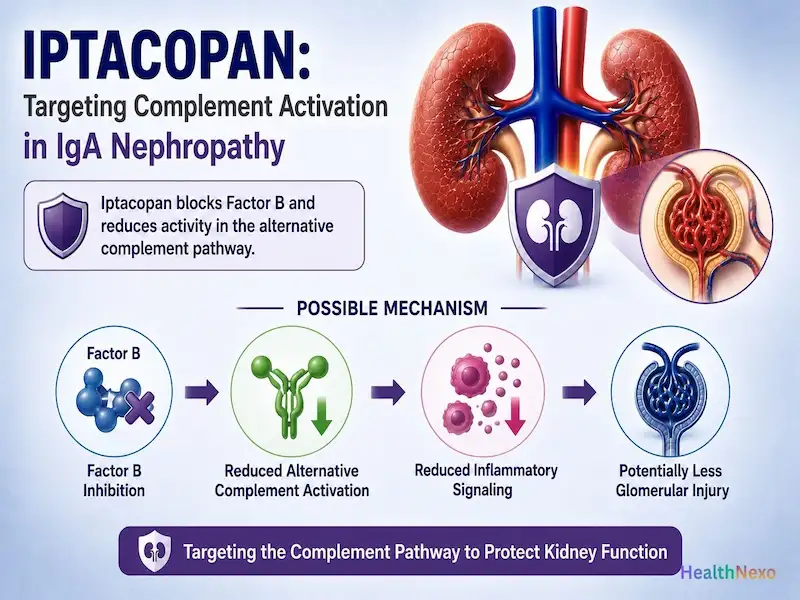
The complement pathway has increasingly been recognized as a significant focus of research in immune-mediated kidney disease. Iptacopan is a medicine designed to block factor B and reduce activity in the alternative complement pathway.
Possible Mechanism
- Factor B inhibition → reduced alternative complement activation → reduced inflammatory signaling → potentially less glomerular injury
What Did the 2026 Phase 3 Data Show?
The final 24-month APPLAUSE-IgAN analysis included 477 participants with IgA nephropathy. Annualized eGFR decline was:
- 3.10 mL/min/1.73 m²/year with iptacopan
- 6.12 mL/min/1.73 m²/year with placebo
- Difference: 3.02 mL/min/1.73 m²/year; adjusted P<0.001
A composite kidney-failure endpoint occurred in:
- 21.4% with iptacopan
- 33.5% with placebo
- HR 0.57 (95% CI, 0.40–0.81)
The study analyzed kidney dysfunction and kidney failure, apart from just changes in proteinuria.
Key Limitation: The results apply to IgA nephropathy only and cannot be extrapolated to all cases of CKD.
6. Precision Kidney Treatment: Matching Therapy to Disease Biology
Another future direction in nephrology can be linked to the concept of personalized medicine. The biological heterogeneity of CKD suggests that two patients with comparable eGFRs can have different reasons for developing kidney disease and different mechanisms of injury.
Scientists are trying to use various biomarkers, genetics and other features to determine:
- Which mechanism is involved?
- Who is at risk of progression?
- Which treatment can be offered?
- If the patient responds to treatment
Note! This sixth strategy can be considered a research direction and not one specific drug or treatment.
Treatment Approaches Based on Disease Mechanisms
- Increased intraglomerular pressure: SGLT2 inhibition may influence kidney hemodynamics.
- Mineralocorticoid signaling: Finerenone targets receptor activity involved in inflammatory and fibrotic signaling.
- Metabolic and cardiovascular pathways: GLP-1 receptor agonists may influence metabolic and cardiovascular factors linked to kidney health.
- Endothelin signaling: Endothelin-A blockade targets a pathway associated with vascular and inflammatory processes.
- Complement activation: Complement inhibitors aim to reduce abnormal complement activity in selected kidney diseases.
- Immune-mediated injury: Disease-specific therapies are being studied for individual glomerular disorders.
This reflects a broader move toward mechanism-based nephrology.
Instead of asking only:
- “How low is the patient’s eGFR?”
research is increasingly asking:
- “What biological process is driving this patient’s kidney injury?”
- What Could These Developments Mean for Future Kidney Care?
The emerging treatment landscape does not point to a single universal kidney treatment.
Future care may involve multiple therapies targeting different pathways:
- RAS blockade → SGLT2 inhibition → disease-specific treatment → eGFR and albuminuria monitoring
The exact combination would depend on the cause of kidney disease and the individual’s risk profile.
Are These Treatments a Cure for Kidney Disease?
No. Kidney diseases are of different kinds, and up to date, there are no treatments that can be effective in curing all forms of CKD. Though some of these treatments have been tested in some cases, others are still under investigation.
Researchers must still consider:
- Long-term effectiveness
- Safety
- Adverse effects
- Patient selection
- Treatment interactions
- Affordability and access
- Applicability to other kidney diseases
For instance, the results from the iptacopan study on 2026 do not necessarily apply to diabetic nephropathy, hypertension nephropathy, and other forms of CKD.
The Bottom Line
New hope for kidney disease is emerging as researchers develop more targeted kidney disease treatment options. Certain SGLT2 antagonists, finerenone, and semaglutide have provided some positive results in certain CKD patients. There is ongoing research on endothelin and complement pathways in certain kidney conditions as well.
In the 2026 APPLAUSE-IgAN results, a slower drop in eGFR was observed in IgA nephropathy patients with iptacopan treatment. None of these medications cure the disease. Yet, certain more recent medications may assist suitable patients in slowing down the course of their disease.
Medical Disclaimer
The following data is for educational purpose only and does not represent any form of medical advice. Treatments of kidney diseases depend on the cause of the disease and other patient-related factors like eGFR, albuminuria, potassium levels, etc. Please seek guidance from a qualified health care professional when making any decisions regarding prescribed medications.
Primary Research Sources
1. EMPA-KIDNEY — Empagliflozin in Chronic Kidney Disease
2. FIDELIO-DKD — Finerenone in CKD and Type 2 Diabetes
3. FLOW — Semaglutide and Kidney Outcomes
4. ALIGN — Atrasentan in IgA Nephropathy
5. APPLAUSE-IgAN — Iptacopan in IgA Nephropathy
6. KDIGO 2024 Clinical Practice Guideline for CKD
Tags:

Md. Rakibul Hasan, BSc (Hons), MS (Thesis)
Biochemistry & Molecular Biology, University of Chittagong, Bangladesh
Senior Biochemist | Health Content Writer | Evidence-Informed Health Information Creator
Popular Diagnostic Centre Limited, Bangladesh.
He specializes in clinical biochemistry, laboratory diagnostics, and medical testing. Alongside his professional work, he is actively involved in health education and scientific communication.
As a Health Content Writer and Research-Based Health Information Creator, he simplifies complex medical and biochemical topics into clear, evidence-informed, and reader-friendly health information.