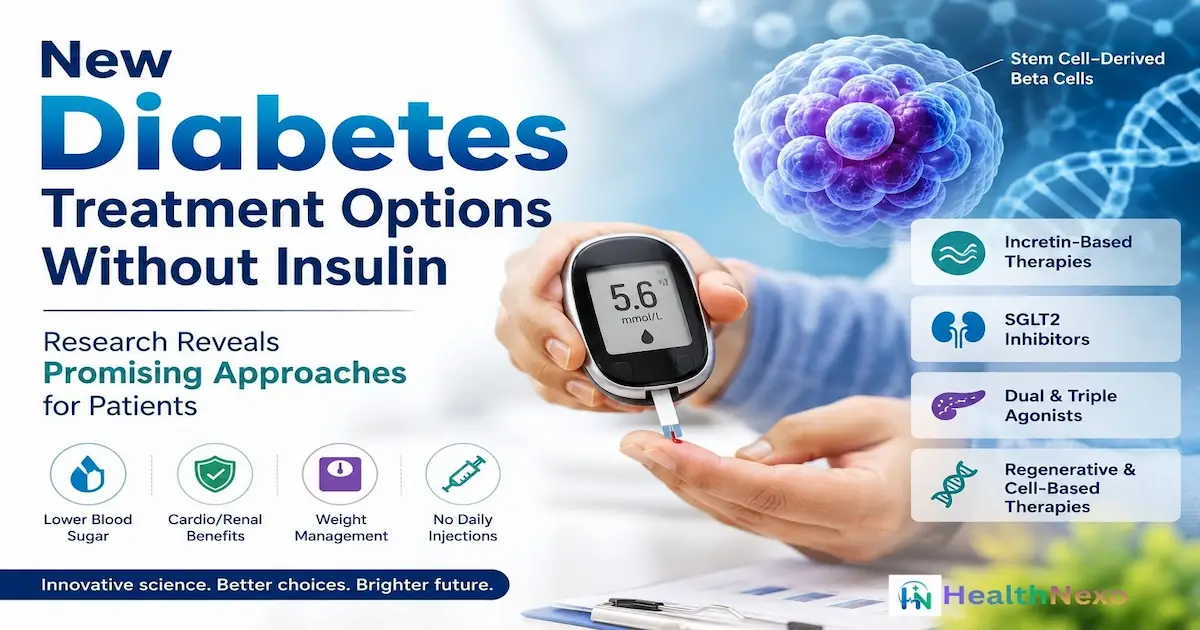
Reducing the need for insulin injections has been a focus of diabetes research for many years. Scientists are now exploring new diabetes treatment options without insulin, including therapies that aim to restore, replace, or protect insulin-producing cells. Another promising development is stem-cell-derived islet cell therapy, which aims to restore insulin production in people with type 1 diabetes.
In a 2025 clinical study, 10 of 12 participants who received the full dose of zimislecel became insulin-independent within one year. However, despite the success, the field of research is relatively recent. Researchers are looking into the use of other types of treatments, including transplanting donor islets, cell encapsulation, gene therapy, immunotherapy, beta-cell regeneration, and non-insulin treatment of type 2 diabetes.
Here’s how all that could change the future of diabetes care.
Key Takeaways
- Methods are being tested on how to revive, replace, or preserve insulin-secreting beta cells.
- Stem-cell-derived islet cell therapy is a promising method being tested for treating type 1 diabetes.
- According to a study conducted in 2025, insulin independence was achieved among 10 out of 12 full-dose patients after a year.
- Islets can be transplanted from donor cells to eligible patients.
- Encapsulation and gene editing techniques can prevent immune rejection of transplanted cells.
- Teplizumab is used for delaying the onset of type 1 diabetes among selected patients.
- A number of medicines other than insulin have been developed for treating type 2 diabetes.
- Most advanced cell-based approaches are still being studied.
A New Direction in Diabetes Treatment
In type 1 diabetes, the body’s immune system mistakenly attacks and damages the pancreas’s insulin-producing beta cells. Insulin is replaced through conventional methods. There is a new theory being considered:
- Replace or protect beta cells → restore insulin production → potentially reduce insulin dependence
This strategy is behind several emerging diabetes treatments.
8 Promising New Approaches to Reduce Insulin Dependence
1. Stem-Cell-Derived Islet Cell Therapy
Islet therapy from stem cells has emerged as one of the hottest areas of type 1 diabetes research. It is possible to make stem cells develop into islet cells capable of producing insulin and introducing them into the body.
How It Works
The basic concept is:
- Stem cells → insulin-producing islet cells → transplantation → glucose sensing → insulin release
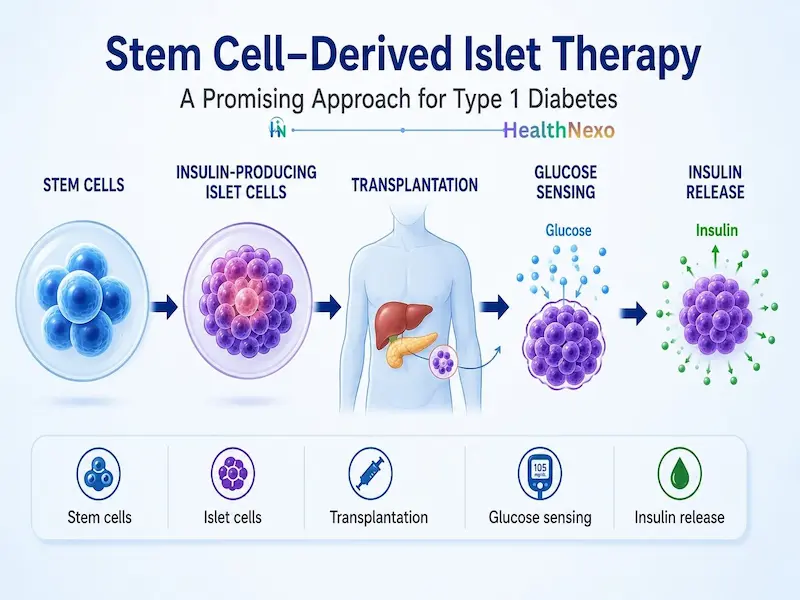
If the new cells can take root in the body, they will react to changes in the level of blood sugar and make insulin accordingly. Nevertheless, unlike insulin injections, the idea is to get the body to make insulin in response to changing blood sugar levels.
What Does Recent Research Show?
In a 2025 study conducted in the New England Journal of Medicine, the efficacy of zimislecel was tested, a novel islet cell therapy obtained from stem cells. Of the 12 patients who received the full dose of the treatment, 10 became insulin-independent within one year. The results are encouraging, but larger and longer studies are needed to confirm the treatment’s safety and effectiveness.
2. Donor Islet Cell Transplantation
Another approach is to transplant insulin-producing islet cells from deceased human donors. These cells are introduced into the body via the portal vein of the liver.
How It Works:
- Donor islets → portal-vein infusion → cell engraftment → insulin production → improved glucose control
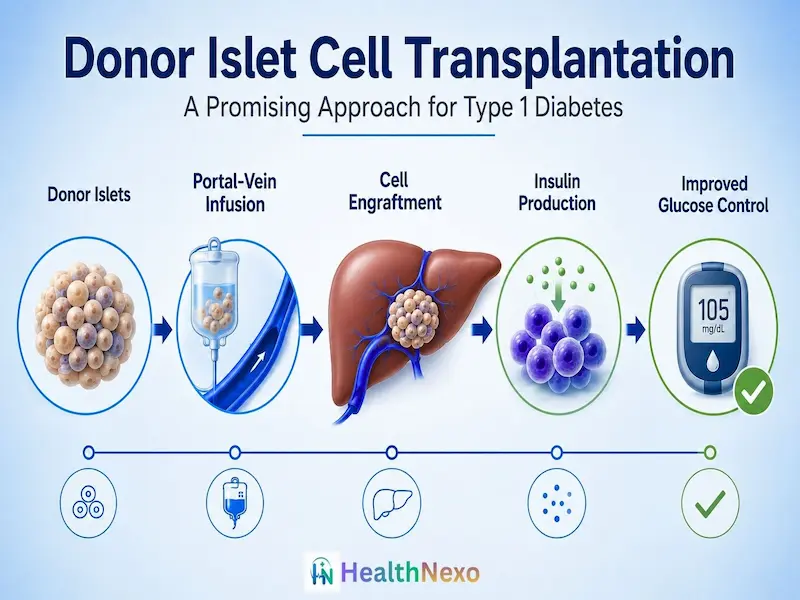
In 2023, Lantidra (donislecel-jujn) was approved by the U.S. FDA for use in certain adults with type 1 diabetes mellitus suffering from frequent episodes of severe hypoglycemia despite optimal therapy.
Some patients become insulin-independent following islet transplantation from donors. However, patients generally need immunosuppressive medicines to help prevent rejection of the transplanted cells.
3. Encapsulated Islet Cells
Scientists are developing protective capsules that surround insulin-producing cells and help protect them from immune attack. These capsules are designed to allow glucose, oxygen, nutrients, and insulin to pass through while limiting contact with immune cells.
Potential mechanism:
- Glucose + oxygen + nutrients → reach cells → insulin is released → immune attack is reduced
This process, if it succeeds, would decrease the dependence on immunosuppressive medications. There are still difficulties such as oxygen supply, fibrosis, cell viability, and insulin production.
4. Gene-Edited Insulin-Producing Cells
Researchers are also studying gene-editing approaches that could modify insulin-producing cells to make them less vulnerable to immune attack. They are looking into the possibility of genetically engineering such cells so that they can produce insulin as well as react to fluctuations in blood glucose levels.
Potential mechanism:
- Gene-edited cells → reduced immune recognition → better cell survival → insulin production
This method holds promise but is still experimental. Further research on safety, genetic stability, and efficacy is required.
5. Immune-Modulating Treatments
Other scientists have begun looking for techniques to safeguard any of the remaining beta cells rather than to replace them. In type 1 diabetes, the body’s immune system attacks these cells that produce insulin and, therefore, less insulin is produced.
Potential mechanism:
- Autoimmune attack → beta-cell damage → declining insulin production
These treatments try to slow this process down and preserve what remains of the beta-cell function.
Teplizumab
Teplizumab (Tzield) is an immune-modulating medicine that has been approved by the FDA to help in delaying the development of stage 3 type 1 diabetes. Teplizumab is used in certain people with stage 2 type 1 diabetes to delay progression to stage 3 disease. It does not cure diabetes or replace insulin.
6. Beta-Cell Regeneration
Another area of study in relation to diabetes is that of beta-cell regeneration. Rather than focusing on transplanting cells, researchers are studying the ability to have the current cells of the pancreas grow and/or regenerate.
Proposed Mechanism:
- Existing pancreatic cells → increased beta-cell mass → increased insulin production → improved glucose regulation
If effective, beta-cell regeneration would circumvent several problems associated with cell transplantation. Nevertheless, there is the need for scientists to establish methods that can be used to stimulate beta-cell regeneration effectively in humans.
7. Advanced Cell-Engineering and Biomaterial Approaches
Moreover, scientists are conducting studies on 3-D structures, biomaterials, and tissue engineering to prolong the life span of insulin-producing cells after transplantation. These technologies can help maintain the functionality of these cells.
Potential Goal:
- Engineered environment → improved cell survival → better glucose response → more stable insulin production
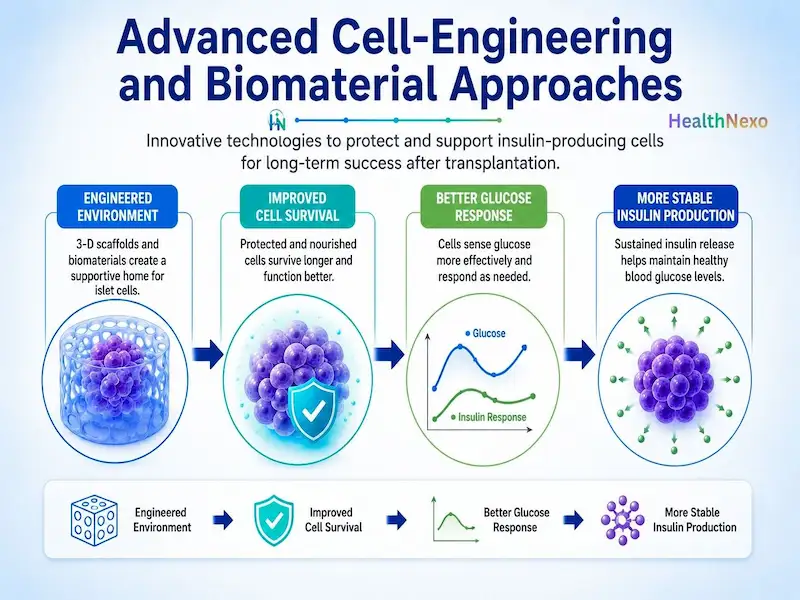
The technologies may also be used in combination with islet cells grown from stem cells, encapsulation, or even genetic manipulation. However, they are still experimental and have not yet been established as treatments.
8. Non-Insulin Medicines for Type 2 Diabetes
The quest for alternatives to insulin for diabetes treatment is also extended to already existing drugs for treating type 2 diabetes. These medications, according to the patient’s requirements, could:
- Decrease glucose production in the liver
- Increase insulin sensitivity
- Increase glucose excretion via urine
- Increase glucose-stimulated insulin secretion
- Delay stomach emptying and aid in weight loss
Some popular medications are metformin, GLP-1 receptor agonists, and SGLT2 inhibitors. These might enable several individuals to treat their diabetes without the need for insulin. However, they cannot replace insulin if the body does not produce enough insulin.
Important: Most emerging cell-based therapies are being studied mainly for type 1 diabetes. People with type 2 diabetes may already have several non-insulin treatment options, depending on their condition.
The Most Promising Diabetes Treatment Approaches
There is currently no single treatment that can replace insulin for everyone with diabetes.
- For type 1 diabetes, stem-cell-derived islet cell therapy is one of the most closely studied approaches because it aims to restore insulin-producing cells. Early clinical results with zimislecel have been encouraging, but larger and longer studies are still needed.
- For type 2 diabetes, several non-insulin medicines are already available and can help control blood glucose in many patients.
Potential to Reduce the Need for Insulin Injections
For some patients, possibly—but not for everyone.
Some experimental cell-based therapies have helped certain people with type 1 diabetes become insulin-independent. However, these treatments are still being evaluated and are not a universal replacement for insulin.
People with type 1 diabetes should not stop insulin unless advised by their healthcare professional.
Challenges in Developing New Diabetes Treatment Options Without Insulin
Prior to the extensive availability of such advanced therapy products, the following must be considered:
- Immune response: Protection of transplanted cells.
- Cell survival: Maintaining cell function for several years.
- Insulin secretion: Guaranteeing appropriate insulin response to glucose.
- Safety: Long-term safety of cell and gene therapies.
- Immunosuppression: Minimizing the use of immunosuppressant drugs.
- Manufacturing: Consistent production of cells.
- Cost and accessibility: Wider availability of advanced therapies.
Are These New Diabetes Treatments Available Now?
There are some treatment options available. However, there are still many advanced therapy options that are experimental.
Options Available:
- Non-insulin therapy for type 2 diabetes
- Islet transplantation from selected donors
- Other available diabetes treatment options
Experimental Options:
- Islet therapy using stem cells
- Gene-modified cells
- Encapsulated cell therapy
- Beta cell regeneration
- Advanced biomaterials techniques
Availability depends on regulatory approval, eligibility, and location.
The Future of New Diabetes Treatment Options
Future treatment may combine several approaches:
- Replace beta cells → protect them → restore insulin production → maintain long-term function
In type 1 diabetes, the hope is that one day these treatments can reduce the need for insulin in some people. As for type 2 diabetes, personal medicine, weight control, and cardiovascular and renal protection treatments are going to be important.
What Patients Should Know
There are many positive developments in the field of diabetes research, but unfortunately, the majority of them are not yet standard treatment options.
- Do not discontinue taking your insulin or medication without consulting your physician.
- A lot of promising treatments are still waiting for further clinical trials.
- Access depends on the country and the criteria for enrollment in trials.
- Discussion with a medical practitioner is necessary to understand the potential benefits and drawbacks of these newer modes of therapy.
Final Takeaway
New diabetes treatment options without insulin are expanding research beyond traditional insulin replacement. Stem-cell-derived islet therapy, donor islet transplantation, immune-modulating treatments, gene-edited cells, and beta-cell regeneration are being studied as potential ways to restore or preserve insulin production. For type 2 diabetes, several non-insulin medicines are already available. However, many advanced approaches remain experimental, and insulin should not be stopped without medical advice.
Frequently Asked Questions (FAQs)
Q1. Can diabetes be treated without insulin?
Many people with type 2 diabetes can manage their blood glucose with non-insulin medicines, lifestyle changes, or both. However, some may eventually need insulin. People with type 1 diabetes generally need insulin unless an effective therapy restores sufficient insulin production.
Q2. What is the most promising new treatment?
Islet cell transplantation using stem cells is one of the most researched methods in the treatment of type 1 diabetes. Early studies have reported encouraging results.
Q3. Can new treatments replace insulin?
Certain treatments could help lower insulin needs in some people in the future. However, currently there is no one-size-fits-all treatment that does not use insulin.
Medical Disclaimer
This article is for informational and educational purposes only and does not provide medical advice, diagnosis, or treatment. Some treatments discussed are experimental or available only to selected patients. Do not stop or change insulin or other diabetes medications without consulting a qualified healthcare professional.
References
- NEJM: Stem Cell–Derived, Fully Differentiated Islets for Type 1 Diabetes — 2025 clinical study on zimislecel. View study
- FDA: Lantidra (donislecel-jujn) — donor-derived islet cell therapy. FDA information
- FDA: Tzield (teplizumab) — information on delaying type 1 diabetes progression. FDA information
Tags:

Md. Rakibul Hasan, BSc (Hons), MS (Thesis)
Biochemistry & Molecular Biology, University of Chittagong, Bangladesh
Senior Biochemist | Health Content Writer | Evidence-Informed Health Information Creator
Popular Diagnostic Centre Limited, Bangladesh.
He specializes in clinical biochemistry, laboratory diagnostics, and medical testing. Alongside his professional work, he is actively involved in health education and scientific communication.
As a Health Content Writer and Research-Based Health Information Creator, he simplifies complex medical and biochemical topics into clear, evidence-informed, and reader-friendly health information.