
Kidney disease can develop gradually without noticeable symptoms. Early kidney disease diagnosis tests can help identify kidney damage or reduced kidney function before more advanced problems develop, especially in people at higher risk of chronic kidney disease (CKD). Two key measures used to evaluate CKD are estimated glomerular filtration rate (eGFR) and urine albumin-to-creatinine ratio (UACR).
eGFR estimates how well the kidneys filter blood, while UACR detects albumin in urine, which can be a marker of kidney damage. Other blood and urine tests may provide additional information depending on a person’s risk factors, symptoms, medical history, and initial test results.
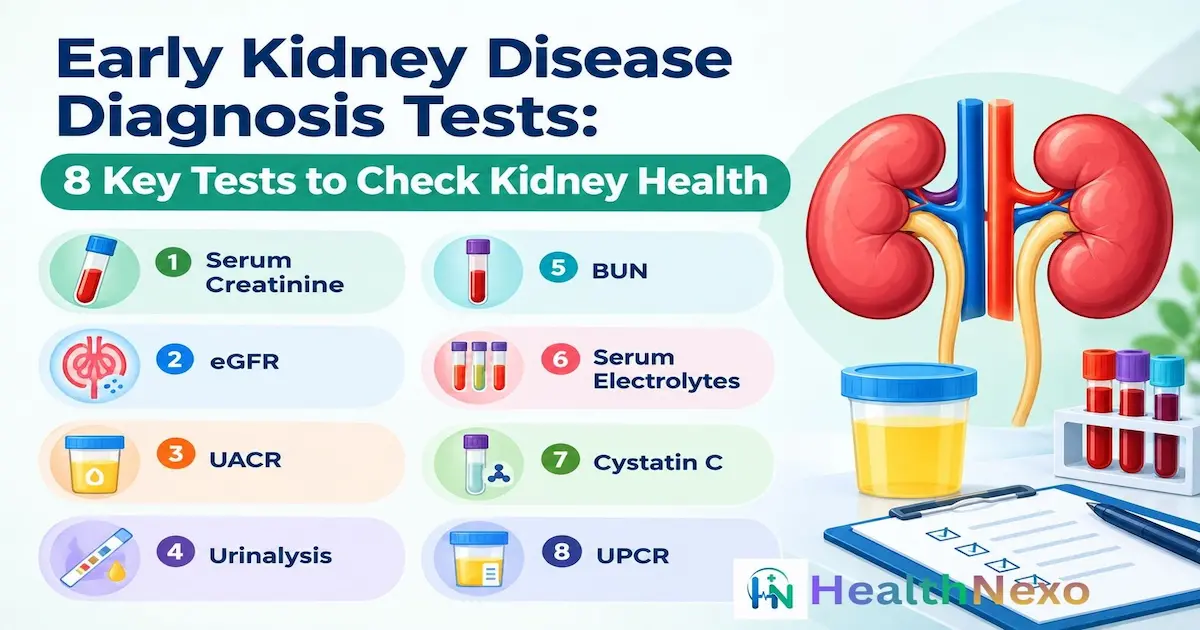
This guide explains 8 early kidney disease diagnosis tests and how they may help assess kidney health.
Important: The reference values differ from one lab to another, depending on the type of tests done, the individual’s age, sex, and clinical conditions. The ranges shown below are just some of the adult reference or decision ranges.
Key Takeaways
- eGFR estimates how well the kidneys filter blood.
- UACR detects albumin in urine and helps identify kidney damage.
- Serum creatinine is commonly used to calculate eGFR but should not be interpreted by itself.
- Urinalysis can provide clues about kidney and urinary tract problems.
- Cystatin C can improve kidney-function assessment when creatinine-based eGFR may be less reliable.
- BUN and electrolytes provide additional information about kidney function and related metabolic changes.
- UPCR measures total urinary protein and can provide additional information when proteinuria needs further evaluation.
- One abnormal test does not automatically mean CKD. Kidney damage or reduced kidney function generally needs to persist for at least 3 months to establish chronicity.
Understanding Kidney Disease
There are several functions that the kidneys play. These functions include the filtering of the waste products and excess fluids in the blood and their elimination through urine. The kidneys are also involved in the regulation of electrolytes, fluids, blood pressure, and minerals. A balanced intake of essential nutrients may also support normal kidney function and overall health.
Poor functionality of the kidneys causes accumulation of wastes and excess fluids in the body. Chronic kidney diseases may lead to complications such as cardiovascular disease, bone disease, abnormal blood chemistry, and other organ dysfunctions.
Since there may be no symptoms at an early stage of kidney disease, proper tests will help in detecting any problem early enough.
Why Early Kidney Disease Detection Matters
Kidney dysfunction and kidney disease can be detected early when the presence of symptoms is yet to occur. This will ensure that the root cause of the disease can be identified.
Kidney testing can help:
- Detect albumin and other abnormalities in urine
- Estimate kidney filtration using eGFR
- Identify reduced kidney function that may not cause symptoms
- Monitor kidney health in people with diabetes or high blood pressure
- Investigate possible causes of abnormal results
- Track kidney function over time

Not everyone does require all the tests mentioned below. It is the individual circumstances that determine which tests are necessary for a person. For younger adults, kidney health also depends on managing modifiable risk factors through evidence-based CKD prevention strategies.
8 Early Kidney Disease Diagnosis Tests
The following 8 early kidney disease diagnosis tests can be used in order to determine the functioning of the kidneys, any damage to the kidneys, and other anomalies that might occur before the development of symptoms. They include key blood and urine tests that provide complementary information about overall kidney health.
1. Serum Creatinine
Serum creatinine test is one of the most common tests performed for the determination of renal function. Creatinine is a waste product generated mainly from normal muscle metabolism. It is filtered from the blood by the kidneys and eliminated in urine. If kidney filtration rate is decreased, then serum creatinine accumulates in the bloodstream.
Example Adult Reference Ranges
- Men: 0.7–1.3 mg/dL
- Women: 0.5–0.95 mg/dL
Reference intervals vary by laboratory and may also depend on factors such as age, sex, and muscle mass.
Clinical Significance
High creatinine values can be associated with decreased filtration of the kidneys, but this finding is non-specific for CKD because dehydration, obstruction of urine flow, drugs, diet, and body muscle mass might influence the test value.
That is why creatinine value is more informative when it is used to calculate estimated GFR than in isolation. The 2021 CKD-EPI equation of creatinine does not use race factor.
Key point: Creatinine should be interpreted alongside eGFR, urine findings, previous results, and the clinical context.
2. Estimated Glomerular Filtration Rate (eGFR)
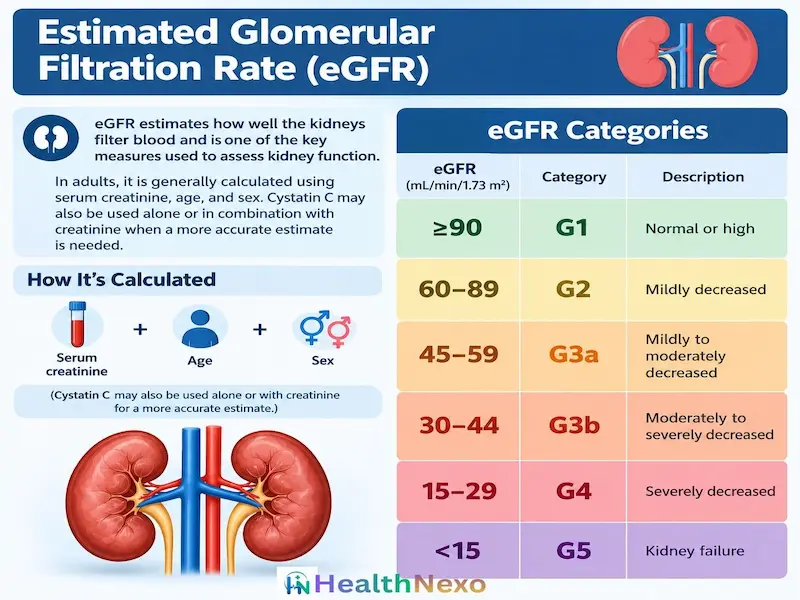
eGFR estimates how well the kidneys filter blood and is one of the key measures used to assess kidney function. In adults, it is generally calculated using serum creatinine, age, and sex. Cystatin C may also be used alone or in combination with creatinine when a more accurate estimate is needed.
eGFR Categories
- ≥90 mL/min/1.73 m² — G1: Normal or high
- 60–89 mL/min/1.73 m² — G2: Mildly decreased
- 45–59 mL/min/1.73 m² — G3a: Mildly to moderately decreased
- 30–44mL/min/1.73 m² — G3b: Moderately to severely decreased
- 15–29 mL/min/1.73 m² — G4: Severely decreased
- <15 mL/min/1.73 m² — G5: Kidney failure
G1 or G2 alone does not establish CKD. A marker of kidney damage, such as persistent albuminuria, must also be present.
CKD is generally defined by abnormalities of kidney structure or function that persist for at least 3 months. An eGFR below 60 mL/min/1.73 m² for 3 months is one criterion, while persistent albuminuria or other markers of kidney damage can indicate CKD even when eGFR is 60 or higher.
Clinical Significance
eGFR is generally more informative than serum creatinine alone because it accounts for factors such as age and sex. However, creatinine-based eGFR can still be affected by muscle mass, diet, and other factors. An eGFR change can also be helpful in determining the health status of the kidneys.
Key point: eGFR is an estimation and not the actual GFR, which means an unexpected or uncertain result may require repeat testing or additional evaluation.
3. Urine Albumin-to-Creatinine Ratio (UACR)
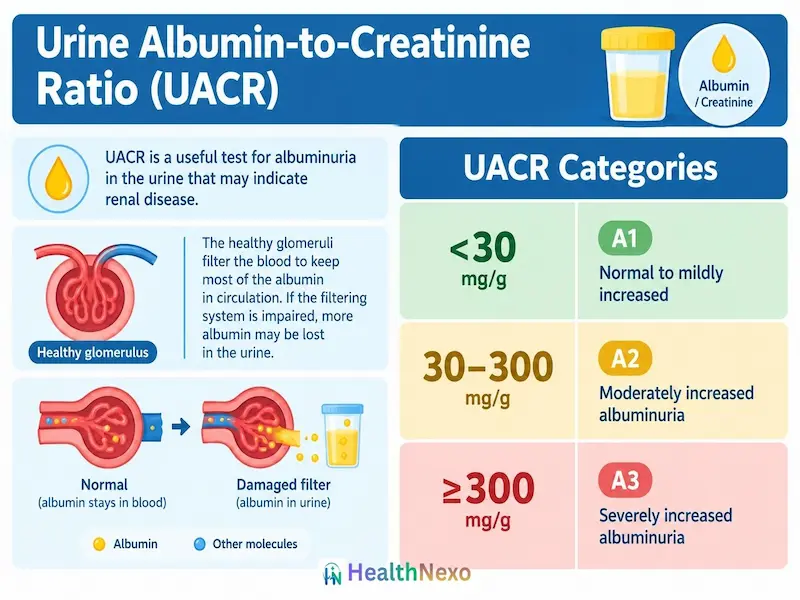
UACR is a useful test for albuminuria in the urine that may indicate renal disease. The healthy glomeruli filter the blood to keep most of the albumin in circulation. If the filtering system is impaired, more albumin may be lost in the urine.
UACR Categories
- <30 mg/g — A1: Normal to mildly increased
- 30–300 mg/g — A2: Moderately increased albuminuria
- ≥300 mg/g — A3: Severely increased albuminuria
Albuminuria may occur even when eGFR is still 60 or higher. This is why UACR and eGFR provide complementary information.
Clinical Significance
Spot UACR is popularly employed in the clinic since it normalizes the reading of the albumin level in accordance with urine concentration. The first morning sample is preferable; however, a random sample may also be taken.
UACR can be temporarily elevated by factors such as urinary tract infection, fever, recent strenuous exercise, and marked hyperglycemia. An abnormal result may therefore need to be repeated to confirm persistent albuminuria.
Key point: UACR helps identify kidney damage, while eGFR estimates filtration. Together, they provide a more complete picture of CKD status.
4. Complete Urinalysis
Urinalysis is a laboratory test that analyzes the physical, chemical, and microscopic properties of urine. It helps diagnose conditions such as kidney disease, UTI, kidney stones, etc.
What Can Urinalysis Check?
Depending on the testing method, it may assess:
- Protein
- Blood
- Red and white blood cells
- Glucose and ketones
- Nitrites
- pH and specific gravity
- Crystals
- Urinary casts
- Bacteria
Clinical Significance
Presence of blood or protein in the urine may indicate disorders of the kidney or the urinary system. Presence of specific types of casts in the urine can be helpful in diagnosing kidney disorders.
An abnormal urinalysis does not by itself diagnose CKD because urine findings can have several causes. Results should be interpreted alongside UACR, eGFR, symptoms, medical history, and other findings.
Key point: Urinalysis can provide useful clues about kidney and urinary tract problems, but abnormal results should be interpreted alongside other clinical information.
5. Blood Urea Nitrogen (BUN)
Blood urea nitrogen indicates the amount of nitrogen in the blood that comes from urea. Urea is produced as a result of the metabolism of proteins and is removed from the body by the kidneys.
Typical Adult Reference Range
- 6–20 mg/dL (2.14–7.14 mmol/L)
The reference interval may vary between laboratories.
What Can Increase BUN?
BUN may rise with:
- Reduced kidney function
- Dehydration
- High protein intake
- Gastrointestinal bleeding
- Heart failure
- Urinary obstruction
- Certain other medical conditions
Clinical Significance
Even though the level of BUN can be increased because of reduced kidney function, it is less specific than eGFR. Dehydration and the metabolism of proteins can influence BUN significantly.
Key point: BUN must be considered along with creatinine and eGFR and not alone when it comes to diagnosing CKD.
6. Serum Electrolytes
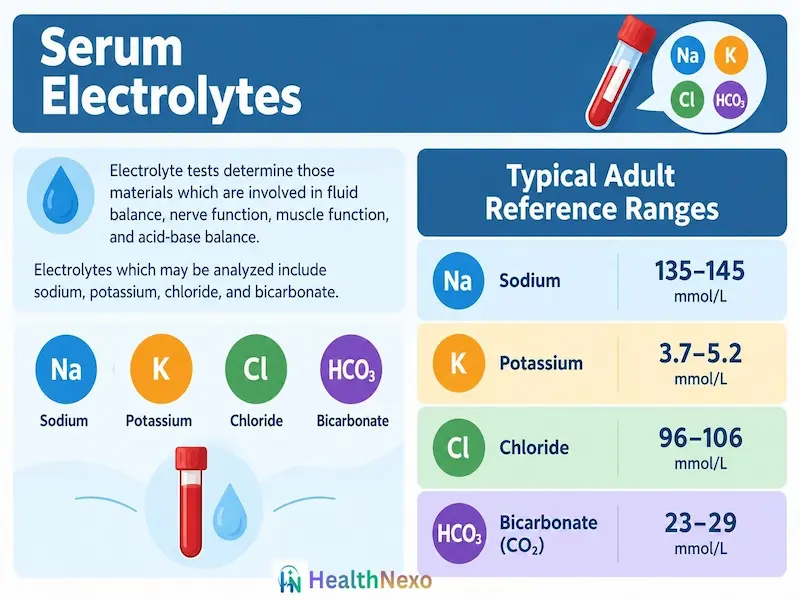
Electrolyte tests determine those materials which are involved in fluid balance, nerve function, muscle function, and acid-base balance. Electrolytes which may be analyzed include sodium, potassium, chloride, and bicarbonate.
Typical Adult Reference Ranges
- Sodium: 135–145 mmol/L
- Potassium: 3.7–5.2 mmol/L
- Chloride: 96–106 mmol/L
- Bicarbonate (CO₂): 23–29 mmol/L
Ranges vary between laboratories.
Clinical Significance
Reduced kidney function can impair potassium and acid-base regulation. This may contribute to hyperkalemia or metabolic acidosis, although both abnormalities can have other causes.
Any disturbance in the potassium concentration may have implications on heart function as well. Low bicarbonate levels may arise when the kidney cannot get rid of acid, although it has many other possible causes as well.
Key point: Electrolytes do not diagnose early CKD on their own. They mainly help identify metabolic abnormalities and complications associated with reduced kidney function.
7. Serum Cystatin C
Cystatin C is a protein that is produced by cells in the body. It can be used as an alternative to creatinine or combined with creatinine to improve estimation of GFR in selected situations.
When Can Cystatin C Be Useful?
It may be considered when:
- Creatinine-based eGFR is uncertain
- Muscle mass is unusually high or low
- A more accurate GFR estimate is clinically important
- Confirmation of kidney function is needed
A universal normal value does not exist for cystatin C in all laboratories. Variability can occur depending on the assay method used and clinical aspects. Thyroid disease and corticosteroids also affect results.
Key point: Cystatin C can provide additional information when creatinine-based assessment may be less reliable.
8. Urine Protein-to-Creatinine Ratio (UPCR)
UPCR evaluates the quantity of total protein in the urine compared to the urine creatinine. This is in contrast to UACR, which assesses albumin.
Typical Reference Value
- <150 mg/g is commonly considered within the normal range, although interpretation depends on the laboratory and clinical setting.
Clinical Significance
The UPCR is helpful for assessing the amount of total urinary protein loss and is valuable in cases where proteins other than albumin are involved.
In the case of regular screening for chronic kidney disease, the UACR test is preferable because albuminuria indicates renal damage.
Key point: UACR measures albumin specifically, whereas UPCR measures total urinary protein.
Key Tests for Early Kidney Disease Detection
Two key measures used to evaluate CKD are eGFR and UACR. The eGFR test evaluates renal function through glomerular filtration rate, whereas UACR test evaluates the presence of albuminuria which is an important indicator of CKD.
Why Repeat Kidney Testing May Be Needed
An abnormal kidney test does not always mean chronic kidney disease (CKD). Temporary factors can affect results:
- Creatinine: dehydration, muscle mass, diet, or certain medications
- UACR: infection, fever, exercise, or high blood glucose
- BUN: dehydration, high protein intake, or gastrointestinal bleeding
- eGFR: changes in creatinine or acute illness
CKD is defined by abnormalities of kidney structure or function that persist for at least 3 months. Repeat testing may therefore be needed when an unexpected result does not clearly establish chronic kidney disease.
Normal Creatinine Does Not Always Rule Out Kidney Disease
Creatinine levels cannot always be relied upon in ruling out decreased kidney function because creatinine is dependent on muscle mass and other variables.
eGFR is more effective than creatinine, while cystatin C could prove helpful in cases when the assessment using creatinine appears to be inconclusive. Albuminuria could also point toward kidney damage even when eGFR has been relatively well-preserved.
People Who May Need Kidney Disease Testing
Kidney disease testing is especially important for people at higher risk of chronic kidney disease, including those with:
- Diabetes
- High blood pressure
- Cardiovascular disease
- A family history of kidney failure
- Previous acute kidney injury
- Certain systemic or inherited diseases
The type and frequency of testing depend on individual risk factors and clinical assessment. Early identification of kidney problems may also be important as new kidney disease treatment approaches continue to emerge.
Bottom Line
Early kidney disease can develop without noticeable symptoms, so early kidney disease diagnosis tests can help detect kidney damage or reduced kidney function sooner. eGFR and UACR are two key measures used to evaluate CKD, while creatinine, urinalysis, cystatin C, BUN, electrolytes, and UPCR may provide additional information when needed.
An abnormal kidney test does not automatically mean that a person has CKD. Results should be interpreted together with repeat testing, medical history, symptoms, and other kidney markers.
Frequently Asked Questions (FAQs)
Q1. What is the most important blood test for kidney disease?
The creatinine test is frequently done, while eGFR derived from creatinine is a better test for measuring kidney filtration. The cystatin C test can give further details on certain individuals.
Q2. What is a normal eGFR?
An eGFR of ≥90 mL/min/1.73 m² is classified as G1, or normal to high. However, G1 alone does not establish CKD. A marker of kidney damage must also be present.
Q3. What is a normal UACR?
If the UACR is <30 mg/g, it is considered as class A1, which is a normal to mild increase. A sustained UACR of 30 mg/g or greater can be indicative of kidney damage or albuminuria.
Q4. What creatinine level is considered normal?
Typical adult creatinine reference ranges are approximately 0.7–1.3 mg/dL in men and 0.5–0.95 mg/dL in women. However, the reference range provided by the individual laboratory is more appropriate for interpretation.
Q5. Can kidney disease be present with normal eGFR?
Yes. The presence of persistent albuminuria or another sign of kidney injury is evidence of CKD despite an eGFR ≥ 60 mL/min/1.73 m².
Q6. Is BUN enough to diagnose kidney disease?
No. The level of BUN may be influenced by hydration, protein consumption, gastrointestinal bleeding, and other variables. It should be interpreted along with the creatinine level, eGFR, and the clinical condition.
Medical Disclaimer
The above article is meant for educational purposes only and should not be taken as medical advice. The reference ranges in the above article for testing kidney may differ from one lab to another depending on the type of test, age, sex, and other circumstances. Abnormal results do not indicate the presence of chronic kidney disease. For further evaluation, consult a qualified healthcare professional who can interpret the results in the context of your medical history and other clinical findings.
References
- National Institute of Diabetes and Digestive and Kidney Diseases (NIDDK). Chronic Kidney Disease Tests & Diagnosis.
- NIDDK. Identify & Evaluate Patients with Chronic Kidney Disease.
- NIDDK. Quick Reference on UACR & GFR.
- NIDDK. Assess Urine Albumin.
- KDIGO. 2024 Clinical Practice Guideline for the Evaluation and Management of Chronic Kidney Disease.
- National Kidney Foundation. Estimated Glomerular Filtration Rate (eGFR).
- National Kidney Foundation. Urine Albumin-Creatinine Ratio (uACR).
- MedlinePlus. Kidney Tests.
Tags:

Md. Rakibul Hasan, BSc (Hons), MS (Thesis)
Biochemistry & Molecular Biology, University of Chittagong, Bangladesh
Senior Biochemist | Health Content Writer | Evidence-Informed Health Information Creator
Popular Diagnostic Centre Limited, Bangladesh.
He specializes in clinical biochemistry, laboratory diagnostics, and medical testing. Alongside his professional work, he is actively involved in health education and scientific communication.
As a Health Content Writer and Research-Based Health Information Creator, he simplifies complex medical and biochemical topics into clear, evidence-informed, and reader-friendly health information.




2 thoughts on “Early Kidney Disease Diagnosis Tests: 8 Key Tests to Check Kidney Health”