
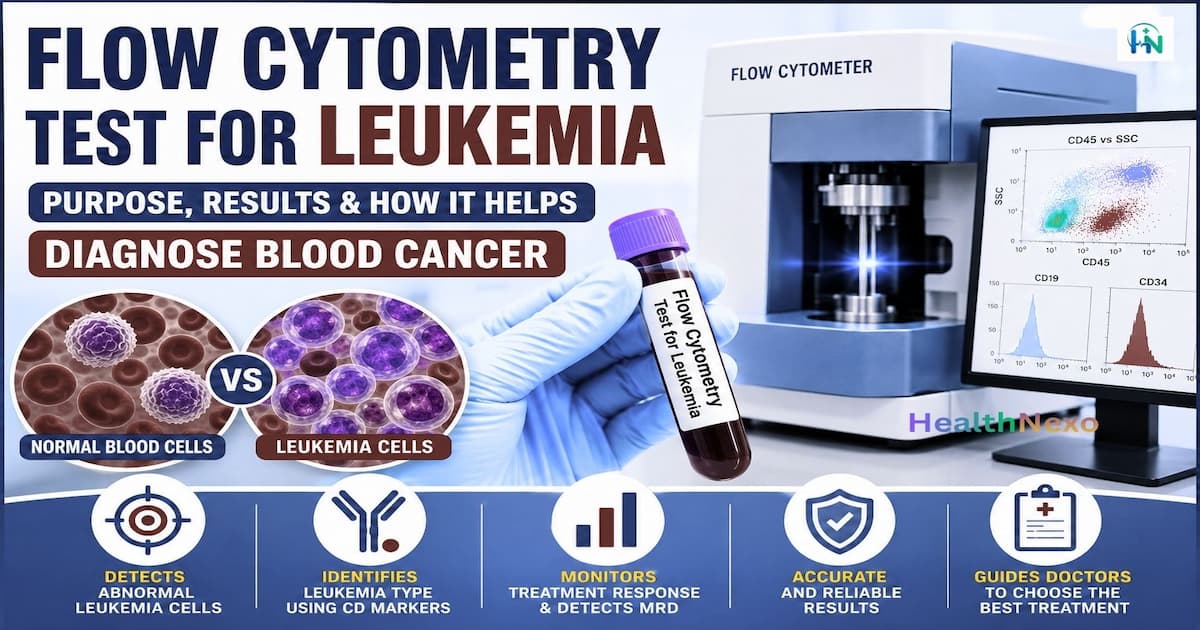
A Flow Cytometry Test for Leukemia is a type of laboratory analysis that identifies abnormal cells by studying their properties, such as CD markers. This procedure determines the type of leukemia and measures its response to therapy. In addition, this test can help in detecting minimal residual disease (MRD) and estimating the risk of relapse. Nevertheless, a flow cytometry test is usually a part of a comprehensive diagnostic evaluation that may include CBC, bone marrow aspiration and biopsy, and other laboratory analyses.
The present article aims to explain the flow cytometry test for leukemia in detail and discuss its importance. Furthermore, the mechanism of developing blood cancer will be presented.
Key Takeaways
- Flow Cytometry Test for Leukemia identifies and sorts abnormal cells according to their CD markers.
- This test is crucial in determining the type of leukemia, including ALL, AML, CLL, or other blood cancer.
- Besides, it can help estimate minimal residual disease (MRD) that can help assess the treatment’s efficiency.
- The flow cytometry test is informative but cannot confirm or rule out leukemia.
- Health care providers use it alongside CBC tests, bone marrow tests, and molecular or genetic studies to evaluate and treat blood cancer patients.
Mechanism of Leukemia: How Blood Cancer Develops
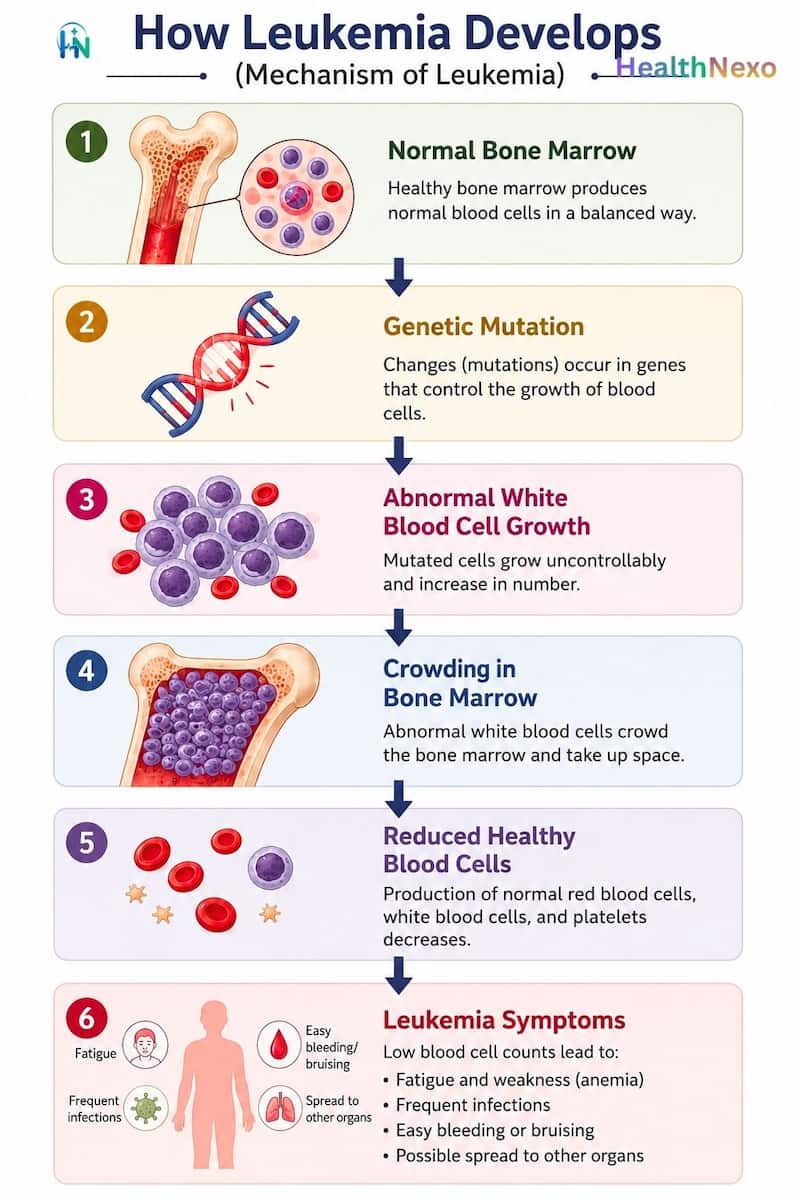
Genetic mutations in blood-forming stem cells can cause abnormal white blood cells to grow uncontrollably. These leukemia cells crowd the bone marrow, reducing the production of healthy blood cells. This may lead to anemia, increased infection risk, and the spread of abnormal cells to other parts of the body.
Simplified Mechanism:
Genetic mutation → Abnormal growth of white blood cells → Crowd in the bone marrow → Decreased numbers of healthy blood cells → Development of leukemia.
What Is the Flow Cytometry Test?
Flow cytometry is a laboratory test that examines the characteristics of cells. It measures the physical and chemical properties of individual cells. The test is widely used to diagnose leukemia and lymphoma. It also helps detect other blood cancers and some autoimmune diseases. The suspected cells are diluted in a special solution with fluorescence antibodies.
These antibodies adhere to CD markers on the surface of cells. Next, the cells pass through a laser beam. Special fluorescent markers attach to the cells. The flow cytometer detects these markers. It quickly analyzes each cell. The machine quickly examines individual cells and helps identify both normal blood cells and abnormal leukemia cells in just a few seconds.
Doctors use flow cytometry to:
- Diagnose and classify blood cancers
- Identify abnormal cell populations
- Monitor treatment response
- Detect minimal residual disease (MRD)
Purpose and Uses of a Flow Cytometry Test
The Flow Cytometry Test is a procedure conducted in the laboratory that helps investigate the blood, plasma, and other body fluids. Abnormal cells are found, indicating blood cancers. In addition, it also indicates what type of leukemia the patient has as well as the treatment efficiency. Lastly, it also investigates some immune system problems.
Common purposes and uses include:
- Diagnose blood cancers: Identifies abnormal cells linked to leukemia, lymphoma, and multiple myeloma.
- Classify leukemia: Analyzes CD markers to distinguish leukemia types such as ALL, AML, CLL, and CML.
- Detect abnormal cells: Finds cancerous cells that may not be visible through routine microscopic examination.
- Monitor treatment response: Helps evaluate the effectiveness of chemotherapy, targeted therapy, or immunotherapy.
- Detect Minimal Residual Disease (MRD): Identifies small numbers of remaining leukemia cells after treatment.
- Evaluate immune and bone marrow disorders: Helps diagnose immune deficiencies, autoimmune diseases, MDS, and other hematologic conditions.
What Is a Flow Cytometry Test for Leukemia?
A Flow Cytometry Test for Leukemia is one of the kinds of lab tests which are primarily applied in order to detect leukemia. The test is about examining either blood or cells from the bone marrow in order to reveal the existence of any abnormal leukemia cells. Moreover, the test allows identifying the type of blood cancer.
The test uses special fluorescent antibodies, which bind to clusters of differentiation (CD) molecules. In turn, the cells are examined one by one under a laser beam. The computer reads the signals emitted from the cells and detects abnormal leukemia cells.
The test evaluates:
- Cell size and complexity
- Cell type
- CD marker expression
- Presence of abnormal leukemia cells
- Leukemia subtype
Each type of leukemia has its own set of CD markers. By using flow cytometry, these markers can be identified with great accuracy. This allows doctors to understand what form of leukemia the person has and how best to treat it.
Procedure of Flow Cytometry Test for Leukemia
A Flow Cytometry Test examines blood or bone marrow cells. It looks for abnormal leukemia cells. The test also identifies the cells’ immunophenotype (cell markers). This information helps doctors diagnose and classify leukemia. The procedure involves several simple steps:
Step 1: Sample Collection
A sample is collected from the patient. It may come from peripheral blood, bone marrow, or another body fluid. The type of sample depends on the patient’s condition. The sample is then sent to the laboratory for testing.
Step 2: Sample Preparation
In the laboratory, the cells are separated from the sample. They are mixed with special antibodies. These antibodies attach to specific CD markers on the cell surface. This helps identify each cell’s immunophenotype.
Step 3: Flow Cytometry Analysis
The prepared specimen is placed inside a flow cytometer to identify and analyze different cell populations. The cells pass through the machine one at a time. Each cell moves through a laser beam. The flow cytometer analyzes every cell individually.
It measures:
- Cell size (Forward Scatter)
- Cell complexity (Side Scatter)
- Fluorescent signals from CD markers
Step 4: Data Analysis
A computer analyzes the signals and creates cell profiles to identify:
- Abnormal leukemia cells
- CD marker patterns
- Percentage of blast cells
- Leukemia subtype
Step 5: Interpretation of Results
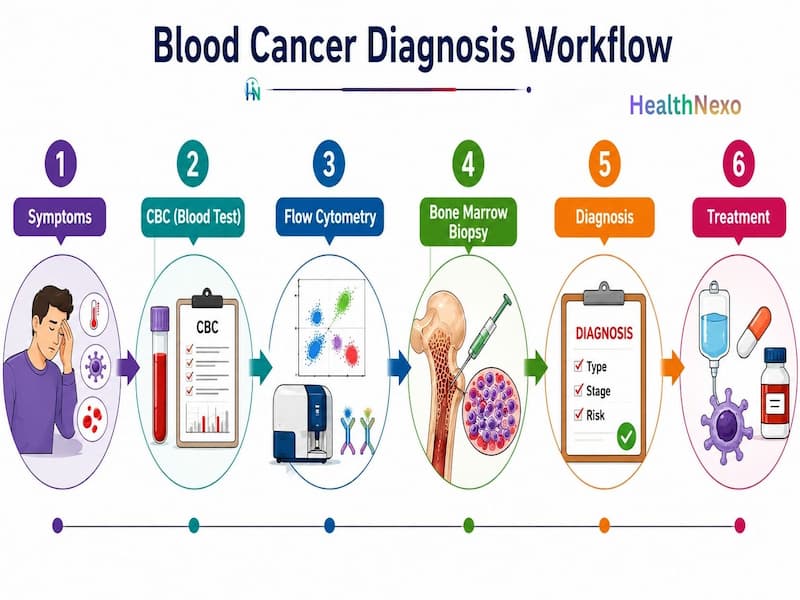
A hematologist reviews the flow cytometry results. The doctor also checks the results of other tests. These may include a Complete Blood Count (CBC), bone marrow biopsy, cytogenetic analysis, and molecular tests. Together, these tests help confirm the diagnosis. They also help determine the most appropriate treatment plan.
Preparation Before the Test
A Flow Cytometry Test typically does not require any special preparation beforehand. However, before the procedure, a patient should inform a healthcare provider about:
- Any medications or supplements he/she is taking.
- A history of bleeding disorders or use of anticoagulant drugs.
- Wearing clothes that are convenient for a bone marrow biopsy.
- And adhere to the additional instructions given by a doctor.
- A blood test for flow cytometry does not usually require fasting unless a doctor says otherwise.
How Long Does the Procedure Take?
- Blood collection: About 5–10 minutes
- Bone marrow aspiration: About 15–30 minutes
- Laboratory flow cytometry analysis: Usually completed within a few hours
- Final report: Typically available within 24–48 hours, although complex cases may take several days.
Risks and Side Effects
A Flow Cytometry Test is generally very safe. The laboratory analysis itself has no risks because it is performed on the collected sample. Possible side effects are related to sample collection and may include:
- Mild discomfort, tenderness, or a small bruise may occur at the blood collection site.
- Slight bleeding or swelling
- Temporary soreness after a bone marrow aspiration
- Rarely, infection at the collection site
- Most side effects are minor and usually improve on their own within a few days.
How Does Flow Cytometry Detect Leukemia Cells?
Flow cytometry can detect leukemia cells. It identifies the immunophenotype of blood cells. The test analyzes CD markers on the surface of each cell. These markers help classify different cell populations. Doctors use this information to distinguish normal blood cells from leukemia cells.
Detection process:
- Fluorescent antibodies bind to specific CD markers expressed on leukemia cells.
- The cells are propelled through the cytometer one by one.
- Using this information, the computer establishes an immunophenotype of the population of cells analyzed.
- Physicians can determine the type of leukemia based on these results.
- A flow cytometry test can detect even small numbers of abnormal leukemia cells, including MRD.
Advantages of Flow Cytometry in Leukemia Diagnosis
A Flow Cytometry Test for Leukemia quickly analyzes blood or bone marrow cells. It helps diagnose leukemia. The test also identifies the leukemia subtype. It can monitor how well treatment is working. In addition, it can detect minimal residual disease (MRD) after treatment.
1. High diagnostic accuracy
Flow cytometry analyzes thousands of cells in a short time. It can quickly identify abnormal leukemia cells. The test has high accuracy. It is highly sensitive and specific for detecting leukemia cells.
2. Rapid results
A flow cytometry test usually provides results within 24 to 48 hours. It gives important information for diagnosis and treatment. These results help doctors make accurate, evidence-based treatment decisions.
3. Accurate determination of leukemia subtypes
Flow cytometry identifies specific CD markers on leukemia cells. These markers help classify different types of leukemia. For example, the test can distinguish ALL, AML, and CLL. This helps healthcare professionals establish a more accurate diagnosis.
4. Monitoring of treatment and detection of MRD
Leukemia treatment response can be estimated using flow cytometry, and MRD can also be identified.
How Accurate Is Flow Cytometry?
The flow cytometry test is an extremely accurate one for diagnosing and determining the type of leukemia. It very successfully identifies abnormal cell populations with high sensitivity. Moreover, the test is greatly efficient when used in combination with other diagnostic measures.
However, this test is not used alone. Doctors interpret these findings together with results from other diagnostic tests. These include a Complete Blood Count (CBC), bone marrow biopsy and aspiration, and genetic and molecular tests. In addition, these diagnostic procedures allow the doctor to determine the most appropriate treatment method.
Which Types of Leukemia Can Flow Cytometry Diagnose?
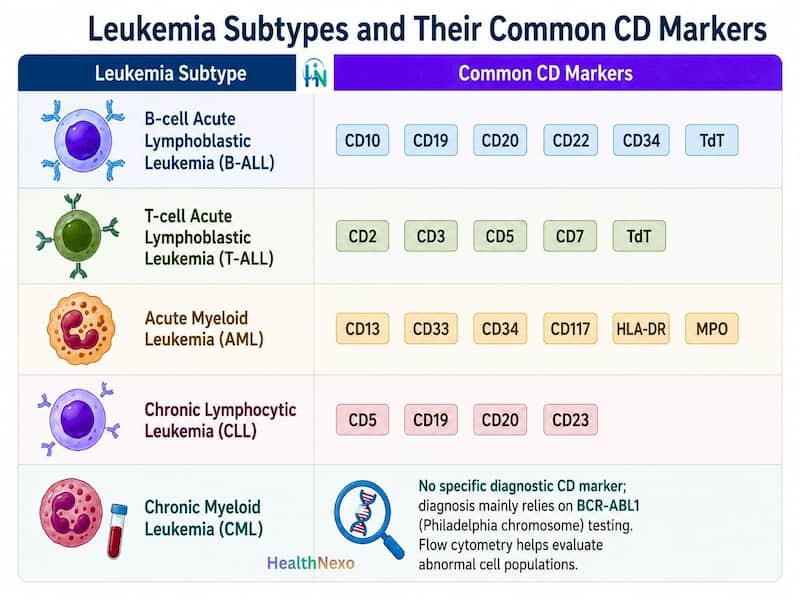
Flow cytometry enables diagnosing and identifying the type of leukemia by means of CD markers. The data acquired from this examination play a significant role in the diagnosis and treatment of leukemia.
Table 1: Common CD Markers by Leukemia Subtype
| Leukemia Subtype | Common CD Markers |
| B-cell Acute Lymphoblastic Leukemia (B-ALL) | CD10, CD19, CD20, CD22, CD34, TdT |
| T-cell Acute Lymphoblastic Leukemia (T-ALL) | CD2, CD3, CD5, CD7, TdT |
| Acute Myeloid Leukemia (AML) | CD13, CD33, CD34, CD117, HLA-DR, MPO |
| Chronic Lymphocytic Leukemia (CLL) | CD5, CD19, CD20, CD23 |
| Chronic Myeloid Leukemia (CML) | No specific diagnostic CD marker; diagnosis mainly relies on BCR-ABL1 (Philadelphia chromosome) testing. Flow cytometry helps evaluate abnormal cell populations. |
Note: The exact CD marker pattern may vary between patients. Doctors interpret these findings alongside bone marrow, cytogenetic, and molecular test results.
Understanding Flow Cytometry Test Results for Leukemia
A Flow Cytometry Test for Leukemia is used to study blood or bone marrow cells to get detailed information about their function. It helps diagnose and identify leukemia by indicating abnormal cells and patterns of CD marker expression. The test provides more extensive information as compared to a simple positive/negative result.
Doctors review the flow cytometry results with other test results. These include a Complete Blood Count (CBC), bone marrow biopsy, and genetic and molecular tests. Together, these tests help diagnose leukemia accurately.
What Does a Flow Cytometry Report Include?
A typical report includes:
- Cell populations
- Percentage of blast cells
- CD marker expression
- Immunophenotype
- Interpretation of findings
What Is a Normal Result?
A typical result is one that shows normal numbers of blood cells, normal patterns of CD markers, and no abnormal leukemia cells. Nevertheless, additional testing may be required to rule out leukemia.
What Do Positive or Abnormal Test Results Mean?
An abnormal flow cytometry result may indicate a bone marrow disorder. It may suggest leukemia, lymphoma, multiple myeloma, or myelodysplastic syndrome (MDS). However, the test alone cannot confirm a diagnosis. Doctors make the final diagnosis after reviewing all test results and the patient’s overall condition.
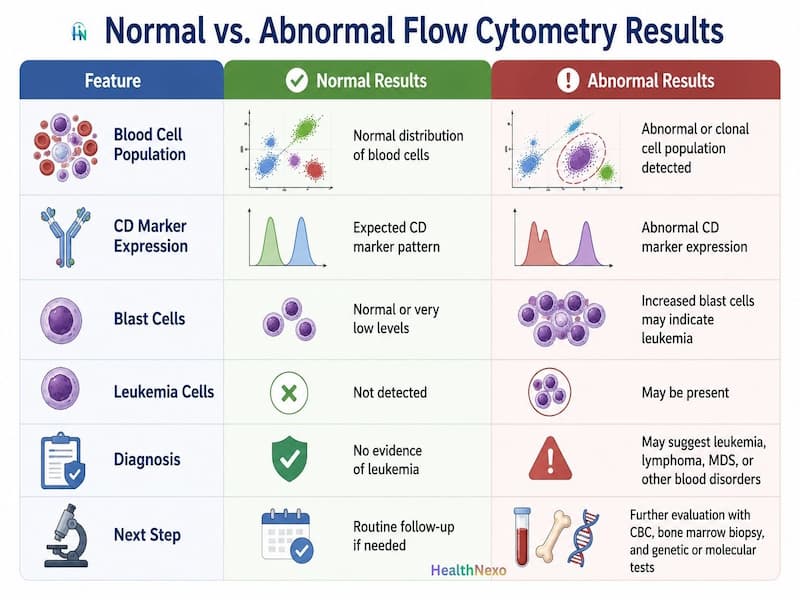
Table 2: Normal vs. Abnormal Flow Cytometry Results
| Feature | Normal Results | Abnormal Results |
| Blood Cell Population | Normal distribution of blood cells | Abnormal or clonal cell population detected |
| CD Marker Expression | Expected CD marker pattern | Abnormal CD marker expression |
| Blast Cells | Normal or very low levels | Increased blast cells may indicate leukemia |
| Leukemia Cells | Not detected | May be present |
| Diagnosis | No evidence of leukemia | May suggest leukemia, lymphoma, MDS, or other blood disorders |
| Next Step | Routine follow-up if needed | Further evaluation with CBC, bone marrow biopsy, and genetic or molecular tests |
Note: Flow cytometry cannot confirm or rule out a diagnosis of leukemia. The physician uses the patient’s symptoms and the medical history and other lab results.
Role of Flow Cytometry in Blood Cancer Diagnosis
The flow cytometry test identifies CD markers on the cells. These markers help distinguish healthy cells from leukemia cells. This information helps doctors make an accurate diagnosis.
The flow cytometry technique can be used for:
- Identify and classify leukemia cells to determine the type of AML, ALL, B-cell or T-cell leukemia.
- Make a differential diagnosis of blood cancers such as lymphoma and leukemia.
- Test how well the treatment works by detecting minimal residual disease (MRD).
- Estimate the risk of relapse and response to therapy in patients with blood cancers.
When Doctors Recommend This Test
Your doctor may suggest a Flow Cytometry Test if you have:
- An abnormal CBC (complete blood count)
- An unusual level of WBC.
- The existence of swollen lymph glands or spleen.
- Fatigue feelings, recurrent infections, easy bruising, or mysterious bleeding.
- The concept of blood cancer is present.
- The test helps monitor how well the treatment is working. It can also detect if leukemia has returned after treatment.
This is an integral part of the doctor’s process of confirmation of the diagnosis of blood cancer and subsequent treatment choice.
Bottom Line
The Flow Cytometry Test for Leukemia is a vital lab diagnostic method for performing diagnosis and classification of blood cancers. It allows for identification of the leukemia cells, determination of the type of leukemia, evaluation of efficacy of treatment administered, and detection of minimal residual disease (MRD).
However, flow cytometry is not a primary diagnostic test. The test can be employed along with CBC findings, results from bone marrow examination, and molecular/genetic analysis of samples. The application of all methods gives a true confirmation of diagnosis.
Frequently Asked Questions (FAQs)
Q1. Can a Flow Cytometry Test Detect Leukemia?
A flow cytometry test is an important part of leukemia diagnosis. However, it is not used alone. Doctors combine the results with blood tests, a bone marrow biopsy, and genetic or molecular tests. Together, these tests help confirm leukemia.
Q2. Is flow cytometry more effective than a routine blood test?
Yes. A routine blood test measures the number of blood cells. A flow cytometry test examines the characteristics of each cell. It also analyzes the pattern of CD markers on the cells. This helps doctors identify abnormal leukemia cells more accurately.
Q3. Can flow cytometry tests detect blood cancer?
Yes, flow cytometry can detect even small numbers of abnormal cells, making it helpful in diagnosing blood cancers.
Q4. Is flow cytometry an accurate test?
Yes, flow cytometry is an accurate test for diagnosing and identifying different types of leukemia when combined with other tests.
Q5. Does a positive flow cytometry always indicate leukemia?
No. A positive flow cytometry result does not always mean leukemia. Similar results can occur in lymphoma, immune system disorders, or other bone marrow diseases. Doctors compare the results with other tests. This helps confirm the correct diagnosis.
References
- World Health Organization (WHO) – Cancer Information
- National Cancer Institute (NCI) – Leukemia and Flow Cytometry Resources
- American Cancer Society (ACS) – Leukemia Diagnosis and Testing
- Leukemia & Lymphoma Society (LLS) – Leukemia Overview
- National Comprehensive Cancer Network (NCCN) – Clinical Guidelines
- International Clinical Cytometry Society (ICCS) – Clinical Flow Cytometry Resources
- Hoffman et al. Hematology: Basic Principles and Practice, Elsevier
- Arber et al. International Consensus Classification of Myeloid and Lymphoid Neoplasms, Blood, 2022
⚕️ Medical Disclaimer
The information provided in this article is for educational and informational purposes only. It is not intended to be a substitute for professional medical advice, diagnosis, or treatment. Always consult a qualified healthcare professional before making any medical decisions, starting any treatment, or changing your current healthcare plan.
Tags:

Md. Rakibul Hasan, BSc (Hons), MS (Thesis)
Biochemistry & Molecular Biology, University of Chittagong, Bangladesh
Senior Biochemist | Health Content Writer | Evidence-Informed Health Information Creator
Popular Diagnostic Centre Limited, Bangladesh.
He specializes in clinical biochemistry, laboratory diagnostics, and medical testing. Alongside his professional work, he is actively involved in health education and scientific communication.
As a Health Content Writer and Research-Based Health Information Creator, he simplifies complex medical and biochemical topics into clear, evidence-informed, and reader-friendly health information.