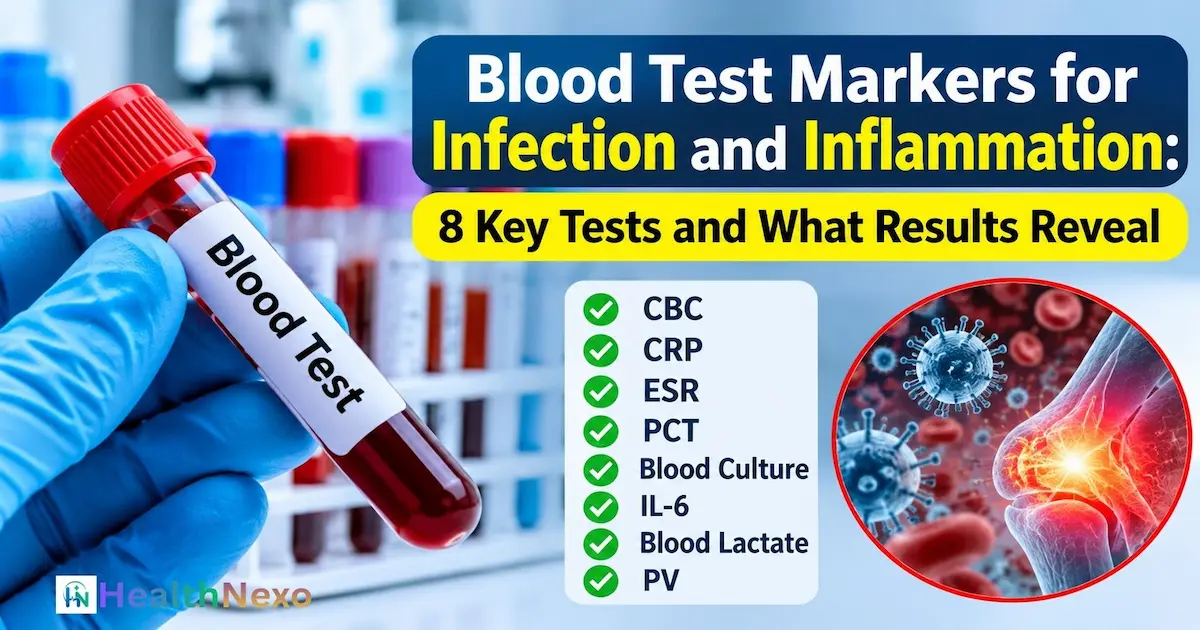
Blood test markers for infection and inflammation help clinicians assess immune responses, inflammatory activity, and signs of severe illness. Common tests include a Complete Blood Count (CBC), C-reactive protein (CRP), Erythrocyte Sedimentation Rate (ESR), and procalcitonin (PCT). Blood cultures can help identify microorganisms in the bloodstream. In certain clinical situations, interleukin-6 (IL-6) and blood lactate may provide additional information. Plasma viscosity (PV) may also help assess certain inflammatory conditions, although it is not a routine test for diagnosing infections.
Infection and inflammation are not the same. Inflammation can occur without an infection, and some infections may not cause significant changes in blood test results.
Important Note: No single blood test can identify every infection or confirm sepsis on its own. Doctors interpret test results alongside symptoms, medical history, and other clinical findings.
Quick Summary
- CBC: Detects changes in the white blood cells and other components of the blood in cases of infection.
- CRP and ESR: Assist in determining the presence of inflammation but cannot detect the source of inflammation.
- Procalcitonin (PCT): May assist in detecting suspected bacterial infection in specific clinical cases.
- Blood culture: Detects bacteria in the bloodstream, and helps to tailor an antimicrobial therapy.
- IL-6: Indicates the inflammatory response and can be used in specific clinical settings.
- Blood lactate: Assists in detecting metabolic stress, and impaired perfusion of tissues.
- Plasma viscosity (PV): Non-specific test that is affected by plasma proteins.
All the findings above should be interpreted alongside clinical symptoms, signs and history along with other investigations. Raised inflammatory markers do not necessarily indicate infection and antibiotics may not be required.
Clinical Importance of Blood Test Markers for Infection and Inflammation
Doctors may request these tests to:
- Examine the possibility of infection or inflammation: Analyze the symptoms like fever, fatigue, unexplained pain, and so forth.
- Evaluate the extent of disease: Monitor inflammatory processes or examine possible disturbances in circulation and metabolism in patients who are critically ill.
- Plan further diagnostic procedures and treatments: Will help to assess if cultures, specific pathogen testing, radiological examination, or further clinical evaluation is required.
These tests have different objectives and cannot be used interchangeably. Their value is determined by the suspected disease, the timing of the test, and clinical presentation of the patient.
How Infection and Inflammation Occur
Infection can be divided into entry into the body, replication and immune activation. Upon detection of the pathogen associated molecules by the PRRS, the inflammatory pathway is activated. This causes the release of pro-inflammatory cytokines such as IL-1, IL-6 and TNF-α. This leads to vasodilatation, increased vascular permeability and recruitment of white blood cells at the site of infection. IL-6 leads to the release of acute phase proteins such as CRP from the liver.
Possible Biological Mechanism:
Pathogen entry → Immune recognition through PRRS, → Cytokine release → Vasodilation and increased vascular permeability → White blood cell recruitment → Acute-phase protein production (e.g., CRP) → Pathogen elimination and tissue repair.
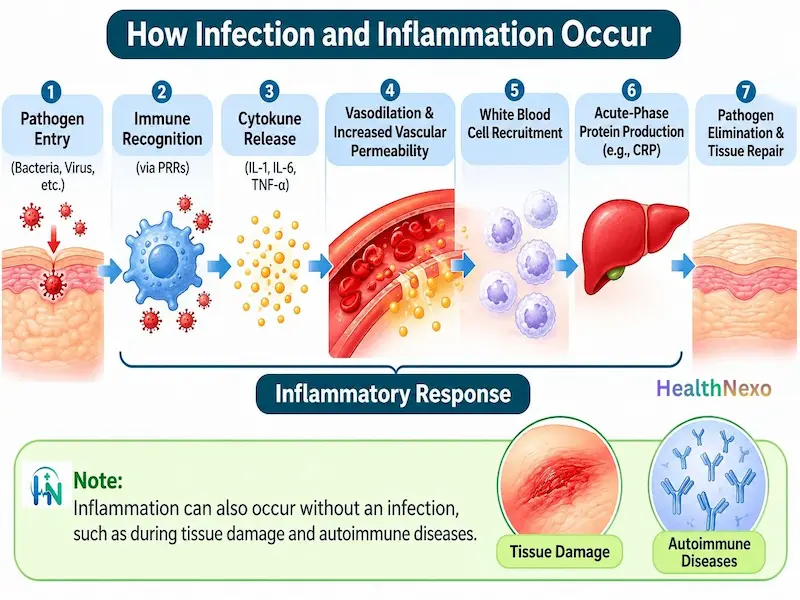
Important Note: Inflammation can occur without an infection present, such as during tissue damage and autoimmune diseases.
How Infection and Inflammation Affect Blood Tests
Inflammatory cytokines influence several laboratory markers during infection and inflammation. These changes may include:
- CBC: Changes in total WBC count and differential, particularly neutrophils.
- CRP and ESR are high because of changes in inflammatory proteins.
- PCT and IL-6: High concentrations in certain systemic inflammatory reactions.
- Lactate: High concentrations in cases of poor tissue perfusion or metabolic distress.
These results do not point exclusively to an infection. The interpretation is dependent on the patient’s clinical picture and investigation results.
8 Blood Test Markers for Infection and Inflammation
1. Complete Blood Count (CBC) With Differential
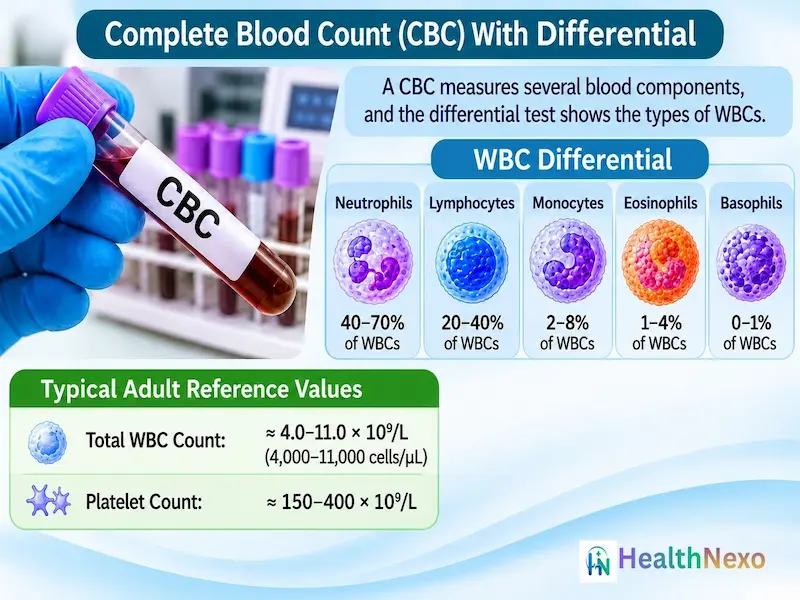
A complete blood count (CBC) measures several blood components, including white blood cells, red blood cells, hemoglobin, and platelets. The complete blood count differential test measures all kinds of WBCs that take part in immune defense.
Typical adult reference values
- Total WBC count: approximately 4.0–11.0 × 10⁹/L (4,000–11,000 cells/µL).
- Neutrophils: approximately 40–70% of WBCs.
- Lymphocytes: approximately 20–40% of WBCs.
- Platelet count: approximately 150–400 × 10⁹/L.
The above are some examples of ranges. Reference ranges depend on many factors, including the lab from which the results are obtained. The range in which the laboratory reports the results should be given priority.
Abnormal results and interpretation
- Leukocytosis: High WBCs can be seen in infection, inflammation, trauma, corticosteroids.
- Neutrophilia: Increased neutrophils can be seen in suspected bacterial infection. It can also be seen following trauma, stress and some drugs.
- Lymphocytosis: Seen in viral infections and other conditions.
- Leukopenia: Reduced WBCs can be seen in viral infections, serious infections, bone marrow problems and drug-induced problems.
- Thrombocytopenia: Reduced platelets can be seen in dengue and other infections, serious systemic illness and non-infectious conditions.
Neutrophils below 1500 are usually suggestive of neutropenia. Anything below 500 is considered severe neutropenia.
Clinical interpretation: CBC with differential is commonly used as part of the initial evaluation of suspected infection. However, it cannot independently confirm or exclude an infection. A normal white cell count does not exclude infection, including serious infection.
2. C-Reactive Protein (CRP)
CRP is an acute phase protein that is released in large quantities by the liver in response to inflammatory cytokines such as IL-6. CRP can increase in the presence of infection, tissue damage or inflammation. Values below 5mg/L are usually considered to be within the normal range in many laboratories.
Typical adult reference value: CRP less than 5 mg/L is generally considered falling within normal limits at many laboratories.
Illustrative interpretation of CRP results
- < 5 mg/L: Likely to fall within the reference range, but there might be early or focal infection.
- 5-10 mg/L: Could be a mild increase, based on the lab and clinical setting.
- 10-100 mg/L: Seen in infections, autoimmune disease, tissue damage, inflammation, among other conditions.
- > 100 mg/L: Indicates high inflammation, which may be due to severe infection but is non-specific for infections.
The ranges above are very broad. CRP concentrations begin increasing from 6–8 hours after stimulation of the inflammatory process and reach their peak at about 36–50 hours.
Clinical interpretation: The test is useful in evaluating inflammation and change in its intensity. Lowering of the CRP indicates improvement, although one should consider clinical parameters along with CRP level. CRP cannot be used for identification of the pathogen and cannot establish the necessity of antibiotics alone.
Important distinction: High Sensitivity CRP (hs-CRP) is mostly used for evaluation of cardiovascular risk due to low-grade inflammation. The CRP test is often used for assessment of acute inflammation.
3. Erythrocyte Sedimentation Rate (ESR)
The ESR test involves measuring the distance red blood cells have moved in a vertical column within an hour. In the case of inflammation, variations in the proteins found in the plasma, especially fibrinogen, facilitate red blood cell clustering.
Illustrative adult reference values
- Men younger than 50 years: approximately 0–15 mm/hour.
- Women younger than 50 years: approximately 0–20 mm/hour.
- Higher reference values may apply to older patients.
Values depend on age, gender, laboratory, and testing method. The reference range from the lab test report is more important.
Abnormal results and interpretation
- Normal ESR: Does not rule out the presence of infection, especially during the initial stages of the disease.
- Elevated ESR: May be seen in infections, autoimmune diseases, chronic inflammation or specific types of malignancy.
- Elevated ESR for a long period of time: It can suggest chronic inflammation or poor response to treatment.
ESR is slower to rise and fall than CRP. It can also be raised in a patient who is recovering from the disease. The ESR can be affected by anemia, pregnancy, age and RBC morphology.
Clinical interpretation: It can be used to help with diagnosis of some chronic inflammatory and infectious diseases. It is not specific and changes very slowly.
4. Procalcitonin (PCT)
Procalcitonin is a protein that serves as a precursor to the hormone calcitonin. It can be raised in the case of bacterial systemic infection due to increased production of procalcitonin in inflammation.
Typical adult reference value: PCT is generally very low in healthy individuals, often below 0.05 ng/mL. The exact reference limit depends on the assay.
Examples of PCT decision ranges used in selected adult clinical protocols
- <0.1 ng/mL: Low PCT concentration; bacterial infection is unlikely, but it cannot be ruled out.
- 0.1 – 0.25 ng/mL: Indicates a low probability of bacterial infection in some cases.
- 0.25 – 0.5 ng/mL: Raises suspicion of bacterial infection, according to the clinical picture.
- >0.5 ng/mL: Supports suspicion of bacterial infection with clinical correlation.
PCT thresholds are intended to support clinical decision-making in specific clinical settings and should not be considered universal diagnostic cutoffs. Procalcitonin testing should not be used alone to diagnose an infection or determine whether antibiotic therapy is needed. Results should be interpreted alongside clinical findings, infection severity, the timing of testing, and other laboratory results.
Factors affecting PCT results: PCT can be low during early infections or localized bacterial infections. It may be used following major surgical operations, injuries, burns, and certain non-infectious conditions.
Clinical interpretation: PCT can give extra data in some instances, but it is merely to be used as an aid to help with the response to treatment. According to the 2026 Surviving Sepsis Campaign guidelines, clinical evaluation alone is preferred over PCT plus clinical evaluation when deciding whether to start antibiotics in adults with possible or probable sepsis or septic shock. However, PCT combined with clinical evaluation may help guide antibiotic discontinuation in selected patients when the optimal treatment duration is uncertain.
5. Blood Culture
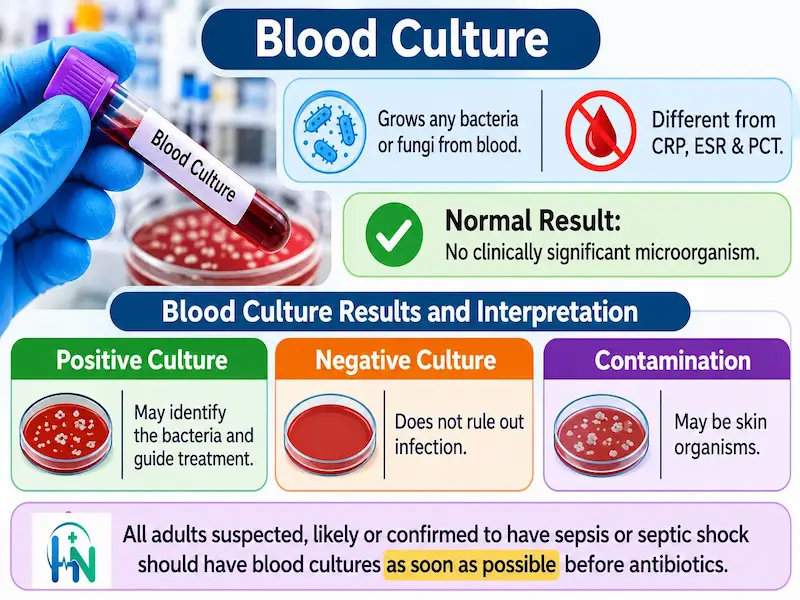
Blood culture is a microbiological test where any bacteria or fungi are grown from a sample of blood. This is different to CRP, ESR and PCT as it does not measure the inflammatory response.
Normal result: No clinically significant microorganism is recovered from the culture. This is a qualitative result, not a numerical reference range.
Blood culture results and interpretation
- Positive culture: May provide information regarding the identity of the bacteria responsible for infection in the blood stream. This would aid in management based on antimicrobial sensitivity.
- Negative culture: Does not mean absence of infection. Previous antibiotic use, insufficient blood taken and intermittent infection in the blood stream can make it hard to detect infection. Some organisms are also more difficult to grow.
- Contamination: The blood can become contaminated with skin organisms. Whether this is significant will depend on the organism, how many sets were positive, how they were obtained and the clinical signs.
All adults suspected, likely or confirmed to have sepsis or septic shock should have blood cultures taken as soon as possible and prior to administering any antimicrobials.
Clinical interpretation: Blood cultures are particularly important if there is a suspicion of infection in the blood stream or sepsis.
6. Interleukin-6 (IL-6)
Interleukin-6 (IL-6) is a pro-inflammatory cytokine synthesized by different cell types. It plays a role in inflammatory pathways and stimulates the production of acute phase reactants by the liver. This includes CRP. IL-6 levels can increase before CRP during inflammation.
Normal values: There are no standard ranges for IL-6 as values will depend on the test, lab, patient population and clinical situation. The range indicated by the laboratory should be used.
IL-6 results and interpretation
- Increased IL-6: May signify immune system activation by an infection, trauma, or any inflammatory disease.
- Significant increase: Is noted in the case of severe systemic inflammation such as sepsis and cytokine release syndrome.
- Normal IL-6: Cannot rule out infection since its levels fluctuate very quickly and are time-dependent.
Clinical interpretation:: IL-6 may provide additional useful data in some specific hospitals and units, but in isolation it is unable to identify a pathogen or sepsis. It is not required to perform in all infections.
7. Blood Lactate
Lactate is produced due to the normal physiology of cells. Lactate levels become elevated when the amount produced is greater than its rate of clearance. Elevated levels of lactate in the critically ill patient may suggest compromised tissue perfusion or a physiologic problem.
Normal adult reference range: Around 0.5–2.2 mmol/L is usually taken as normal, although this varies depending on the type of sample and laboratory.
Lactate test results interpretation
- Result interpretation if within the normal range: Does not exclude sepsis or infection.
- Result interpretation if greater than 2 mmol/L: High lactate but needs to be interpreted considering the circulation status and differential diagnosis.
- Result interpretation of 4 mmol/L or more: elevated level, which can cause concern, particularly in acute care when infection is suspected and inadequate perfusion of tissues.
These are just interpretation values and not criteria to diagnose sepsis. A lactate level of 4 mmol/L is not diagnostic of sepsis.
Other causes of elevated lactate
- Shock or reduced tissue perfusion.
- Seizures or strenuous exercise.
- Severe respiratory or circulatory illness.
- Certain medications and metabolic disorders.
- Impaired lactate clearance, including some cases of liver dysfunction.
Clinical interpretation: Lactate is an indicator of metabolic disturbance or inadequate perfusion of the tissues but does not serve as an indicator of infection. According to the recommendations of the 2026 Surviving Sepsis Campaign, lactate levels should be tested in the case of suspected, probable or confirmed sepsis and septic shock. This measure should be repeated in case it is elevated.
8. Plasma Viscosity (PV)
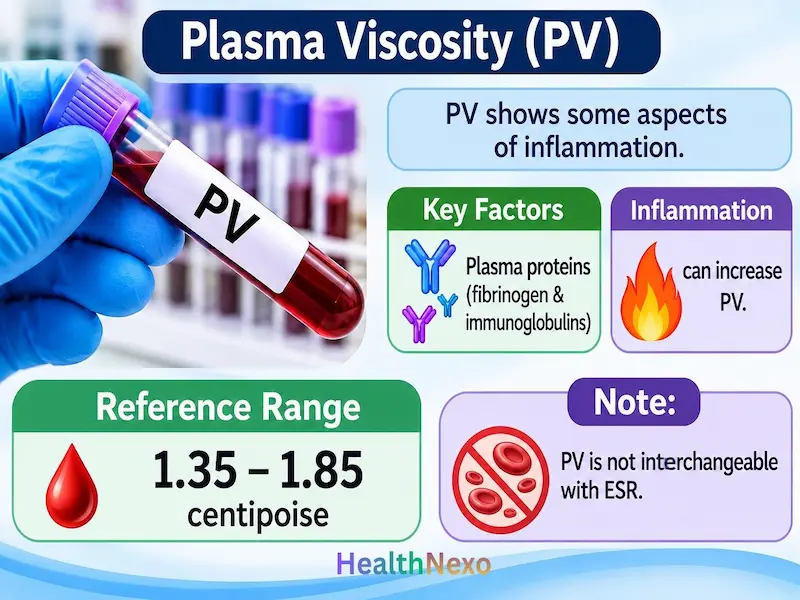
Plasma viscosity refers to the thickness of plasma and how easily it flows. Some of the factors which affect this are plasma proteins such as fibrinogen and immunoglobulins. Inflammation and some diseases affect PV. The PV test does not indicate the presence of microorganisms. PV and ESR show some aspects of inflammation, though they are not interchangeable. PV is relatively immune to some factors affecting ESR and related to red blood cells, including anemia.
Illustrative adult reference range: The reference range is approximately 1.35 – 1.85 centipoise, according to the University of Michigan MLabs. However, the reference intervals can differ depending on the laboratory and methodology used for performing the test.
What PV results may mean
- Reference Range: Does not rule out the presence of infection or inflammation.
- Increased PV: Might be indicative of high levels of plasma proteins such as fibrinogen and immunoglobulins, which are normally seen in inflammation. This might also be due to other disorders that affect the level of plasma proteins.
- Consistently Increased PV: Might be indicative of ongoing inflammation or some other disorder.
Clinical interpretation: Plasma viscosity may prove to be useful in researching the inflammatory response and diseases related to the protein that is found in plasma. However, plasma viscosity is not used extensively in the diagnosis of infections since it does not indicate whether there is infection or the site of infection.
How to Interpret Infection-Related Blood Test Results
Combined blood test results generally provide more useful clinical information than any single marker. Common patterns include:
- High WBC count, neutrophilia, and CRP: May support suspected infection when clinical findings are compatible.
- High CRP with normal WBC: May occur in early or localized infection or non-infectious inflammation.
- Elevated PCT: May raise concern for systemic bacterial infection but requires clinical assessment.
- Positive blood culture: May identify a bloodstream pathogen and help guide targeted antimicrobial treatment.
- Elevated lactate with low blood pressure or poor perfusion: May indicate serious physiological disturbance requiring urgent assessment.
They serve as markers but do not serve as diagnostic criteria. Bacterial infections can happen if the number of white blood cells is normal or the PCT is low, but viral infections will lead to increased CRP levels. There is no single test that can confirm sepsis. The following tests will be done if there is suspicion of certain types of infections.
When to Seek Urgent Medical Assessment
An infection with any of the following symptoms demands immediate medical evaluation:
- Confusion, lack of awareness, and difficulty being aroused.
- Difficulty breathing or increased rate of breathing.
- Faintness, dangerously low blood pressure, or signs of poor circulation.
- Lack of urination.
- Extreme weakness and progressive deterioration of symptoms.
- Cold, moist skin, mottled, and strangely discolored skin.
Such a presentation may indicate severe infections like sepsis. Sepsis is an emergency condition that demands urgent treatment and does not require any laboratory test results.
Final Thoughts
Blood Test Markers for Infection and Inflammation offer different information in regard to immune response, inflammation, infections in the blood and physiological stress. This depends on the specific disease and time of testing, as well as the general condition of the patient. The tests can never be used to diagnose and exclude all infections. The right interpretation comes from the clinical evaluation of the doctor, together with lab and microbiology tests. Abnormal test results do not mean there is an infection requiring treatment with antibiotics.
Frequently Asked Questions (FAQs)
Q1. Which blood tests help detect infection and inflammation?
Blood tests such as CBC, CRP, ESR, PCT, and blood culture are often done. Other tests like IL-6, lactate, and plasma viscosity give more information on certain medical conditions.
Q2. Can a blood test confirm an infection?
Some tests are used to identify specific infections, but there are infections that cannot be detected using one test. Some infections are detected using blood cultures, while others need the aid of other tests.
Q3. What blood test results suggest inflammation?
Results showing elevated CRP, high ESR, and WBC count can indicate the presence of inflammation. These results can also be present in some non-infectious conditions.
Q4. Can blood tests distinguish bacterial infections from viral infections?
PCT and some other markers can be used in some cases. The results might be similar for both infections.
Q5. Does a normal white blood cell count rule out infection?
No. Infection can occur even when the WBC count is normal, particularly during early illness or in people with weakened immune systems.
References
- Prescott HC, Antonelli M, Alhazzani W, et al. Surviving Sepsis Campaign: International Guidelines for Management of Sepsis and Septic Shock 2026. Society of Critical Care Medicine. Read the 2026 guideline.
- Centers for Disease Control and Prevention (CDC). Clinical Care of Sepsis. Read the clinical guidance.
- MedlinePlus. Complete Blood Count (CBC). Read the test overview.
- MedlinePlus. White Blood Count (WBC). Read the test overview.
- MedlinePlus. C-Reactive Protein (CRP) Test. Read the test overview.
- MedlinePlus. Erythrocyte Sedimentation Rate (ESR). Read the test overview.
- MedlinePlus. Procalcitonin Test. Read the test overview.
- Tanaka T, Narazaki M, Kishimoto T. IL-6 in Inflammation, Immunity, and Disease. Cold Spring Harbor Perspectives in Biology. 2014;6(10). Read the full article.
- MedlinePlus. Lactate Test. Read the test overview.
- University of Michigan MLabs. Viscosity (Plasma Viscosity). Read laboratory test information and reference range.
- Kesmarky G, Kenyeres P, Rabai M, Toth K. Plasma viscosity: a forgotten variable. Clinical Hemorheology and Microcirculation. 2008;39(1–4):243–246. Read the publication record.
Medical Disclaimer
This article is to be taken in its true educational sense only, and decisions pertaining to any kind of diagnosis or medication should not be based on information provided by this article alone. Reference ranges vary among laboratories, and lab tests have to be interpreted in the context of other clinical findings. All infections cannot be ruled out or diagnosed with just one test. Do not alter your medication based on information presented in this article.

Md. Rakibul Hasan, BSc (Hons), MS (Thesis)
Biochemistry & Molecular Biology, University of Chittagong, Bangladesh
Senior Biochemist | Health Content Writer | Evidence-Informed Health Information Creator
Popular Diagnostic Centre Limited, Bangladesh.
He specializes in clinical biochemistry, laboratory diagnostics, and medical testing. Alongside his professional work, he is actively involved in health education and scientific communication.
As a Health Content Writer and Research-Based Health Information Creator, he simplifies complex medical and biochemical topics into clear, evidence-informed, and reader-friendly health information.