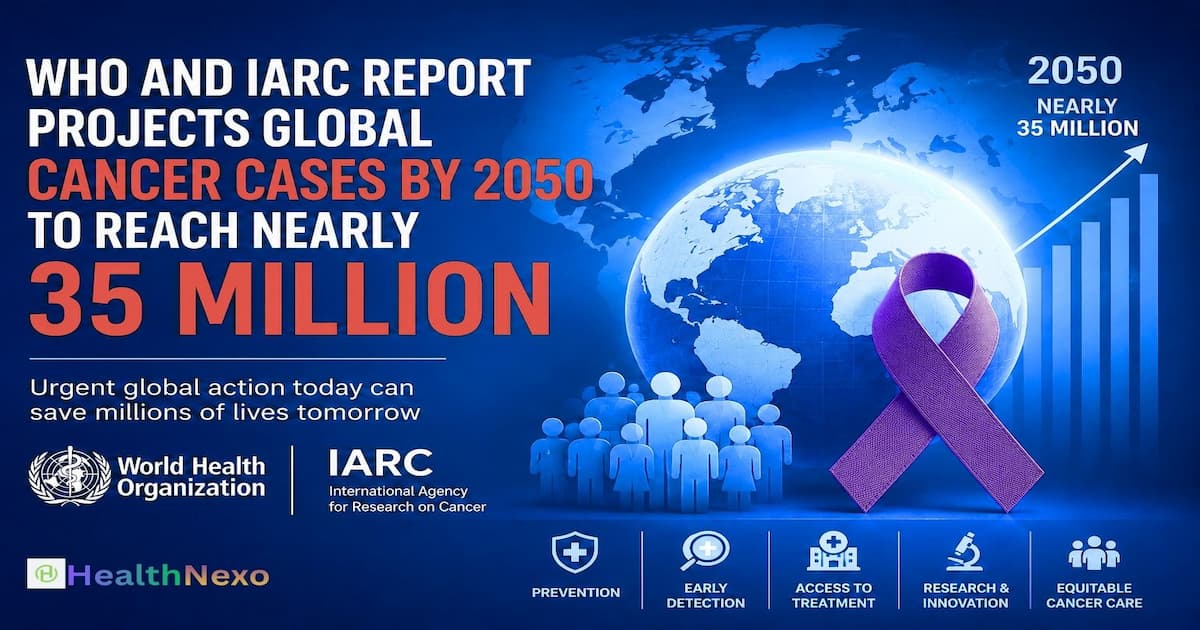
A global report by WHO and IARC has recently been published. The report states that if current trends continue and prevention measures are not strengthened, Global Cancer Cases by 2050 could reach nearly 35 million new cases annually. The increase indicates an urgent need to improve cancer prevention, detection, timely treatment and support, experts said.
This report notes the rising burden of cancer around the globe. A large proportion of cancers are preventable. WHO cites population growth and an aging population as two key reasons for the forecasted rise in the rate of cancer cases.
Other factors that will contribute to the predicted increase include health risks associated with lifestyles and unequal access to healthcare, which will cause an additional millions of people to have cancer within the next 25 years. Although significant medical advances against cancer have been made, there is still further to go.
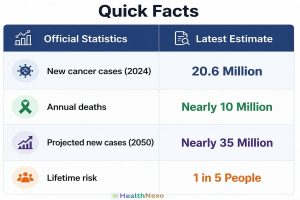
Quick Facts: Global Cancer Cases by 2050
WHO and IARC projects that the world had 20.6 million new cancer cases, including approximately 10 million deaths from cancer in 2024. If current trends persist, annual Global Cancer Cases could approach 35 million in 2050 and approximately one in five people globally can expect to develop cancer in their lifetime.
Research & Data Analysis
WHO and IARC reports suggest that the number of cancer cases each year will grow from 20.6 million in 2024 to 35 million in 2050. There is a projected 77% increase. Other research suggests that 30% to 50% of cancers can be prevented. The ways to do this include smoking cessation, immunization, a healthy lifestyle, and screening programs.
Global Cancer Burden Continues to Grow
Cancer is one of the leading causes of death worldwide and accounts for nearly 10 million deaths each year. The WHO and IARC calculate that there have been as many as 20.6 million new cancer cases reported this year, and some 10 million deaths globally caused by cancer. But researchers project that if trends continue, that could become 35 million new cases per year by 2050.
Global Cancer Cases by 2050: Regional Statistics and Trends
There are variations between each region in population, screening services available and accessibility of treatment. Thus, the pattern of cancer prevalence differs between the regions.
| Region | Share of new cancer cases | Mortality Trend | Growth Trend by 2050 | Healthcare Access |
| Asia | 50.7% | High | Rapid Increase | Moderate |
| Europe | 21.0% | Moderate | Moderate Increase | Excellent |
| Africa | Lower incidence | Very High | Fastest Growth | Poor |
| North America | High | Low | Moderate Increase | Excellent |
| Latin America & Caribbean | Moderate | Moderate to High | Significant Increase | Limited |
| Oceania | Small share | Low | Gradual Increase | Excellent |
Table Note: Healthcare Access is a qualitative summary based on regional differences in screening, diagnosis, treatment availability, and healthcare infrastructure reported by WHO and IARC. It is not an official WHO rating.
Why Are Global Cancer Cases Rising?
WHO and IARC say several factors are driving the projected rise in global cancer cases by 2050. The growing population and aging have resulted in more people being exposed to higher risks of cancers due to age. Yet, there still remain avoidable environmental and lifestyle risk factors that have played a substantial role in the increased global burden of cancers.
Key risk factors include:
- Cigarette smoking
- Alcohol misuse
- Being overweight or obese
- Lack of exercise
- Poor diet
- Contamination of air
- Overexposure to UV radiation
- Chronic infections such as HPV, Hepatitis B, Hepatitis C, and Helicobacter pylori
WHO believes that numerous cancers could have been prevented had people avoided these risk factors.
Unequal Access to Cancer Care Remains a Major Challenge
Some of the important issues discussed in the report that need to be resolved in regard to cancer care around the world include the following:
- Access to cancer screening and early detection facilities for people living in rich countries.
- Increased availability of cancer treatment and cancer drugs.
- Better survival rates in countries with more developed healthcare systems.
- Late diagnosis in many developing and underdeveloped countries.
- Inadequate access to cancer treatment and medical facilities.
- Shortage of skilled workers like nurses, oncology specialists.
The WHO said that tackling these inequalities was vital if they were to improve the global cancer outcome and give all people access to cancer care.
Prevention Could Save Millions of Lives
The WHO reiterates prevention as the cheapest form of tackling the global burden of cancer and the main recommended interventions are:
- Do not smoke tobacco
- Limit alcohol consumption
- Maintain normal body weight
- Stay active
- Eat well, and consume a balanced and nutritious diet
- Get the recommended HPV and hepatitis B vaccinations
- Reduce sun exposure and protect your skin from it
The world organization WHO recommends that all of these preventive measures can greatly reduce your chances of developing this disease and promote a healthy public
Early Detection Improves Survival
Many experts agree that early detection has historically been one of the most reliable strategies to improve cancer survival. Early detection has always been associated with improved treatment results. It may also help in lowering mortality from cancer. The WHO encourages everyone eligible to participate in recommended cancer screening services. These include screenings for breast cancer, cervical cancer, and colorectal cancer.
Challenges That Still Need Attention
Despite the improvements, the report identifies key challenges that are still undermining cancer care across the world:
- Inadequate screening services and health care systems leading to delays in diagnosis
- Disparities in access to cancer medicines, especially in lower and middle-income countries
- Scarcity of cancer health workers, including oncologists, surgeons, nurses, pathologists, and radiologists.
According to WHO, these shortcomings must be addressed in order to boost cancer survival and make health systems more robust against the projected increase in the global cancer burden.
WHO Calls for Stronger Global Action
WHO and IARC are calling for stronger global action to address the projected rise in Global Cancer Cases by 2050. It is suggested that collaboration is required among governments, health care facilities, researchers, and communities. Increased funding for cancer prevention and early detection programs is necessary. Access to equal treatment for all patients is another necessity. IARC and WHO hope that through joint initiatives and expanded research, the future toll of cancer can be reduced.
Key priorities include:
- Strengthen national cancer control programs
- Make cancer prevention and early detection available for more people
- Develop affordable and accessible diagnosis and treatment
- Include cancer care within universal health coverage
- Increase investment in cancer research, innovation, and health workforce development
- Bridge disparities in cancer care within countries and between them
- Provide life care for patients and caregivers with extensive survivorship care.
According to WHO, actions today can prevent millions of cancer cases and deaths in the future and also save lives and increase the quality of life of many people globally.
Looking Ahead
Global Cancer Cases by 2050 could approach 35 million annually if current trends continue. However, experts emphasize that this future is not inevitable. Stronger prevention, early detection, and equitable access to treatment could save millions of lives worldwide.
Key Takeaways
- Cases may rise to near 35 million a year globally by 2050 at this rate.
- More people, living longer and with risk factors which can be prevented, have caused this to grow.
- Lifestyle choices, tobacco control, and vaccination, however, have made sure cancers can be prevented.
- When cases are diagnosed and dealt with sooner, survivors’ chances increase significantly.
- Everyone must get fair entry to care across the globe
Frequently Asked Questions (FAQs)
Q1. What is the projected number of global cancer cases by 2050?
WHO and IARC estimate that annual global cancer cases could reach nearly 35 million by 2050 if current trends continue.
Q2. Why are cancer cases increasing worldwide?
The main reasons include population growth, aging, unhealthy lifestyles, and unequal access to healthcare.
Q3. Can cancer be prevented?
Yes. Many cancers can be prevented through healthy lifestyle choices, vaccination, regular screening, and avoiding tobacco and excessive alcohol.
References
- World Health Organization (WHO). Global Status Report on Cancer 2026. Geneva: World Health Organization.
- International Agency for Research on Cancer (IARC). Global Cancer Observatory (GCO): Cancer Today. Lyon: IARC.
- World Health Organization. Cancer Fact Sheet. Geneva: World Health Organization.
- National Cancer Institute (NCI). Cancer Statistics. Bethesda, MD: National Cancer Institute.
- World Health Organization. Global Initiative for Cancer Control. Geneva: World Health Organization.
Sources
- World Health Organization (WHO)
- International Agency for Research on Cancer (IARC)
- National Cancer Institute (NCI)
Editor’s Note: This article is based on information published by the World Health Organization (WHO) and the International Agency for Research on Cancer (IARC). Readers should consult healthcare professionals for personalized medical advice.
⚕️ Medical Disclaimer
The information provided in this article is for educational and informational purposes only. It is not intended to be a substitute for professional medical advice, diagnosis, or treatment. Always consult a qualified healthcare professional before making any medical decisions, starting any treatment, or changing your current healthcare plan.
Tags:

Md. Rakibul Hasan, BSc (Hons), MS (Thesis)
Biochemistry & Molecular Biology, University of Chittagong, Bangladesh
Senior Biochemist | Health Content Writer | Evidence-Informed Health Information Creator
Popular Diagnostic Centre Limited, Bangladesh.
He specializes in clinical biochemistry, laboratory diagnostics, and medical testing. Alongside his professional work, he is actively involved in health education and scientific communication.
As a Health Content Writer and Research-Based Health Information Creator, he simplifies complex medical and biochemical topics into clear, evidence-informed, and reader-friendly health information.