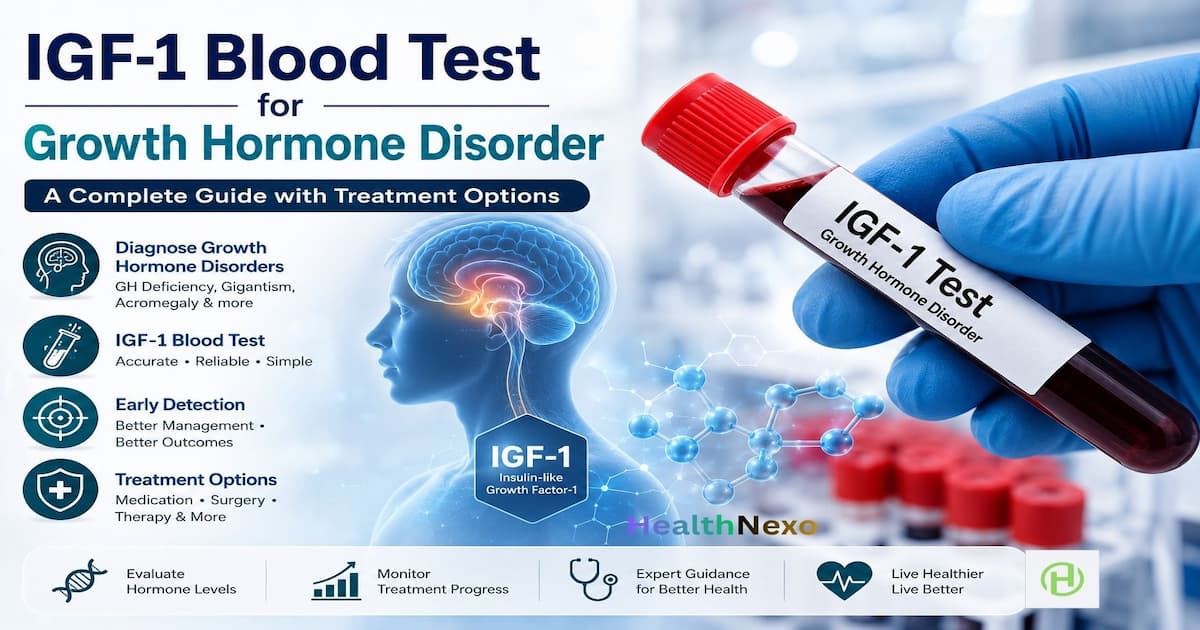
An IGF-1 blood test for growth hormone disorder is a straightforward and highly effective test and diagnostic tool to determine the growth hormone level within the blood stream. This blood test checks for IGF-1 test level, a very accurate hormone that is stimulated by growth hormone (GH) and it is then released from the liver. However, in certain circumstances, your IGF-1 blood samples might be abnormal and these include: growth hormone deficiency, gigantism or acromegaly and / or another endocrine disorder.
An abnormality in the level of IGF-1 may be suggestive of various diseases associated with growth hormones, such as growth hormone deficiency, gigantism, acromegaly, among others. Early diagnosis of these diseases is essential since an imbalance in hormones could affect physical development as well as general wellbeing.
This guide is intended to inform you about the importance of your IGF-1 blood test for growth hormone disorder or problems. It will explain the procedure of the growth hormone blood test, why abnormalities in results are significant, and how problems like growth hormone deficiency, gigantism and acromegaly can be treated.
Insulin-like Growth Factor-1 (IGF-1) Blood Test
This is a blood test where the amount of GH in the blood stream can be assessed. GH is growth hormone, it makes the liver release growth hormone, which it is stimulated to do immediately. It is the main link responsible for the growth-enhancing effects of GH on the pituitary. It is necessary for normal growth and metabolism. The IGF-1 protein is necessary for various processes including:
- Normal physical growth during childhood
- Normal growth in childhood and adolescents
- Growth of bone and muscle
- Cell repair and regeneration
- Regulation of metabolism, including protein, carbohydrate, fat etc.
Importance of IGF-1 Testing
This is known to be a stable indicator of GH action due to the absence of fluctuations throughout the day and hence has been found to be a useful indicator for diagnosis and management of disorders of the GH axis in the IGF-1 blood test for growth hormone disorder.
Key importance:
1. GH deficiency (GOD): it’s defined as GH production that is too low and results in poor growth, short height, small genitals in children and in adults reported fatigue, loss of muscle and bone mass and increased body fat.
2. Acromegaly: The condition is due to hyper secretion of growth hormone in adulthood and signs/symptoms are enlarged features (feet, hands and face), joint pain, diabetes, headaches and even loss of sight.
3. Gigantism: This is caused by excessive GH production either in childhood or adolescence prior to growth plate fusion and this condition is characterized by exceptional height and disproportionate growth.
IGF-1 Blood Test Procedure
The IGF-1 blood test for growth hormone disorder is a fast and simple blood test that will indicate to the doctor the present amount of Insulin-like Growth Factor in the bloodstream. A small amount of blood is needed and should not be very time-consuming to complete.
Pre-test preparation:
- Fasting for 8 to 12 hours if requested by the doctor
- Adequate water intake to prevent dehydration
- Tell the doctor if taking medication or supplements
- If requested by a doctor, refrain from intense exercise.
Test method:
Specimen collection tube:
- Red-top tube (serum tube with no anticoagulant)
During the test:
The identity of the patient is confirmed, and the procedure explained by a health care professional.
- A tourniquet is tied to the upper arm, causing the vein to be more prominent.
- The site of the puncture is cleaned with an antiseptic solution.
- A sterile needle is inserted into a vein (usually in the arm)
- A small sample of blood is taken in a tube.
- The needle is withdrawn, and pressure is applied to stop any bleeding from the vein.
- A bandage is placed over the wound.
Post-test care:
- The patient can return to normal activities immediately.
- There may be some bruising or slight tenderness, but this is short-lived.
Lab analysis and results:
Next, the blood sample is taken to the laboratory to be analyzed and the growth hormone test results are compared to the values for the age and sex. The results can usually be received within a few days. The doctor reviews the results for further diagnosis or treatment if needed.
Normal Range Note: The range of IGF-1 normal range varies greatly according to sex, age, and laboratory standards, and must always be interpreted with respect to normal individual values.
Normal range of IGF-1
Actual normal ranges may vary slightly between laboratories but generally the ranges will be something like:
- Children/Adolescents: The range will be slightly higher given the rapid growth in these age ranges.
- Adults (18–40): Approx 100–300 ng/mL (may vary with laboratory)
- Middle-aged adults: Starting to reduce compared to younger adults.
- Older adults: Low levels are seen to be normal given the decrease in growth hormone activity with age
IGF-1 reference ranges by age
IGF-1 is a hormone that is found to decrease with age. It should be interpreted based on age. Reference ranges vary among labs, but normal ranges are approximately:
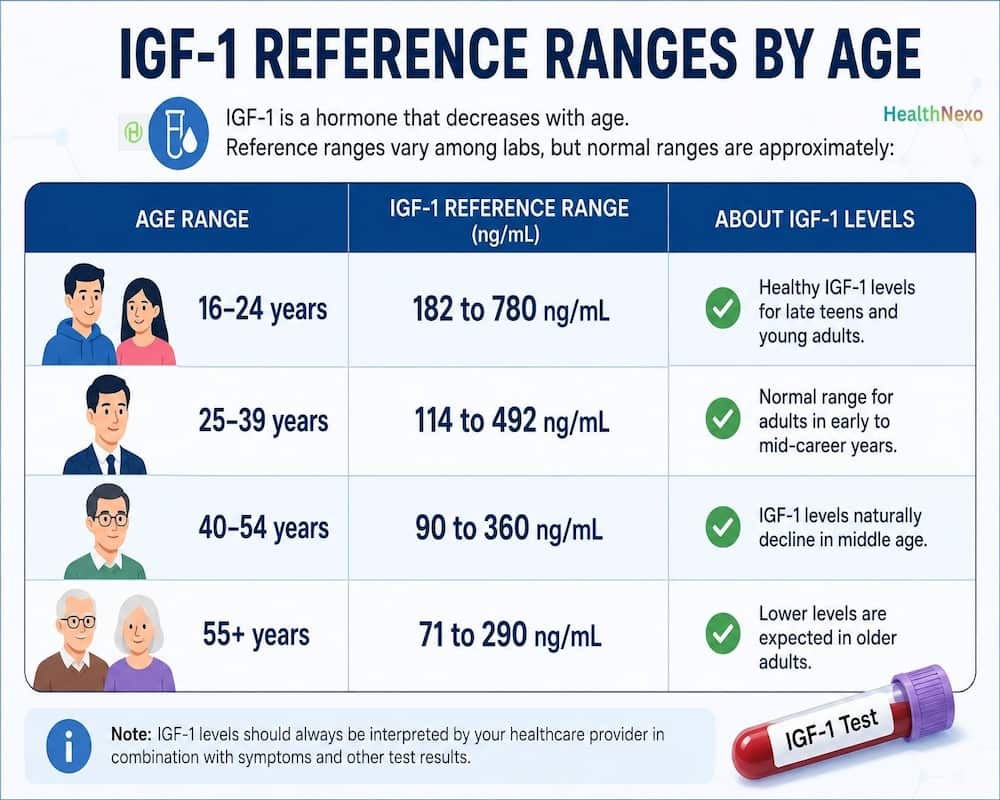
- 16–24 years: 182 to 780 ng/mL
- 25–39 years: 114 to 492 ng/mL
- 40–54 years: 90 to 360 ng/mL
- 55+ years: 71 to 290 ng/mL
In adults, a low level of IGF-1 may show that you have growth hormone deficiency, illness, poor nutrition, or are aging. A high level of IGF-1 can show evidence of acromegaly or growth hormone overdose.
High IGF-1 level Interpretation:
Elevated levels may mean that there is an excess amount of growth hormone activity in the body.
Causes of high IGF-1 level:
- Acromegaly (adult form)
- Gigantism (children)
- A tumor on the pituitary gland that overproduces GH
- Other rare hormonal issues
Symptoms of high IGF-1 level:
- Enlargement of hands, feet, facial features
- Joint pain
- Sweatiness
- Headaches or problems seeing
High IGF-1 level may require further investigation to reach a diagnosis. Other tests are a test for suppression of growth hormone and imaging of the pituitary gland (MRI).
Low IGF-1 level Interpretation:
Low level suggests not enough growth hormone is being produced, or some other abnormality.
Causes of low IGF-1 Level:
- Growth hormone deficiency
- The pituitary gland is not functioning correctly.
- Poor eating habits, being underfed
- Chronic problems with the liver or kidneys
- Critical systemic illness
Symptoms of low IGF-1 Level :
- Slowed growth and small stature in children
- Fatigue, lack of muscle mass and increased body fat in adults
Low IGF-1 levels usually require further testing to confirm the condition. Other tests include a growth hormone stimulation test to determine GH deficiency.
Borderline or normal values with symptoms
If the IGF-1 levels are normal and there is evidence of problems, it might be important to investigate further for abnormalities with other pituitary hormones.
Key Interpretation Points
- IGF-1 alone is not enough for a final diagnosis
- Results must be combined with clinical symptoms and other hormone tests.
- Age adjusted reference ranges are to be taken into consideration for correct interpretation.
- Repeat testing may be needed to confirm an abnormal value.
Factors Influencing IGF-1 levels
- Age: Increases rapidly throughout puberty and falls slowly thereafter.
- Nutritional status: Protein-calorie malnutrition will cause a drop in GH secretion.
- Liver function: GUI is made in the liver and, as such, disease of the liver can cause a drop in GH secretion.
- Endocrine disturbances: Panhypopituitarism, GH resistance, GH excess.
- Medication: GH therapy can increase IGF-1 levels, as many corticosteroids and estrogen reduce them.
Treatment Options for Growth Hormone Disorders
More common disorders of GH include GH deficiency, gigantism and acromegaly and they both involve either not enough or too much GH. These can be diagnosed by an IGF-1 blood test for growth hormone disorder and the treatment approach to any one of them will vary depending on what has caused the disease and the age and severity of the problem.
The aim of the treatment is to achieve normal levels of GH, reduce the symptoms and avoid the problem becoming worse.
1. Growth Hormone Replacement Therapy (GHRT)
The management of a growth hormone deficient patient is typically replacement therapy. It can be provided in the form of laboratory produced synthetic human growth hormone administered to compensate for the lack of the endogenous hormone. This treatment provides normal growth and metabolic activity in children and adults if proved deficient.
Benefits:
- Promotes normal height growth in children
- Builds muscle mass and strength in adults
- Boosts energy and reduces fatigue
- Improves bone density and health
- Normalizes the concentration of IGF-1 in the blood
The treatment is typically a lifelong therapy with monitoring of IGF-1 levels through blood tests.
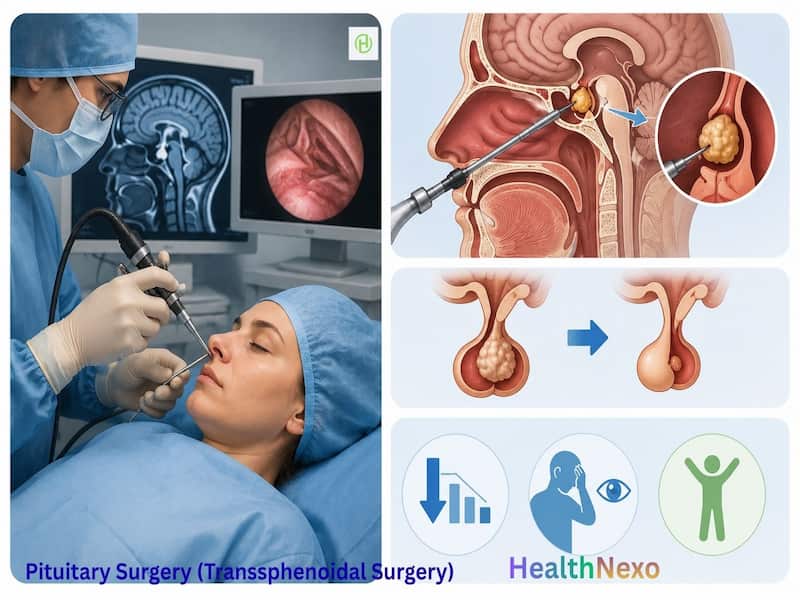
2. Pituitary Surgery (Transsphenoidal Surgery)
A highly frequent indication of a surgery on the pituitary gland is the treatment of gigantism or acromegaly due to a pituitary tumor. The surgery is carried out through the nose where the tumor is removed from the pituitary gland. Removing the tumor reduces a substantial amount of growth hormone being overproduced.
Benefits:
- Rapid reduction of growth hormone levels
- Reduction of symptoms, e.g. Headaches, vision impairment
- In many cases, it can lead to complete remission.
However, in some patients, complete tumor removal may not be possible, and additional treatment may be required.
3. Somatostatin Analogs
This drug works by reducing the secretion of the growth hormone from the pituitary gland. It is also frequently used to treat acromegaly. It works by reducing the secretion of the growth hormone, therefore also reducing the amount of IGF-1 in the blood. This then inhibits activity in the pituitary tumor and decreases symptoms like sweating, fatigue and joint pain and decreases pituitary tumor growth.
Common drugs examples:
- Octreotide
- Lanreotide
- Pasireotide
4. Growth Hormone Receptor Blockers
Growth hormone receptor blockers block its action rather than its production. In general, within the liver, they are known to bind to growth hormone receptors and prevent the binding of GH, which in turn prevents its production within the liver, thus inhibiting the liver from producing IGF-1. Other mechanisms will prevent the unwanted effects of excess growth hormone.
It has very good efficacy for correction of IGF-1 levels, particularly in those patients who do not respond to other forms of treatment, and very good efficacy for reduction of metabolic side effects and augmentation of insulin sensitivity.
- Example: Pegvisomant
5. Radiation Therapy
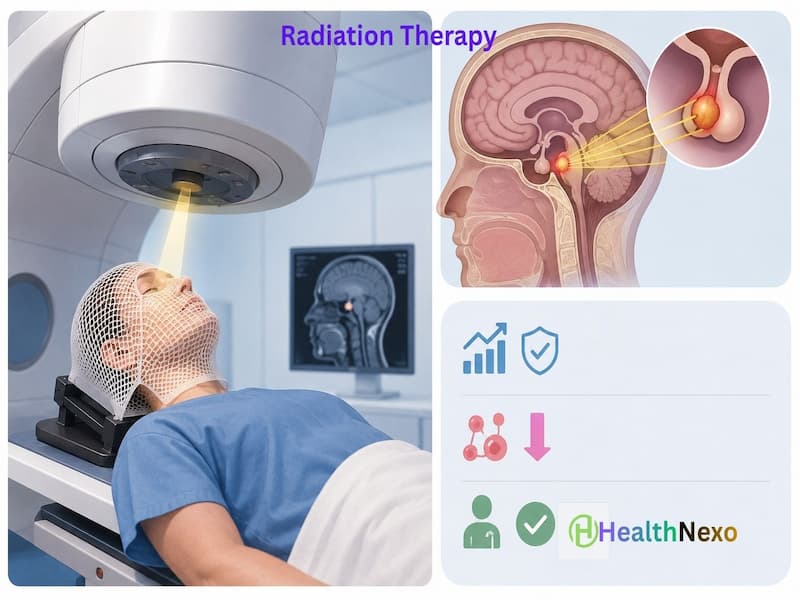
In cases where surgery and drugs are not enough for excessive growth hormone conditions, radiation therapy can be a good choice. Their effects are to destroy the remaining pituitary tumor cells and the amount of growth hormone slowly reduces.
Benefits:
- Controls tumor growth over time
- Helps reduce excess hormone secretion
- Useful when surgery is incomplete or not possible
Benefits of combination therapy
In many patients, a combination of treatments is required:
- Surgery + medication
- Medication + radiation
- Long-term GH or IGF-1 monitoring
With the combo therapy approach, this may help to cure many people in terms of hormone imbalance and better the quality of their lives with a physician’s proper supervision.
When Should You See a Doctor?
Seek medical attention from a doctor for the child or yourself if:
- There are unexplained growth disorders
- Hands, feet or features of the face seem to be growing abnormally large
- Extreme fatigue
- Development delays are occurring
- There are signs and symptoms indicating a hormonal imbalance.
- Early detection can greatly benefit treatment.
Key Takeaways
This type of blood test, an IGF-1 blood test for growth hormone disorder, would also be very beneficial to the doctor for finding out about growth hormone disorders. There are numerous disorders which are characterized by being associated with a variety of growth hormone disorders, including growth hormone deficiency, gigantism, and acromegaly.
A blood test of this nature is based on the test of the levels of insulin-like growth factor in an effort to investigate the state of the hormones and the system responsible for growth. As it is generally said that the sooner the condition is detected, the easier it is to treat and cure. If you think that you may have contracted one of the mentioned diseases, then it may be a good choice to use a blood test for IGF-1.
Frequently Asked Questions (FAQs)
Q1. What medication is used to treat high IGF-1 levels?
Generally, the elevated IGF-1 is treated with somatostatin analogues such as octreotide and lanreotide. The growth hormone receptor blocker, pegvisomant, and DOPamine agonists are also used in specific cases.
Q2. How to improve IGF-1 levels?
Diet, exercise, sleep, stress levels and weight control are all crucial to achieving optimal levels of IGF-1 and should a medical reason be present, then a doctor can issue growth hormone treatment.
Q3. What is the best treatment for growth hormone disorders?
Treatment is condition-specific. Deficiencies are treated with hormone replacement while oversecretion (like acromegaly) may be managed surgically and with drugs (somatostatin analogs, pegvisomant).
Q4. What is the use of IGF-1 supplement?
There is little scientific evidence behind taking supplements of IGF-1 for muscle growth, or as an anti-aging treatment. Medicinally, You should always take the advice of a doctor before taking supplements of IGF-1.
Q5. Can treatment normalize IGF-1 levels?
In many circumstances, it may be possible to restore the patient’s IGF-1 to normal levels through an appropriate treatment regimen.
 Medical Disclaimer
 Medical Disclaimer
The information provided in this article is for educational and informational purposes only. It is not intended to be a substitute for professional medical advice, diagnosis, or treatment. Always consult a qualified healthcare professional before making any medical decisions, starting any treatment, or changing your current healthcare plan.
Tags:

Md. Rakibul Hasan, BSc (Hons), MS (Thesis)
Biochemistry & Molecular Biology, University of Chittagong, Bangladesh
Senior Biochemist | Health Content Writer | Evidence-Informed Health Information Creator
Popular Diagnostic Centre Limited, Bangladesh.
He specializes in clinical biochemistry, laboratory diagnostics, and medical testing. Alongside his professional work, he is actively involved in health education and scientific communication.
As a Health Content Writer and Research-Based Health Information Creator, he simplifies complex medical and biochemical topics into clear, evidence-informed, and reader-friendly health information.