Hair loss can be very disappointing for young individuals when hair thinning or patches start to appear sooner than anticipated. These developments are creating new hope for hair loss treatment in young adults, although many of the newest therapies are still being tested in clinical trials.
The field of study is growing exponentially. Based on an analysis conducted in 2026 on the ClinicalTrials.gov website, 514 trials have been conducted on hair loss between 2015 and 2025, where registrations have been increasing every year from 29 in 2015 to 87 in 2025. Androgenic Alopecia and Alopecia Areata are the two most studied diseases.
Some of the new technologies that are gaining recognition include VDPHL01, PP405, and immunotherapy for
Key Takeaways
Hair loss in young adults can have genetic, hormonal, immune, nutritional, or systemic causes.
VDPHL01 and PP405 are promising investigational hair-regrowth approaches.
Ritlecitinib offers a targeted treatment option for severe alopecia areata.
Early diagnosis helps identify the cause and guide appropriate treatment.
Emerging therapies are moving toward targeted, personalized hair-regrowth strategies.
Common Causes of Hair Loss in Young Adults
There could be many reasons for the loss of hair among young adults. However, the type of hair loss can help us understand what is actually going on.
In addition, this kind of balding is also referred to as patterned baldness, which has genetic and androgen influences. Di-hydrotestosterone (DHT) in susceptible hair follicles may be responsible for the miniaturization of the follicles.
This gradual process can make the scalp increasingly visible.
Alopecia Areata
Alopecia areata is an immune disorder where the immune system attacks the hair follicles. This results in patches of hair loss occurring all of a sudden.
Other Possible Causes
Hair loss in young adults can also be associated with:
Nutritional deficiencies, including low iron or anemia
Thyroid disorders
Illness, significant stress, or major weight changes
Because different causes call for different methods to handle them, finding out the cause is one crucial initial step.
The New Science Behind Hair Loss Treatment
Most conventional therapies have been concentrated on delaying hair fall or minimizing follicle miniaturization. The latest scientific developments are looking into an alternative solution by concentrating on the biology of hair follicles. There are several exciting new approaches being studied, such as:
Androgen signaling: To help reduce the follicle miniaturization linked to androgen-related hair loss.
Hair-follicle stem cells: To understand how these cells could be activated to support new hair growth.
Immune pathways: To target the immune processes involved in conditions such as alopecia areata.
Local metabolic pathways: To investigate how metabolism within the follicle may influence hair growth and follicle activation.
Advanced drug delivery: To develop new ways of delivering treatments directly to the scalp or hair follicle for better effectiveness.
In general, this discipline is slowly progressing from mere retardation of hair loss to reactivation of dormant follicles and regeneration of damaged follicles. This transition is among the key factors that have made new hair loss treatments increasingly interesting for science.
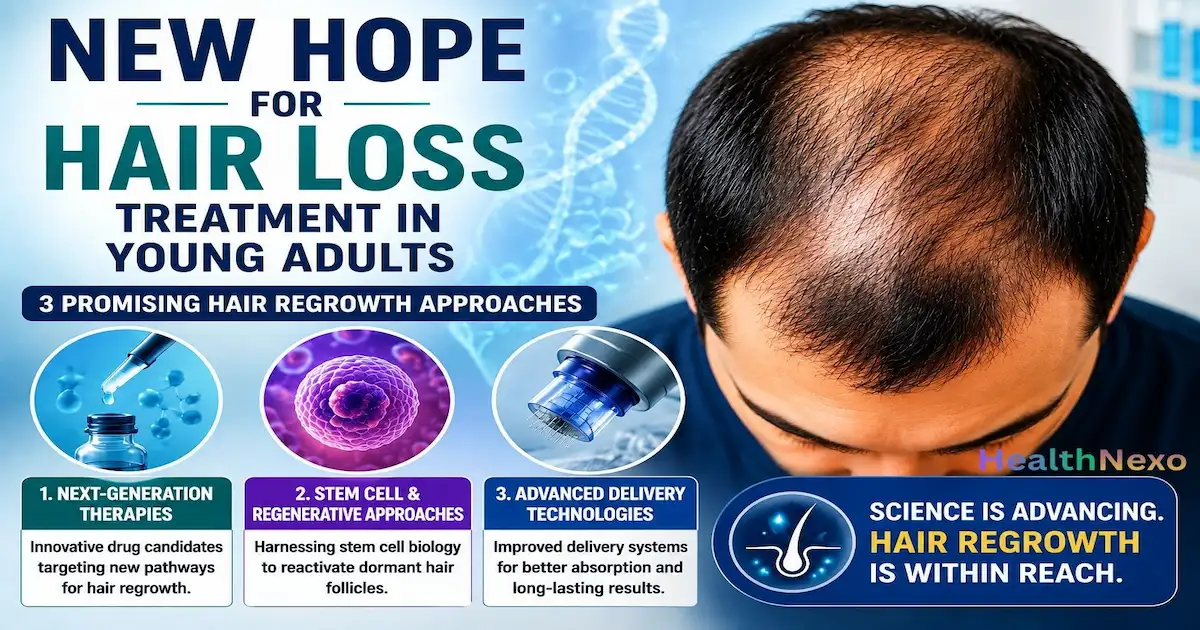
3 Promising Approaches: New Hope for Hair Loss Treatment in Young Adults
New techniques are being explored by scientists for hair growth stimulation, reactivation of inactive hair follicles, and hair loss causes. This could provide some new hope for young adults suffering from pattern baldness or alopecia areata.
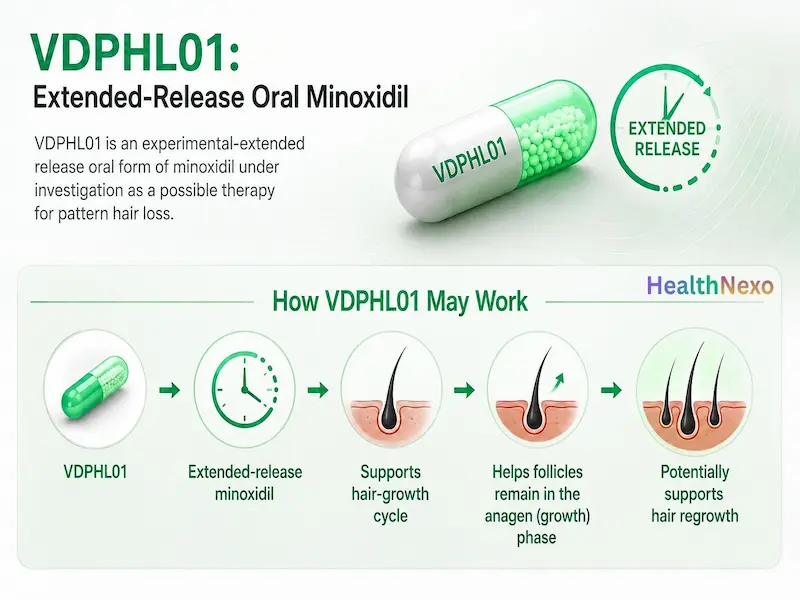
1. VDPHL01: Extended-Release Oral Minoxidil
VDPHL01 is an experimental-extended release oral form of minoxidil under investigation as a possible therapy for pattern hair loss.
It is believed that minoxidil helps keep the follicles in their growth stage, the anagen phase. The formulation VDPHL01 is extended release, meaning that it provides long-term exposure to minoxidil when taken orally.
Extended-Release Oral Minoxidil
What Did the Research Show?
Based on top-line data released by the companies, in a 2026 Phase 2/3 trial involving 519 male subjects with mild to moderate pattern baldness, results were observed at Month 6. In Month 6, the reported increase in non-vellus hair count was:
Once daily: +30.3 hairs/cm²
Twice daily: +33.0 hairs/cm²
Placebo: +7.3 hairs/cm²
Both active-treatment groups were significantly better than placebo (p<0.0001).
Also, a 2026 subgroup analysis in addition focused on men experiencing pattern hair loss under the age of 40 years.
Important Note: VDPHL01 is still considered experimental, and this information does not serve as an indication of an approved treatment for hair loss.
2. PP405: Reactivating Hair-Follicle Stem Cells
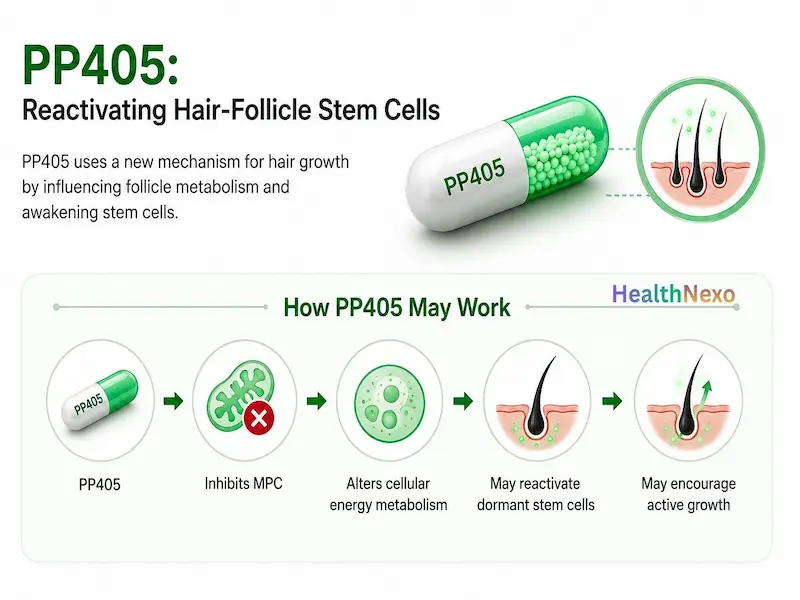
While most compounds are used for their ability to regulate androgens, PP405 uses a totally new mechanism for hair growth. It may be potentially effective in influencing metabolism within hair follicles and awakening stem cells.
How PP405 May Work
Hair follicles contain specialized stem cells that contribute to follicle regeneration.
PP405 → Inhibits MPC → Alters cellular energy metabolism → May reactivate dormant hair-follicle stem cells → May encourage follicles to enter an active growth state.
Reactivating Hair-Follicle Stem Cells
PP405 aims at inhibiting the mitochondrial pyruvate carrier (MPC) metabolism pathway, which is a cellular energy regulation mechanism. The rationale behind the study is the probability that the follicles affected still possess the ability to regenerate even when they become inactive or miniaturized.
The researchers aim to explore the possibilities of reactivating dormant stem cells within the hair follicles through the modification of the mentioned metabolic pathway.
What Did the Research Show?
A Phase 2a study included 78 participants with androgenetic alopecia. Among men with a higher degree of hair loss, the reported Week 8 results were:
PP405: 31% achieved >20% increase in hair density
Placebo: 0% achieved this outcome
The outcome is hopeful, but the trial size was small and brief. Further clinical trials should be conducted in order to establish the effectiveness of PP405.
Important Note: PP405 is still under investigation and is not yet an approved treatment for hair loss.
3. Targeted Immune Treatments for Alopecia Areata
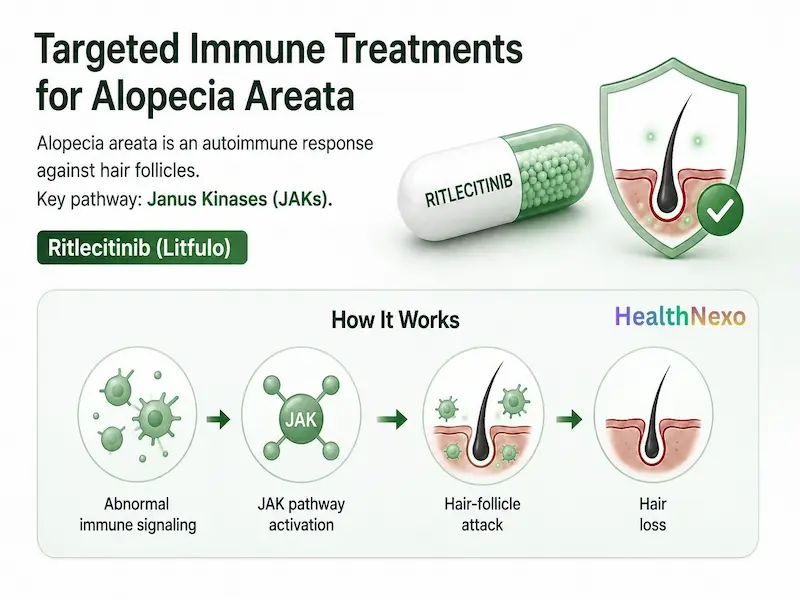
Management of alopecia areata requires a completely different approach as it involves an autoimmune response to hair follicles. One of the key signal transduction pathways includes Janus Kinases (JAKs).
Ritlecitinib (Litfulo)
Abnormal immune signaling → JAK pathway activation → Hair-follicle attack → Hair loss
Ritlecitinib works to target selective pathways involved in JAK-induced immune responses and represents a more precise solution to the alopecia areata condition.
Targeted Immune Treatments for Alopecia Areata
In 2023, the FDA approved ritlecitinib (Litfulo) as a medicine that is effective for severe cases of alopecia areata among adults and adolescents aged 12 years and older. This drug was tested on 718 people diagnosed with alopecia areata. The creation of a targeted treatment drug like ritlecitinib demonstrates how biological mechanisms of hair loss contribute to developing more precise treatments.
Important Note: Ritlecitinib is not an appropriate medicine to use in the case of regular hair loss associated with males’ and females’ pattern hair loss conditions.
The Importance of Early Hair Loss Diagnosis
Diagnosis at an early stage helps determine the root cause of hair loss, which is helpful in determining the most suitable treatment for the same. Some diseases are best managed early, whereas others may need certain tests to be performed by a doctor. Hair loss problems among young adults may be associated with certain signs and symptoms such as:
Sudden or rapid hair loss
Round or patchy bald spots
Gradual thinning or a widening part
Increased hair shedding that persists
Scalp itching, redness, scaling, or pain
Hair loss after illness, major stress, or significant weight changes
This helps to avoid unnecessary medication and makes sure that no hidden causes are missed.
What Young Adults Should Do If They Notice Hair Loss
Those who are young and suffer from continual hair loss should consider seeing a doctor for their condition. In addition to the symptoms and physical examination results, the following tests may be considered:
CBC
Ferritin and iron studies
Thyroid testing
The type of test might vary according to the individual’s health background. Multivitamins consumption without any deficiency symptoms cannot replace a diagnosis.
Current Availability of New Hair Loss Treatments
Not all emerging treatments are currently available for routine use.
Ritlecitinib: FDA-approved for severe alopecia areata in eligible patients.
VDPHL01: Investigational for pattern hair loss.
PP405: Investigational for androgenetic alopecia.
Positive clinical-trial results do not automatically mean that a treatment has received regulatory approval.
The Future of Hair Regrowth Treatments
Future hair-loss treatment may become increasingly mechanism-specific and personalized.
Hair-loss problem
Potential treatment direction
Pattern hair loss
Target androgen signaling
Follicular miniaturization
Stimulate growth pathways
Dormant follicles
Activate regenerative pathways
Alopecia areata
Control abnormal immune signaling
Nutritional/systemic causes
Correct the underlying condition
This could eventually allow treatments to be better matched to the biological cause of an individual’s hair loss.
Bottom Line
There is genuine new hope for hair loss treatment in young adults, but no universal cure has been established. VDPHL01 is currently under investigation as a long-term release oral minoxidil preparation, whereas PP405 focuses on developing hair-follicle regeneration mechanisms. Novel immune targeted treatments like ritlecitinib have already broadened the scope of treatment options for alopecia areata.
For younger individuals suffering from chronic or progressive hair loss problems, finding out the reasons behind them is the utmost priority. Investigational treatments are not synonymous with a cure or even proven treatments.
Medical Disclaimer
This essay is for academic purposes only, and can never take the place of personal medical consultation. The experimental treatments discussed above may not be approved and available for commercial use. Patients experiencing symptoms of hair loss such as persistent, acute, patchy or progressive hair loss are advised to consult their doctor.
Frequently Asked Questions (FAQs)
Q1. Can young adults develop pattern hair loss?
Yes. Pattern hair loss can begin during young adulthood, although the age of onset and progression vary.
Q2. Is there a new cure for hair loss?
No universal cure exists yet, but several promising treatments are being studied.
Q3. What is PP405?
PP405 is an investigational topical therapy being studied to potentially reactivate dormant hair-follicle stem cells.
Md. Rakibul Hasan, BSc (Hons), MS (Thesis) Biochemistry & Molecular Biology, University of Chittagong, Bangladesh
Senior Biochemist | Health Content Writer | Evidence-Informed Health Information Creator
Popular Diagnostic Centre Limited, Bangladesh.
He specializes in clinical biochemistry, laboratory diagnostics, and medical testing. Alongside his professional work, he is actively involved in health education and scientific communication.
As a Health Content Writer and Research-Based Health Information Creator, he simplifies complex medical and biochemical topics into clear, evidence-informed, and reader-friendly health information.





1 thought on “New Hope for Hair Loss Treatment in Young Adults: 3 Promising Hair Regrowth Approaches”