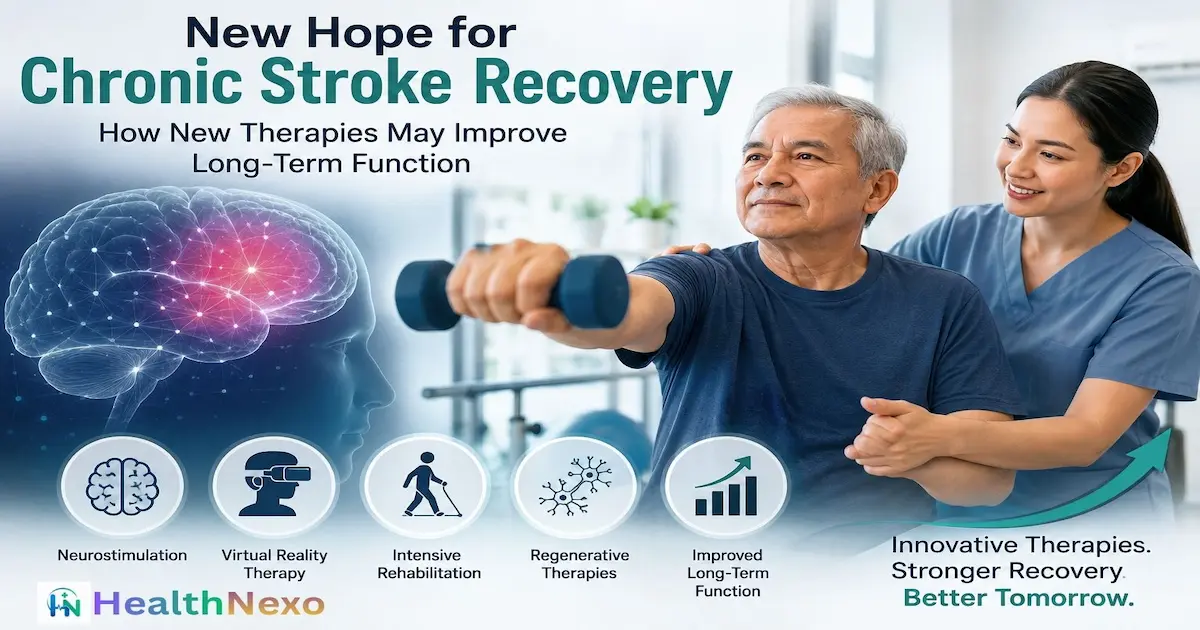
Recovery from a stroke is a lengthy process for many people. Some of the effects that they suffer from include weakness, difficulty moving their arms and hands, impaired balance, and lack of mobility.
However, new hope for chronic stroke recovery is emerging as researchers learn more about the brain’s ability to adapt after injury. There is research into different treatment techniques like intensive rehabilitation, vagal nerve stimulation, virtual reality, and brain stimulation. There is also research into experimental cell-based treatments which aim to promote better functioning following a stroke.
Although they hold much promise, these interventions cannot ensure full recovery. They are being studied to find out which people can gain from them and how they can be integrated into rehabilitation programs.
Key Takeaways
- Recovery can continue: Some stroke survivors may improve months or years after a stroke.
- Neuroplasticity plays a role: Repeated practice can help the brain adapt and strengthen useful pathways.
- Vagus nerve stimulation: Paired VNS has shown benefits in selected people with chronic stroke.
- VR and neurostimulation: These technologies may enhance repetitive and goal-directed rehabilitation.
- Cell therapy and BCIs: These approaches remain experimental and require further research.
- Rehabilitation remains essential: New technologies are intended to complement—not replace—evidence-based rehabilitation.
What Is Chronic Stroke Recovery?
A stroke happens if there is obstruction in the blood flow to the brain or there is an artery rupture within the brain. This brain damage may lead to difficulty in moving, speaking, coordination, sensation, or thinking. The chronic phase of stroke recovery is when neurological problems continue after the early recovery period.
During this phase, rehabilitation may focus on improving:
- Arm and hand movement
- Walking and balance
- Coordination and muscle control
- Daily activities
- Independence and quality of life
Stroke risk reduction strategies or stroke recovery is different for everyone. Factors include stroke location and severity, individual abilities, overall health, and participation in rehabilitation.
The Science Behind New Hope for Chronic Stroke Recovery
Neuroplasticity is one major factor behind the continuation of recovery after a stroke. Neuroplasticity means the capacity of the brain to adapt in response to experiences and repetitions. When a stroke damages part of the brain, other brain pathways may adapt and help support lost functions. Regular rehabilitation exercises can encourage this process.
Researchers are also studying rehabilitation with technologies that may influence brain activity or provide sensory stimulation.
- Rehabilitation → Repeated Practice → Neuroplastic Changes → Movement and Function Improvement
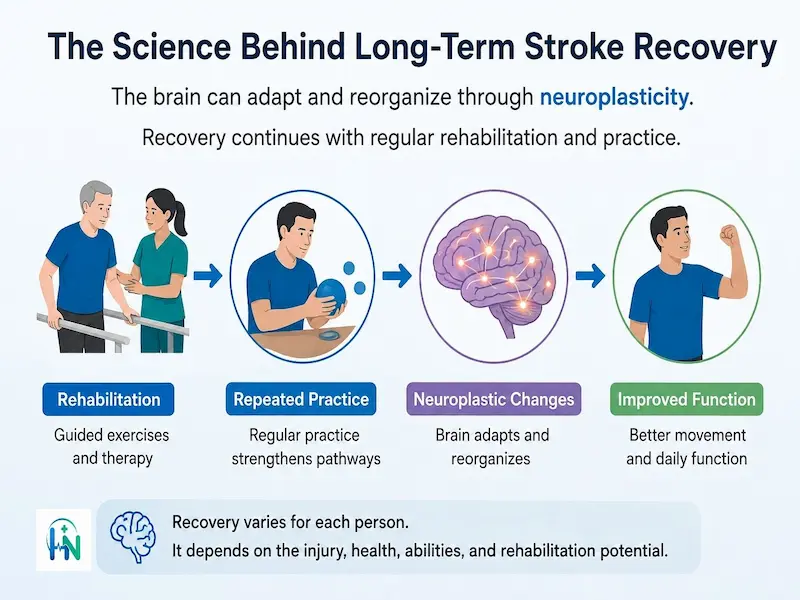
It does not mean that all the functions one had lost can be recovered using neuroplasticity. There are various factors involved when doing such functions.
New Therapies Being Studied for Chronic Stroke Recovery
Researchers are studying new ways to improve recovery for people with long-term stroke disabilities. Most of these approaches are designed to support, not replace, standard rehabilitation.
1. Vagus Nerve Stimulation With Rehabilitation
Vagus nerve stimulation (VNS) is an example of a relatively modern technique which is being developed to help chronic stroke patients recover. This is a technique where electrical stimulation is applied to the vagus nerve in conjunction with physical exercises.
The goal is to pair nerve stimulation with physical activity to strengthen brain pathways involved in movement. The VNS-REHAB study found that combining VNS with physical therapy improved motor function in some people with chronic ischemic stroke.
Key Points
- Uses mild electrical stimulation of the vagus nerve
- Delivered alongside rehabilitation exercises
- Mainly studied for persistent arm and hand impairment
- May support neural activity involved in motor recovery
- Approved for a specific chronic ischemic stroke population
VNS is not suitable for every stroke survivor, and its approved use applies only to specific patients.
2. Non-Invasive Brain Stimulation
Research on non-invasive brain stimulation (NIBS) is another field within stroke rehabilitation research. NIBS seeks to affect the activity/excitability of brain areas responsible for movements.
Common approaches include:
- Transcranial magnetic stimulation (TMS)
- Transcranial direct-current stimulation (tDCS)
- Other forms of non-invasive electrical stimulation
Researchers are studying whether these treatments can help the brain respond better to rehabilitation through repeated movements.
However, results have varied across studies. Scientists are still working to find the best timing, frequency, intensity, and treatment duration.
3. Virtual Reality and Neurostimulation
Stroke rehabilitation could be made interactive by developing a virtual reality environment for repetitive and targeted training. The feasibility of this method was studied in the 2026 Nature Medicine paper that investigated MultiSensy, which combines VR with neurostimulation for sensory and motor rehabilitation.
This study comprised 34 patients with chronic stroke from a pilot study and a randomized feasibility trial. Positive effects were noted on upper limb function.
Why This Approach Is Promising
- Engaging practice: Makes repetitive exercises more interactive.
- Sensory input: Adds stimulation that may provide feedback to the nervous system.
- Goal-directed training: Encourages practice of specific movements.
- Potential brain benefits: May support pathways involved in motor control.
- Rehabilitation support: Could complement conventional therapy.
Larger clinical trials are needed to confirm whether the benefits last over time and apply to more stroke patients.
4. Intensive and Task-Specific Rehabilitation
Even as technology advances, structured rehabilitation remains the foundation of chronic stroke recovery. Physical and occupational therapy use repeated, goal-focused exercises to help patients improve movement and daily activities.
Examples include:
- Reaching for objects
- Grasping and releasing items
- Walking and balance exercises
- Standing and sitting
- Climbing stairs
- Dressing
- Using everyday objects
This approach is called task-specific training because it focuses on useful movements needed in daily life. Many new technologies are designed to support this type of rehabilitation, not replace it.
5. Cell-Based Therapy for Chronic Stroke Recovery
Cell-based therapy is one of the most experimental areas of chronic stroke research. Scientists are investigating whether some cells may help promote healing within the damaged brain tissue.
At the ISSCR 2026 Annual Meeting, researchers shared long-term clinical and imaging data on hNPC01, an iPSC-derived neural progenitor cell therapy being studied for chronic ischemic stroke.
The research provided additional information about:
- Long-term safety
- Treatment feasibility
- Biological activity
- Possible effects on motor function
Cell-based therapy is still experimental. Further large-scale studies are required for determining the safety and efficacy of this procedure. It should not be confused with commercial stem-cell treatments that promise guaranteed stroke recovery.
6. Brain-Computer Interfaces for Stroke Rehabilitation
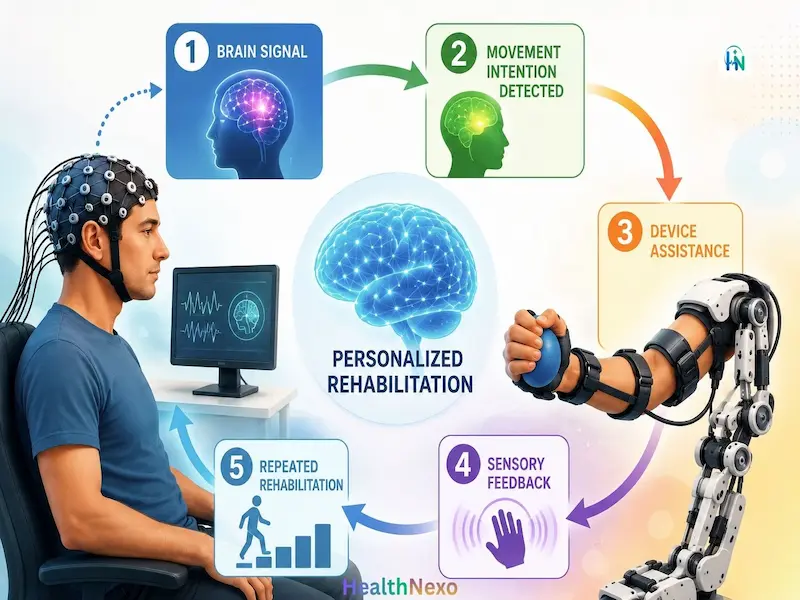
Another developing area for chronic stroke rehabilitation is brain-computer interfaces (BICs). These devices detect brain waves that are generated with the intention of moving, and convert them into signals controlling external devices.
Researchers are also studying whether Bis can provide more personalized stroke rehabilitation by linking brain activity, movement, and feedback.
A potential closed-loop approach is:
- Brain signal → Movement intention → Device assistance → Sensory feedback → Repeated practice
Why BICs Are Promising
- May allow more personalized rehabilitation.
- Connect brain activity with movement
- Can provide real-time feedback
- May reinforce useful neural pathways
- Could support repetitive motor training
Rehabilitation through BCI is still an emerging technology. Further studies need to be conducted to ascertain how effective this technology is over time and who will benefit from it.
New Evidence on Chronic Stroke Recovery
In conclusion, current scientific investigations yield an optimistic perspective on stroke survivors suffering from permanent disability.
- Certain patients can keep on benefiting from functional improvement well after a stroke occurs, especially when proper rehabilitation is applied. Innovative techniques, like VNS, neurostimulation, and VR, could offer another option for some patients.
- Nevertheless, the level of the available evidence varies from technique to technique. Paired VNS is now used in selected patients, while BICs, cell-based therapies, and other neurostimulation methods are still being studied.
- Additional randomized and controlled trials and more follow-up studies are required in order to reveal efficient treatment options.
How Recovery Can Continue Years After a Stroke
This is because stroke rehabilitation may not necessarily stop after several months following a stroke incident. Some stroke survivors may still keep improving even several years after the stroke experience.
A rehabilitation specialist may assess:
- Strength and movement
- Arm and hand function
- Walking, balance, and mobility
- Speech and cognitive abilities
- Potential for specialized rehabilitation
Recovery varies widely from person to person. Stroke type, brain injury, existing abilities, overall health, and rehabilitation can all affect the outcome. For that reason, it is important for the program to be personalized.
What New Stroke Recovery Research Means for Survivors
Recent developments in research have brought fresh hope for chronic stroke recovery, but there are no surefire remedies for chronic stroke disabilities. Recent therapies are being designed primarily to complement existing rehabilitation methods.
Chronic stroke patients need to be careful about any treatment that guarantees complete recovery. Prior to embarking on any novel therapy, one needs to consult an expert medical professional.
The Bottom Line
New research is creating new hope for chronic stroke recovery, using strategies like VNS, virtual reality, neurostimulation, BCIs, and cell therapy as some of those being researched.
Nevertheless, evidence-based rehabilitation is still the core of therapy. More extensive studies have to be conducted to see what new therapies can safely benefit patients.
Medical Disclaimer
This paper acts as an informative source alone and does not provide any medical information, advice, diagnoses, or treatment of any sort. Rehabilitation following a stroke is based on the individual and not all new forms of treatments work for everyone. Please consult a professional health-care provider before trying any new treatment or therapy. Treatment on an experimental basis is only possible with appropriate medical assistance.
References
FDA — Vivistim Paired VNS System and approved chronic stroke use.
The Lancet — VNS-REHAB randomized trial.
Nature Medicine — 2026 MultiSensy VR and neurostimulation study.
ISSCR — 2026 research on hNPC01 cell-based therapy.
American Stroke Association — Stroke recovery and rehabilitation resources.
NINDS — Stroke research and rehabilitation information.
Tags:

Md. Rakibul Hasan, BSc (Hons), MS (Thesis)
Biochemistry & Molecular Biology, University of Chittagong, Bangladesh
Senior Biochemist | Health Content Writer | Evidence-Informed Health Information Creator
Popular Diagnostic Centre Limited, Bangladesh.
He specializes in clinical biochemistry, laboratory diagnostics, and medical testing. Alongside his professional work, he is actively involved in health education and scientific communication.
As a Health Content Writer and Research-Based Health Information Creator, he simplifies complex medical and biochemical topics into clear, evidence-informed, and reader-friendly health information.
1 thought on “New Hope for Chronic Stroke Recovery: New Therapies May Improve Long-Term Function”