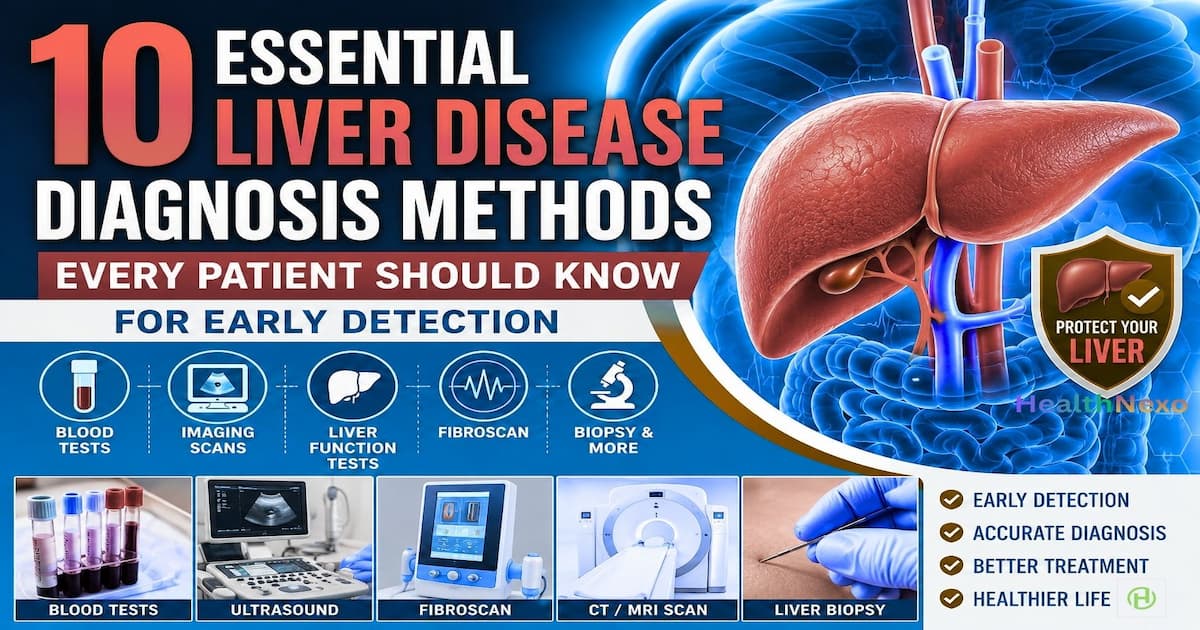
Liver disease diagnosis methods play a crucial role in detecting liver problems before serious complications develop. Liver disease often progresses silently, with symptoms appearing only after significant liver damage has occurred. Early diagnosis is essential to prevent complications such as fibrosis, cirrhosis, liver failure, and liver cancer. Fortunately, modern diagnostic methods—including blood tests, imaging scans, FibroScan, and liver biopsy—can identify liver disease before irreversible damage develops.
In this guide, you’ll learn about the 10 essential liver disease diagnosis methods, what each test measures, when doctors recommend them, and how they help detect liver disease at different stages.
Understanding Liver Disease
Liver disease refers to a situation where the liver becomes damaged and therefore its effectiveness becomes hampered. It is a very important organ since it helps in detoxification, digestion of food, storage of vitamins and production of protein. Its effectiveness is thus greatly affected when it gets damaged.
Liver disease can result from obesity, viral infections, excessive alcohol consumption, medications, autoimmune disorders, genetic conditions, and metabolic diseases. Many patients with NASH have no signs in the early stage. Doctors recommend patients undergo a health check on a regular basis. Liver disease is manageable with the right medical intervention and changes in one’s way of life.
Stages of Liver Disease
These liver problems progress through different stages, and they include the following stages, although the rate of progression varies from one patient to another.
- Hepatitis (Inflammatory Phase): Liver becomes inflamed due to infection, fat buildup, or toxins.
- Fibrosis: Long-term inflammation causes scar tissue formation.
- Cirrhosis: Severe scarring leads to permanent liver damage.
- End-stage liver disease (Liver Failure): Advanced stage where liver function significantly declines.
Causes of Liver Disease
Liver disease occurs due to various factors. Some of the main causes are:
- Infection by viruses
- Consumption of alcohol
- Fatty liver disease
- Medicines and toxins
- Autoimmune disorders
- Genes
- Unhealthy lifestyle
Effects of Liver Disease on the Body
Liver disease affects many vital functions because the liver controls digestion, detoxification, and metabolism.
- Poor Digestion: Reduced bile production leads to loss of appetite, nausea, and weight loss.
- Toxin Build-up: Impaired detoxification allows toxins to build up in the blood, affecting brain function.
- Jaundice: High bilirubin levels cause yellowing of the skin and eyes.
- Body Swelling: Fluid may collect in the abdomen (ascites) or legs due to poor liver function.
- Weakness: Low energy levels and fatigue are common in liver disease.
- Easy Bleeding: Reduced clotting factors increase the risk of bleeding and bruising.
- Neurological Problems: Toxin buildup can lead to confusion, memory issues, or even coma in severe cases.
10 Essential Liver Disease Diagnosis Methods
Liver disease diagnosis involves several medical tests that evaluate liver function, detect inflammation, identify infections, and assess structural damage.
1. Medical History and Physical Examination
The first step involved in the process of diagnosing liver diseases is the collection of a detailed medical history and physical examinations.
Medical history includes:
- Consumption of alcohol
- Use of any drugs or supplements
- History of family members having liver disease
- Any previous history of hepatitis
- Any signs such as fatigue, jaundice, and abdominal pain
Physical examination may reveal signs like:
- Jaundice (yellowing of skin and eyes)
- Abdominal swelling
- Swelling of the liver
- Spider angiomas
- Edema (swelling of legs and feet)
This is not an absolute way of detecting liver diseases, but it provides insight into other processes of liver disease diagnosis.
2. Liver Function Tests (LFTs)
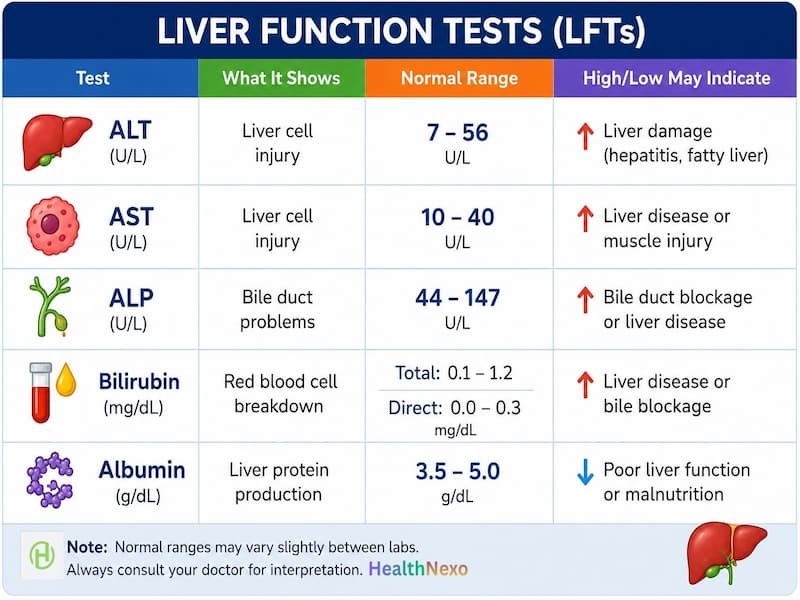
Blood tests to determine how well your liver is performing. They involve measuring the level of enzymes and proteins in the blood, which can be an indicator of liver health. The enzymes and proteins which are tested through a liver function blood test are the below.
Alanine Aminotransferase (ALT): These enzymes get released into the bloodstream if there’s an injury to the liver cells.
- Normal Values: 7–56 U/L
Aspartate Aminotransferase (AST): These enzymes appearing in the blood show the presence of injury of cells in the liver.
- Normal Values: 10–40 U/L
Alkaline Phosphatase (ALP): High Alkaline Phosphatase could be a signal of problems within the Bile Ducts and the Bile pathway within the liver.
- Normal Values: 44–147 U/L
Bilirubin: A byproduct of the destruction of red blood cells. Increased bilirubin levels may cause jaundice (yellowing of eyes and skin).
Normal Values:
- Total Bilirubin: 0.1–1.2 mg/dL
- Direct Bilirubin: 0.0–0.3 mg/dL
Albumin: Decreased albumin shows poor liver synthesis function.
- Normal Values: 3.5–5.0 g/dL
Important Note: Normal reference ranges may vary slightly between laboratories.
3. Complete Blood Count (CBC)
Complete Blood Count (CBC) is one of the diagnostic techniques for liver diseases. This test includes a simple examination of a blood sample and gives information on the general health condition of the patient. Possible complications of CBC which can be associated with liver disease.
CBC includes measuring of such blood cells as:
- Red blood cells (RBC)
- White blood cells (WBC)
- Platelets
This diagnostic technique is significant because advanced liver disease influences the processes of formation of blood cells and increases risks of complications.
Complete Blood Count (CBC): Normal Ranges
Hemoglobin (Hb):
- Males: 13.5 – 17.5 g/dL
- Females: 12.0 – 15.5 g/dL
White Blood Cells (WBC): 4,000 – 11,000 /µL
Platelets: 150,000 – 450,000 /µL
Abnormal Results:
- Thrombocytopenia (low platelet count): Usually found with liver cirrhosis due to an enlarged spleen and reduced platelet production.
- Anemia (low hemoglobin): Could occur due to chronic liver failure, malnutrition, and/or internal hemorrhage.
- WBC increased or decreased: Indicates possible infection or inflammation.
4. Viral Hepatitis Testing
A viral hepatitis test is necessary as other viral infections could affect the liver, resulting in potential complications later in the future. Viral hepatitis is one of the major causes of damage to the liver. Below is a list of commonly named tests conducted on viral hepatitis:
| Hepatitis Type | Test | Positive (+) Indicates | Negative (−) Indicates |
| Hepatitis A (HAV) | Anti-HAV IgM | Recent or acute HAV infection | No current HAV infection |
| Anti-HAV IgG | Previous infection or immunity | No immunity or previous infection | |
| Hepatitis B (HBV) | HBsAg | Active HBV infection | No active HBV infection |
| Anti-HBs | Immunity from vaccination or recovery | Not immune | |
| Anti-HBc IgM | Recent or acute HBV infection | No recent infection | |
| Anti-HBc IgG | Previous or chronic HBV infection | No history of HBV infection | |
| HBeAg | High viral replication and infectivity | Low or inactive viral replication | |
| HBV DNA | Active viral replication | No detectable viral replication | |
| Hepatitis C (HCV) | Anti-HCV | Previous exposure to HCV | No evidence of HCV exposure |
| HCV RNA | Active HCV infection | No active HCV infection | |
| Hepatitis D (HDV) | Anti-HDV | HDV infection present | No HDV infection |
| HDV RNA | Active HDV infection | No active HDV infection | |
| Hepatitis E (HEV) | Anti-HEV IgM | Acute HEV infection | No current HEV infection |
| Anti-HEV IgG | Previous infection or immunity | No immunity | |
| HEV RNA | Active HEV infection | No active HEV infection |
Interpretation:
- IgM Positive → Recent or acute infection
- IgG Positive → Previous infection or immunity
- DNA/RNA Positive → Active viral replication and ongoing infection
- Negative Result → Usually indicates no evidence of infection for that specific test, but results should always be interpreted with clinical findings and a healthcare provider’s evaluation.
5. Abdominal Ultrasound
Ultrasound is one of the most harmless and commonly employed diagnostic tools for assessing the liver. This diagnostic procedure creates an image of the liver and surrounding tissues with the use of sound waves.
Ultrasound can help diagnose:
- Fatty liver
- Enlarged liver
- Tumors of the liver
- Cysts
- Gallstones
- Indications of cirrhosis
Since it involves no pain and no use of ionizing radiation, ultrasound is usually suggested as an initial tool of diagnosis.
6. FibroScan (Transient Elastography)
Fibro scan is an innovative diagnostic test which determines liver stiffness. There is an association between an increase in liver stiffness and fibrosis or scar tissue.
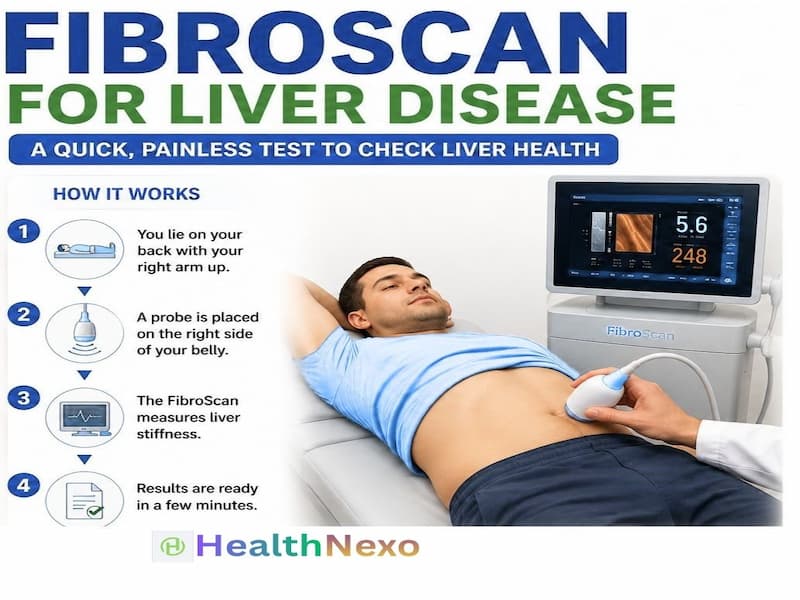
The advantages of Fibro scan are:
- It is a non-invasive test
- Results are quickly obtained
- It does not require any needle insertion
- Evaluation of fibrosis is accurate
Fibro scan is especially helpful for patients suffering from:
- Fatty liver disease
- Hepatitis B
- Hepatitis C
- Liver disease
Fibro scan (Liver Stiffness Test): Fibro scan detects liver stiffness in kPa (kilopascal unit). General interpretation of the results:
- Normal: < 5.5 kPa
- Fibrosis: 5.5 – 7.0 kPa
- Moderate fibrosis: 7.0 – 9.5 kPa
- Severe fibrosis: 9.5 – 12.5 kPa
- Cirrhosis: > 12.5 kPa
Scientific Explanation:
Scar tissues replace natural liver cells as liver fibrosis progresses. This process leads to higher stiffness in the liver. Liver stiffness is measured by FibroScan, which helps avoid doing a biopsy for most patients.
Note: FibroScan cutoff values vary depending on the underlying liver disease. Results should always be interpreted by a healthcare professional.
7. Computed Tomography (CT scan)
This creates cross-sectional images of the liver. A CT scan is ordered when additional information is needed beyond an ultrasound.
A CT scan can help detect the following:
- Liver tumors
- Bleeding
- Cirrhosis
- Abnormalities in blood vessels
- Liver infections
A contrast dye can be used to enhance images.
8. Magnetic Resonance Imaging (MRI)
MRI is one of the most accurate imaging tools for diagnosing liver diseases. While CT scans utilize radiation for the purpose of diagnosing the ailment, MRI employs magnetic fields. The MRI scan can be used to make detailed images of the following ailments:
- Liver cancer
- Benign tumors of liver
- Fatty liver disease
- Biliary disorders
- Fibrosis
Doctors often use MRI when other imaging tests produce unclear results.
9. Alpha-Fetoprotein (AFP) Blood Test
The Alpha-Fetoprotein blood test is often used in conjunction with another type of test to diagnose liver cancer. AFP is a protein that can be raised in patients with:
- Hepatocellular Carcinoma (HCC)
- Chronic Hepatitis
- Liver Cirrhosis
An AFP test is not sufficient by itself for a cancer diagnosis but is typically combined with ultrasound or MRI procedures. A periodic AFP test is available for liver cancer patients and those who are considered at high risk for the disease.
Normal Levels of Alpha-Fetoprotein (AFP):
- AFP: < 10 ng/mL (most adults)
Explanation Scientifically: AFP is a tumor marker.
High level may be indicative of:
- Hepatocellular Carcinoma (Liver Cancer)
- Chronic Hepatitis
- Liver Cirrhosis
But AFP alone is not enough for a diagnosis; it needs to be coupled with other imaging techniques like ultrasound and MRI.
Note: AFP levels may also increase in chronic hepatitis, pregnancy, and certain non-cancerous liver conditions.
10. Liver Biopsy
Liver biopsy is regarded to be one of the most conclusive diagnostic techniques.
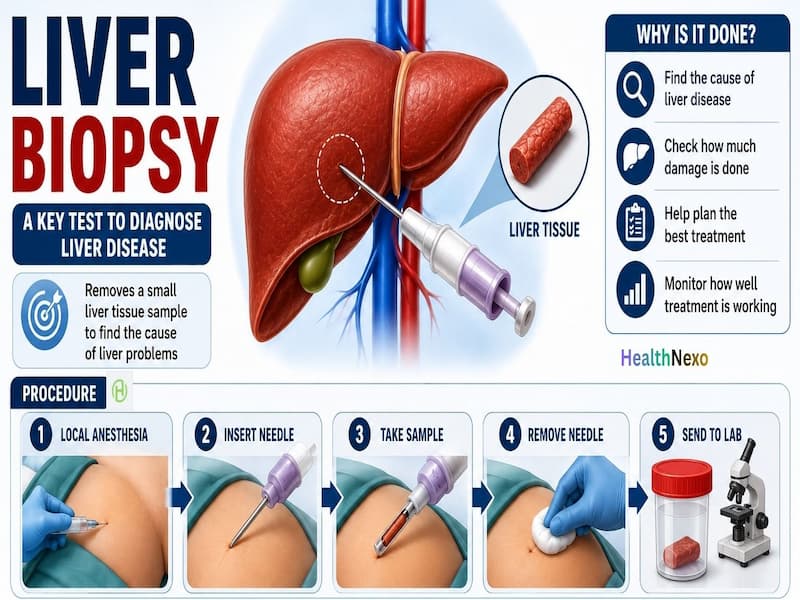
While performing this technique:
- A tissue specimen is taken out of the liver
- The specimen is analyzed using a microscope
Biopsy is used to determine:
- Fatty liver disease
- Cirrhosis
- Hepatitis
- Liver cancer
- Degree of fibrosis
Scientific explanation:
Even though Liver Biopsy is very accurate, it is invasive and can have some complications. Therefore, it’s done only in those situations in which the reason of diseases cannot be identified by any other methods.
Summary Table: Liver Disease Diagnosis Methods
| No. | Diagnosis Method | What It Shows | Key Purpose |
| 1 | Medical History & Physical Exam | Symptoms, risk factors, visible signs | First step to identify possible liver problems |
| 2 | Liver Function Tests (LFTs) | Liver enzymes & proteins (ALT, AST, ALP, bilirubin, albumin) | Detect liver damage, inflammation, and function level |
| 3 | Complete Blood Count (CBC) | Blood cells (RBC, WBC, platelets) | Check complications like anemia or infection |
| 4 | Viral Hepatitis Testing | Hepatitis A, B, C, D, E infection status | Identify viral causes of liver disease |
| 5 | Abdominal Ultrasound | Liver structure and size | Detect fatty liver, tumors, cirrhosis, gallstones |
| 6 | FibroScan | Liver stiffness (kPa) | Measure fibrosis and cirrhosis without biopsy |
| 7 | CT Scan | Detailed liver images | Detect tumors, bleeding, infections, cirrhosis |
| 8 | MRI Scan | High-resolution soft tissue images | Diagnose cancer, fatty liver, bile duct issues |
| 9 | AFP Blood Test | Tumor marker (alpha-fetoprotein) | Screen for liver cancer risk |
| 10 | Liver Biopsy | Liver tissue under microscope | Confirm exact liver disease type and severity |
Prevention and Management Tips for Better Liver Health
Below are some practices that help you in keeping you from liver disorders:-
- Manage your body weight by eating nutritious foods and doing regular exercise
- Abstain from alcohol.
- Eat a good diet of fruits, vegetables, grains and proteins.
- Reduce usage of sugar, salt and fast food
- Vaccinations for hepatitis A and B are given
- Exercise yourself for at least 150 minutes per week
- Get rid of problems like diabetes, high bp, and high cholesterol
- Avoid unnecessary medications and follow doctor’s advice.
Healthy habits are the best way to protect your liver and keep it functioning properly.
When Should You See a Doctor?
See a doctor if you have:
- Fatigue
- Yellowing of the eyes or skin
- Pain in your abdomen
- Unintentional weight loss
- Darker-colored urine
- A swollen belly
- Nausea
Getting checked early on means you’ll be able to get diagnosed and treated sooner.
Final Thoughts
Liver disease is commonly acquired without much notice, and it makes the diagnosis very important. The study of liver disease diagnosis methods would help patients understand the significance of regular tests and medical visits. Using liver function tests, viral hepatitis tests, and advanced technologies like MRI and FibroScan, contemporary liver screening enable physicians to diagnose liver diseases more accurately than before.
The status of the liver may be ameliorated by means of healthy routines, routine healthcare checkups, as well as ways to manage a particular disease plus the diagnosis of certain liver diseases earlier on.
Frequently Asked Questions (FAQs)
Q1: What is the best test for liver disease?
Some of the most common ones are Liver Function Tests (LFTs), Complete Blood Count (CBC), tests for viral hepatitis, ultrasound, FibroScan, CT scan, MRI, and liver biopsy.
Q2. Can blood tests detect liver disease?
Yes, LFTs and CBC can indicate liver damage or inflammation.
Q3: Is liver disease reversible?
Early stages like fatty liver can often be improved with lifestyle changes.
Q4: What is FibroScan used for?
It measures liver stiffness to detect fibrosis and cirrhosis.
Q5: Why are liver disease diagnosis methods important?
This helps in the early diagnosis and prevention of complications associated with liver diseases such as cirrhosis or liver failure.
References
World Health Organization (WHO) – https://www.who.int
Mayo Clinic – https://www.mayoclinic.org
Centers for Disease Control and Prevention (CDC) – https://www.cdc.gov
National Institutes of Health (NIH) – https://www.nih.gov
MedlinePlus – https://medlineplus.gov
American Liver Foundation – https://liverfoundation.org
RadiologyInfo (ACR) – https://www.radiologyinfo.org
 Medical Disclaimer
 Medical Disclaimer
The information provided in this article is for educational and informational purposes only. It is not intended to be a substitute for professional medical advice, diagnosis, or treatment. Always consult a qualified healthcare professional before making any medical decisions, starting any treatment, or changing your current healthcare plan.
Tags:

Md. Rakibul Hasan, BSc (Hons), MS (Thesis)
Biochemistry & Molecular Biology, University of Chittagong, Bangladesh
Senior Biochemist | Health Content Writer | Evidence-Informed Health Information Creator
Popular Diagnostic Centre Limited, Bangladesh.
He specializes in clinical biochemistry, laboratory diagnostics, and medical testing. Alongside his professional work, he is actively involved in health education and scientific communication.
As a Health Content Writer and Research-Based Health Information Creator, he simplifies complex medical and biochemical topics into clear, evidence-informed, and reader-friendly health information.
1 thought on “10 Essential Liver Disease Diagnosis Methods Every Patient Should Know for Early Detection”