High blood pressure, or hypertension, is diagnosed by an accurate blood-pressure measurement, not a blood test. However, blood tests to find the cause of high blood pressure can help assess kidney function, electrolytes, blood sugar, cardiovascular risk, thyroid function, and possible hormonal causes. The tests can also be useful when hypertension is recently identified, hard to manage, rapidly getting worse, developing at a young age, or when there are doubts about the secondary cause.
In the AHA/ACC 2025 guidelines, a comprehensive assessment is recommended in order to identify other conditions, risk of cardiovascular disease, and kidney damage in the form of albuminuria.
All blood tests cannot help in determining the real cause of hypertension. Sometimes, blood tests are carried out for the determination of other diseases, overall health risks, establishing the baseline for therapy, or to assess the safety of therapy. Also, tests of the urine, such as the urine albumin-to-creatinine ratio (UACR), are an integral part of comprehensive assessment.
Key Takeaways
- Hypertension is diagnosed with an accurate blood-pressure measurement, not a blood test.
- Creatinine and eGFR help assess kidney function.
- Sodium, potassium, and calcium can identify electrolyte abnormalities and provide clues to some secondary causes.
- Fasting glucose or HbA1c can identify diabetes and prediabetes.
- A lipid profile mainly assesses cardiovascular risk rather than the direct cause of hypertension.
- TSH can help identify thyroid dysfunction.
- Aldosterone and renin testing can evaluate possible primary aldosteronism.
- A CBC provides additional information about overall health but usually does not identify the direct cause of hypertension.
- Urinalysis and UACR/UPCR are important parts of the broader hypertension evaluation.
- Normal blood-test results do not rule out every possible cause of high blood pressure.
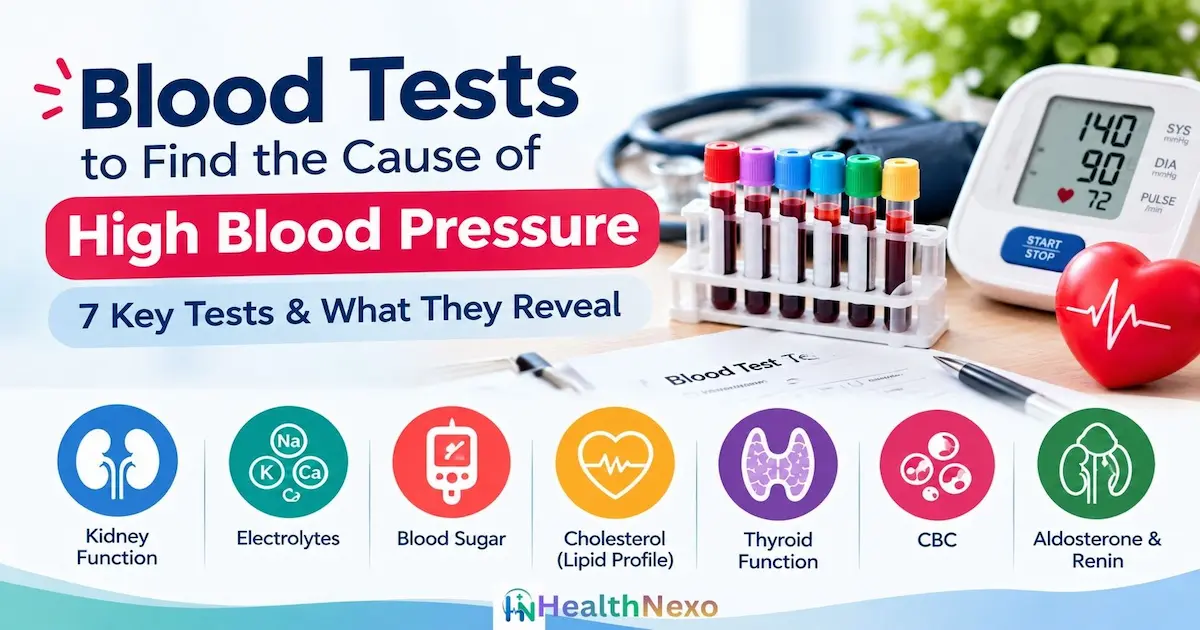
7 Blood Tests to Find the Cause of High Blood Pressure
Blood tests can provide useful information on how the kidneys work, electrolyte levels, blood sugar, cholesterol, the thyroid gland, and hormone levels. However, these tests do not identify the cause in every person with high blood pressure. Instead, they help doctors look for kidney disease, hormonal disorders, metabolic conditions, and other factors that may contribute to hypertension.
1. Creatinine and eGFR: Checking Kidney Function
When kidney disease may be contributing to high blood pressure, creatinine and estimated glomerular filtration rate (eGFR) can help assess kidney function. These include the serum levels of creatinine and estimated glomerular filtration rate (eGFR). Creatinine is a substance which is usually excreted by the kidneys. On the other hand, the eGFR measures the efficiency with which the kidneys filter the blood. This was recommended in the 2025 AHA/ACC guidelines.
Common reference points:
- Serum creatinine: The reference range varies by laboratory and may differ based on age, sex, and other individual factors.
- eGFR ≥90: G1, normal or high
- eGFR 60–89: G2, mildly decreased
KDIGO emphasizes that an eGFR of 60–89 alone does not establish chronic kidney disease. Evidence of kidney damage, such as albuminuria, and persistence over time are also important.
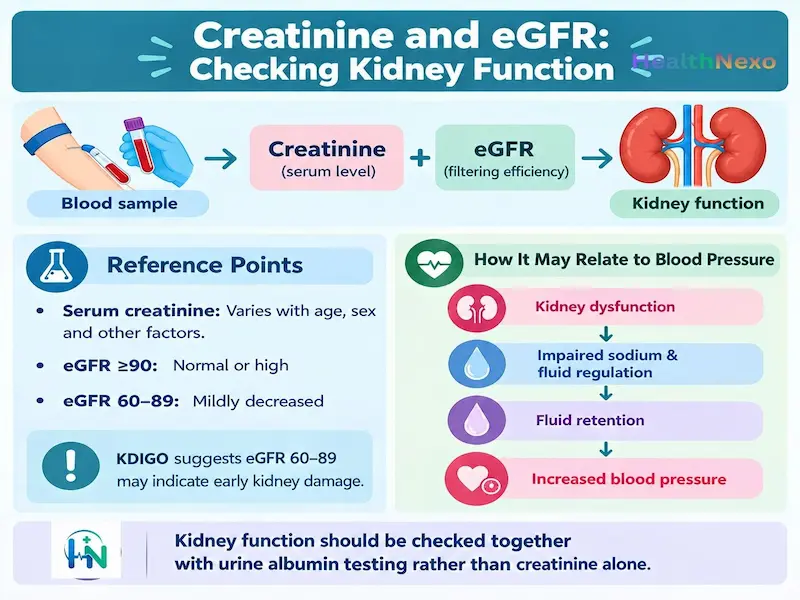
How It May Relate to Blood Pressure
- Kidney dysfunction → impaired sodium and fluid regulation → fluid retention → increased blood pressure
If kidney disease is suspected, other kidney function tests may also be needed. Kidney function should therefore be interpreted together with urine albumin testing rather than from creatinine alone.
2. Sodium, Potassium, and Calcium: Checking Electrolyte Balance
Sodium, potassium, and calcium are helpful in assessing electrolyte balance, kidney function, hormones, and medications. The electrolytes have been incorporated into the AHA/ACC 2025 guideline for assessing hypertension in adults. Electrolyte abnormalities can also provide clues to some secondary causes of hypertension, including conditions that affect hormone or kidney function.
Common adult reference ranges:
- Sodium: 135–145 mmol/L
- Potassium: 3.5–5.0 mmol/L
- Calcium: approximately 8.5–10.5 mg/dL
However, there might be variations in reference ranges from one laboratory to another, hence the need to use the range provided by the testing laboratory. Potassium becomes especially important if one suspects primary aldosteronism. Increased aldosterone production leads to sodium retention and potassium loss. However, the presence of normal potassium does not rule out primary aldosteronism. There is also a need for electrolyte monitoring following the use of some anti-hypertensive medications.
How It May Relate to Blood Pressure
- Excess aldosterone → sodium retention → water retention → increased blood volume → higher blood pressure
3. Fasting Glucose or HbA1c: Checking Diabetes and Metabolic Risk
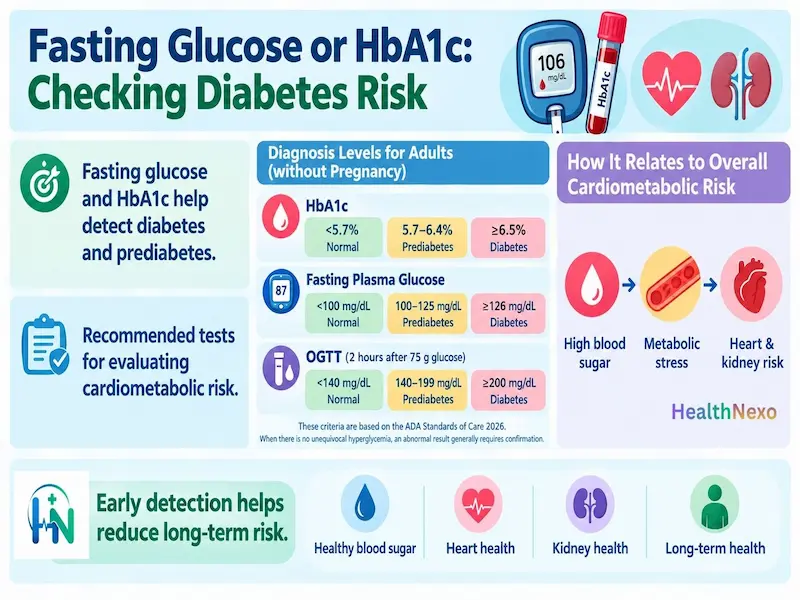
Both fasting glucose and HbA1c are tests that can diagnose diabetes and prediabetes. Diabetes and prediabetes often occur along with hypertension and can lead to increased risk of heart disease and kidney problems. Fasting glucose or the HbA1c test is among the laboratory investigations recommended by the 2025 AHA/ACC guideline for evaluation of hypertension. Identifying abnormal blood sugar can also help guide diabetes prevention strategies.
Diagnosis Levels for Adults without Pregnancy:
- HbA1c: <5.7% is normal, 5.7–6.4% is prediabetes, and ≥6.5% is diabetes;
- Fasting plasma glucose: <100 mg/dL is normal, 100–125 mg/dL is prediabetes, and ≥126 mg/dL is diabetes;
- OGTT 2 hours after a 75 g oral glucose challenge: <140 mg/dL is normal, 140–199 mg/dL is prediabetes, and ≥200 mg/dL is diabetes.
These criteria are based on the ADA Standards of Care 2026. When there is no unequivocal hyperglycemia, an abnormal result generally requires confirmation.
How It Relates to Overall Cardio metabolic Risk
- Persistent high blood sugar → metabolic and vascular stress → increased cardiovascular and kidney risk
However, in most cases, the results of these tests cannot be used to determine the causes of high blood pressure. Nevertheless, they are very useful for determining diabetes or glucose regulation disorders.
4. Lipid Profile: Assessing Cardiovascular Risk
This kind of test evaluates total cholesterol, LDL cholesterol, HDL cholesterol, and triglycerides. It is an essential test that is conducted during the evaluation of cardiovascular risk among hypertensive patients. The 2025 AHA/ACC guidelines suggest performing this test while evaluating hypertensive patients.
Common Reference Points:
- Total cholesterol: <200 mg/dL is generally considered desirable
- Triglycerides: <150 mg/dL is generally considered normal
- LDL cholesterol: Treatment goals depend on overall cardiovascular risk
- HDL cholesterol: Interpreted as part of the overall cardiovascular risk profile rather than as a stand-alone treatment target
Unlike creatinine or aldosterone tests, the lipid panel does not detect the underlying cause of hypertension. Rather, it is used to determine the patient’s risk of developing heart diseases and manage it preventively.
How It Relates to Cardiovascular Risk
- Hypertension + unfavorable lipid profile → greater overall cardiovascular risk
Clinical significance of LDL and triglycerides relies on the risk profile of the individual, which includes diabetes, kidney disease, smoking, age, and any previous history of cardiovascular disease. Thus, interpretation of lipid values alone is not advisable.
5. TSH: Checking for Thyroid Dysfunction
TSH is the hormone used for determining the functioning of the thyroid gland and is included in the laboratory test recommended according to the AHA/ACC hypertension guidelines for 2025. Thyroid hormones influence such functions as heart rate, cardiac output, and peripheral resistance in the cardiovascular system. Hypothyroidism and hyperthyroidism are associated with changes in the blood pressure levels, but they are not one of the most frequent causes of hypertension.
Common Reference Point:
- TSH: Approximately 0.4–4.0 mIU/L
Reference ranges vary by laboratory, testing method, age, and other patient factors. The laboratory’s own reference range should be used.
How It May Relate to Blood Pressure
- Thyroid dysfunction → altered cardiac output and/or vascular resistance → possible changes in blood pressure
An abnormal TSH level does not in itself confirm any particular thyroid problem. The next step would depend on the findings, which may include testing for free T4 and further thyroid function tests.
6. Aldosterone and Renin: Evaluating Primary Aldosteronism
Aldosterone and renin testing is one of the most targeted blood-test approaches for evaluating a hormonal cause of hypertension, particularly primary aldosteronism. The 2025 guideline of the Endocrine Society recommends testing everyone with hypertension for primary aldosteronism, but its realization depends on resources. Testing involves measurement of aldosterone and renin, with the ratio between aldosterone and renin (ARR) being the basis of interpretation. Potassium is also measured to aid in interpreting the results, since low potassium can reduce aldosterone.
Commonly Assessed:
- Aldosterone
- Renin
- Aldosterone-to-renin ratio (ARR)
- Potassium
How It May Raise Blood Pressure
- Excess aldosterone → sodium retention → water retention → increased blood volume → persistent hypertension.
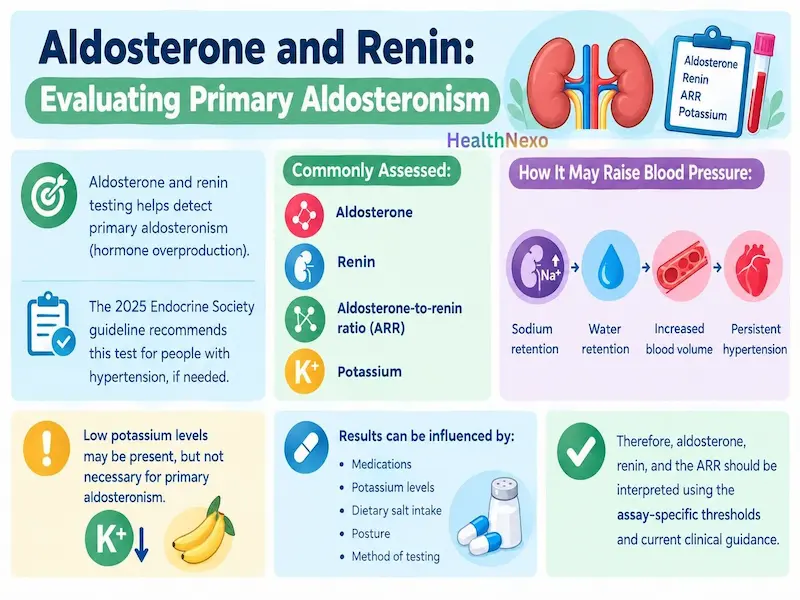
Low potassium levels may be present but are not necessary for primary aldosteronism. Results can be influenced by medications, potassium, dietary salt intake, posture, and method of testing. Therefore, aldosterone, renin, and the ARR should be interpreted using the laboratory’s assay-specific thresholds and current clinical guidance.
7. Complete Blood Count (CBC): Checking for Other Health Conditions
Complete blood count (CBC) evaluates red blood cells, hemoglobin, hematocrit, white blood cells, and platelets. The 2025 AHA/ACC guideline includes a complete blood count (CBC) among the laboratory tests used in the evaluation of adults with hypertension. Nevertheless, CBC is not likely to reveal the underlying causes of high blood pressure. CBC has a wider application because it can indicate the presence of anemia, abnormal white blood cell count, or platelets, which would need further investigation.
Common adult reference points:
- White blood cells: approximately 4,000–11,000/µL
- Platelets: approximately 150,000–450,000/µL
- Hemoglobin: reference range varies by sex, age, and laboratory
Laboratory-specific ranges should always take priority.
What It Can Help Identify
- CBC abnormality → identification of another health condition → additional evaluation when appropriate.
CBC, when normal, cannot exclude a kidney disease, primary aldosteronism, dysfunction of the thyroid gland or other secondary hypertension disorders. The purpose of CBC in the context of hypertension investigation is thus only to assist in the overall clinical evaluation.
Other Tests That May Be Needed
Blood tests are only one part of hypertension evaluation. Doctors may also consider other tests based on the patient’s condition, such as:
1. Urinalysis and UACR: Urinalysis and urine albumin-to-creatinine ratio (UACR) can help detect kidney disease. KDIGO classifies albuminuria as:
- A1: <30 mg/g
- A2: 30–300 mg/g
- A3: >300 mg/g
These categories help assess the severity of albuminuria and overall kidney health.
2 ECG: Helps identify cardiovascular changes, including possible left ventricular hypertrophy.
3. Kidney imaging: May be used when structural or renovascular kidney disease is suspected.
4. Sleep-apnea evaluation: Obstructive sleep apnea can contribute to difficult-to-control hypertension.
5. Medication and substance review: NSAIDs, decongestants, corticosteroids, some hormonal medicines, stimulants, nicotine, excessive alcohol, and certain supplements may raise blood pressure or interfere with treatment.
Secondary Hypertension: When Further Evaluation Is Needed
Secondary hypertension occurs when an identifiable condition or substance contributes to high blood pressure. Further evaluation may be considered when hypertension is unusually severe, difficult to control, suddenly worsens, or occurs with other clinical clues. Important situations include:
- Resistant or difficult-to-control hypertension
- Sudden or severe worsening of blood pressure
- Hypertension at an unusually young age
- Unexplained low potassium
- Abnormal kidney function or significant albuminuria
- Symptoms suggesting an endocrine disorder
- Possible obstructive sleep apnea
- Clinical signs suggesting renovascular disease
Potential causes include primary aldosteronism, kidney disease, renovascular disease, sleep apnea, thyroid or adrenal disorders, and medication or substance effects.
Interpreting Laboratory Results Together
The diagnostic value often comes from patterns rather than individual results.
- Possible kidney disease: Increased creatinine + reduced eGFR + increased UACR → may indicate kidney disease.
- Possible primary aldosteronism: Suppressed renin + inappropriately elevated aldosterone + elevated ARR → may suggest primary aldosteronism.
- Diabetes or prediabetes: Elevated HbA1c and/or fasting glucose → abnormal glucose regulation and increased cardiometabolic risk.
- Possible thyroid dysfunction: Abnormal TSH → may require additional thyroid testing, often including free T4.
- Increased cardiovascular risk: Hypertension + elevated LDL or triglycerides → greater overall cardiovascular risk, but does not prove that lipid abnormalities caused hypertension.
Normal results also do not exclude every possible cause. For example, normal potassium does not rule out primary aldosteronism, and normal creatinine does not exclude early kidney disease or albuminuria.
Follow-Up Testing and Monitoring
There is no set protocol for doing the tests regarding high blood pressure. Repeat tests will depend on blood pressure control, kidney function, electrolyte status, diabetes, cardiovascular risk factors, medications, previous abnormalities, and symptoms. The kidney function and electrolyte status must be done after the commencement and dose increment of certain antihypertensive drugs.
Bottom Line
Blood tests to find the cause of high blood pressure are most useful when interpreted as part of a complete clinical evaluation. These are helpful in determining kidney malfunction, electrolyte imbalance, diabetes, thyroid diseases, and heart-related risks. In the case of a secondary source of the hormone, a test for aldosterone, renin, and the proportion between aldosterone and renin might prove helpful in diagnosing the condition.
There is no single blood test that explains every case of high blood pressure. A complete evaluation may combine accurate blood-pressure measurement, blood and urine tests, medical history, medication and substance review, physical examination, and targeted testing when appropriate.
Frequently Asked Questions (FAQs)
Q1. Can a blood test find the cause of high blood pressure?
Blood tests are not able to determine all the reasons for hypertension, although they are capable of determining kidney diseases, electrolyte disturbances, diabetes, thyroid diseases, and some hormonal imbalances.
Q2. What blood tests are commonly used for high blood pressure?
The most common tests are creatinine and eGFR, electrolytes, glucose or HbA1C, lipid panel, TSH, and complete blood count. The aldosterone and renin tests are done to screen for primary aldosteronism.
Q3. Which blood test checks for a hormonal cause of high blood pressure?
Aldosterone and renin measurement, based on the aldosterone to renin ratio (ARR), can be used to diagnose primary aldosteronism.
Q4. Can kidney problems cause high blood pressure?
Yes, because kidney disease causes an imbalance in sodium and fluid retention, hence high blood pressure. Tests that help assess kidney function include creatinine, eGFR, and urine albumin.
Q5. Can blood tests be normal with high blood pressure?
Yes. A person can have high blood pressure even when routine blood-test results are within the laboratory’s reference range. Blood-pressure diagnosis depends on accurate blood-pressure measurements, while laboratory tests help identify associated conditions and possible secondary causes.
Medical Disclaimer
The information presented here is purely educational and cannot be taken as a replacement for any medical consultation, diagnostics, or medication. The normal ranges will differ depending on the lab and tests being performed and can be affected by many factors, which include medications, kidney function, dehydration, diet, and several others. Do not make any adjustments to any high blood pressure medicines without consulting your doctor.
References
- Jones DW, et al. 2025 AHA/ACC Guideline for the Prevention, Detection, Evaluation and Management of High Blood Pressure in Adults. 2025. Official AHA/ACC Guideline
- Adler GK, et al. Primary Aldosteronism: An Endocrine Society Clinical Practice Guideline. J Clin Endocrinol Metab.
Official Endocrine Society Guideline - American Diabetes Association Professional Practice Committee. Diagnosis and Classification of Diabetes: Standards of Care in Diabetes—2026. Diabetes Care. 2026;49(Suppl 1):S27–S49. doi:10.2337/dc26-S002. Official ADA Reference
- Kidney Disease: Improving Global Outcomes (KDIGO). KDIGO 2024 Clinical Practice Guideline for the Evaluation and Management of Chronic Kidney Disease. Kidney International. 2024;105(Suppl 4S). Official KDIGO Guideline
Tags:

Md. Rakibul Hasan, BSc (Hons), MS (Thesis)
Biochemistry & Molecular Biology, University of Chittagong, Bangladesh
Senior Biochemist | Health Content Writer | Evidence-Informed Health Information Creator
Popular Diagnostic Centre Limited, Bangladesh.
He specializes in clinical biochemistry, laboratory diagnostics, and medical testing. Alongside his professional work, he is actively involved in health education and scientific communication.
As a Health Content Writer and Research-Based Health Information Creator, he simplifies complex medical and biochemical topics into clear, evidence-informed, and reader-friendly health information.