Many different mental health conditions can cause people difficulties with their thoughts, emotions, behavior, sleep and function in daily life. Due to overlapping symptoms, it can be difficult to accurately diagnose conditions such as depression, anxiety disorders, bipolar disorder, post-traumatic stress disorder (PTSD) and ADHD.
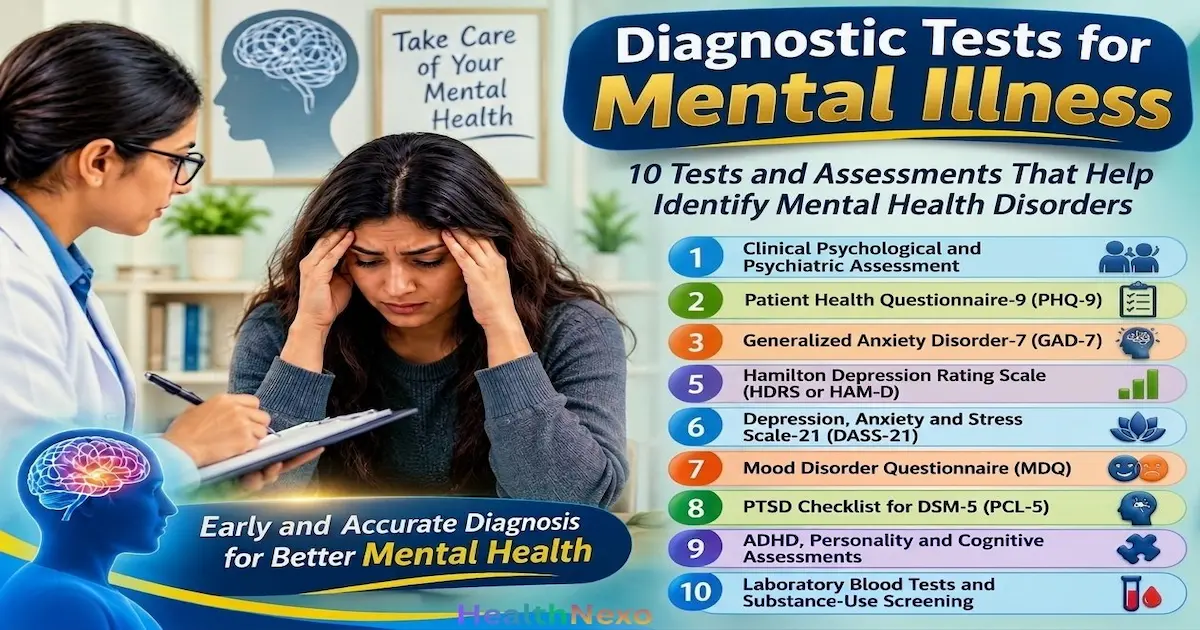
Diagnostic tests for mental illness include clinical interviews, psychological assessments, validated screening questionnaires, and selected laboratory tests. These methods can be used in order to gain knowledge of symptoms, investigate possible physiological causes and evaluate progress of treatments. It is recognized by WHO that mental health can be impacted by a range of biological, psychological and social factors.
This article covers 10 commonly used diagnostic tests and assessment methods, their clinical uses, score interpretations, and limitations.
Quick Summary
- Mental health disorders require a complete clinical assessment. No single test can confirm most conditions.
- PHQ-9, GAD-7, BDI-II, DASS-21, and PCL-5 help assess symptoms of depression, anxiety, stress, and PTSD.
- MDQ, ADHD scale, MMPI, and cognitive tests also give some more insight into the emotional state, behavior, personality, and cognition of the individual.
- Certain blood tests can be useful for detecting physical illnesses that could be causing mental disorders.
- Testing is useful in diagnosing and monitoring treatment but should always be interpreted by a licensed medical professional.
Importance of Diagnostic Tests for Mental Health Disorders
Investigations are helpful in the assessment of mental health in the following ways:
- Early Diagnosis: Helps in identifying the presence of any mental disorder and facilitates evaluation.
- Assessment of Symptoms: Helps in assessing the pattern, severity, and any change over time in the symptoms.
- Detection of Physical Illnesses: Helps in detecting physical illnesses like hyperthyroidism, anemia, and vitamin deficiency that could cause the symptoms.
- Treatment Planning and Monitoring: Assist in planning treatments and evaluation of responses to medication and therapy.
- Detection of Comorbidities: Aid in the assessment of co-existing psychiatric symptoms, substance abuse, and cognitive impairment.
Clinical Note: Although conclusions are drawn from screening surveys and tests, most mental illnesses cannot be diagnosed independently.
10 Common Diagnostic Tests for Mental Illness
1. Clinical Psychological and Psychiatric Assessment
Psychological or psychiatric assessment enables clinicians to obtain information on the emotions, thoughts, behaviors, medical history, and functioning of a client. This type of assessment can involve clinicians asking the patient questions in a structured or unstructured way to obtain additional information on their symptoms, their onset, and how they affect their daily activities. The mental status assessment usually consists of the following components:
- Current symptoms, along with their timing, length, frequency, and intensity.
- Family history of mental disorders.
- Past diagnosis and response to treatment.
- Sleeping, eating, and concentration patterns.
- Changes in mood, thoughts, and behavior.
- Any traumatic experiences or stressors.
- Impact on work, education, socialization, and other spheres of life.
In addition to cognitive function tests, an MSE also measures appearance, behavior, speech, mood, affect, thought process, perception, attention, orientation, insight, and judgment.
Clinical Importance: A clinical assessment can be helpful in differentiating between conditions that share some of the same symptoms, as well as identifying any co-morbid conditions. For instance, depression may be a symptom of major depression, bipolar depression, or hypothyroidism.
These results are assessed using the diagnostic criteria as described in the fifth edition of the Diagnostic and Statistical Manual of Mental Disorders (DSM-5-TR) and WHO International Classification of Diseases 11th revision (ICD-11). Unlike questionnaires, clinical interviews do not yield any standardized number or normal range. The diagnosis is based on the overall clinical picture of the individual.
2. Patient Health Questionnaire-9 (PHQ-9)
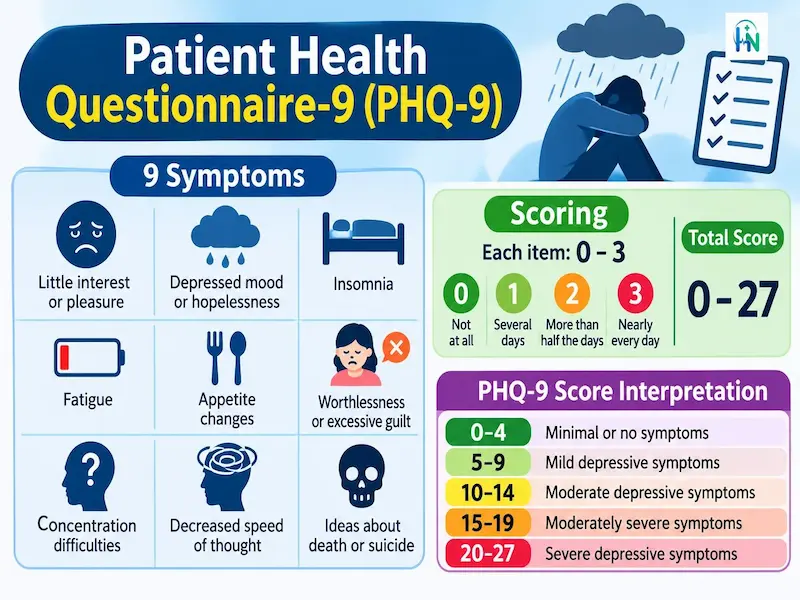
Patient Health Questionnaire-9 (PHQ-9) is a very common self-report measure that screens depression. It involves checking the presence of nine symptoms of major depression experienced by patients within the last two weeks. The questionnaire includes the following:
- Lack of interest or pleasure.
- Depressed mood or hopelessness.
- Insomnia.
- Fatigue.
- Appetite changes.
- Worthlessness or excessive guilt.
- Concentration difficulties.
- Decreased speed of thought and motor activity or psychomotor agitation.
- Ideas about death or suicide.
Each item is scored from 0 to 3 based on how often the symptom occurs:
- 0: Not at all.
- 1: Several days.
- 2: More than half the days.
- 3: Nearly every day.
The total score ranges from 0 to 27.
PHQ-9 Score Interpretation:
- 0–4: Minimal or no depressive symptoms.
- 5–9: Mild depressive symptoms.
- 10–14: Moderate depressive symptoms.
- 15–19: Moderately severe depressive symptoms.
- 20–27: Severe depressive symptoms.
Research Evidence: The validation study for the PHQ-9 done on 6,000 people showed sensitivity and specificity of 88% for major depression in those who scored above 10 in the test. Another study using meta-analysis on 18 studies with 7,180 participants indicated that even with cutoff values between 8 and 11, the accuracy was reasonable.
Clinical Importance: PHQ-9 is an instrument which helps detect symptoms of depression, their severity, as well as the reaction of the patient on treatment. On the other hand, diagnosis of depression includes other aspects. The presence of any self-harm behavior or suicidal ideation needs to be assessed clinically irrespective of the overall score.
3. Generalized Anxiety Disorder-7 (GAD-7)
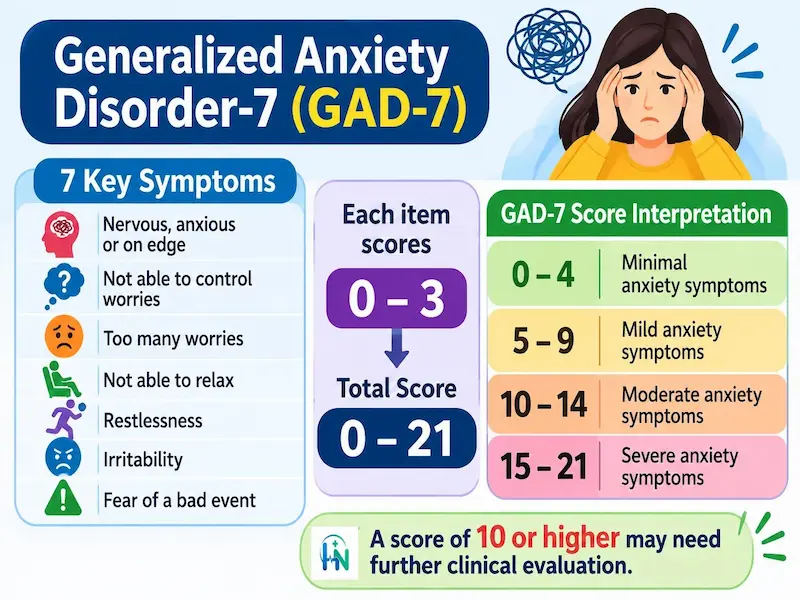
GAD-7 is short for Generalized Anxiety Disorder-7, which is a dependable self-rated scale used for assessing the existence of GAD symptoms. The scale is made up of seven questions regarding symptoms the individual has been experiencing within the past two weeks. These include:
- Being nervous, anxious or on edge.
- Not being able to control worries.
- Having too many worries.
- Not being able to relax.
- Restlessness.
- Irritability.
- Fear of a bad event happening.
Each item receives a score from 0 to 3, giving a total score between 0 and 21.
GAD-7 Score Interpretation:
- 0–4: Minimal anxiety symptoms.
- 5–9: Mild anxiety symptoms.
- 10–14: Moderate anxiety symptoms.
- 15–21: Severe anxiety symptoms.
A score of 10 or higher is commonly used as a threshold for further clinical evaluation.
Research Evidence: In the first validation study performed by Spitzer et al., a sample of 2,740 patients was selected from 15 primary care practices. The GAD-7 instrument showed sensitivity and specificity of 89% and 82%, respectively, to detect GAD at a cutoff score of 10.
Clinical Importance: The GAD-7 helps in determining the presence of any anxiety symptoms and changes during treatment. However, GAD-7 cannot diagnose GAD or all anxiety disorders alone. Clinical interviews need to be done to determine the duration, cause, somatic symptoms, and effects of these symptoms on activities.
4. Beck Depression Inventory-II (BDI-II)
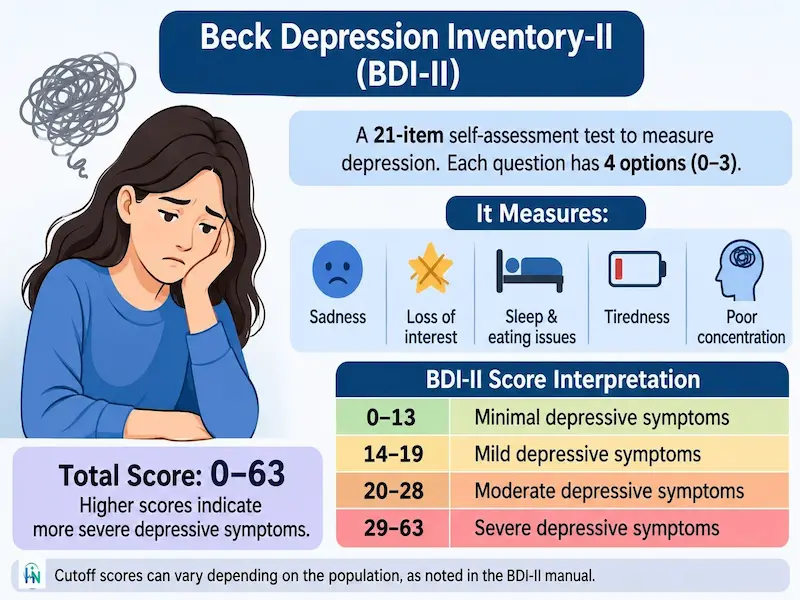
Beck Depression Inventory – II (BDI-II) is a standardized self-assessment test for measuring the severity of depression. There are 21 items in the test that are related to emotions, thoughts, and physical symptoms. Each question has four options ranging from 0 to 3. The assessment measures:
- Sadness and pessimism.
- Lack of pleasure and interest.
- Guilt or lack of value.
- Sleeping and eating disturbance.
- Tiredness.
- Concentration problems.
- Self-esteem changes.
- Death or suicidal thoughts.
The total score ranges from 0 to 63. Higher scores indicate more severe depressive symptoms.
BDI-II Score Interpretation:
- 0–13: Minimal depressive symptoms.
- 14–19: Mild depressive symptoms.
- 20–28: Moderate depressive symptoms.
- 29–63: Severe depressive symptoms.
Categories listed above are described in the BDI-II test manual. However, the correct cutoff scores might vary depending on the population for whom the test was administered.
Clinical Importance: The test provides a complete insight into the manifestations of depression and helps monitor changes over time in the course of treatment. In contrast to the PHQ-9 test, which contained only 9 questions, it concentrated on 21 manifestations of depressive symptoms. Neither of these tests could be used for diagnosing MDD independently.
5. Hamilton Depression Rating Scale (HDRS or HAM-D)
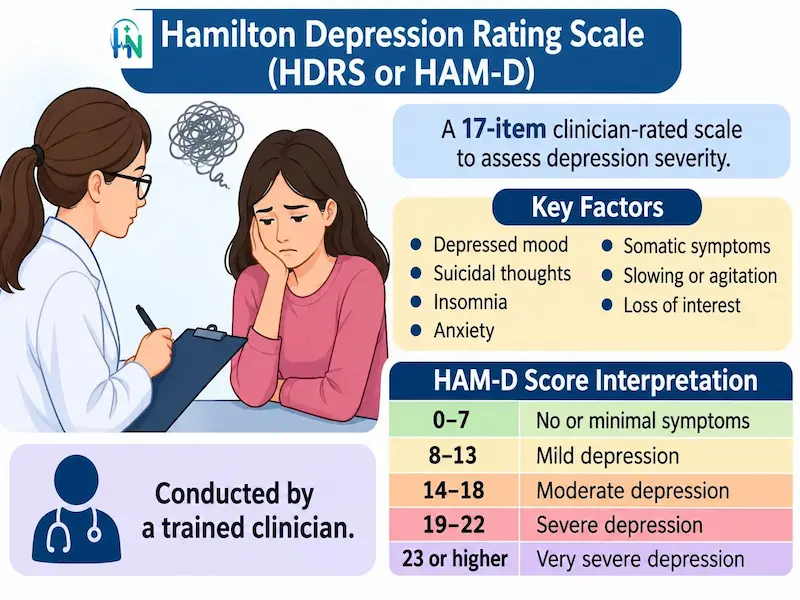
Hamilton Depression Rating Scale (HDRS), also known as HAM-D, is a rating scale which determines the degree of presence of depressive symptomatology. This scale was designed by Max Hamilton in 1960 and has been widely used in depression research and trials. The conventional 17 item scale contains such factors as:
- Depressed mood and guilty feelings.
- Suicidal ideations.
- Insomnia.
- Anxiety.
- Gastrointestinal and other somatic symptoms.
- Slowing down or agitation.
- Loss of interest and psychomotor retardation.
A trained clinician conducts an interview with the subject and rates them on this scale.
HAM-D Score Interpretation:
For the commonly used 17-item version, one frequently cited interpretation is:
- 0–7: No or minimal depressive symptoms.
- 8–13: Mild depression.
- 14–18: Moderate depression.
- 19–22: Severe depression.
- 23 or higher: Very severe depression.
These are commonly used research guidelines, not universal diagnostic ranges. Different studies and clinical settings may use different thresholds.
Clinical Importance: HAM-D helps to quantify the severity of depression symptoms, as well as the effectiveness of therapy, particularly for clinical trials and psychiatrists. However, there are physical symptoms that are taken into consideration when evaluating a patient with HAM-D that can be related to other illnesses.
6. Depression, Anxiety and Stress Scale-21 (DASS-21)
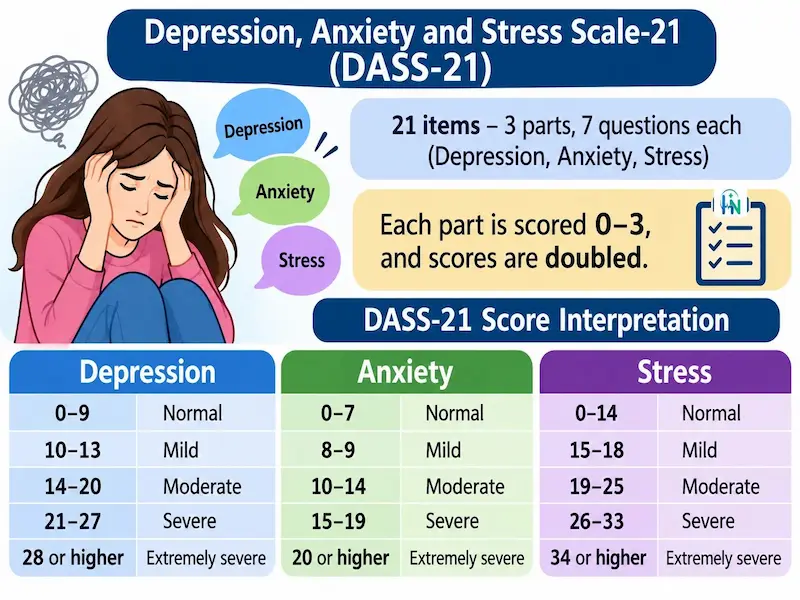
Depression, Anxiety and Stress Scale-21 (DASS-21) is a self-reporting instrument used to measure three distinct emotions that are somewhat related to one another. The DASS-21 questionnaire contains 21 items, which are divided into three parts with seven questions each. These parts are used to measure depression, anxiety, and stress. Depression is measured by the presence of low mood and loss of interest in things. Anxiety and stress are measured by fear and physical symptoms of anxiety, respectively.
Each of these is scored on a 0–3 point scale based on how well the particular statement describes an individual’s condition during the past week. Points received for each of the seven questions are summed up. As DASS-21 is a shortened version of DASS-42, the score for each subscale is doubled.
DASS-21 Score Interpretation:
The following categories apply after multiplying each subscale score by two.
Depression:
- 0–9: Normal.
- 10–13: Mild.
- 14–20: Moderate.
- 21–27: Severe.
- 28 or higher: Extremely severe.
Anxiety:
- 0–7: Normal.
- 8–9: Mild.
- 10–14: Moderate.
- 15–19: Severe.
- 20 or higher: Extremely severe.
Stress:
- 0–14: Normal.
- 15–18: Mild.
- 19–25: Moderate.
- 26–33: Severe.
- 34 or higher: Extremely severe.
These categories follow the standard DASS scoring manual .
Clinical Importance: The use of DASS-21 helps to diagnose depression, anxiety, and stress and monitor any changes in time. However, DASS-21 is not a diagnostic test. It only indicates the severity of symptoms and does not confirm a mental health disorder.
7. Mood Disorder Questionnaire (MDQ)
MDQ stands for the Mood Disorder Questionnaire, which is a test used to identify whether a patient shows signs of having bipolar spectrum disorder. Bipolar disorders are marked by the presence of depression and manic or hypomanic phases. Bipolar disorder affects the energy, sleeping patterns, activities, judgment, and behaviors of the patients. The MDQ has 13 questions related to the existence of the following manic or hypomanic symptoms in one’s life:
- Elevated or irritable mood.
- High levels of energy and increased activity.
- Decreased need for sleep.
- Excessive talking.
- Rapid thinking.
- Increased self-esteem.
- Increased distractibility.
- Risky or impulsive actions.
- Unusual behavior in terms of spending and decision-making.
The questionnaire also asks whether several symptoms occurred during the same period and whether they caused problems in daily life.
MDQ Score Interpretation:
A frequently used positive screen test consists of the following three:
- Seven or more of the 13 symptom questions were answered positively.
- Several symptoms occurred during the same period.
- There were some moderate or severe issues due to these symptoms.
Research Evidence: The MDQ was compared to a psychiatric clinical evaluation with a view to improving identification of people suffering from the bipolar disorder spectrum, particularly those with depressive characteristics .
Clinical Importance: MDQ helps detect individuals who may require further psychiatric assessment, but that does not necessarily mean that the individual is having bipolar disorder. This diagnosis requires an analysis of how long the mood episodes have lasted, the symptoms experienced, the functioning changes, family history, among others, which can lead to this mental disorder. It is crucial to understand this because bipolar and unipolar depression are treated differently.
8. PTSD Checklist for DSM-5 (PCL-5)
The PTSD checklist for DSM-5 (PCL-5) is a standardized test instrument used in the assessment of post-traumatic stress disorder (PTSD). PTSD symptoms come as a result of exposure to a traumatizing experience such as accidents, violence, sexual abuse, or a threatening experience. The PCL-5 test instrument includes 20 questions which fall into the following four categories of symptoms:
- Intrusion Symptoms: Unwanted memories, nightmares, and distressing reminders of trauma.
- Avoidance: Avoiding thoughts, feelings, people, or situations linked to a traumatic event.
- Negative Changes in Thoughts and Mood: Persistent guilt, emotional detachment, negative beliefs, or loss of interest.
- Changes in Arousal and Reactivity: Hypervigilance, irritability, sleep problems, and exaggerated startle responses.
Each item is rated from 0 to 4, giving a total score between 0 and 80.
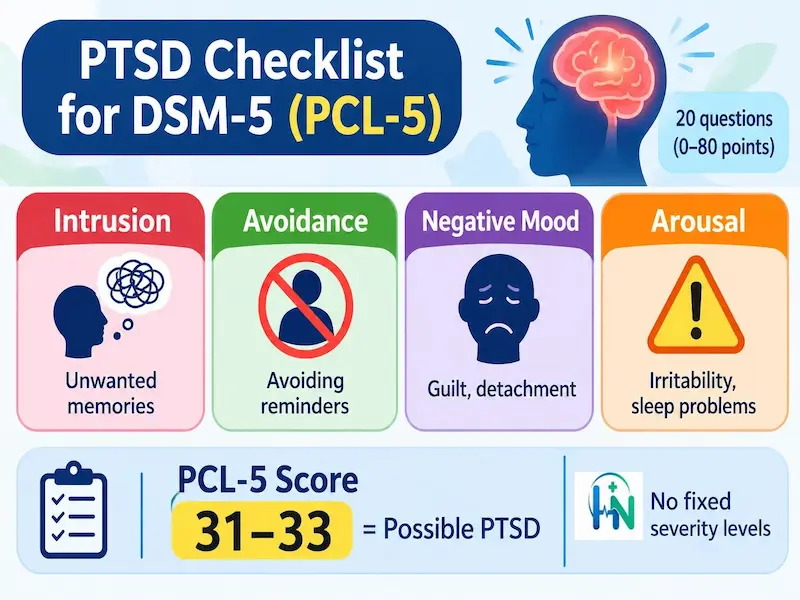
PCL-5 Score Interpretation: The cutoff score of 31–33 is used for provisional screening to identify cases of PTSD, though the cutoff may be different in specific settings. The PCL-5, unlike other tests, does not have universal score classifications of normal, mild, moderate, or severe.
Clinical Importance: PCL-5 is an instrument used to identify PTSD symptoms and their intensity levels. The score on this test is not proof of having PTSD; it only points out further investigation of this disorder. CAPS-5 is widely accepted to be the gold standard for assessing PTSD .
9. ADHD, Personality and Cognitive Assessments
There are various psychological assessments that may be used to test a patient’s ability to concentrate, his behavior, personality traits, and his cognitive skills.
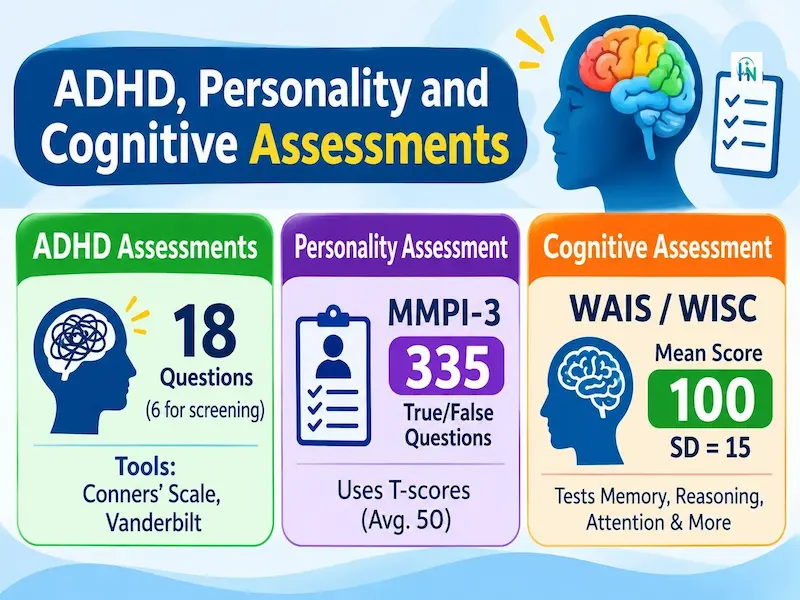
- ADHD Assessments: Adult ADHD Self-Report Scale consists of 18 questions, with six questions from Part A often being used for initial screening. The Conners’ scale and the Vanderbilt are other scales that are useful in assessing ADHD. A positive result from the screening needs to be followed by a full clinical assessment.
- Personality Assessment: The Minnesota Multiphasic Personality Inventory (MMPI-3) has 335 True/False questions. The MMPI-3 uses T-scores with an average of 50, as well as validity scales, to measure response style and personality traits.
- Cognitive Assessment: The Wechsler Adult Intelligence Scale (WAIS) and Wechsler Intelligence Scale for Children (WISC) assess memory, reasoning, attention, and other cognitive skills. Most composite tests have a mean score of 100 and a standard deviation of 15.
Clinical Importance: This kind of test aids in the recognition of the signs and symptoms of Attention Deficit Hyperactivity Disorder and any problems that could affect the personality and cognition.
10. Laboratory Blood Tests and Substance-Use Screening
Some physical disorders and chemical factors can also be responsible for mental symptoms. Based on a person’s mental symptoms and medical history, certain tests may be recommended by clinicians.
- Complete Blood Count (CBC): This test is helpful to detect the problem of anemia in individuals along with other abnormalities in the body. The normal level of hemoglobin in adults is normally between 13.5–17.5 g/dL for men and 12–16 g/dL for women.
- Thyroid Function Test (TSH): It is used to determine the condition of the thyroid that may cause problems with the energy and mood levels of the person. The common reference range of TSH in adults is 0.4–4.0 mIU/L.
- Vitamin B12 and Folate: Deficiency of these vitamins results in fatigue and problems related to memory and neurology. The normal level of vitamin B12 is 200–900 pg/mL and folate less than 3–4 ng/mL indicates a deficiency of folate.
- Glucose and HbA1c: Used to diagnose diabetes or impaired glucose tolerance, which might influence a patient’s well-being. Normal fasting glucose level is 70–99 mg/dl and HbA1c less than 5.7%.
- Electrolytes and Functional Tests of the Organs: These tests of sodium, potassium, calcium, kidney and liver functions could indicate any dysfunction of the metabolism or organs if required clinically.
- Substance Abuse Assessment: Might include AUDIT, AUDIT-C, DAST and WHO ASSIST screening.
Clinical Importance: This is because these tests help to diagnose physical disorders which could either mimic mental disorders or cause them. All the tests need not be done on all patients; it would vary from one patient to another.
Clinical Diagnosis of Mental Health Disorders
Diagnosis of mental health conditions is done using an assessment process and not one single test. The steps involved include:
- Initial Interview: Discussion of your symptoms and the need for a consultation.
- Personal and Medical History: Examining your medical history, substance use, medications, and previous therapy.
- Clinical Assessment: Testing your mood, behavior, cognitive functioning, memory, concentration, and judgment.
- Psychological Tests: Using tests such as PHQ-9, GAD-7, MDQ, and PCL-5.
- Physical Examination and Laboratory Studies: To find out other disorders that can cause or complicate the symptoms.
- Diagnosis Interpretation: Comparison of results with DSM-5-TR or ICD-11 of WHO.
The final diagnosis will be made taking into account the symptoms’ pattern, their duration, intensity, impact on your everyday life, and all other contributing factors.
Factors Affecting Mental Health Test Results
Various aspects might have an impact on the results of a mental health assessment:
- Age: The signs will be different depending on developmental stages.
- Physical Condition: Physical problems, hormone imbalance, and lack of nutrition will impact emotions and thought processes.
- Medications/Substances: Some medication, alcohol, and other substances will impact behavior and emotional reactions.
- Culture and Language: Differences in culture and language will influence the answers to questionnaires.
- Existing Disorders: Depression, anxiety, PTSD, and ADHD are some examples of disorders that overlap with symptoms.
- Duration of Symptoms: Brief instances of emotional discomfort may vary from the prolonged symptoms of psychiatric illnesses.
Testing results should be taken into account in conjunction with clinical background, existing symptoms, and general well-being.
When to Seek a Mental Health Evaluation
If the problem continues, worsens, or begins to impact your day-to-day life, you might want to think about getting professional help. Symptoms that might indicate something is wrong include:
- Feeling sad, hopeless, or disinterested.
- Extreme worry or panic attacks.
- Significant disruptions in sleeping, eating, or energy levels.
- Trouble concentrating or memory problems.
- Unusual changes in mood or behavior.
- Avoidance of others and trouble in relationships.
- Difficulties in school, work, or other regular activities.
This may be done by a psychiatrist, psychologist, or another suitable medical practitioner.
Note: In the event of suicidal ideations or thoughts of self-harm, or when you feel unsafe, immediate professional attention is necessary. It should not wait until an appointment or test results.
Final Thoughts
Diagnostic Tests for Mental Illness help healthcare professionals assess symptoms and guide clinical decisions. Unfortunately, there is not one test or questionnaire that will allow for a definitive diagnosis of most mental illnesses. Proper diagnosis is done through a complete clinical assessment. Early detection may be used to determine treatment.
Frequently Asked Questions (FAQs)
Q1. What tests are used to diagnose mental health disorders?
Tests for assessing mental well-being involve clinical interview, questionnaires like PHQ-9 and GAD-7, psychological tests, cognitive tests, and certain laboratory tests.
Q2. Can a blood test detect mental illness?
There is no standard blood test for the diagnosis of most mental illnesses. Nevertheless, there are some blood tests including CBC, TSH, and vitamin B12 that can detect medical problems causing psychiatric symptoms.
Q3. Is there a blood test for depression?
However, there is no definite blood test that could be used to diagnose depression. Clinics use PHQ-9 questionnaires to test symptoms, while some blood tests could reveal possible physical causes.
Q4. Which questionnaire is commonly used to screen for depression?
The PHQ-9 questionnaire evaluates a patient for nine depressive symptoms experienced within the past two weeks. The test is scored on a scale of 0 to 27.
Q5. How are anxiety disorders evaluated?
Some common methods for diagnosing anxiety include the use of clinical interviews, medical histories, physical exams, and questionnaires such as the GAD-7 test.
Q6. Can online mental health tests provide a clinical diagnosis?
Not really. Although online tests can be useful in identifying potential symptoms, they cannot make a clinical diagnosis.
Q7. Are psychological tests and psychiatric assessments the same?
No. Psychological tests are based on measuring specific symptoms, characteristics, and skills. Psychiatric evaluations are done in a much broader context than just symptoms.
Medical Disclaimer
This document is strictly for educational and information purposes. This is not a substitute for medical advice, diagnosis, or treatment. Questionnaires and psychological assessment scales should not be used for self-assessment. Reference values for laboratory tests may differ depending on the laboratory, age group, and type of testing. If you have any questions regarding your mental well-being, please consult a healthcare provider.
References
- American Psychiatric Association. DSM-5-TR. 2022. Source
- World Health Organization. ICD-11 Clinical Descriptions and Diagnostic Requirements. 2024. Source
- Kroenke K, et al. The PHQ-9: Validity of a Brief Depression Severity Measure. JGIM. 2001;16:606–613. DOI
- Levis B, et al. PHQ-9 Accuracy for Detecting Major Depression: Meta-analysis. BMJ. 2019;365:l1476. DOI
- Spitzer RL, et al. A Brief Measure for Assessing Generalized Anxiety Disorder: GAD-7. Archives of Internal Medicine. 2006;166:1092–1097. DOI
- Beck AT, et al. Beck Depression Inventory-II Manual. 1996. Source
- Hamilton M. A Rating Scale for Depression. JNNP. 1960;23:56–62. DOI
- Lovibond SH, Lovibond PF. Depression Anxiety Stress Scales Manual. 2nd ed. 1995. Source
- Hirschfeld RMA, et al. Development and Validation of the Mood Disorder Questionnaire. American Journal of Psychiatry. 2000;157:1873–1875. DOI
- Weathers FW, et al. PTSD Checklist for DSM-5 (PCL-5). National Center for PTSD. Source
- NICE. Attention Deficit Hyperactivity Disorder: Diagnosis and Management (NG87). Guideline
- Lam RW, et al. CANMAT 2023 Update on Major Depressive Disorder Guidelines. Canadian Journal of Psychiatry. 2024. DOI
- Kessler RC, et al. WHO Adult ADHD Self-Report Scale (ASRS). Psychological Medicine. 2005;35:245–256. DOI
- Ben-Porath YS, Tellegen A. Minnesota Multiphasic Personality Inventory-3 (MMPI-3). 2020. Official Source
- Pearson Assessments. WAIS-5 and WISC-V. WAIS-5 | WISC-V

Md. Rakibul Hasan, BSc (Hons), MS (Thesis)
Biochemistry & Molecular Biology, University of Chittagong, Bangladesh
Senior Biochemist | Health Content Writer | Evidence-Informed Health Information Creator
Popular Diagnostic Centre Limited, Bangladesh.
He specializes in clinical biochemistry, laboratory diagnostics, and medical testing. Alongside his professional work, he is actively involved in health education and scientific communication.
As a Health Content Writer and Research-Based Health Information Creator, he simplifies complex medical and biochemical topics into clear, evidence-informed, and reader-friendly health information.






1 thought on “Diagnostic Tests for Mental Illness: 10 Tests and Assessments That Help Identify Mental Health Disorders”