Diabetes is a chronic metabolic disease in which blood glucose levels become persistently elevated because the body does not produce enough insulin, does not use insulin effectively, or both. When diabetes remains untreated for a long period of time, it may lead to complications such as heart diseases, damage to blood vessels, kidney problems, eye disorders, nerve problems, and many more.
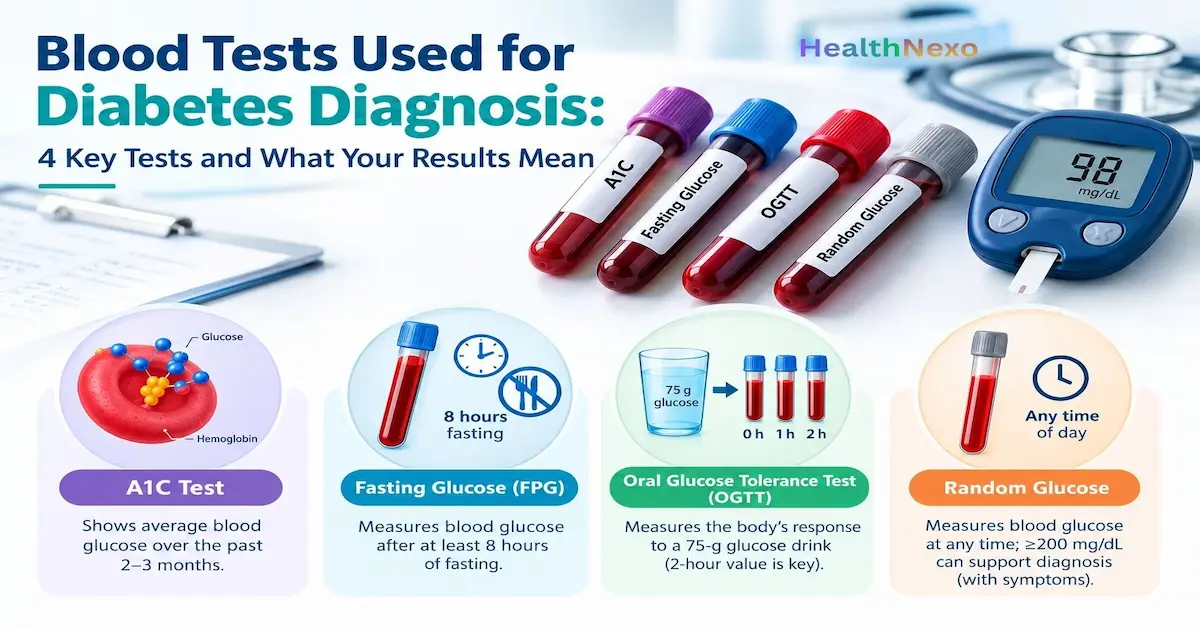
The blood tests used for diabetes diagnosis help identify abnormal glucose levels and determine whether a person has diabetes or prediabetes. The four key tests used for diagnosis are A1C test, fasting plasma glucose test (FPG), 75g Oral Glucose Tolerance Test (OGTT), and random plasma glucose test.
Each of the tests gives its own perspective on the regulation of blood glucose level. Maintaining healthy blood sugar levels is also an important part of long-term diabetes management. Since all tests measure glucose in a different way, the test results may sometimes differ – thus it is important to know what each test actually measures.
Quick Summary
- A1C: Reflects average glucose exposure over the past 2–3 months; usually no fasting is required.
- FPG: Measures blood glucose after fasting for at least 8 hours.
- OGTT: Measures the body’s response to a 75-g glucose drink; The 2-hour value is the standard diagnostic measurement for nonpregnant adults.
- Random glucose: Measures blood glucose at any time; ≥200 mg/dL can support diagnosis when classic symptoms or a hyperglycemic crisis is present.
- Additional tests: C-peptide and diabetes-related autoantibodies can help classify diabetes but are not primary diagnostic tests.
How Diabetes Develops
Diabetes is a condition that develops when the body lacks insulin or does not have the ability to use insulin effectively. It leads to imbalance in the level of sugar in the blood.
Basic mechanism:
Insulin production ↓ and/or insulin action ↓ → Blood glucose ↑
The underlying process varies by diabetes type:
- Type 1 diabetes: Autoimmune attack → Beta-cell destruction → Insulin production ↓ → Blood glucose ↑
- Type 2 diabetes: Insulin resistance → Beta-cell dysfunction → Insulin action ↓ → Blood glucose ↑
- Gestational diabetes: Pregnancy-related hormonal changes → Insulin resistance ↑ → Insulin production becomes insufficient → Blood glucose ↑
- Other forms: Pancreatic disease, hormonal disorders, certain medications, or genetic conditions → Impaired glucose regulation → Blood glucose ↑
Why Diabetes Diagnostic Testing Is Important
Diabetes testing can help:
- Detect diabetes and prediabetes early
- Confirm abnormal blood glucose levels
- Identify people at increased risk of complications. Because diabetes can affect the kidneys over time, appropriate kidney health tests may also be important for ongoing health monitoring.
- Guide treatment and ongoing monitoring
- Clarify diabetes type when additional testing is needed
For people with prediabetes or other risk factors, lifestyle changes can also help reduce the risk of developing type 2 diabetes. Learn more about diabetes prevention strategies for adults.
4 Key Blood Tests Used for Diabetes Diagnosis
There are four types of tests, such as A1C test, fasting plasma glucose test, oral glucose tolerance test, and random plasma glucose test. All the above-mentioned tests have their own way to determine blood glucose levels.
1. A1C Test: Measuring Long-Term Blood Sugar Exposure
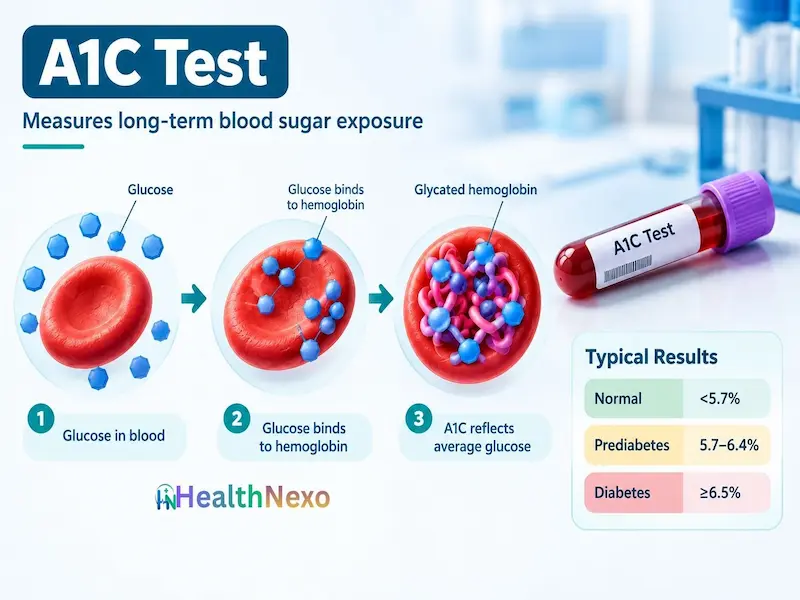
The alternative names for the A1C test are hemoglobin A1C and glycated hemoglobin test. This test estimates the glucose percentage in the hemoglobin molecules. A1C does not give the level of glucose in the blood at that particular time; instead, it shows the average amount of glucose in the blood for two to three months.
If there is an increase in blood glucose, then glucose attaches itself to the hemoglobin. The life span of red blood cells in the body is around 120 days.
- Blood glucose → Glucose binds to hemoglobin → Glycated hemoglobin forms → A1C reflects long-term glucose exposure.
Procedure
- A1C testing is simple and usually does not require fasting.
- A blood sample is collected.
- The laboratory measures glycated hemoglobin.
- The result is reported as an A1C percentage.
For diagnosis, laboratory A1C testing should use an appropriate standardized method.
A1C Results For nonpregnant adults
- Normal: <5.7%
- Prediabetes: 5.7%–6.4%
- Diabetes: ≥6.5%
Why It Matters
The usefulness of A1C is that it measures prolonged exposure to glucose levels without requiring fasting. However, the accuracy of A1C cannot be used to determine the presence of diabetes since it may be affected by factors such as hemoglobin and metabolism of red blood cells.
2. Fasting Plasma Glucose (FPG) Test: Measuring Fasting Blood Sugar
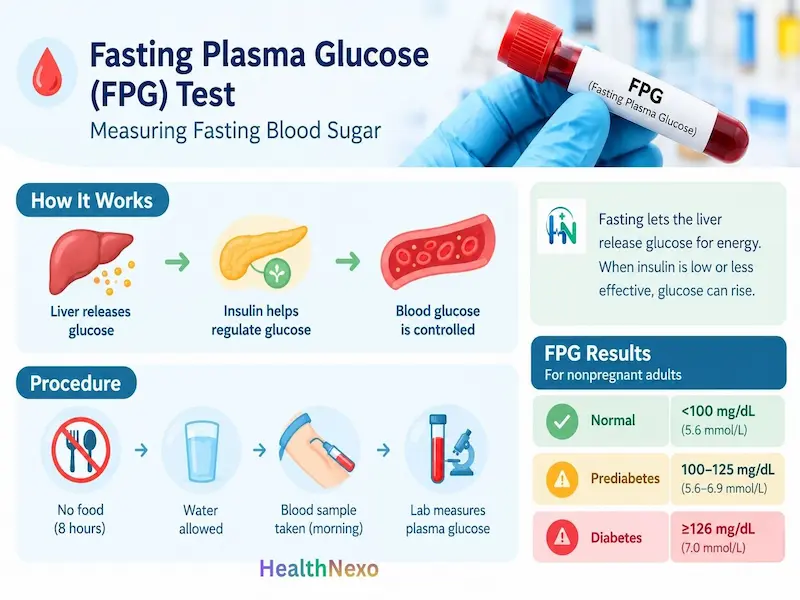
Fasting plasma glucose test is done to check the levels of blood sugar after fasting. It is one of the common blood tests that are used to diagnose diabetes. Fasting results in the release of glucose by the liver in order to give the body energy. Glucose regulation occurs through the work of insulin, which promotes glucose usage while inhibiting excessive production. When there is low insulin production or reduced sensitivity to it, then glucose levels in the blood can be high.
- Fasting → Liver releases glucose → Insulin helps regulate glucose → Blood glucose is controlled.
Procedure:
- Fast for at least 8 hours.
- Avoid food and caloric beverages during the fasting period.
- Water is generally allowed.
- A blood sample is typically taken in the morning for laboratory testing.
- The laboratory measures plasma glucose.
FPG Results For nonpregnant adults
- Normal: <100 mg/dL (5.6 mmol/L)
- Prediabetes: 100–125 mg/dL (5.6–6.9 mmol/L)
- Diabetes: ≥126 mg/dL (7.0 mmol/L)
Why It Matters
FPG test allows for a direct assessment of glucose levels during fasting and is easy to conduct. Nevertheless, it measures glucose level only at one point in time and can miss certain deviations, which appear after the glucose load.
3. Oral Glucose Tolerance Test (OGTT): Measuring the Body’s Glucose Response
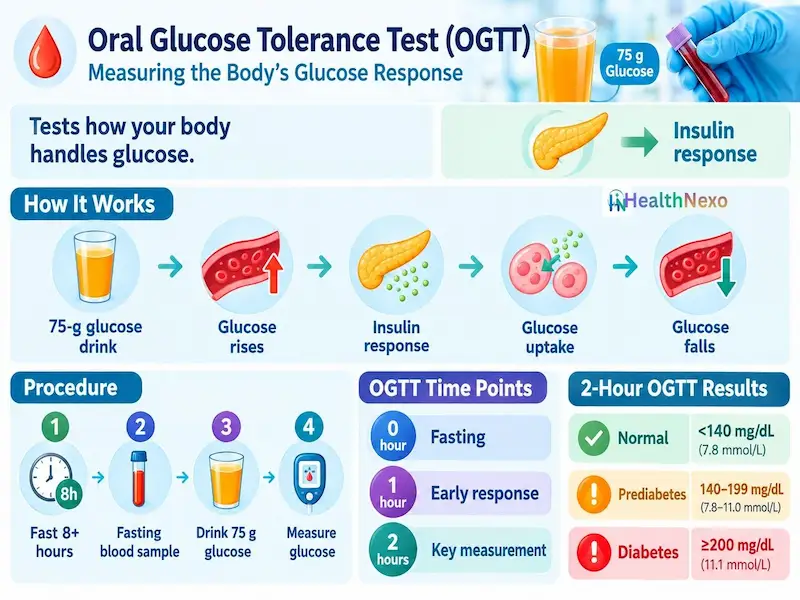
The OGTT measures the body’s ability to handle glucose after a given glucose challenge. The 75 g OGTT may aid in the diagnosis of glucose handling disorders that are not identifiable from fasting glucose alone. After consumption of glucose, there is an increase in blood glucose level. This causes the secretion of insulin from the pancreas and enables the absorption of glucose into the blood, thereby reducing the level. Lack of secretion of insulin or low response to the hormone from the body tissues causes high blood glucose levels.
- 75-g glucose drink → Blood glucose rises → Insulin response → Glucose uptake → Blood glucose falls
Procedure
A typical 75-g OGTT involves:
- Fast for at least 8 hours.
- Collect a fasting blood sample before the glucose drink.
- Drink a solution containing 75 g of glucose.
- Measure blood glucose at the required time point(s).
OGTT Time Points
A 75-g OGTT includes a fasting measurement and glucose measurements after the glucose drink:
- 0 hour: Fasting glucose, measured before the glucose drink.
- 1 hour: Provides additional information about the early glucose response but is not the traditional diagnostic value for diabetes in nonpregnant adults.
- 2 hours: The key diagnostic measurement for traditional diabetes diagnosis in nonpregnant adults.
2-Hour OGTT Results For nonpregnant adults
- Normal: <140 mg/dL (7.8 mmol/L)
- Prediabetes: 140–199 mg/dL (7.8–11.0 mmol/L)
- Diabetes: ≥200 mg/dL (11.1 mmol/L)
Why It Matters
OGTT is the test that assesses glucose regulation on a dynamic basis and is able to detect glucose intolerance, which cannot be detected by fasting glucose test. The only drawback of OGTT is that it involves fasting, drinking of glucose and a few hours of testing.
4. Random Plasma Glucose Test: Measuring Blood Sugar at Any Time
The random plasma glucose test is done to measure the level of glucose present in the blood of an individual at any time without considering the meal status. This test is recommended when there is suspicion of hyperglycemia, but fasting tests cannot be performed. Insulin secretions may be inadequate or ineffective, hence leading to poor tissue utilization of glucose. Consequently, more glucose stays in the blood, raising its concentration.
- Impaired insulin action/secretion → Reduced glucose uptake → Increased blood glucose → Hyperglycemia
Procedure
- No overnight fasting is required.
- A blood sample is collected at any time of day.
- The laboratory measures plasma glucose.
- The result is interpreted together with symptoms and clinical findings.
Diagnostic Threshold
A random plasma glucose level of ≥200 mg/dL (11.1 mmol/L) can support the diagnosis of diabetes when accompanied by classic symptoms of hyperglycemia or a hyperglycemic crisis.
Classic symptoms may include:
- Frequent urination
- Excessive thirst
- Unexplained weight loss
Why It Matters
The random test for blood sugar levels is beneficial since it helps diagnose high blood sugar levels without the need to fast. However, the test should not be used in isolation when diagnosing a symptomless individual.
What the 4 Main Diabetes Tests Measure
Although all four tests assess glucose regulation, they measure different physiological aspects:
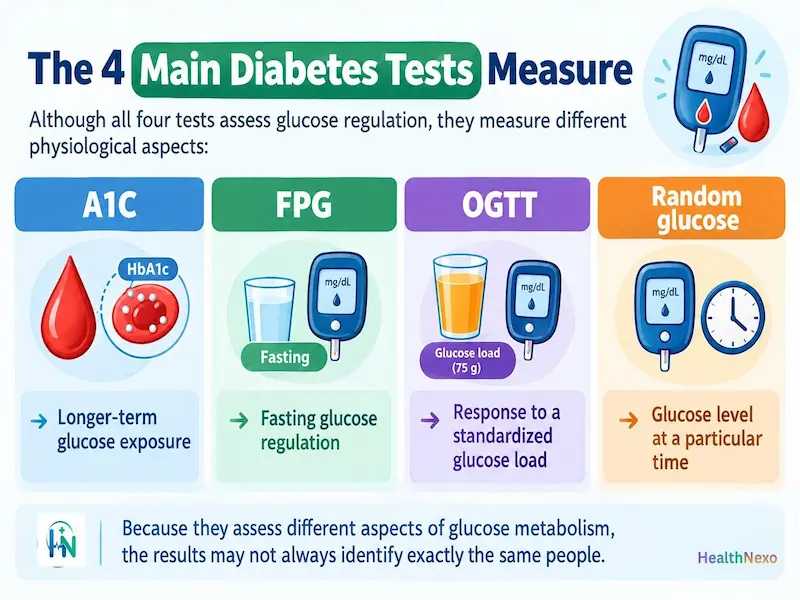
- A1C → Longer-term glucose exposure
- FPG → Fasting glucose regulation
- OGTT → Response to a standardized glucose load
- Random glucose → Glucose level at a particular time
Because they assess different aspects of glucose metabolism, the results may not always identify exactly the same people.
Confirming a Diabetes Diagnosis
- In the absence of clear-cut hyperglycemia, the diagnosis of diabetes usually needs two abnormal findings. This can happen through the same test taken at different times or from two different tests performed at the same time.
- If there are conflicting findings from two different tests, the test which exceeds the diagnostic level will need to be repeated.
- For instance, in case of a finding of A1C within the diabetic range, the test will need to be repeated, or another diagnostic test will need to be done.
Additional Blood Tests for Diabetes Classification
All four major tests help diagnose diabetes or prediabetes but cannot generally pinpoint the type of diabetes. Other tests may be useful in the case of an unclear classification of the disease.
C-Peptide Test: C-Peptide is produced along with insulin in the pancreas. This test helps estimate the insulin production and functioning of the pancreas’ beta-cells.
Proinsulin → Insulin + C-Peptide
Insulin Test: The measurement of insulin in the blood. The test is not a conventional way of diagnosing diabetes but may help in additional evaluation of the metabolic process.
HOMA-IR: Calculation of insulin resistance using fasting blood sugar level and insulin. The test is mostly used for metabolic assessment and is not a conventional way of diagnosing diabetes; there is no universal cutoff point.
GAD65 Antibody Test: The test of GAD65 antibodies may be helpful in the case when it is not clear whether the patient suffers from type 1 or type 2 diabetes. However, the test alone cannot diagnose the disease; it is necessary to perform a glucose-based test or A1C test.
Selecting a Diabetes Diagnostic Test
- For routine screening: A1C or FPG is often convenient because these tests are relatively simple to perform.
- When fasting glucose is unclear: A 75-g OGTT may provide additional information about how the body handles glucose after a standardized glucose load.
- When classic symptoms are present: A random plasma glucose test is useful when fasting is not required, making it a convenient option for assessing blood glucose at any time.
- When diabetes type is uncertain: Additional tests such as C-peptide and diabetes-related autoantibodies may provide information about insulin production and autoimmune activity.
Home Glucose Meters and Diabetes Diagnosis
A home glucose meter is useful for glucose monitoring but should not be used by itself to establish a diagnosis of diabetes. Formal diagnosis should be based on appropriate laboratory testing and clinical interpretation.
Diabetes Testing During Pregnancy
- There are specific testing guidelines and cutoff points used during pregnancy.
- For instance, the single 75-g OGTT test for gestational diabetes involves taking samples from the fasting state, 1 hour, and 2 hours. Different methods for testing during pregnancy will include different glucose loads and time points.
- Consequently, the non-pregnant cutoff points outlined here do not apply to gestational diabetes.
Key Takeaways
- The main blood tests used for diabetes diagnosis are A1C, FPG, OGTT, and random plasma glucose.
- Diabetes thresholds for nonpregnant adults include A1C ≥6.5%, FPG ≥126 mg/dL, or 2-hour OTT ≥200 mg/dL.
- Random glucose ≥200 mg/dL can support diagnosis when classic symptoms or a hyperglycemic crisis is present.
- Without unequivocal hyperglycemia, an abnormal result generally requires confirmation.
- C-peptide and diabetes-related antibodies may help clarify diabetes type, while pregnancy requires different testing protocols.
Important: A healthcare professional should interpret abnormal or conflicting diabetes test results.
Bottom Line
The blood tests used for diabetes diagnosis assess blood glucose in different ways. The A1C, FPG, OGTT, and RPLG tests have particular purposes and diagnostic criteria. Results may vary, thus abnormal results may need to be confirmed through professional analysis.
Frequently Asked Questions (FAQs)
Q1. Which blood tests are used to diagnose diabetes?
The most common blood tests that are used to diagnose diabetes include the A1C, fasting plasma glucose test (FPG), 75 grams oral glucose tolerance test (OGTT), and random plasma glucose test.
Q2. What A1C level indicates diabetes?
In a non-pregnant adult, an A1C level of 6.5% or more is a diabetic value. If there is no clear hyperglycemia, then the value should be confirmed.
Q3. What fasting glucose level indicates diabetes?
Plasma glucose greater than 126 mg/dL (7.0 mmol/L) is used to diagnose diabetes mellitus in people who are not pregnant. Fasting usually implies abstinence from food for 8 hours or more.
Q4. Can a random blood glucose test diagnose diabetes?
Plasma glucose level of 200 mg/dL (11.1 mmol/L) taken randomly with the presence of classical symptoms of hyperglycemia or hyperglycemia crises can be used to diagnose diabetes.
Q5. Can a home glucose meter diagnose diabetes?
A glucometer at home is helpful in testing glucose levels in the blood but cannot be relied on solely to diagnose the patient with diabetes. A diagnosis of diabetes should be established through appropriate laboratory testing and clinical evaluation.
Medical Disclaimer
This paper has been prepared only for information purposes and should not be used as an alternative to any professional medical advice, diagnosis, or treatment. Test results can vary depending on what type of diabetes test has been performed, personal medical history, medication, and other different factors. Unless stated differently, diagnostic criteria discussed in this paper are intended for non-pregnant adults.
References
- American Diabetes Association Professional Practice Committee for Diabetes. Diagnosis and Classification of Diabetes: Standards of Care in Diabetes—2026. Diabetes Care. 2026;49(Suppl. 1):S27–S49. doi:10.2337/dc26-S002.Read the official ADA guideline
- National Institute of Diabetes and Digestive and Kidney Diseases (NIDDK). Diabetes Tests & Diagnosis. Read NIDDK: Diabetes Tests & Diagnosis
- National Institute of Diabetes and Digestive and Kidney Diseases (NIDDK). Diabetes & Prediabetes Tests. Read NIDDK: Diabetes & Prediabetes Tests
- National Institute of Diabetes and Digestive and Kidney Diseases (NIDDK). The A1C Test & Diabetes. Read NIDDK: The A1C Test & Diabetes
Tags:

Md. Rakibul Hasan, BSc (Hons), MS (Thesis)
Biochemistry & Molecular Biology, University of Chittagong, Bangladesh
Senior Biochemist | Health Content Writer | Evidence-Informed Health Information Creator
Popular Diagnostic Centre Limited, Bangladesh.
He specializes in clinical biochemistry, laboratory diagnostics, and medical testing. Alongside his professional work, he is actively involved in health education and scientific communication.
As a Health Content Writer and Research-Based Health Information Creator, he simplifies complex medical and biochemical topics into clear, evidence-informed, and reader-friendly health information.