

Natural Headache Relief Methods can help reduce headache pain without relying on medication. Headaches are considered one of the most widespread health conditions in the world, with millions of people experiencing them every day. Headaches affect our work and sleep. Although pain medications will quickly treat headaches, excessive use may lead to medication-overuse headaches. However, there are many other proven natural techniques for treating headaches.
Good news is that lots of home remedies for headache pain actually have evidence to back up how they work. Changing habits that you have, like not drinking enough water, or how many hours you sleep, may really relieve a headache.
Inside this guide, you will be able to read 10 Proven Home Remedies for Fast Pain Relief. Also, know how they work and what you need to know to try fewer headaches.
What Is a Headache?
A headache is pain in your head, face, scalp or the back of your neck. This pain is transmitted to your brain as a signal by stimulating the nerve cells, blood vessels or the muscles that lie within the brain. The brain does not have the ability to sense pain, but structures around the brain do.
There are two main types of headaches:
1. Primary headaches: It develops because of the activation of pain-sensitive nerves in the head or neck region.
- Example: tension headaches, migraine headaches, and cluster headaches.
2. Secondary headaches: They tends to be caused by other diseases.
- Examples: dehydration, sinusitis, hypertension, or head injury.
Common types of headache
Headaches may be classified in accordance with their cause and symptoms. Indicated below are some of the common types of headaches:
- Tension Headache: A dull pain encountered due to tension, stress or bad posture.
- Migraine Moderate to severe pain: Bursts of pain, often with nausea and sensitivity to light and sound.
- Cluster Headache: Sharp pain around the temple and behind the eye periodically.
- Sinus Headache: Pain and facial pressure caused by inflammation of the sinuses.
- Cervicogenic Headache: Occurs resulting from neck disorders.
- Medication—Overuse Headache: It is a kind of headache that arises due to frequent use of medications to treat headache.
Mechanism of Headache
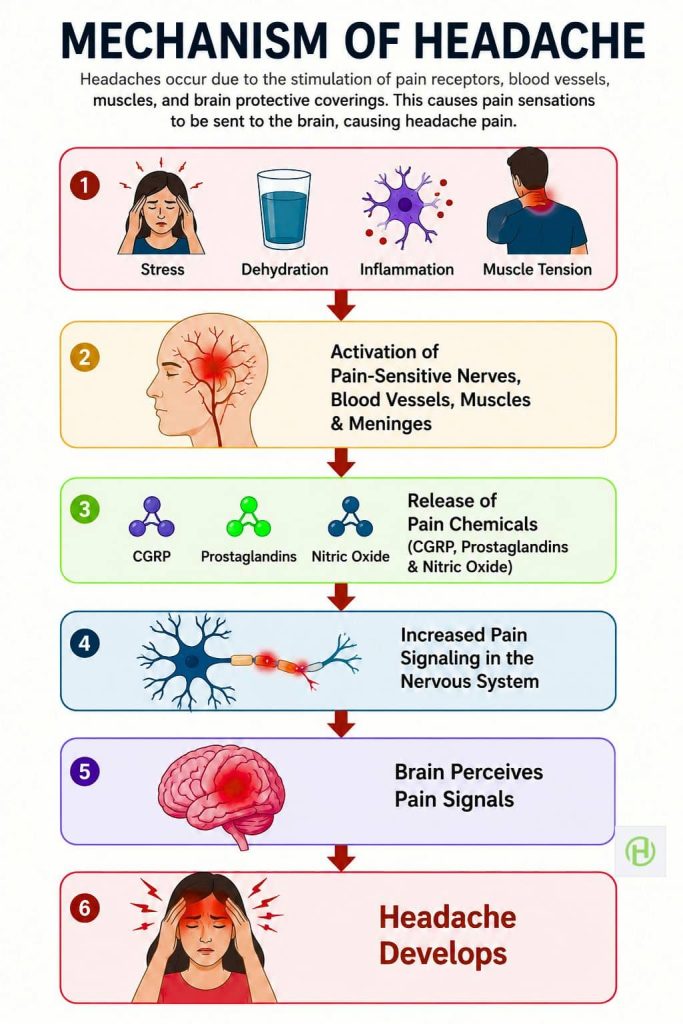
Headaches occur due to the stimulation of pain receptors, blood vessels, muscles, and brain protective coverings. This causes pain sensations to be sent to the brain, causing headache pain.
Stress / Dehydration / Inflammation / Muscle Tension
↓
Activation of Pain-Sensitive Nerves, Blood Vessels, Muscles & Meninges
↓
Release of Pain Chemicals (CGRP, Prostaglandins & Nitric Oxide)
↓
Increased Pain Signaling in the Nervous System
↓
Brain Perceives Pain Signals
↓
Headache Develops
Different headache triggers activate pain pathways in the brain, leading to tension headaches, migraines, and cluster headaches.
Common Causes of Headache
Headaches can have many causes, including:
- Stress and anxiety
- Dehydration
- Lack of sleep
- Eye strain
- Neck and shoulder muscle tension
- Hunger or low blood sugar
- Caffeine withdrawal
- Alcohol consumption
- Cold or sinus infections
- Hormonal changes
- Medication overuse
Less commonly, headaches may be linked to high blood pressure, infections, migraines, or brain tumors. Frequent or severe headaches should be evaluated by a healthcare professional.
Advice: Keeping the headache diary will help as it can help recognize possible headache triggers later on.
10 Proven Natural Headache Relief Methods
Many headaches can be alleviated through natural means without taking any medicine. The natural headache relief methods listed below for headaches have been scientifically proven to provide relief from pain and other causes of headaches.
Summary of Natural Headache Relief Methods
| Natural Headache Relief Method | How It Helps | Best For |
| Drink More Water | Prevents dehydration and supports brain function | Dehydration headaches |
| Apply a Cold Compress | Reduces inflammation and numbs pain | Migraines |
| Rest in a Quiet, Dark Room | Minimizes light and noise sensitivity | Migraines, stress headaches |
| Practice Deep Breathing | Relaxes muscles and lowers stress | Tension headaches |
| Reduce Screen Time | Relieves eye strain and muscle tension | Digital eye strain headaches |
| Try Gentle Neck and Shoulder Stretches | Eases neck and shoulder tightness | Tension headaches |
| Eat Nutritious Meals Regularly | Maintains stable blood sugar levels | Hunger headaches |
| Improve Your Sleep Habits | Supports pain regulation and recovery | Chronic headaches, migraines |
| Limit Excess Caffeine | Prevents caffeine-related headache triggers | Caffeine-withdrawal headaches |
| Engage in Regular Physical Activity | Reduces stress and boosts endorphins | Recurrent headaches |
1. Drink More Water: The First Step to Headache Relief
Perhaps one of the most ignored yet frequent headaches would be dehydration headaches. Even slight dehydration of the body can affect the blood supply in such a way that the brain gets insufficient amounts of oxygen and nutrients.
Why It Works
Hydration is key to ensuring:
- Healthy blood circulation
- Electrolyte balance
- Maintain normal function of the brain and nerves.
It has been shown that an increase in water consumption leads to a decrease in the occurrence of headaches caused by dehydration.
How to Practice
- Consume 1–2 glasses (250-500 mL) of water upon experiencing a headache.
- Consume 2–3 liters of liquid daily depending on the level of activity and the weather conditions.
- Increase fluid consumption if it is hot outside, while being physically active or ill.
- Consume water-containing foods, for example, watermelon, cucumbers, oranges, and soup.
Headaches caused by dehydration can be both prevented and cured by consuming more fluid during the day.
2. Apply a Cold Compress for Fast Headache Relief
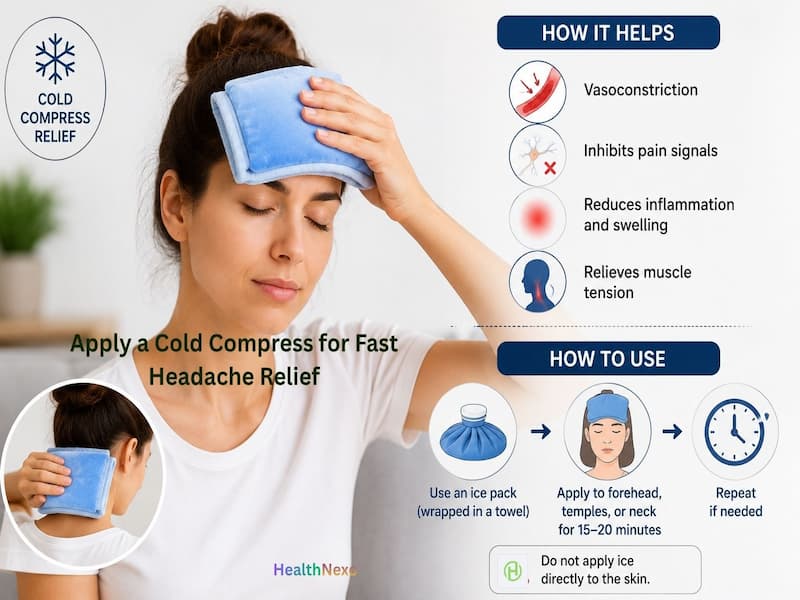
A cold compress is a simple, drug-free method that may help with headaches, particularly a migraine headache. A cold compress may decrease inflammation, while also temporarily numbing tender areas that cause headaches.
Scientific Mechanism
What cold therapy can do:
- Cause vasoconstriction
- Inhibit pain signal transmission
- Decrease inflammation and swelling
- Alleviate tightness in muscles of the head and neck
It has been proven through research that the application of a cold pack on your forehead or neck could potentially alleviate pain from migraines and tension.
Practice Technique
- Get yourself an ice pack and cover it with a towel.
- Put the ice pack on your forehead, temples, or neck for 15–20 minutes.
- Do it several times if necessary.
- Avoid putting ice directly on your skin.
It has been scientifically proven that the application of a cold pack on your forehead or neck can decrease pain and swelling through vasoconstriction.
3. Rest in a Quiet, Dark Room for Headache Relief
Lying down in a quiet, dark room for some time can bring some relief to headaches and most especially to the pain from migraine. It can calm the irritated nerves from loud noise and lights and helps the pain go away.
How to Practice
- Turn off all bright lights or turn on dimmed lights.
- Close the window curtains or blinds.
- Avoid watching TV, using your cell phone and computer.
- Take a rest or sleep for 20–30 minutes.
The effectiveness of the practice in treating migraines is supported by research, since sitting in dark and quiet rooms reduces your brain’s sensitivity to light and sound, which triggers migraines.
4. Practice Deep Breathing and Relaxation Techniques
It has been observed that stress is the most frequent headache trigger. As well, it also plays a significant role in triggering or worsening the intensity and frequency of migraines. The deep breathing exercise practice can act as trigger of a relaxation response for your headache relief.
How It Works
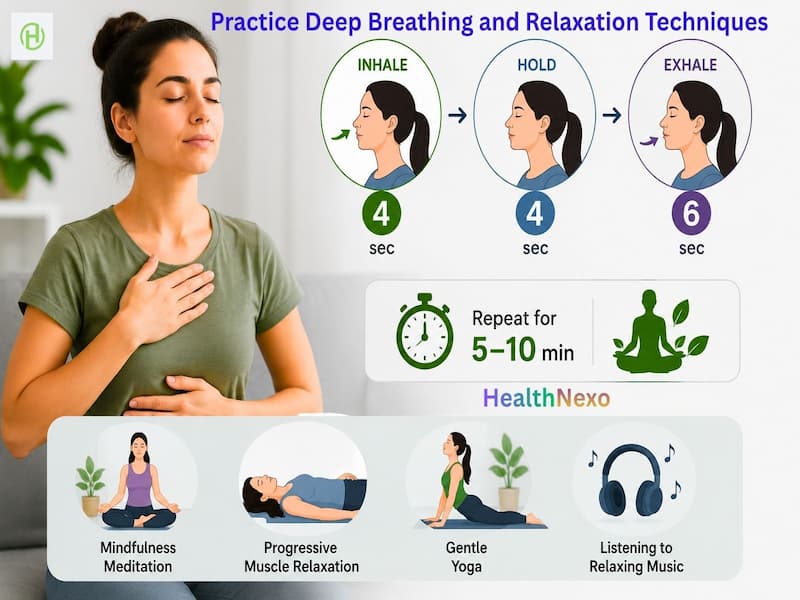
- Deep breathing activates the parasympathetic nervous system, helping your body relax.
- It lowers stress hormone levels, such as cortisol.
- It relaxes tense muscles, reducing physical tension.
- It decreases pain signals sent to the brain, helping relieve headaches.
Regular daily practice may help prevent recurring headaches and reduce their frequency over time.
How to Practice
Try this breathing exercise:
- Inhale through your nose for 4 seconds.
- Hold your breath for 4 seconds.
- Exhale through your mouth for 6 seconds.
- Repeat for 5–10 minutes.
Other techniques:
- Mindfulness meditation
- Progressive muscle relaxation
- Gentle yoga
- Listening to relaxing music
Explain: Research has revealed that performing deep breathing exercises, being mindful, and other forms of relaxation can be effective for relieving stress and avoiding getting headaches.
5. Reduce Screen Time and Eye Strain
Extended exposure to computers, tablets, or cell phones will lead to digital eye strain, which causes many headaches.
How It Works
- Relaxes the eyes and reduces eye strain.
- Prevents dry, tired eyes from long screen use.
- Reduces neck and shoulder tension.
- Helps prevent screen-related headaches and blurred vision.
How to Practice
- Follow the 20-20-20 Rule: Every 20 minutes, look at something 20 feet away for 20 seconds.
- Adjust screen brightness to a comfortable level.
- Keep your screen at eye level to reduce neck strain.
- Blink often to prevent dry eyes.
- Maintain good posture while using computers and other digital devices.
Studies have shown that taking breaks from staring at a screen and the 20-20-20 method help prevent digital eye strain and headaches.
6. Try Gentle Neck and Shoulder Stretches
Tension headaches may be caused by tense neck and shoulder muscles. Gently stretch the muscles of your neck and shoulders and you should feel better.
How It Works
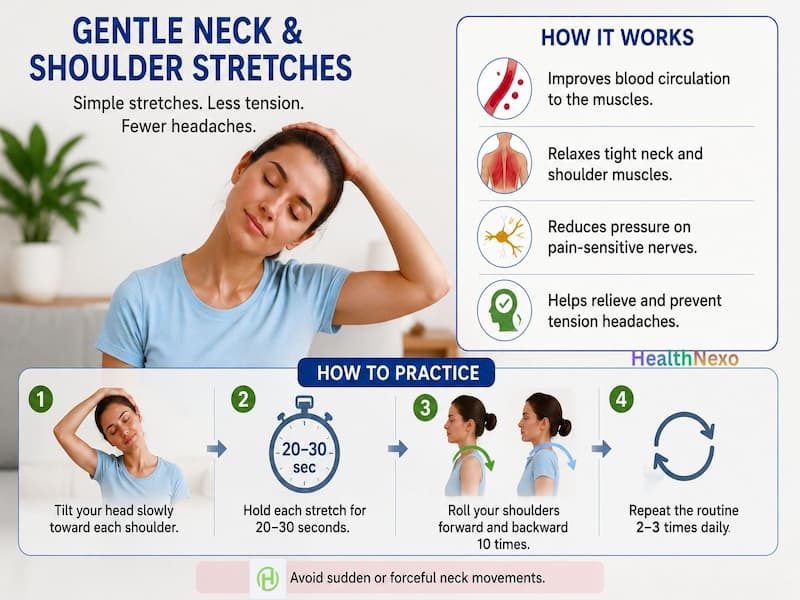
- Improves blood circulation to the muscles.
- Relaxes tight neck and shoulder muscles.
- Reduces pressure on pain-sensitive nerves.
- Helps relieve and prevent tension headaches.
How to Practice
- Tilt your head slowly toward each shoulder.
- Hold each stretch for 20–30 seconds.
- Roll your shoulders forward and backward 10 times.
- Repeat the routine 2–3 times daily.
- Avoid sudden or forceful neck movements.
According to researchers, routine stretching might help to relax muscles and ease the prevention of tension headaches.
7. Eat Nutritious Meals Regularly
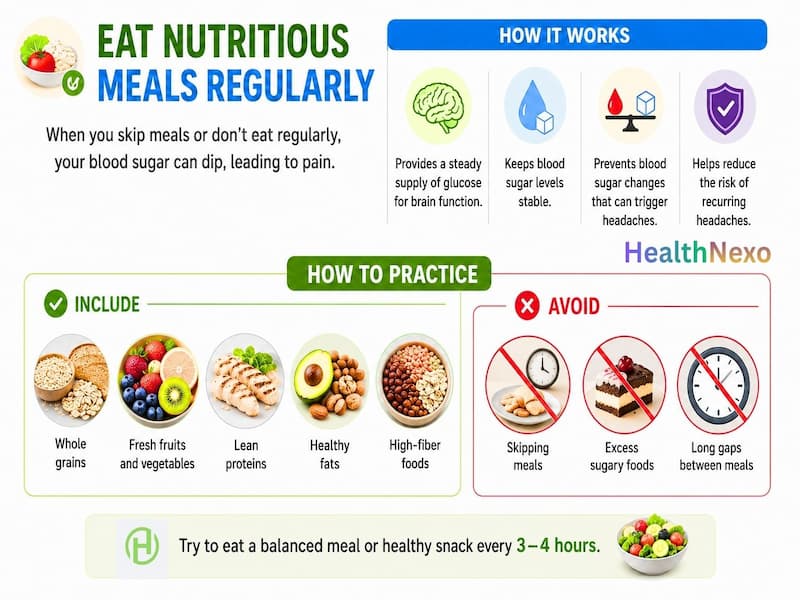
When you skip meals or don’t eat regularly, your blood sugar can dip, leading to pain.
How It Works
- Provides a steady supply of glucose for brain function.
- Keeps blood sugar levels stable.
- Prevents blood sugar changes that can trigger headaches.
- Helps reduce the risk of recurring headaches.
How to Practice
Include:
- Whole grains
- Fresh fruits and vegetables
- Lean proteins
- Healthy fats
- High-fiber foods
Avoid:
- Skipping meals
- Excess sugary foods
- Long gaps between meals
Try to eat a balanced meal or healthy snack every 3–4 hours.
Some proof suggests that eating on schedule and having a well-balanced diet may be beneficial in preventing headaches caused by low blood sugar levels.
8. Improve Your Sleep Habits: A Key Step to Prevent Headaches
Insufficient or interrupted sleep can trigger and exacerbate the risk of headaches and migraines. Adequate rest allows for the brain to relax and restore pain centers in the body and brain.
How It Works
- Helps regulate stress hormones.
- Reduces inflammation linked to headaches.
- Supports healthy brain function.
- Lowers the risk of frequent headaches.
Practice method
- Get 7–9 hours of sleep each night
- Have a fixed time for sleeping and waking
- Do not consume caffeine 6 hours before sleep.
- Avoid using electronic devices before going to sleep
- The room should be cool, silent, and dark.
Studies have revealed that sleep can decrease the occurrence of headache attacks and enhance brain performance.
9. Limit Excess Caffeine: Support Better Brain Health
A small amount of caffeine helps to alleviate pain during headaches, but overdoing the caffeine and then having an abrupt stopping will result in a headache.
How It Works
- Small amounts of caffeine may help relieve headache pain.
- It narrows blood vessels, which may reduce inflammation.
- Too much caffeine can cause dependence.
- Caffeine withdrawal may trigger headaches.
How to Practice
- Limit caffeine to no more than 400 mg per day
- Avoid consuming caffeine later in the day, especially during the afternoon and evening
- Cut down on caffeine if you are a habitual user
- Check the label of any medicines, sports, or energy drinks to see if they contain caffeine.
It has been established that drinking a certain amount of coffee can ease headaches, but on the other hand, it can cause caffeine-withdrawal headaches.
10. Engage in Regular Physical Activity
Taking regular, moderate exercise is good for both the prevention of headaches and for your overall health.
How It Works
- Releases endorphins, the body’s natural painkillers.
- Improves blood circulation.
- Reduces stress and promotes better sleep.
- Helps lower the frequency of headaches over time.
How to Practice
Aim for at least 150 minutes of moderate exercise each week, such as:
- Brisk walking
- Cycling
- Swimming
- Yoga
- Stretching exercises
Advice: Do not engage in any strenuous physical activity when you have a migraine headache, since this can make your condition worse for the time being.
Some studies show that moderate exercising on a regular basis can actually help prevent headaches – be it migraine or stress-related.
Lifestyle Tips to Prevent Headaches
Some practices that can aid in reducing the number of headaches include:
- Staying hydrated.
- Exercising on a regular basis.
- Getting adequate rest and having a routine sleep schedule.
- Eating proper meals and never skipping breakfast.
- Using relaxation techniques to deal with stress.
- Limiting your intake of alcohol.
- Not smoking.
- Taking periodic rests from screen time.
- Avoiding foods that trigger headaches.
- Using good posture while working.
When to See Your Doctor
While most headaches are not dangerous, consult a doctor if:
- You have a thunderclap headache that occurs suddenly.
- You develop a headache following an injury to your head.
- There is confusion, loss of consciousness or seizures.
- Difficulty speaking or numbness.
- Loss of vision or double vision.
- Vomiting persistently.
- Feeling feverish and having stiffness of the neck.
- The pain gets worse over time.
- Headaches that occur often and interrupt your day-to-day activities.
Key Takeaways
Natural Headache Relief Methods can help reduce headache pain and lower the risk of future headaches. Drinking plenty of water, ensuring adequate rest, eating balanced meals, reducing stress levels, avoiding excess screen use, and regular physical activity are some easy methods that have been scientifically proven to help prevent and relieve headaches. In case you develop severe, frequent, persistent, or neurological headaches, you should consult your doctor immediately.
Frequently Asked Questions (FAQs)
Q1. What is the fastest natural way to relieve a headache?
Drink plenty of water, use a cold compress, lie down in a quiet room and breathe deeply.
Q2. Can dehydration cause headaches?
Yes. Dehydration may cause headaches. It’s good to drink water.
Q3. What is the best home remedy for migraines?
Lying in a dark and quiet room, drinking plenty of water and using a cold compress.
Q4. Does caffeine help relieve headaches?
Yes, caffeine in moderate amounts can help. Excessive consumption of caffeine and caffeine withdrawal might cause headaches.
Q5. Can stress trigger headaches?
Yes, stress is one of the triggers of headaches, including migraine headaches.
Q6. Are natural headache relief methods safe?
Mostly yes. Nevertheless, in case of serious and frequent headaches, consultation of healthcare professionals is highly advisable.
Q7. Can Lack of Sleep Cause Headaches?
Yes. Poor sleep can trigger headaches and migraines by disrupting the brain’s pain-control system. Getting 7–9 hours of sleep each night may help prevent headaches.
Q8. Are Headaches a Sign of High Blood Pressure?
Usually not. Mild high blood pressure rarely causes headaches. However, severely high blood pressure can cause a severe headache and requires immediate medical attention.
Medical Review
This article is based on guidance from the International Headache Society, the American Migraine Foundation, the National Institute of Neurological Disorders and Stroke (NINDS), and other reputable medical organizations.
References
- American Migraine Foundation2
- International Headache Society (ICHD-3)
- National Institute of Neurological Disorders and Stroke (NINDS)
- Mayo Clinic
- Cleveland Clinic
- Harvard Health Publishing
- National Health Service (NHS)
- World Health Organization (WHO)
⚕️ Medical Disclaimer
The information provided in this article is for educational and informational purposes only. It is not intended to be a substitute for professional medical advice, diagnosis, or treatment. Always consult a qualified healthcare professional before making any medical decisions, starting any treatment, or changing your current healthcare plan.
Tags:

Md. Rakibul Hasan, BSc (Hons), MS (Thesis)
Biochemistry & Molecular Biology, University of Chittagong, Bangladesh
Senior Biochemist | Health Content Writer | Evidence-Informed Health Information Creator
Popular Diagnostic Centre Limited, Bangladesh.
He specializes in clinical biochemistry, laboratory diagnostics, and medical testing. Alongside his professional work, he is actively involved in health education and scientific communication.
As a Health Content Writer and Research-Based Health Information Creator, he simplifies complex medical and biochemical topics into clear, evidence-informed, and reader-friendly health information.



3 thoughts on “Natural Headache Relief Methods: 10 Proven Home Remedies for Fast Pain Relief”