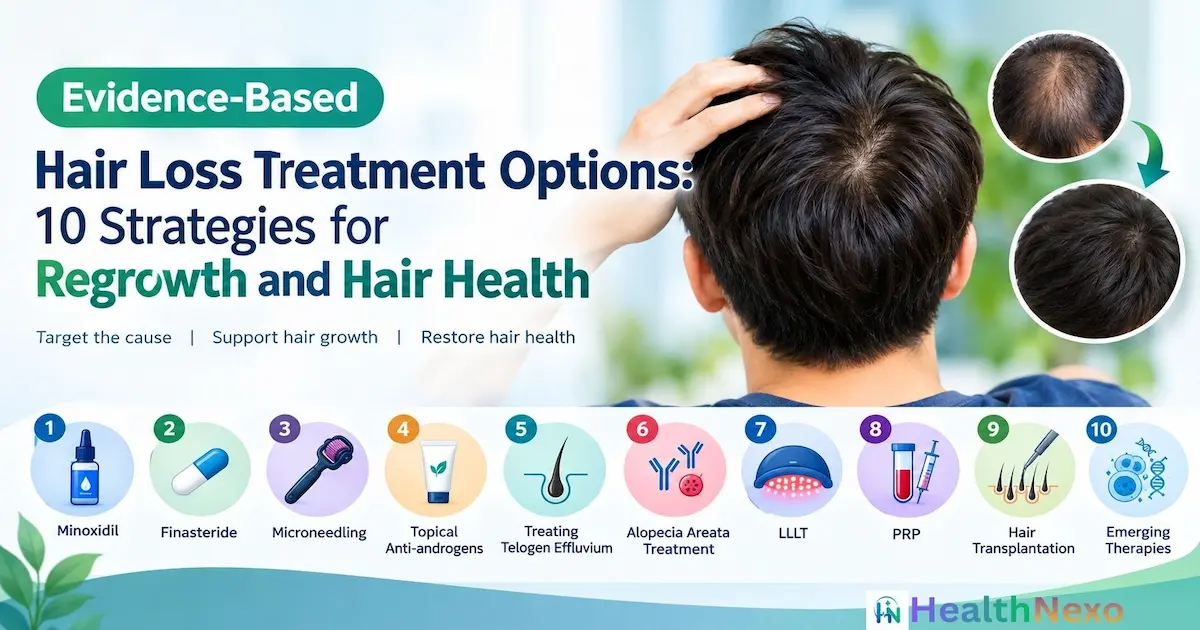
Hair loss can occur for many reasons, including androgenetic alopecia, telogen effluvium, alopecia areata, nutritional deficiencies, thyroid disorders, medications, and scalp conditions. Evidence-based hair loss treatment options vary because these causes involve different biological mechanisms, and no single treatment works best for everyone. Choosing the right approach depends on the type, cause, severity, duration, and pattern of hair loss.
This guide reviews 10 evidence-based hair loss treatment options, explaining how they work, what research suggests, and where each approach may fit.
Quick Summary
- Minoxidil can support hair growth in male and female pattern hair loss.
- Finasteride is an established option for appropriate men with male pattern hair loss.
- Microneedle may improve hair density, especially with minoxidil.
- Topical anti-androgens are being studied for androgenetic alopecia.
- Telogen effluvium often improves when its underlying trigger is addressed.
- Alopecia areata may require immune-targeted treatment.
- LLLT may improve hair density in some people with patterned hair loss.
- PRP may improve hair density, although treatment protocols vary.
- Hair transplantation can provide long-lasting cosmetic restoration in suitable candidates.
- Emerging therapies are exploring follicular signaling, stem cells, and regenerative approaches.
Understanding the Hair Growth Cycle
The hair growth cycle has three main phases:
- Anagen — Growth phase that lasts from several months to several years.
- Catagen — A short transitional phase when hair growth slows down.
- Telogen — Resting phase, after which the hair is eventually shed.
A wide variety of disorders affect this cycle in different ways. Androgenetic alopecia leads to miniaturization of follicles, whereas telogen effluvium leads to premature entrance into the resting phase. Knowing this cycle and the cause of disorder is the key step towards its treatment.
10 Evidence-Based Hair Loss Treatment Options
Hair loss treatment depends on its underlying cause, pattern, and severity. The following 10 evidence-based strategies cover established therapies, supportive options, condition-specific treatments, and emerging approaches for hair regrowth.
1. Topical Minoxidil: Supporting Hair Growth
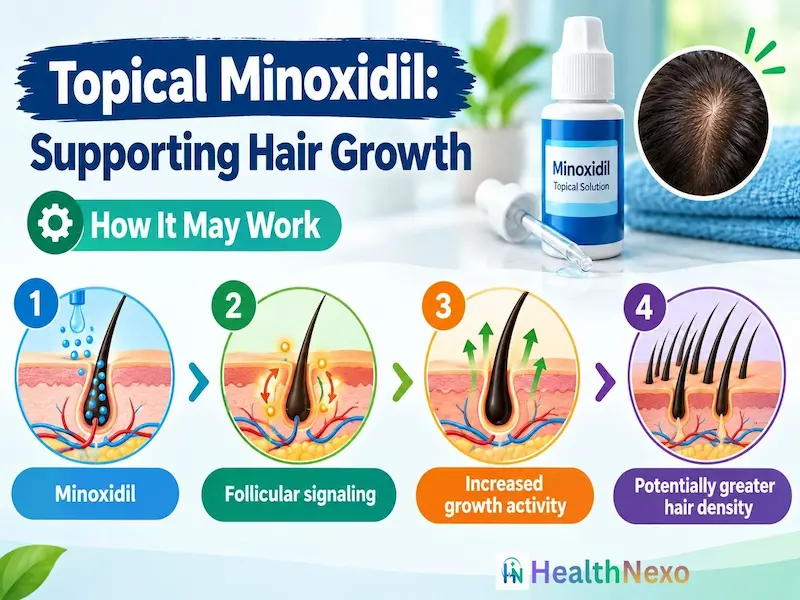
One of the most widely known treatments for pattern baldness is minoxidil. While the mechanism of action of minoxidil is not completely understood, it appears to affect the hair follicle signaling and promote anagen phase of hair growth.
How It May Work
- Minoxidil → Follicular signaling → Increased growth activity → Potentially greater hair density
Clinical studies have repeatedly shown that topically applied minoxidil can be effective for promoting hair growth. In one such randomized study conducted for 48 weeks among 393 males, 5% minoxidil was more effective in promoting hair regrowth compared to 2% minoxidil or placebo.
Important considerations:
- Visible improvement usually takes several months.
- Temporary increased shedding may occur initially.
- Scalp irritation, dryness, or itching can occur.
- Response varies between individuals.
- Continued use is generally needed to maintain benefits.
2. Finasteride for Male Pattern Hair Loss
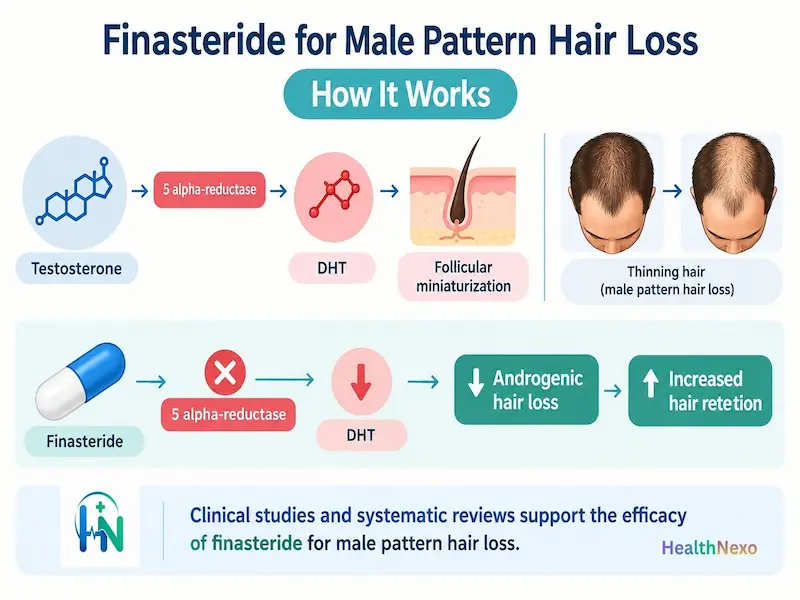
The use of finasteride is mainly in the treatment of androgenic alopecia among males. Follicular miniaturization occurs in genetically susceptible hair follicles due to dihydrotestosterone. This drug works on the inhibition of 5-alpha reductase.
How It Works
- Testosterone → 5 alpha-reductase → DHT → Follicular miniaturization
- Finasteride → ↓ DHT → ↓ Androgenic hair loss → Increased hair retention
Clinical studies and systematic reviews support the efficacy of finasteride for male pattern hair loss.
Important considerations:
- Primarily used for male pattern hair loss.
- Sexual adverse effects can occur in some users.
- Benefits generally decline after treatment is stopped.
- Not everybody can use this product.
Finasteride should not be used during pregnancy because exposure to finasteride may pose a risk to a male fetus.
3. Microneedling: Stimulating Hair Follicles
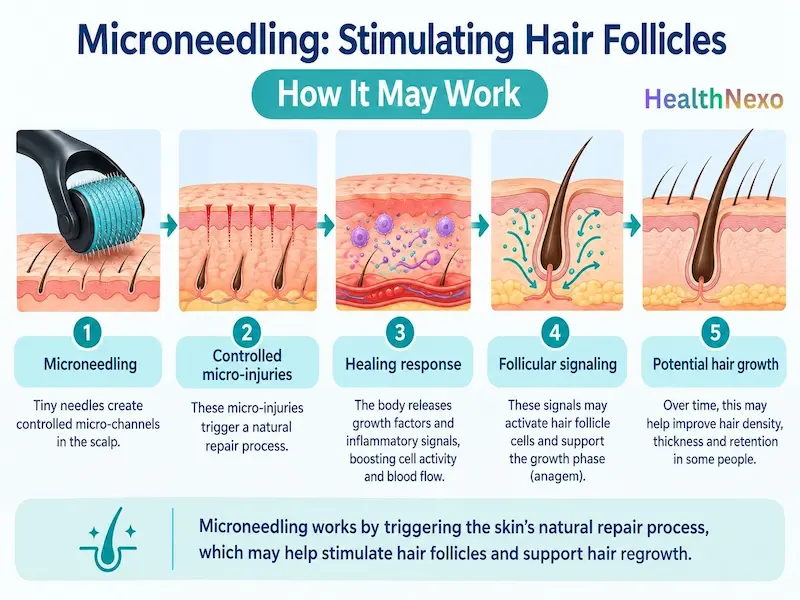
Microneedling involves creating controlled micro-injuries in the scalp with fine needles, which may trigger healing responses and signaling changes around hair follicles. This technique has been used in combination with topical minoxidil.
How It May Work
- Microneedling → Controlled micro-injuries → Healing response → Follicular signaling → Potential hair growth
Microneedling alone or in combination with minoxidil could increase the density of hair in androgenic alopecia based on scientific investigations and reviews. There are different protocols in microneedling depending on the depth of the needle, frequency, and procedure itself.
Important considerations:
- Usually considered an adjunct rather than a replacement for established treatments.
- Temporary redness, irritation, or discomfort may occur.
- Proper technique and hygiene are important.
- Professional guidance may be appropriate for deeper treatments.
4. Topical Anti-androgens: Targeting Hormonal Signals at the Follicle
Topical anti-androgens are currently being explored as therapeutic options that would help lower the activity of androgens around vulnerable hair follicles. One such example of a topical compound that can be used for the treatment of androgenic alopecia is alpha-estradiol (17α-estradiol).
How It May Work
- Testosterone → 5-alpha-reductase → DHT → Follicular miniaturization
- Topical alpha-estradiol → Potentially reduced local androgen activity → Possible reduction in miniaturization
Some studies indicate that topical treatment with alpha-estradiol can help in reducing hair fall or increase hair density. But there is less scientific evidence for this method than that available for traditional treatments like minoxidil and finasteride.
5. Treat the Trigger Behind Telogen Effluvium
Telogen effluvium (TE) is a common cause of excessive hair shedding. TE occurs when the hair growth cycle is disrupted by factors such as illness, stress, nutritional deficiencies, rapid weight loss, hormonal changes, or certain medications.
Common triggers include:
- Severe illness or infection
- High fever
- Major physical or emotional stress
- Surgery
- Rapid weight loss
- Severe calorie restriction
- Nutritional deficiencies
- Hormonal changes
- Certain medications
How It Happens
- Trigger → Altered follicular cycling → More follicles enter telogen → Delayed shedding → Diffuse hair loss
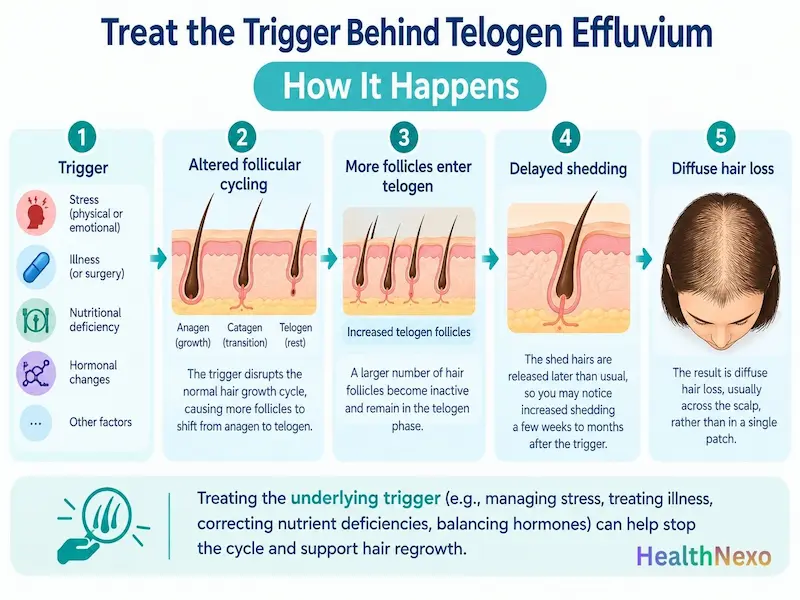
It can take weeks to months before the signs of hair shedding become evident, making it difficult to trace back to the cause. In most instances, hair shedding ceases when the trigger behind it subsides. Recurring shedding requires further assessment of the cause.
6. Condition-Specific Treatment for Alopecia Areata
Alopecia areata is an autoimmune disorder resulting in hair fall. Alopecia areata occurs when there is clearly identifiable hair loss in patches on the scalp or any part of the body.
How It Happens
- Immune dysregulation → Cytokine/JAK-STAT signaling → Disruption of follicular immune privilege → Hair loss
Alopecia areata has a different underlying mechanism from androgenetic alopecia, so treatment approaches also differ. Clinical trials have shown meaningful hair regrowth with JAK inhibitors in patients with severe alopecia areata.
Phase 3 trials have shown greater hair regrowth with baricitinib than with placebo in adults with severe alopecia areata, while ritlecitinib has also demonstrated benefit in adolescents and adults with severe disease. Treatment varies according to severity, age, time span of disease, etc.
7. Low-Level Light Therapy (LLLT): Using Light to Stimulate Hair Growth
LLLT, or photobiomodulation, employs low intensity red or near infrared light to affect cellular function. LLLT has been studied primarily for androgenetic alopecia.
How It May Work
- Red/near-infrared light → Cellular signaling → Follicular stimulation → Potential increase in hair density
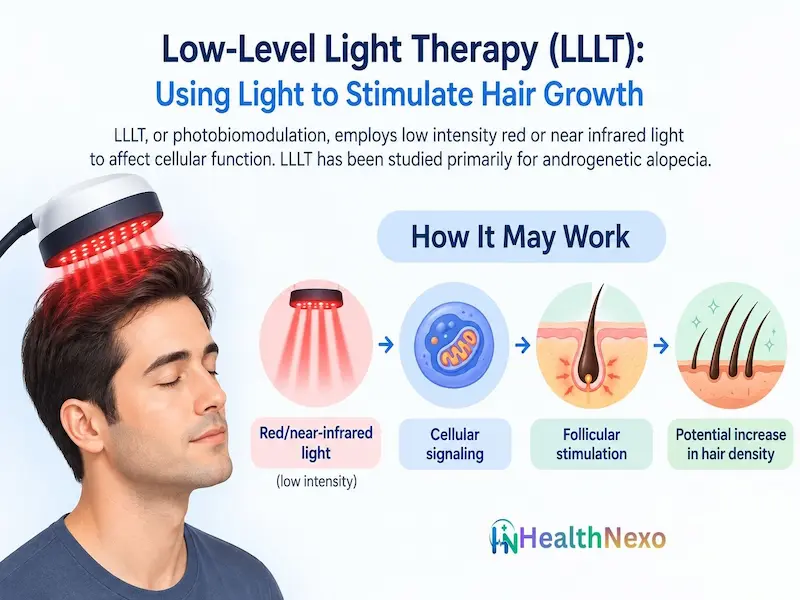
Systematic reviews and meta-analyses suggest that LLLT may increase hair density in some patients with androgenetic alopecia compared with sham treatment.
Still, devices vary in terms of wavelength, energy output, design, and protocol, so results cannot be compared easily. LLLT is non-invasive and well tolerated and may be used as an additional method.
8. Platelet-Rich Plasma (PRP): Stimulating Hair Growth
PRP treatment involves the preparation of platelet-rich blood from an individual’s own blood and injection of this solution in regions of hair loss. Platelets carry growth factors which affect signal transmission around the hair follicle.
How It May Work
- Blood collection → Platelet concentration → Scalp injection → Growth-factor release → Follicular signaling → Potential increase in hair density
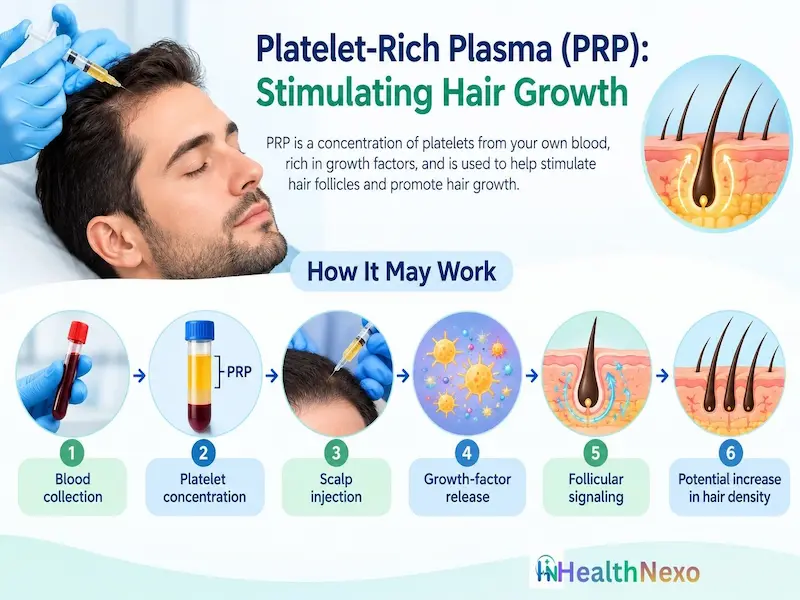
Based on clinical studies and meta-analysis, PRP could help boost hair density among patients suffering from androgenetic alopecia. However, the procedures have high variability regarding platelet concentration, preparation of platelets, injections, and intervals between treatments. Hence, the optimal protocol is unknown.
Nevertheless, PRP could be used as an alternative treatment method among some patients.
9. Hair Transplantation: Long-Lasting Hair Restoration
Hair transplantation entails transplanting healthy follicles to regions where hair loss is experienced, rather than attempting to grow hair in all affected follicles.
How It Works
- Healthy donor follicles → Harvesting → Transplantation → Follicle survival → New hair growth → Cosmetic restoration
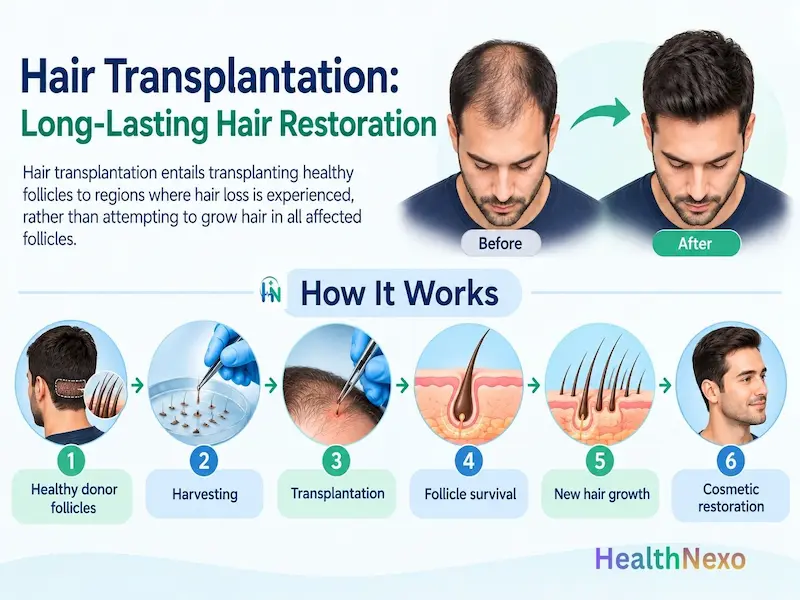
Results depend on donor hair availability and quality, the pattern and extent of hair loss, patient selection, and surgical technique. Hair transplantation is not a cure for androgenic alopecia. The follicles which remain sensitive to androgenic miniaturization may further thin.
It is for this reason that some patients continue medication even after undergoing hair transplant surgery.
10. Emerging Hair Regrowth Treatments
Researchers are also exploring promising new hair regrowth approaches for younger adults, including therapies targeting follicular signaling and regeneration.
Important research areas include:
- Hair follicle stem cells
- Wnt/β-catenin signaling
- Androgen signaling
- JAK-STAT pathways
- Dermal papilla cells
- Follicular regeneration
- Novel topical treatments
- New systemic therapies
Research pathway:
- Biological target → Cellular signaling → Follicular activation or regeneration → Potential new hair production
Positive results in the laboratory do not necessarily ensure effectiveness for human therapy. New drugs usually have to go through laboratory investigation, preclinical testing, clinical testing, large-scale testing, safety testing, and approval processes.
Thus, most new treatment strategies stay experimental.
Choosing Hair Loss Treatment Based on the Cause
There is no standard treatment that is the best for everyone. Treatment will be dependent upon diagnosis, severity, time frame, and objectives.
1. Androgenetic Alopecia: Treatment options may include minoxidil, finasteride for suitable men, microneedling, LLLT, PRP, and selected topical anti-androgen therapies. The choice depends on the severity and pattern of hair loss, treatment goals, potential side effects, and individual suitability.
2. Telogen Effluvium: Consider triggers like sickness, excessive stress, weight loss, lack of proper nutrients, hormonal imbalances, or any drug-related issues.
3. Alopecia Areata: The treatment includes the use of either corticosteroid therapy or immunotherapy, based on the patient’s specific condition.
4. Nutritional Hair Loss: Rather than using excessive amounts of supplements, the deficiency problem needs to be diagnosed and addressed. The deficiency of biotin is quite rare, and excess intake of biotin cannot treat hair loss effectively. Moreover, high doses of biotin may interfere with the test results.
5. Thyroid-Related Hair Loss: Proper diagnosis and treatment of the thyroid disorder are essential.
6. Medication-Related Hair Loss: Do not discontinue prescription drugs without consulting a doctor. Talk to a doctor about hair loss caused by any medicines.
Combining Treatments
Combining treatments may provide additional benefit when each approach targets a different aspect of hair loss. For example, microneedling or PRP may be used alongside established treatments such as minoxidil in selected patients.
However, using more treatments does not necessarily produce better results. Combining therapies should be based on the underlying cause, available evidence, potential side effects, cost, and individual suitability.
Hair Regrowth Timeline: What to Expect
Hair grows slowly, so effective treatments rarely produce visible changes within days.
Treatment → Biological response → Hair-cycle changes → New growth → Increased density
This will depend on the kind and degree of hair loss, the treatment method, one’s own response to it, and how the cause itself has been addressed. In certain cases, decreasing the amount of hair shed or controlling the hair loss needs to occur before regrowth begins.
When Hair Loss Requires Medical Evaluation
Professional evaluation is particularly important when hair loss is:
- Sudden or rapidly progressing
- Patchy or sharply defined
- Associated with redness, scaling, pain, or inflammation
- Affecting eyebrows or eyelashes
- Persistent without an obvious trigger
- Accompanied by other unexplained symptoms
- Not improving with appropriate treatment
Evaluation:
- Unexplained hair loss → Clinical examination → Identify pattern → Determine cause → Targeted treatment → Monitor response
A dermatologist can assess the scalp and hair pattern and determine whether additional testing is appropriate. Persistent or unexplained hair loss may require blood tests to help identify nutritional, hormonal, or other underlying causes.
The Evidence Behind Hair Loss Treatments
The supporting evidence differs according to the type of hair loss and treatments being offered. For pattern hair loss, minoxidil and finasteride have the strongest established evidence, while treatments such as microneedling, LLLT, and PRP may benefit selected patients. Other causes of hair loss require condition-specific evaluation and treatment.
Key principle: Diagnose the cause → Match treatment to the diagnosis → Monitor the response
Final Takeaway
The best evidence-based hair loss treatment depends on the underlying cause. Minoxidil and finasteride are established options for pattern hair loss, while microneedling, LLLT, PRP, and condition-specific treatments may benefit selected patients.
Best approach: Diagnose → Identify the cause → Choose the right treatment → Monitor → Reassess.
Sudden, severe, patchy, painful, or unexplained hair loss should be evaluated by a qualified healthcare professional.
Frequently Asked Questions (FAQs)
Q1. What is the most effective treatment for hair loss?
The right treatment will depend on the cause. Minoxidil and finasteride are established treatments for pattern hair loss, but the most appropriate option depends on the type and cause of hair loss.
Q2. Can hair loss be completely reversed?
Some hair loss conditions tend to respond well to treatment when the cause of the problem is identified early. In some cases, hair regrowth is not guaranteed because of extensive damage to the hair follicles.
Q3. Does minoxidil permanently regrow hair?
No. Minoxidil can support hair growth, but its benefits generally diminish after treatment is discontinued.
Q4. Do hair vitamins and supplements work?
They could be useful in cases where hair loss results from known nutritional deficiency. High doses of these supplements are not likely to provide any benefit without deficiency.
Q5. When should I seek medical help for hair loss?
Consult a doctor in case of quick onset, rapid, patchy, pain-related, inflammation-related, or mysterious hair fall, or when hair falls continuously even after following appropriate treatment measures.
Medical Disclaimer
This article is for educational purposes only and is not a substitute for professional medical advice. Hair loss can have many different causes, and appropriate treatment depends on the underlying condition and individual circumstances.
References
- Olsen EA, et al. J Am Acad Dermatol. 2002;47:377–385. PMID: 12196747.
- Mella JM, et al. Arch Dermatol. 2010. PMID: 20956649.
- Kaufman KD, et al. J Am Acad Dermatol. 1998;39:578–589. PMID: 9777765
- King B, et al. N Engl J Med. 2022;386:1687–1699. PMID: 35334197.
- King B, et al. Lancet. 2023;401:1518–1529. PMID: 37062298.
- Low-Level Laser and LED Therapy in Alopecia: A Systematic Review and Meta-Analysis. PMID: 39404126.
- Effectiveness of Platelet-Rich Plasma in the Treatment of Androgenic Alopecia: A Meta-Analysis. PMID: 37644190.
Tags:

Md. Rakibul Hasan, BSc (Hons), MS (Thesis)
Biochemistry & Molecular Biology, University of Chittagong, Bangladesh
Senior Biochemist | Health Content Writer | Evidence-Informed Health Information Creator
Popular Diagnostic Centre Limited, Bangladesh.
He specializes in clinical biochemistry, laboratory diagnostics, and medical testing. Alongside his professional work, he is actively involved in health education and scientific communication.
As a Health Content Writer and Research-Based Health Information Creator, he simplifies complex medical and biochemical topics into clear, evidence-informed, and reader-friendly health information.