New treatment options for uncontrolled hypertension are expanding as researchers explore better ways to control high blood pressure. In spite of lifestyle modification and drugs, there are people who will still have high blood pressure above the target value. Before any change is made in the treatment process, the accuracy of blood pressure, compliance with treatment, medications and secondary causes are determined by the physician.
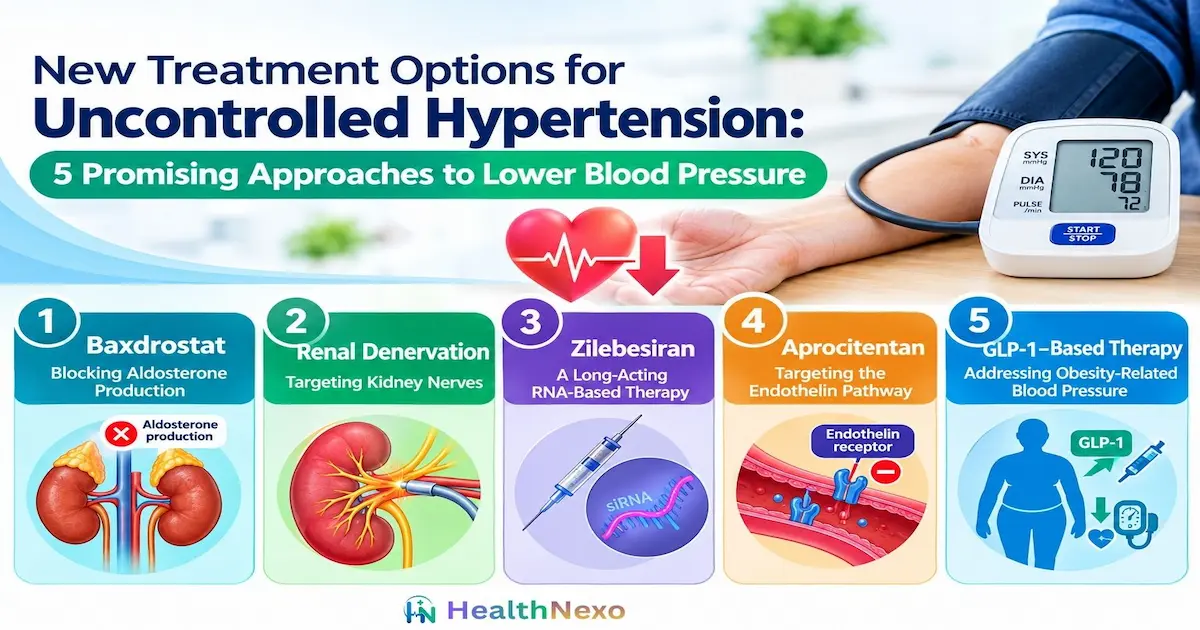
Some new treatments are now being introduced to tackle aldosterone, renin-angiotensin system, endothelin pathway, renal nerves, and obesity pathways.
Here are 5 promising approaches for managing difficult-to-control hypertension.
Key Takeaways
- Baxdrostat: Lowers aldosterone production and has significantly reduced blood pressure in clinical trials, but remains investigational.
- Renal denervation: An FDA-approved option for selected adults whose blood pressure remains uncontrolled despite medication and lifestyle changes.
- Zilebesiran: Uses RNA interference to reduce liver production of angiotensinogen and may provide long-lasting BP control. It remains investigational.
- Aprocitentan: Blocks endothelin receptors and is FDA-approved for adults whose blood pressure is not adequately controlled with other medications.
- GLP-1–based therapy: Drugs such as tirzepatide may lower blood pressure in people with overweight or obesity, mainly through weight loss. They are not primarily blood-pressure medicines.
What Is Uncontrolled Hypertension?
Uncontrolled hypertension occurs when blood pressure remains above the recommended level despite efforts to lower it. Resistant hypertension is a more specific condition in which blood pressure stays high despite treatment with multiple antihypertensive medications, usually including a diuretic. In simple terms, uncontrolled hypertension means blood pressure is not adequately controlled, while resistant hypertension is difficult to control even with several medications.
Prior to determining that a patient has resistant hypertension, the following diagnostic tests and assessment are performed:
- Check blood pressure to ensure that it is indeed high
- Evaluate treatment adherence
- Recommend home blood pressure monitoring
- Determine whether white-coat hypertension is present
- Evaluate whether other medications are increasing blood pressure
- Screen for kidney disease or other secondary hypertension
- Check for hormonal imbalance or other conditions affecting the endocrine system
The 2025 AHA/ACC guideline highlights the importance of correct blood pressure measurement, home monitoring, combination therapy, and individualized treatment. It recommends initiating two antihypertensive agents, typically in a single pill, for most patients with stage 2 hypertension.
5 New Treatment Options for Uncontrolled Hypertension
Scientists are developing treatments that target different biochemical pathways and influence multiple hormones involved in blood-pressure regulation or blood pressure management. These approaches may provide alternative or additional treatment options for patients whose blood pressure remains poorly controlled with current therapies.
1. Baxdrostat: Blocking Aldosterone Production
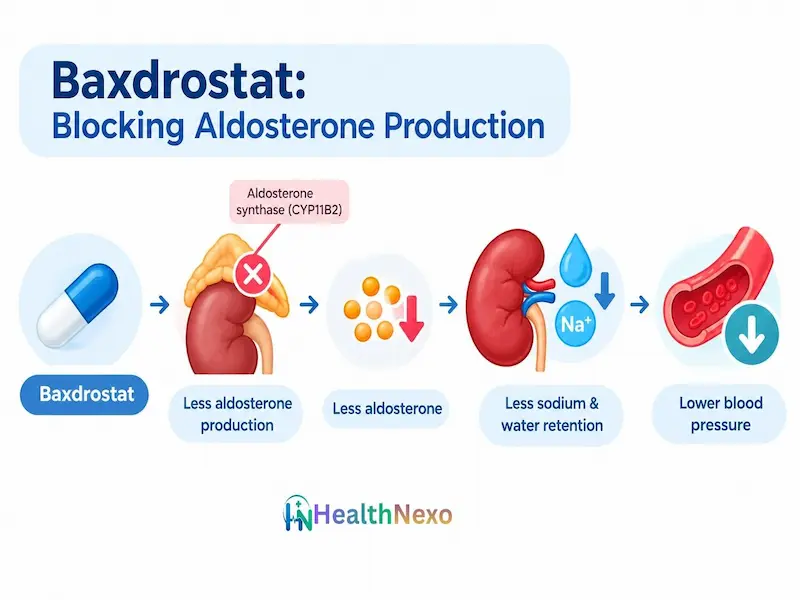
Baxdrostat is a drug under investigation that acts as an aldosterone synthase inhibitor, meaning that it reduces the synthesis of aldosterone via inhibition of the aldosterone synthase (CYP11B2) enzyme. Aldosterone promotes the retention of sodium and water. Hence, an increased amount of aldosterone may cause blood volume expansion and hypertension.
How Does It Work?
- Baxdrostat → less aldosterone production → less sodium and water retention → lower blood pressure
What Did the Phase 3 Trial Show?
The phase 3 BaxHTN trial published in the New England Journal of Medicine journal in 2025 involved 796 patients who suffered from uncontrolled or refractory hypertension. The medical trial was randomized, double-blind, and placebo-controlled. The participants were given baxdrostat 1 mg, baxdrostat 2 mg, or placebo in addition to their antihypertensive treatment.
After 12 weeks, seated systolic blood pressure changed by:
- 14.5 mm Hg with baxdrostat 1 mg
- 15.7 mm Hg with baxdrostat 2 mg
- 5.8 mm Hg with placebo
Compared with placebo, the additional reduction was:
- 8.7 mm Hg with 1 mg
- 9.8 mm Hg with 2 mg
- Both comparisons were statistically significant (P<0.001).
Safety Consideration
Hyperkalemia poses a serious safety concern. Thus, in the study, more than 2 percent of the 1 mg group, more than 3 percent of the 2 mg group, and nearly 0.4 percent of those who took placebo had serum potassium levels above 6 percent. In conclusion, Baxdrostat has shown very promising results in phase 3 trials, but more research is needed before its approval.
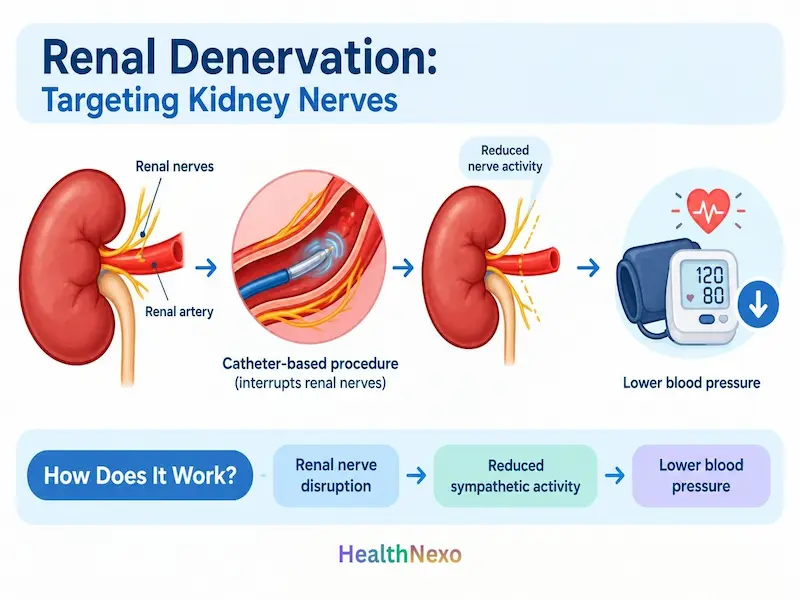
2. Renal Denervation: Targeting Kidney Nerves
Renal Denervation is a catheter-based procedure which interrupts the activity of specific renal sympathetic nerves around the renal arteries. These nerves have a role in blood-pressure regulation. Interruption of excessive sympathetic activity may reduce blood pressure in selected patients.
How Does It Work?
- Renal nerve disruption → reduced sympathetic activity → lower blood pressure
During the procedure, a catheter delivers energy to renal nerves. Depending on the system, this may involve ultrasound or radiofrequency energy.
What Does the Evidence Show?
On 7th November 2023, the Food and Drug Administration approved Paradise Ultrasound Renal Denervation System. The System is intended to be used as an adjunctive therapy in patients with elevated blood pressure (BP) that is inadequately controlled by lifestyle changes and antihypertensive drugs.
Renal denervation should not be the only treatment for high blood pressure. Patients may still need blood pressure medicines because the effect of the procedure can vary from person to person.
3. Zilebesiran: A Long-Acting RNA-Based Therapy
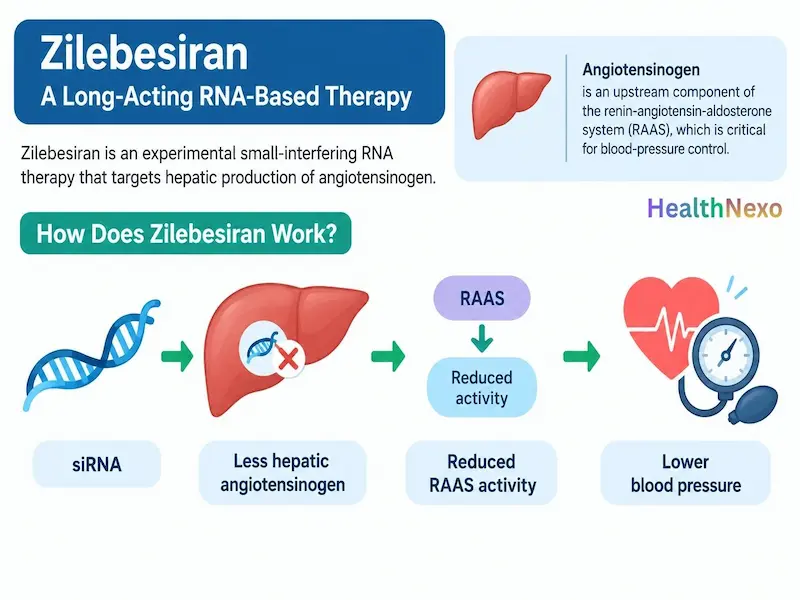
Zilebesiran is an experimental small-interfering RNA therapy that targets hepatic production of angiotensinogen. Angiotensinogen is an upstream component of the renin-angiotensin-aldosterone system (RAAS), which is critical for blood-pressure control.
How Does Zilebesiran Work?
- siRNA → less hepatic angiotensinogen → reduced RAAS activity → lower blood pressure
One potential advantage of zilebesiran is its prolonged effect, allowing investigation of dosing every 3 to 6 months.
What Did the KARDIA-1 Trial Show?
This study was performed on 394 adults who had hypertension either mildly or moderately using multiple dosages of zilebesiran every 3 or 6 months. The placebo adjusted decrease of mean ambulatory systolic BP at 3 months was:
- 14.1 mm Hg with 150 mg every 6 months
- 16.7 mm Hg with 300 mg every 3 or 6 months
- 15.7 mm Hg with 600 mg every 6 months
- All comparisons were statistically significant (P<0.001).
The reduction in blood pressure remained for 6 months, encouraging more studies about zilebesiran as an option for a long-term treatment.
It should be noted that in the study of KARDIA-1, there were patients suffering from mild to moderate hypertension, but not resistant hypertension.
Evidence status: Promising phase 2 evidence; still investigational.
4. Aprocitentan: Targeting the Endothelin Pathway
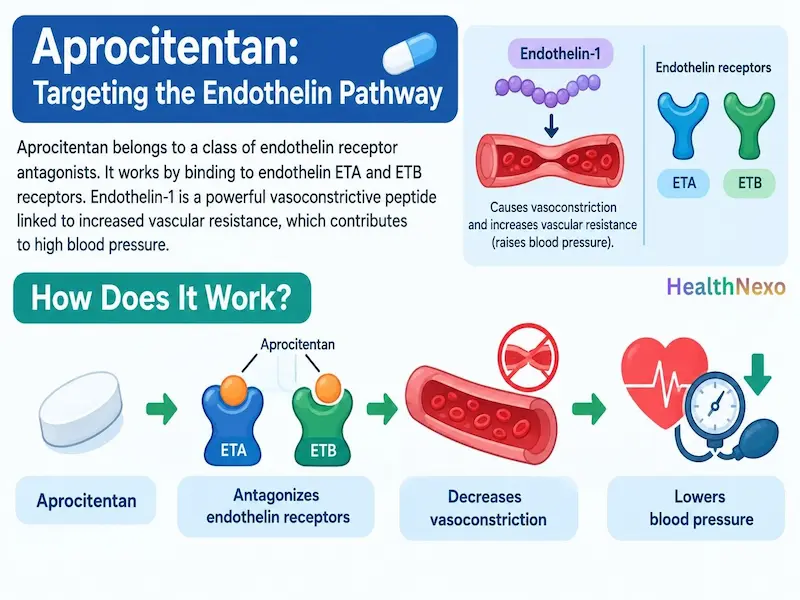
Aprocitentan belongs to a class of endothelin receptor antagonists. It works by binding to endothelin ETA and ETB receptors. Endothelin-1 is a powerful vasoconstrictive peptide linked to increased vascular resistance, which contributes to high blood pressure.
How Does it Work?
- Aprocitentan → antagonizes endothelin receptors → decreases vasoconstriction; lowers blood pressure.
What Did the PRECISION Trial Reveal?
A phase 3 clinical trial studied 730 people with hypertension who were taking at least three blood pressure medicines but still had uncontrolled blood pressure. The trial evaluated how well the drug worked and how safe it was. After four weeks, office systolic BP decreased by:
- 15.3 mm Hg with aprocitentan 12.5 mg
- 15.2 mm Hg with aprocitentan 25 mg
- 11.5 mm Hg with placebo
The placebo-corrected differences between Aprocitentan and two other drugs were about 3.8 mm Hg and 3.7, respectively. One of the significant safety concerns related to fluid retention and edema.
Unlike the other two drugs, aprocitentan has been approved by the FDA. On March 19, 2024, the FDA approved TRYVIO (aprocitentan) for use with other blood pressure medicines in adults whose hypertension is not adequately controlled.
Status of evidence: FDA approved therapy for appropriate adult patients with inadequately controlled hypertension.
5. GLP-1–Based Therapy: Addressing Obesity-Related Blood Pressure
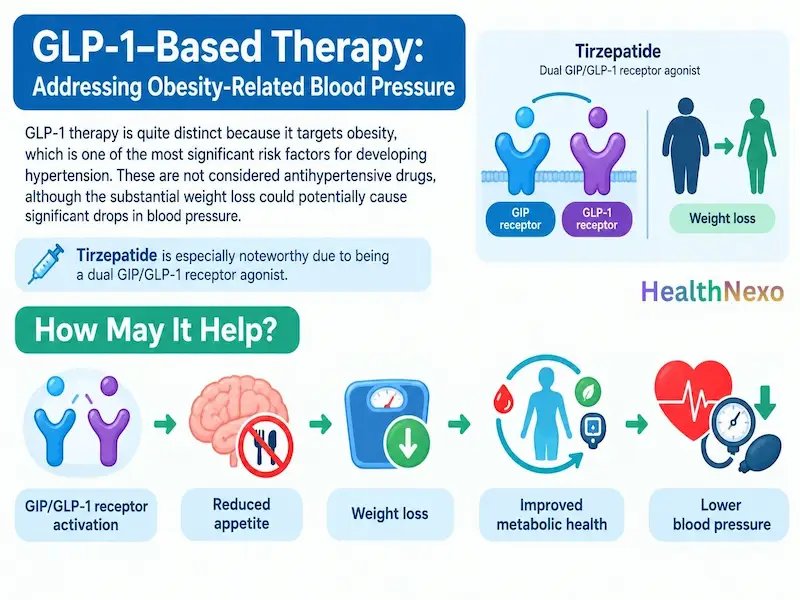
GLP-1 therapy is quite distinct because it targets obesity, which is one of the most significant risk factors for developing hypertension. These are not considered antihypertensive drugs, although the substantial weight loss could potentially cause significant drops in blood pressure. Tirzepatide is especially noteworthy due to being a dual GIP/GLP-1 receptor agonist.
How May It Help?
- GIP/GLP-1 receptor activation → reduced appetite → weight loss → improved metabolic health → lower blood pressure
What Does the Research Show?
A blood pressure substudy of the SURMOUNT-1 trial included 600 adults with overweight or obesity. After 36 weeks of treatment, the study found that 24-hour systolic blood pressure was reduced by approximately the following amounts compared with placebo:
- 7.4 mm Hg with tirzepatide 5 mg
- 10.6 mm Hg with tirzepatide 10 mg
- 8.0 mm Hg with tirzepatide 15 mg
In the 72-week SURMOUNT-1 analysis, tirzepatide reduced blood pressure by 6.8 mm Hg in systolic BP (SBP) and 4.2 mm Hg in diastolic BP (DBP) compared with placebo. About 68% of the SBP reduction was linked to weight loss.
GLP-1 agonists may prevent BP from increasing among obese individuals but should not be used as a substitute for antihypertensive drugs.
Evidence level: The impact of these drugs on BP is well-established in overweight/obese individuals.
The Future of Hypertension Treatment
Treatment for hypertension is changing from traditional daily medicine. Scientists are working to develop treatments which target specific ways to control blood pressure.
Some promising approaches include:
- Baxdrostat — reduces aldosterone production.
- Zilebesiran — reduces angiotensinogen production in the liver.
- Aprocitentan — blocks endothelin receptors.
- Renal denervation — reduces renal sympathetic nerve activity.
- GLP-1–based therapy — may lower blood pressure partly through weight loss in people with obesity.
Such techniques might increase the range of treatment methods available to those who have resistant hypertension despite taking medications. It should be noted, however, that research findings do not always mean that the method can be applied immediately in practice.
Next Steps for Uncontrolled Hypertension
New treatments are promising, but the first step is to determine why blood pressure remains high. Doctors may review:
- Home blood-pressure readings
- Medication adherence
- Current medications and doses
- NSAIDs, decongestants, and other BP-raising medicines
- Kidney function and electrolytes
- Possible secondary causes of hypertension
- Sodium intake
- Body weight and physical activity
- Alcohol consumption
Home monitoring can help create a better understanding of blood pressure. According to the 2025 AHA/ACC guideline, home BP monitoring can help enhance management and control. The American Heart Association recommends that a person use automatic upper arm cuff-style blood pressure monitors in the measurement of BP.
A medication that is prescribed to lower blood pressure should not be discontinued or altered without medical advice. If BP is 180/120 mm Hg and symptoms such as chest pain, difficulty breathing, weakness, changes in vision, and speech difficulties present, immediate medical attention is required.
Bottom Line
New treatment options for uncontrolled hypertension include barostat, renal denervation, zilebesiran, aprocitentan, and GLP-1–based therapy. Some are undergoing further studies, whereas others, such as renal denervation and aprocitentan, have been approved by the FDA. Baxdrostat and zilebesiran have exhibited encouraging trial results, whereas tirzepatide could be an option for further benefits with regard to BP among overweight or obese patients.
For now, proper BP readings, lifestyle modification, and medication compliance form the core of management.
Medical Disclaimer
This paper should only be used for academic purposes, and it should not be treated as professional medical advice. It is important to mention that some of these treatments are still in the research stage, and they only prescribe them to particular patients.
References
- Flack JM, et al. Baxdrostat in Uncontrolled and Resistant Hypertension. NEJM
- Bakris GL, et al. KARDIA-1: Zilebesiran for Hypertension. JAMA
- Schlaich MP, et al. PRECISION: Aprocitentan for Resistant Hypertension. Lancet
- U.S. FDA. TRYVIO (Aprocitentan). FDA
- U.S. FDA. Paradise Ultrasound Renal Denervation System. FDA
- de Lemos JA, et al. Tirzepatide and 24-Hour Ambulatory BP. PubMed
- Tirzepatide and Blood Pressure Reduction: SURMOUNT-1. PMC
- AHA/ACC. 2025 High Blood Pressure Guideline. AHA
Tags:

Md. Rakibul Hasan, BSc (Hons), MS (Thesis)
Biochemistry & Molecular Biology, University of Chittagong, Bangladesh
Senior Biochemist | Health Content Writer | Evidence-Informed Health Information Creator
Popular Diagnostic Centre Limited, Bangladesh.
He specializes in clinical biochemistry, laboratory diagnostics, and medical testing. Alongside his professional work, he is actively involved in health education and scientific communication.
As a Health Content Writer and Research-Based Health Information Creator, he simplifies complex medical and biochemical topics into clear, evidence-informed, and reader-friendly health information.