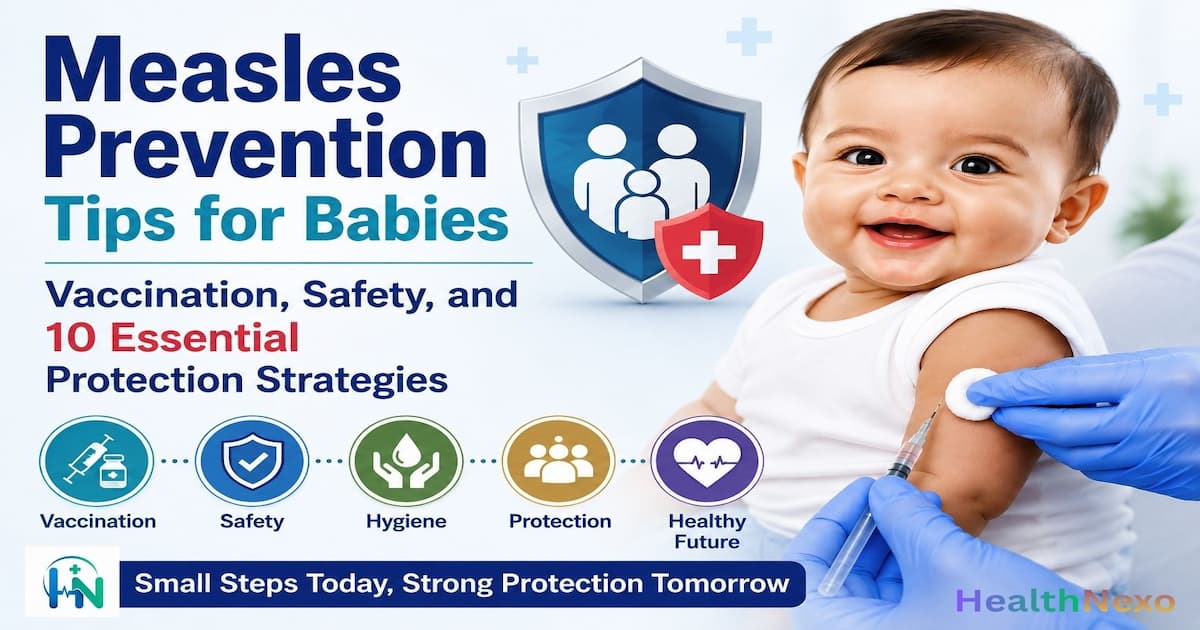
Measles Prevention Tips for Babies is one of the most important ways to protect your child’s health. Measles is a fast-spreading viral illness that spreads through the air. It spreads rapidly through the air when an infected person coughs or sneezes and can also be transmitted through close personal contact. However, although there exist vaccines that are safe and efficient, many people get affected by the virus every year.
The reason why babies are so vulnerable is that they may not have gotten vaccinated yet against measles. Nevertheless, it is possible for parents to reduce the risk of this by avoiding contact with measles-infected people and taking other precautions.
In this guide, you’ll learn how to prevent measles in babies, recognize the early symptoms, understand vaccination recommendations, and know when to seek medical care.
Key Takeaways
Quick Summary: Measles Prevention Tips for Babies
- Measles is one of the most contagious viruses around the globe.
- Young babies less than 12 months old are at a greater risk since they are not eligible for MMR vaccines.
- Avoid putting your infant in contact with anyone who may be suffering from measles.
- Make sure all family members are immunized against measles to provide your baby with immunity.
- Be hygienic by washing your hands and covering your coughing/sneezing to minimize germ transmission.
- Know how to identify early signs and symptoms of measles in your baby and take him/her to the hospital right away.
- Follow your child’s recommended MMR vaccination schedule for the best long-term protection.
What Is Measles?
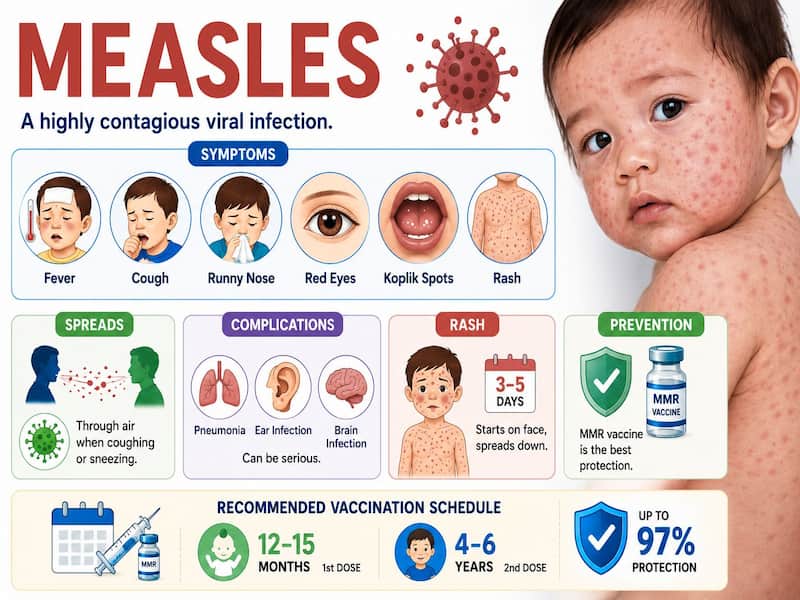
Measles (Rubeola) is a very contagious infectious condition that results from an infection of the body with the measles virus. Measles virus infects the body via coughing, sneezing, and close contact.
Important Information
- Cause: Measles virus (Morbillivirus)
- Transmission: Coughing, sneezing, and close contact
- Complication: Weakens the immune system
- Vaccination: MMR Vaccination
- Outbreaks: Common in areas with low vaccinations
Global Measles Statistics: Why Measles Is Still a Global Health Concern
Even with the development of a successful vaccine, measles remains a serious threat to people all over the world. Measles is especially dangerous for children five years old and younger as this particular segment of the population is affected by the disease most severely.
Key facts
- Around 95,000 measles-related deaths occur each year, mostly in children under 5.
- Vaccination prevented an estimated 59 million deaths between 2000–2024.
- Around 10.3 million measles cases were reported in 2023.
- One infected person can spread measles to 12–18 others.
- At least 95% vaccination coverage is needed to prevent outbreaks.
Mechanism of Measles: How the Virus Develops in the Body
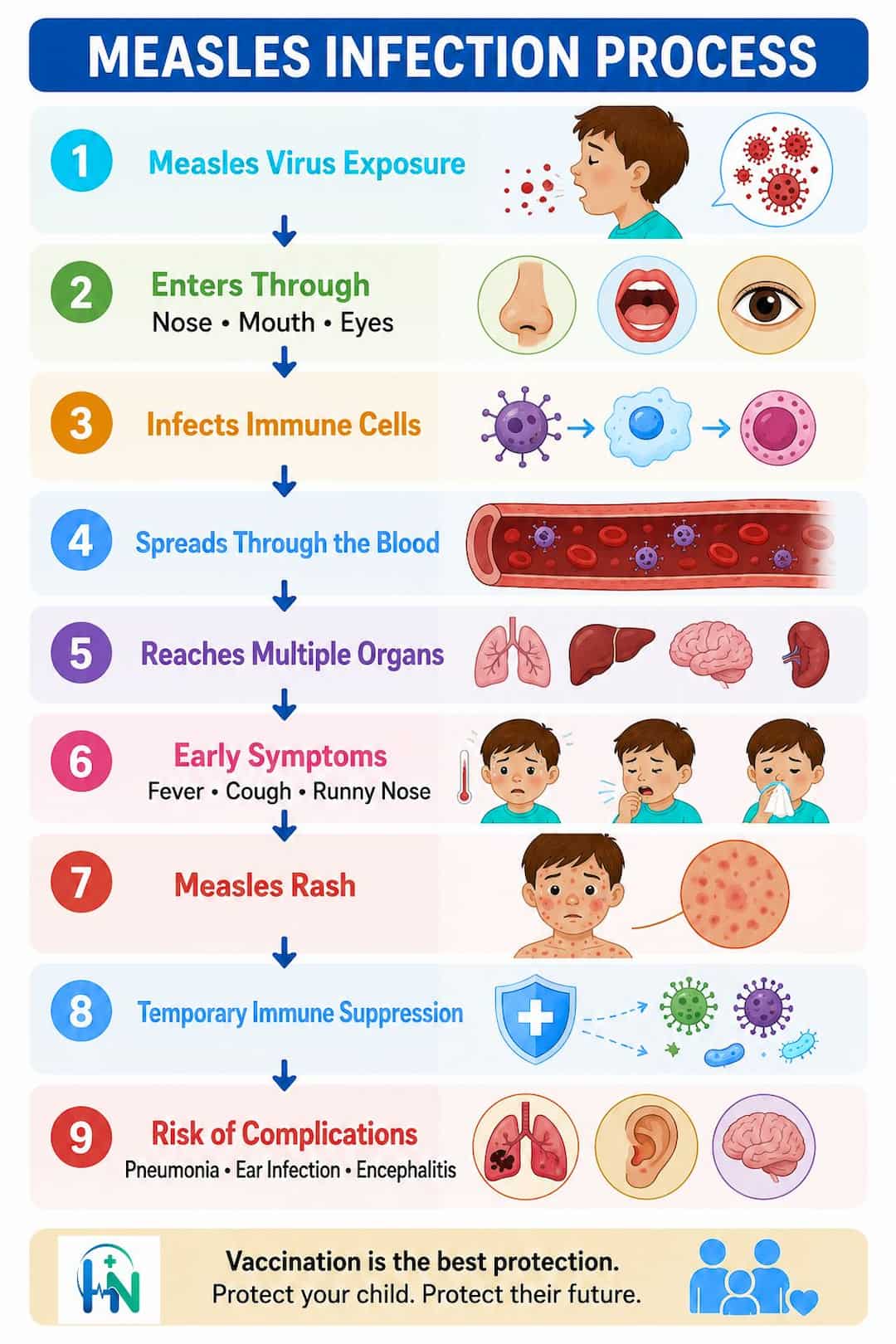
The Measles virus which causes measles affects the body through the moist areas of it, namely the nose, the mouth and the eyes. The virus first spreads and infects the inside lining of the back of your throat and travels into the blood stream. After entering the body, the measles virus spreads through the respiratory tract and bloodstream before causing the characteristic rash and temporary immune system.
Why Is Measles So Contagious?
One of the most communicable diseases among humanity is the measles virus. The reproductive number of measles is between12–18. This indicates that an infected person can infect 12–18 uninfected people.
Measles transmission occurs by:
- The respiratory route
- Exposure to respiratory droplets
- Exposure to aerosols
The measles virus can stay in the air or on surfaces for up to two hours, making it easy to spread. About 9 out of 10 unvaccinated people who are exposed to the virus become infected.
Why Are Babies More Vulnerable?
Children are more prone to measles as compared to older kids. The main reason for this phenomenon is that the quantity of maternal protective antibodies (IgG) becomes lower in the body before reaching 12 months old. Also, children get their first dose of an MMR vaccination at 12–15 months of age. In addition, the complications of measles for children under 5 are severe.
These include:
- Pneumonia
- Ear infections
- Diarrhea, dehydration
- Encephalitis
- Hospitalization
Risk Factors for Measles in Babies
Certain conditions further increase a baby’s likelihood of becoming infected.
Major Risk Factors:
- Lack of vaccination
- Household exposure to an infected person
- Living in areas experiencing measles outbreaks
- International travel
- Low community vaccination rates
- Weakened immune system
- Malnutrition, particularly vitamin A deficiency
- Crowded living conditions
- Attendance at childcare settings during outbreaks
How Measles Spreads
Measles is one of the highly contagious diseases common to humankind. This disease is transmitted by way of the airways (including airborne transmission) from one infected person to another one.
Important information
- The virus is transmitted to people through breathing, talking, coughing, and sneezing by an infected person.
- Measles can remain infectious in the air or on surfaces for up to 2 hours.
- Ninety percent of unimmunized individuals infected by the virus become infected.
- The patient can transmit measles from 4 days before till 4 days after rash development.
Early Symptoms of Measles in Babies
Measles is usually contracted in 7–14 days post-exposure (but has presented as long as 21 days post-exposure). Most times, measles begins with a couple of days of flu-like symptoms.
Early symptoms
There are several common early symptoms of measles, including
- High fever (typically, it is higher than 39 °C or 102.2 °F)
- Persistent cough.
- Runny nose
- Red and watery eyes (conjunctivitis)
- Irritability
- Loss of appetite
- Weakness
Koplik’s spots are small white dots that may develop in the mouth 1–2 days before the development of a rash.
- Measles Rash
A measles rash typically develops within 3–5 days from the onset of fever.
It typically:
- Begins on the face or behind the ears
- Spreads to the neck, chest, trunk, arms, legs, and feet
- Appears as flat red spots that may join together
- Lasts for 5–6 days before fading
- During the rash stage, the fever may become higher, and the baby may appear more seriously ill.
Stages of Measles Infection
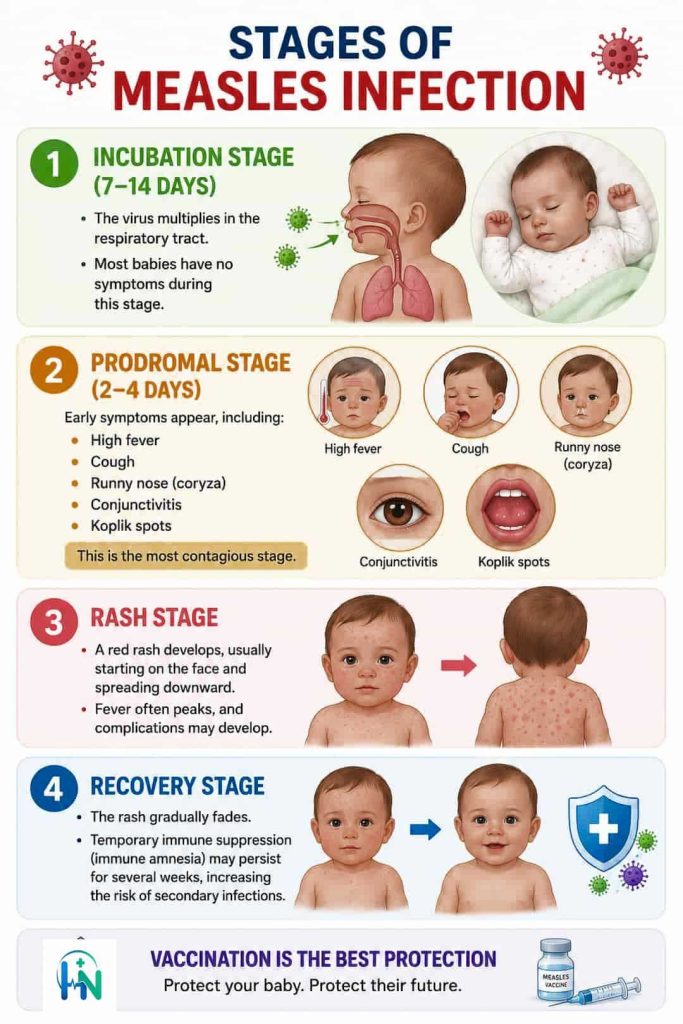
1. Incubation Stage (7–14 Days)
- The virus multiplies in the respiratory tract.
- Most babies have no symptoms during this stage.
2. Prodromal Stage (2–4 Days)
Early symptoms appear, including:
- High fever
- Cough
- Runny nose (coryza)
- Conjunctivitis
- Koplik spots
This is the most contagious stage.
3. Rash Stage
- A red rash develops, usually starting on the face and spreading downward.
- Fever often peaks, and complications may develop.
4. Recovery Stage
- The rash gradually fades.
- Temporary immune suppression (immune amnesia) may persist for several weeks, increasing the risk of secondary infections.
Measles diagnosis methods
The diagnosis of measles involves a mixture of clinical history, physical examination, and laboratory investigations.
Clinical History
Questions that can be posed by the physician include:
- History of contact with a person who is suffering from measles
- Vaccination status
- Recent travels/local epidemics
- Onset of symptoms
Physical Examination
Physicians can look out for the following signs:
- High fever
- Cough
- Runny nose (coryza)
- Red, watery eyes (conjunctivitis)
- Koplik spots
- Characteristic measles rash
Laboratory Tests
- Measles IgM Antibodies: Helps determine whether you have been infected recently with measles virus through antibodies’ presence.
- RT-PCR: Laboratory testing is especially important during outbreaks or when the diagnosis is uncertain. It helps confirm the infection through detecting measles virus RNA obtained from a throat swab, nasal washings, or urine.
Differential Diagnosis
Other diseases can present symptoms similar to measles. Your healthcare provider may need to rule out other conditions, including:
- Rubella
- Roseola
- Scarlet fever
- Parvovirus B19 infection
- Kawasaki disease
- Enteroviral infections
Proper diagnosis early on is very important for the correct treatment, preventing infection spread, and proper public health reporting.
Measles Treatment and Supportive Care
Currently, there is no antiviral therapy against measles. Antibiotics are not effective against the measles virus itself, but may be prescribed if secondary bacterial infections (such as ear infections or pneumonia) develop. It is advisable that you take your child to a health facility if they have contracted measles.
Tips for Providing Supportive Care
- Fever management: Ensure the child remains hydrated, wear light clothes and ensure that fever medicine is administered after consultation from the doctor. Avoid giving children aspirin.
- Prevention of dehydration: You should continue nursing or feeding the child with formula milk. In case of prescription by a health professional, you can feed the child with ORS.
- Nutritious feeding: You should continue feeding the child normally and provide nutritious foods if the child feeds on solid foods.
- Vitamin A: This is prescribed for eligible children as it helps to reduce the risks of complications.
- Treatment of complications: In case of bacterial infection, antibiotics may be needed.
Early diagnosis and timely medical care can improve recovery and help prevent serious complications.
10 Essential Measles Prevention Tips for Babies
Measles Prevention Tips for Babies should be prioritized since a lot of infants are still too young to get the MMR shot. This can be accomplished by not having contact with infected individuals, vaccinating all family members, and observing proper hygiene practices.
10 Essential Measles Prevention Tips for Babies: Quick Summary Table
| Prevention Tip | Quick Summary |
| 1. Follow the MMR Vaccination Schedule | Follow the recommended MMR schedule. |
| 2. Vaccinate Parents and Caregivers | Ensure parents and caregivers are vaccinated. |
| 3. Avoid Measles Outbreak Areas | Stay away from crowded and outbreak areas. |
| 4. Keep Sick People Away | Avoid contact with anyone showing symptoms. |
| 5. Practice Good Hygiene | Wash hands and cover coughs and sneezes. |
| 6. Improve Indoor Ventilation | Open windows and increase airflow. |
| 7. Clean Frequently Touched Surfaces | Disinfect frequently touched baby items. |
| 8. Breastfeed If Possible | Support your baby’s immune system. |
| 9. Check Measles Travel Recommendations | Review travel recommendations before trips. |
| 10. Seek Medical Care After Exposure | Contact a doctor immediately after exposure. |
1. Follow the Recommended MMR Vaccination Schedule
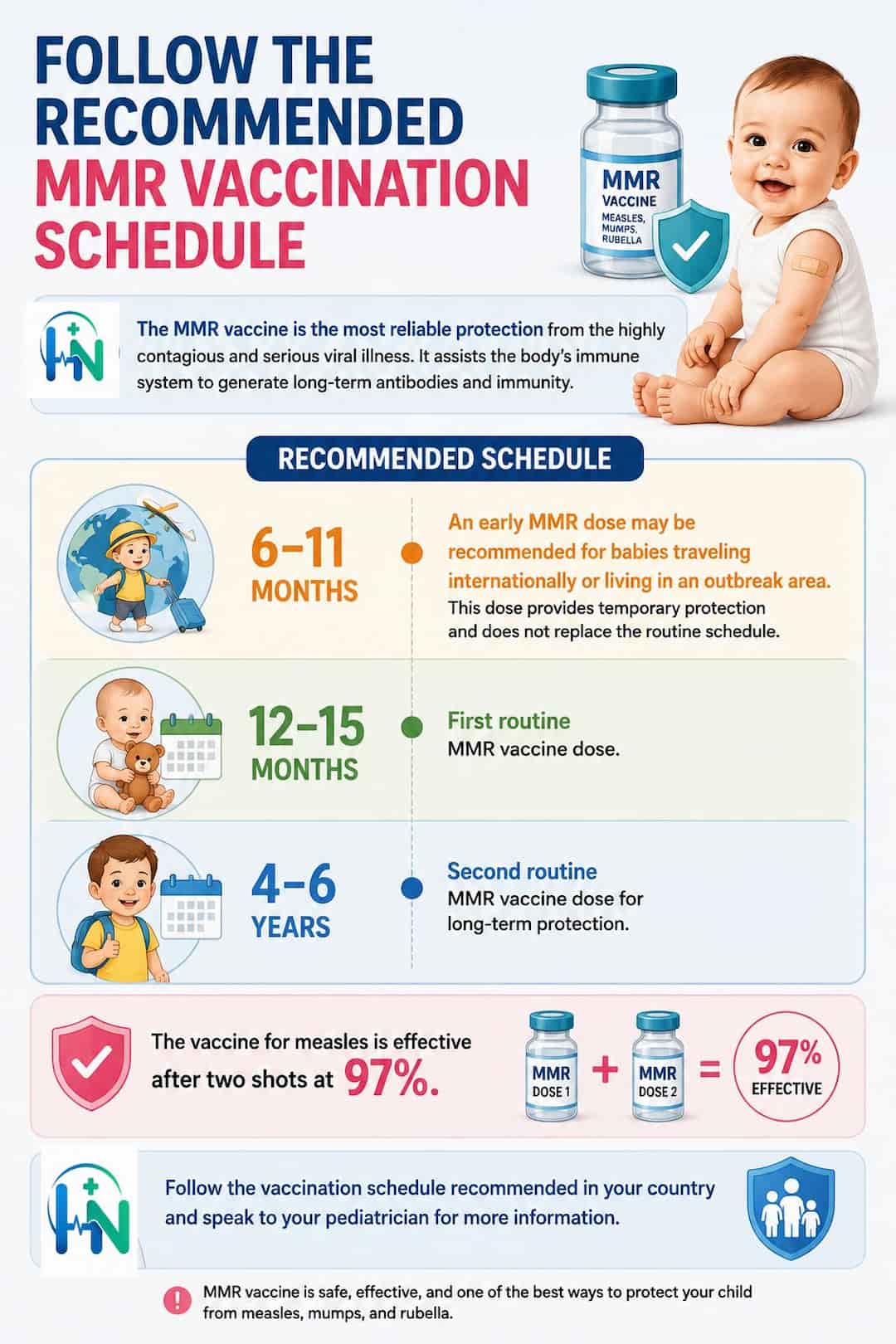
The MMR vaccine is the most reliable protection from the highly contagious and serious viral illness. It assists the body’s immune system to generate long-term antibodies and immunity.
Recommended Schedule
- 6–11 months: An early MMR dose may be recommended for babies traveling internationally or living in an outbreak area. This dose provides temporary protection and does not replace the routine schedule.
- 12–15 months: First routine MMR vaccine dose.
- 4–6 years: Second routine MMR vaccine dose for long-term protection.
The vaccine for measles is effective after two shots at 97%. Follow the vaccination schedule recommended in your country and speak to your pediatrician for more information.
2. Ensure Parents and Caregivers Are Fully Vaccinated
Babies that aren’t eligible for the MMR can be protected by having other immunized members of the household from what is known as cocooning. This strategy involves preventing exposure of young children to the illness.
Make sure these people are fully vaccinated:
- Parents
- Siblings
- Grandparents
- Babysitters
- Healthcare workers
- Other close caregivers
Measles transmission can be dramatically reduced if family members and carers all had a high level of vaccine coverage.
3. Avoid Exposure During Measles Outbreaks
When there is a measles outbreak, it becomes necessary to reduce your contact, as the virus can spread very quickly in the air.
Parents need to:
- Avoid going to enclosed crowded areas like markets, public transport, and gatherings.
- Postpone any unnecessary travel within the country or internationally.
- Limit the visits of unvaccinated individuals or those suffering from cold/flu symptoms.
- Be careful about the advice given by the public health authorities.
This precaution is especially important for babies that have not received their first MMR vaccine.
4. Keep Sick People Away From Your Baby
Don’t allow your baby to come into contact with people who could be carriers of measles or any other respiratory infection.
Look out for symptoms like:
- Fever
- Rash
- Cough
- Runny nose
- Inflammation of eyes
People with measles can infect others up to 4 days prior to the appearance of a rash. Avoid proximity with people showing unexplained fever or cold symptoms.
5. Practice Good Hand and Respiratory Hygiene
Good hygiene will help in reducing the transmission of infection. Although good hygiene cannot prevent transmission of measles through air-borne transmission, it is very essential in preventing infection.
Parents/Caregivers are advised to do the following:
- Wash hands thoroughly with soap and clean water for at least 20 seconds.
- Use an alcohol-based hand sanitizer if soap and water are not available.
- Cover their mouth when coughing or sneezing.
- Wash hands before holding or breastfeeding the infant.
6. Improve Indoor Ventilation
It is capable of staying suspended in the air for up to 2 hours even after an infected individual has left the premises. Good ventilation will ensure that there is minimal concentration of the virus in the air.
What parents can do to improve indoor air quality is:
- Opening windows wherever possible.
- Enhancing natural air flow.
- Spend time in rooms that have adequate air circulation.
- Avoid congested and poorly ventilated indoor areas.
7. Clean Frequently Touched Surfaces
Transmission of measles is mostly airborne. However, cleaning will help make the surroundings clean and free from disease causing germs.
The following items need to be cleaned and disinfected regularly:
- Toys for babies
- Bottles for feeding
- High chairs
- Table tops
- Doorknobs
- Play areas of babies
It is always recommended to follow instructions for use while cleaning products.
8. Breastfeed If Possible
Breastfeeding is beneficial for the development of your baby’s immune system. The breast milk includes a number of substances to fight off infections, including the following:
- Secretory IgA antibodies
- Lactoferrin
- Lysozyme
- Immune cells
- Human milk oligosaccharides (HMOs)
Nevertheless, breastfeeding doesn’t guarantee protection from measles. Breastfeeding helps strengthen a baby’s immune system and supports overall health.
9. Check Measles Travel Recommendations
International travel could increase the chances of your baby getting infected with measles, especially during a period when the virus is prevalent.
Before you travel:
- Check if there are measles travel advisories in place.
- Consult with your child’s doctor regarding the matter of vaccinations.
- Check if there is a need for your child to get an MMR vaccine before you travel.
10. Act Quickly After Measles Exposure
If your baby has come into contact with someone who has definitely got measles, you should consider getting medical advice immediately.
The parents should:
- Contact a healthcare provider immediately.
- Monitor for symptoms during 7 to 21 days following exposure.
- Take medical advice regarding diagnosis and isolation.
See a doctor immediately after measles exposure. Your baby may need the MMR vaccine or immune globulin, depending on their age and vaccination status. Early medical care can help reduce the risk of serious complications.
Possible Complications of Measles in Babies
Most children recover from measles, but some may develop serious complications. The virus can also weaken the immune system, increasing the risk of other infections.
Possible Complications:
- Pneumonia (the most frequent reason for measles mortality)
- Ear infections (otitis media)
- Diarrhea and dehydration
- Encephalitis (inflammation of the brain)
- Febrile convulsions
- Vision and eye problems (including conjunctivitis)
Temporary immune suppression increases the likelihood of other diseases during the next few weeks or months.
When to See a Doctor Immediately
In case your baby experiences:
- Shortness of breath
- Fever
- Feeding problems and signs of dehydration
- Convulsions
- Extreme sleepiness or inability to wake up
- Bluish color of lips or skin
- Persistent vomiting
Conclusion
Measles Prevention Tips for Babies starts with simple but effective steps. By avoiding exposure to sick individuals, ensuring everyone in your household is vaccinated, practicing good hygiene, and following the recommended MMR vaccination schedule, you can significantly reduce your baby’s risk of infection. As babies are more susceptible to suffering from complications, it is also essential that you take note of the signs and symptoms and seek treatment immediately.
Frequently Asked Questions (FAQs)
Q1. Can newborn babies get measles?
Yes. Maternally acquired antibodies offer temporary protection; however, babies are still at risk of getting the infection when exposed.
Q2. Is the MMR vaccine safe?
Yes. Scientific studies have proven that the MMR vaccine is safe and very effective. Severe adverse effects are extremely rare.
Q3. Can vaccinated children still get measles?
Yes, however, such a case is quite rare. The MMR vaccine offers 97% immunity, while those who are infected after receiving the MMR vaccine experience milder symptoms.
Q4. Can babies receive the vaccine before 12 months?
Yes. Babies 6–11 months old may receive an early MMR vaccine during a measles outbreak or before international travel. They will still need the routine MMR doses later.
Q5. Is there a cure for measles?
No. There is no specific antiviral cure. Treatment focuses on supportive care, hydration, fever management, and addressing complications.
Q6. How long is measles contagious?
An infected individual is contagious four days prior to developing a rash and four days following the appearance of a rash.
Q7. Can Adults Spread Measles to Babies?
Yes. Adults with measles can spread the virus to babies through coughing, sneezing, or close contact. Vaccinating parents and caregivers helps protect infants.
Q8. How Effective Is the MMR Vaccine After One Dose?
One dose of the MMR vaccine is about 93% effective against measles. Two doses provide about 97% protection.
References
- World Health Organization (WHO). Measles Fact Sheet.
- World Health Organization (WHO). Measles Vaccines: WHO Position Paper.
- Centers for Disease Control and Prevention (CDC). Measles (Rubeola).
- American Academy of Pediatrics (AAP). Red Book: Report of the Committee on Infectious Diseases.
- UNICEF. Measles Prevention and Immunization.
- Centers for Disease Control and Prevention (CDC). MMR Vaccination Recommendations.
- Moss WJ. Measles. The Lancet.
- Griffin DE. Measles Virus. Nature Reviews Disease Primers.
⚕️ Medical Disclaimer
The information provided in this article is for educational and informational purposes only. It is not intended to be a substitute for professional medical advice, diagnosis, or treatment. Always consult a qualified healthcare professional before making any medical decisions, starting any treatment, or changing your current healthcare plan.
Tags:

Md. Rakibul Hasan, BSc (Hons), MS (Thesis)
Biochemistry & Molecular Biology, University of Chittagong, Bangladesh
Senior Biochemist | Health Content Writer | Evidence-Informed Health Information Creator
Popular Diagnostic Centre Limited, Bangladesh.
He specializes in clinical biochemistry, laboratory diagnostics, and medical testing. Alongside his professional work, he is actively involved in health education and scientific communication.
As a Health Content Writer and Research-Based Health Information Creator, he simplifies complex medical and biochemical topics into clear, evidence-informed, and reader-friendly health information.