Ovarian cancer can be difficult to detect early because its symptoms are often subtle and may resemble other common conditions. Although no strategy can prevent every case, some ovarian cancer risk reduction strategies may help lower the risk, especially for women with inherited genetic risk factors. Understanding your family history, learning about your personal risk, and discussing preventive options with a healthcare professional can help you make informed decisions.
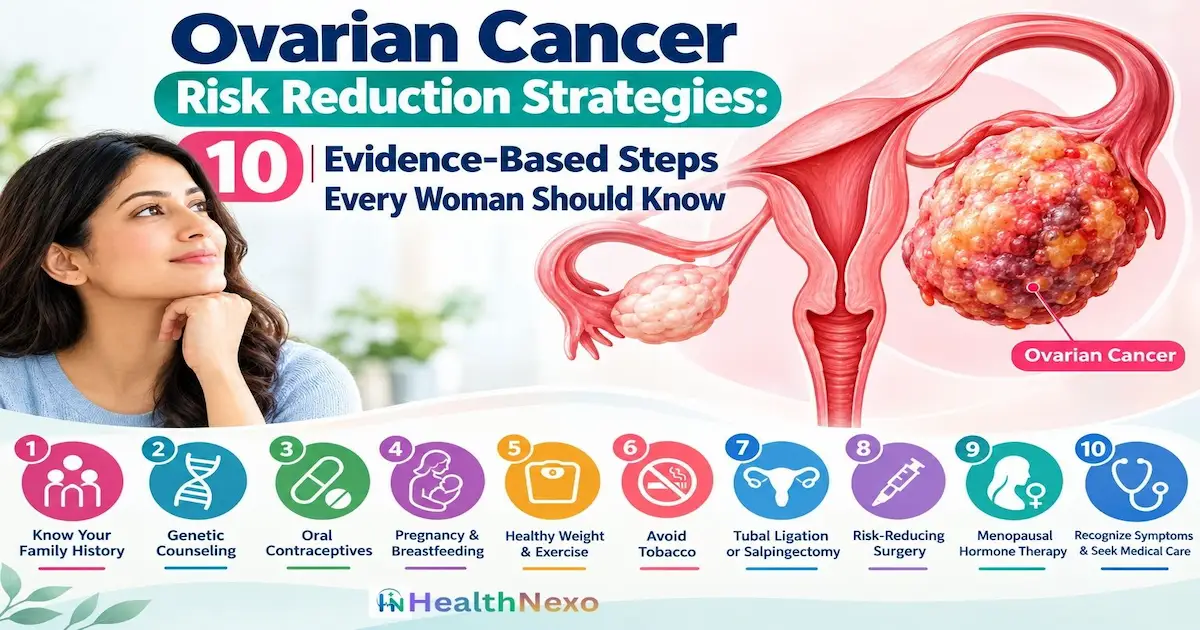
This guide covers 10 evidence-based approaches to ovarian cancer risk reduction and management, including genetic counseling, medical options, and recognizing symptoms that need timely evaluation.
Important: Some approaches may reduce ovarian cancer risk, while others focus on identifying inherited risk or recognizing symptoms. Not every approach directly prevents ovarian cancer, and individual benefits may vary.
Key Takeaways
- No strategy can completely prevent ovarian cancer, but some approaches may help reduce risk.
- Inherited variants in BRCA1, BRCA2, and Lynch syndrome-associated genes can increase ovarian cancer risk.
- Oral contraceptive use, childbirth, and breastfeeding are associated with a lower risk, but their benefits and implications vary.
- Salpingectomy and risk-reducing surgery may lower risk in selected women, particularly those with inherited cancer susceptibility.
- No specific food or diet has been proven to prevent ovarian cancer; healthy habits support overall well-being.
- Routine screening for ovarian cancer is generally not advised for women who have no symptoms and are at average risk.
Risk Factors for Ovarian Cancer
The exact cause of ovarian cancer is often unknown, but several factors are associated with an increased risk:
- Inherited genetic variants: Pathogenic variants in BRCA1, BRCA2, and genes associated with Lynch syndrome.
- Family history: Close relatives with ovarian cancer or certain related cancers.
- Age: Risk generally increases with age.
- Endometriosis: Associated with an increased risk of certain ovarian cancer types.
- Hormonal and reproductive factors: Certain hormonal exposures and reproductive history may affect ovarian cancer risk.
- Body weight: Higher body mass index has been associated with a modest increase in risk in some populations.
Having one or more risk factors does not mean ovarian cancer will develop.
The Science Behind Ovarian Cancer Development
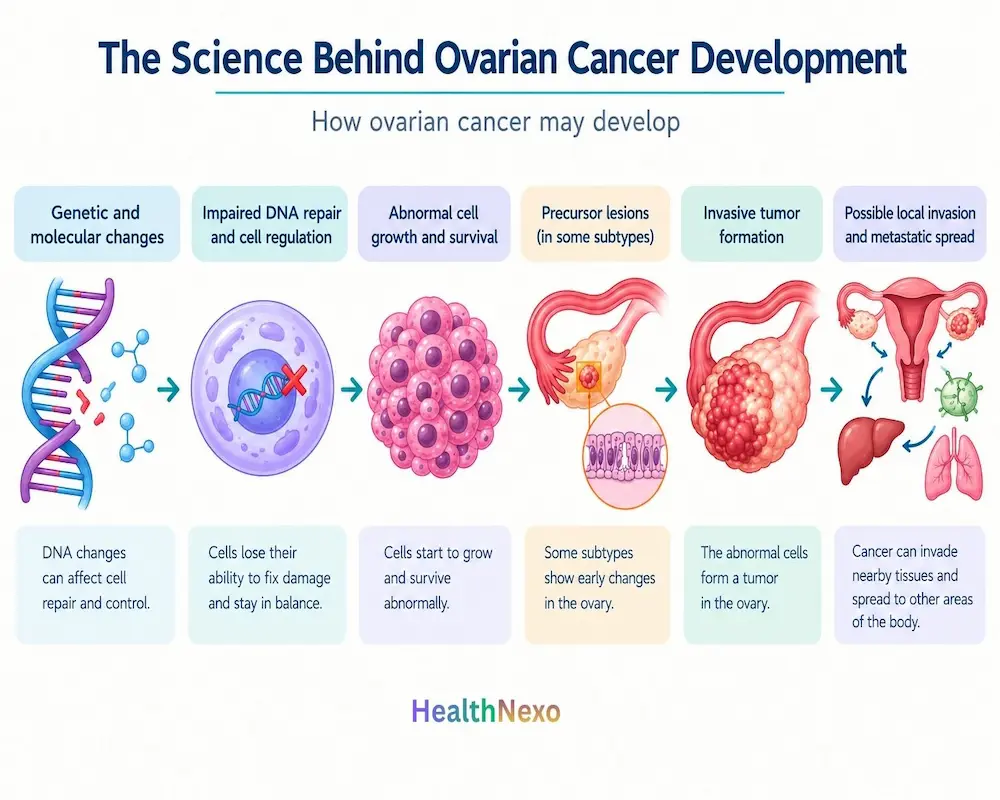
Ovarian cancer develops when genetic and molecular changes disrupt normal cell growth and regulation. Many high-grade serous ovarian cancers may begin in the fallopian tubes, where abnormal cells can develop before the cancer becomes invasive. Changes involving genes such as TP53, BRCA1, and BRCA2 can contribute to cancer development, although the specific changes vary among tumors.
As cancer develops, malignant cells may invade nearby tissues and, in some cases, spread to the peritoneum or distant parts of the body. The pattern of progression varies by ovarian cancer subtype.
How ovarian cancer may develop
Genetic and molecular changes → impaired DNA repair and cell regulation → abnormal cell growth and survival → precursor lesions in some subtypes → invasive tumor formation → possible local invasion and metastatic spread.
10 Evidence-Based Ovarian Cancer Risk Reduction Strategies
1. Know Your Family History
A history of cancer in your family may help you understand whether you could be at greater risk of ovarian cancer. Having a close relative, such as a mother, sister, or daughter, who has had ovarian cancer may increase your risk. A family history of breast, pancreatic, or prostate cancer may also be relevant, particularly when several relatives are affected. Consider cancer history on both your mother’s and your father’s sides of the family, because inherited cancer-associated variants can be passed down through either parent.
How It May Help: Information about relatives’ cancer diagnoses and their ages when diagnosed can help a healthcare professional assess whether genetic counseling or testing should be considered. If possible, gather information about the types of cancer diagnosed in your family.
2. Consider Genetic Counseling
Some women inherit pathogenic genetic variants that increase their risk of ovarian cancer. These include variants in the BRCA1 and BRCA2 genes and genes associated with Lynch syndrome. Other inherited gene changes may also raise a woman’s risk of ovarian cancer. Genetic counseling may be helpful if you have a known inherited cancer-associated variant in your family, a personal history of certain cancers, or a family history that suggests an inherited predisposition. A counselor can assess information from both sides of your family and explain whether genetic testing may be appropriate.
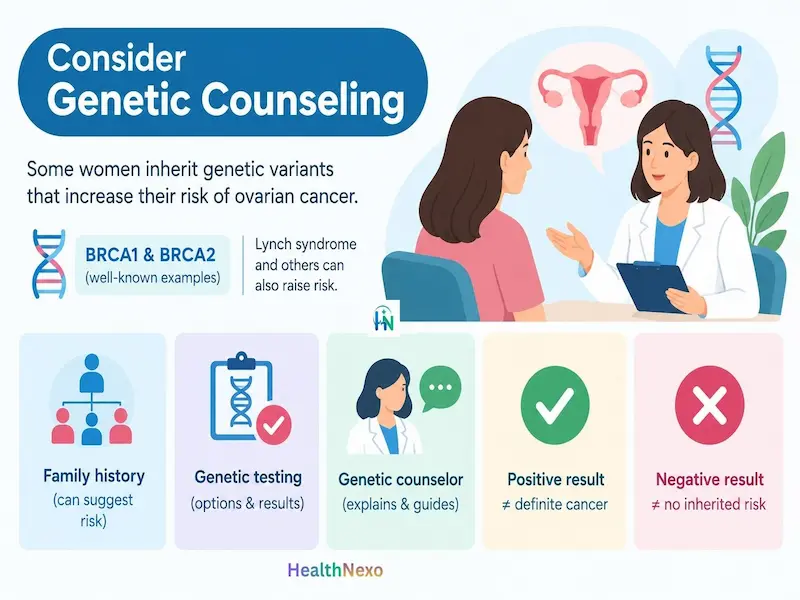
How It May Help: Genetic counseling can help you understand testing options, interpret results, and discuss appropriate risk-management strategies.
A positive genetic test does not guarantee that cancer will develop. Similarly, a negative result may not exclude inherited risk, particularly when the specific genetic cause of cancer in the family has not been identified.
3. Discuss Oral Contraceptives
Oral contraceptives, commonly known as birth control pills, are associated with a lower risk of ovarian cancer. According to the National Cancer Institute (NCI), women who have used oral contraceptives have an approximately 30–50% lower relative risk of ovarian cancer than women who have never used them.
How they may help: Birth control pills reduce ovulation, which may help lower ovarian cancer risk.
However, birth control pills are not suitable for everyone and may increase the chance of blood clots in some women. They should not be started solely for ovarian cancer prevention without discussing their potential benefits and risks with a healthcare professional.
4. Understand the Role of Pregnancy and Breastfeeding
Women who have given birth and women who have breastfed are associated with a lower risk of ovarian cancer in observational studies. However, these associations do not mean that pregnancy or breastfeeding will prevent ovarian cancer.
How they may help: Pregnancy and breastfeeding temporarily reduce ovulation. This may partly explain their association with a lower risk of ovarian cancer, although the relationship is complex.
Pregnancy and breastfeeding should not be pursued solely for cancer prevention. Reproductive decisions should reflect each person’s preferences, circumstances, and healthcare needs.
5. Maintain a Healthy Weight and Stay Physically Active
Staying active and maintaining a weight that supports your health can improve overall well-being. However, the effect of these habits on ovarian cancer risk is not fully established. Higher body weight has been associated with a modest increase in risk for some ovarian cancer types, but the evidence varies by subtype. Physical activity supports general health, although its specific role in ovarian cancer prevention remains uncertain.
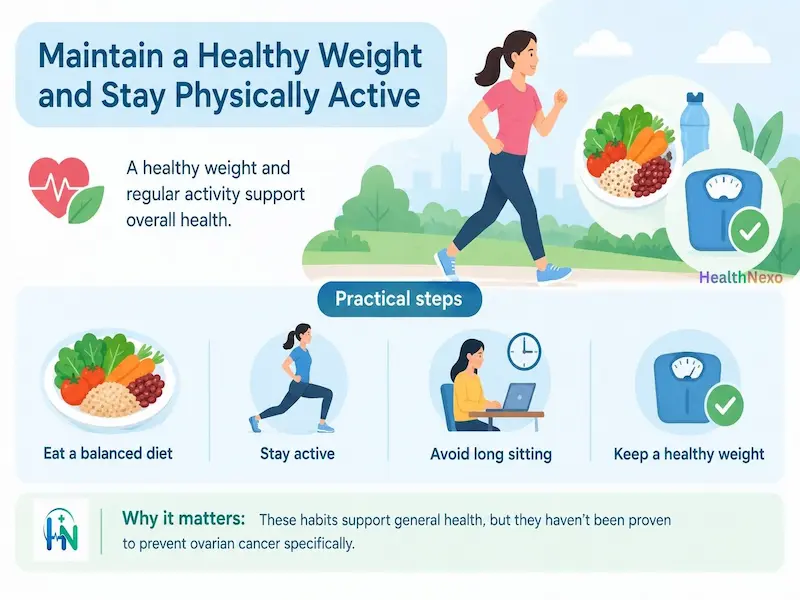
Practical steps include:
- Eat a balanced diet with plenty of fruits, vegetables, whole grains, and beans.
- Stay physically active according to your health and abilities.
- Avoid sitting for long periods without taking breaks.
- Aim for a weight that supports your overall health.
Why it matters: These habits can improve overall well-being, but they should not be presented as proven ways to prevent ovarian cancer.
6. Avoid Tobacco Use
Research suggests that smoking may increase the risk of mucinous ovarian cancer, a less common form of the disease. However, this link has not been found equally across all types of ovarian cancer.
Why it matters: Avoiding tobacco lowers the risk of many smoking-related diseases. Although it is important for overall health, not smoking has not been proven to prevent ovarian cancer on its own.
7. Consider Tubal Ligation or Salpingectomy
Some fallopian tube procedures may lower the risk of ovarian cancer for certain women.
- Tubal ligation: A procedure that blocks or seals the fallopian tubes to prevent pregnancy.
- Salpingectomy: A surgical procedure in which one or both fallopian tubes are removed while the ovaries remain in place.
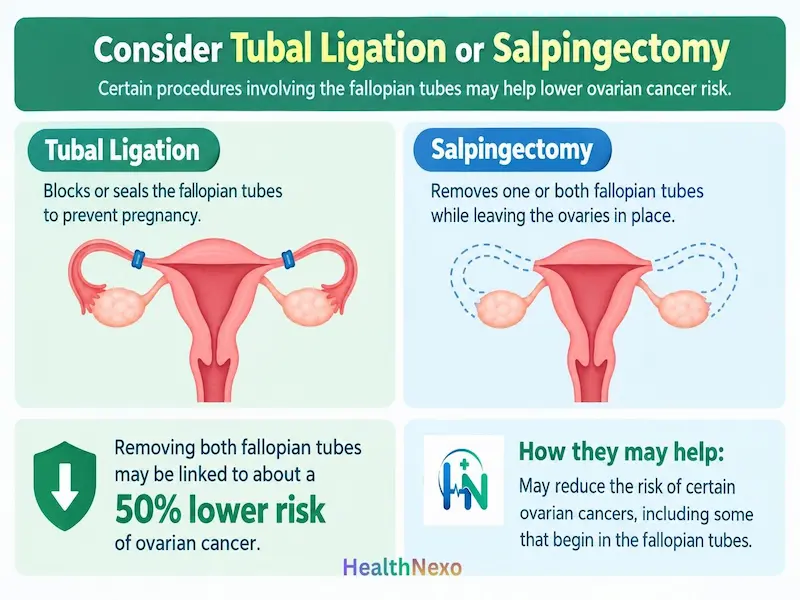
How they may help: Removing the fallopian tubes may lower ovarian cancer risk, according to observational research. However, the amount of risk reduction is uncertain, and the procedure does not eliminate the risk completely.
Important considerations: Both options have possible benefits and risks, so it is best to discuss them with a gynecologist before making a decision. For women with inherited high-risk variants in BRCA1 or BRCA2, salpingectomy alone is not an established substitute for risk-reducing salpingo-oophorectomy (RRSO). The NCI notes that evidence is insufficient to establish the effectiveness of salpingectomy alone as a risk-reducing procedure in BRCA1/BRCA2 carriers.
A specialist can explain the available options based on individual risk, age, and reproductive plans.
8. Discuss Risk-Reducing Surgery for High Genetic Risk
Women with pathogenic variants in BRCA1 or BRCA2 may consider risk-reducing salpingo-oophorectomy (RRSO) after discussing their options with a specialist. During this surgery, both ovaries and both fallopian tubes are removed.
How it may help: The National Cancer Institute (NCI) reports that studies have found approximately a 90% reduction in ovarian cancer risk among women with pathogenic variants in BRCA1 or BRCA2 who undergo risk-reducing surgery. However, the risk is not eliminated completely, as primary peritoneal cancer can still develop after surgery.
Important considerations: RRSO causes permanent infertility and, when performed before natural menopause, leads to early surgical menopause. This may affect bone health, cardiovascular health, sexual function, and quality of life. A healthcare professional can help determine the right time for surgery based on genetic test results, age, plans for having children, and overall health.
RRSO is an important risk-reduction option for selected women with inherited high risk, but it is not routinely recommended for every woman.
9. Review Menopausal Hormone Therapy
Menopausal hormone therapy (MHT) may help relieve symptoms such as hot flashes and night sweats. However, some forms of MHT have been associated with ovarian cancer risk, and the level of risk may vary according to the type of hormones used and the duration of treatment.
Why it matters: If you are thinking about MHT or currently taking it, talk to your doctor or healthcare provider about the pros and cons. Age, medical history, symptoms, and specific treatments can make a difference in your situation.
Do not stop prescribed hormone therapy suddenly without first speaking with your healthcare provider.
10. Recognize Symptoms and Seek Timely Medical Evaluation
Ovarian cancer symptoms can be subtle and may resemble those of common health conditions. Being aware of possible symptoms cannot prevent ovarian cancer, but seeing a healthcare professional promptly can help identify the cause and guide appropriate treatment.
- Persistent abdominal bloating or swelling
- Pelvic or abdominal pain
- Feeling full quickly or having difficulty eating
- Needing to urinate more frequently or urgently
Why it matters: If these symptoms are new, occur frequently, persist for around two weeks, or gradually worsen, consult a healthcare professional. These symptoms may result from various conditions and do not always mean ovarian cancer, but persistent symptoms should be checked by a healthcare professional.
Recognizing symptoms is not a substitute for routine medical care or appropriate evaluation. If symptoms are severe or rapidly worsening, seek medical attention promptly.
Ovarian Cancer Screening: What Women Should Know
Women who have no symptoms and are at average risk of ovarian cancer are generally not advised to undergo routine screening with CA-125 blood tests or transvaginal ultrasound. These tests have not been shown to reduce ovarian cancer deaths in this group and may lead to false-positive results, unnecessary follow-up tests, and potentially harmful procedures. Two tests commonly discussed in ovarian cancer evaluation are:
- CA-125 blood test: This test measures the level of a protein in the blood that may be elevated in ovarian cancer. However, CA-125 can also increase because of noncancerous conditions, and a normal result does not always rule out cancer.
- Transvaginal ultrasound: This imaging test uses sound waves to examine the ovaries and other pelvic organs. It can help evaluate symptoms or an abnormal finding, but routine screening has not been shown to reduce ovarian cancer deaths.
What Should Women Do?
Women with BRCA1 or BRCA2 pathogenic variants or a strong family history of ovarian cancer should consult a specialist about personalized risk management. CA-125 testing and transvaginal ultrasound have not been proven to reduce ovarian cancer deaths through screening, even in high-risk women. Women with persistent or unusual symptoms should seek medical evaluation rather than relying on screening tests alone.
Bottom Line
Ovarian cancer risk reduction strategies include understanding personal and inherited risk and making informed healthcare decisions. Certain medications and surgical procedures may lower risk in some women, while genetic counseling can help guide prevention options. No strategy guarantees prevention, so women with inherited risk factors, a strong family history, or persistent symptoms should seek personalized medical advice.
Frequently Asked Questions (FAQs)
Q1. Can ovarian cancer be completely prevented?
No. There is no guaranteed way to prevent ovarian cancer. Knowing whether inherited factors increase your risk can help you and your healthcare provider consider suitable risk-reduction strategies.
Q2. Can birth control pills lower the risk of ovarian cancer?
Oral contraceptive use may be associated with a decreased chance of ovarian cancer. However, potential benefits and risks vary, so these medicines should not be used solely for cancer prevention without individualized medical advice.
Q3. Can a healthy diet prevent ovarian cancer?
No specific food or diet has been proven to prevent ovarian cancer. A balanced diet supports overall health but cannot guarantee cancer prevention.
Q4. Does a BRCA mutation mean ovarian cancer is inevitable?
No. Pathogenic BRCA1 or BRCA2 variants can substantially increase risk, but they do not guarantee that cancer will develop. Genetic counseling can help women understand their individual risk and available management options.
Q5. Is a yearly CA-125 blood test necessary for every woman?
No. Routine CA-125 screening is not recommended for asymptomatic women at average risk because it has not been shown to reduce ovarian cancer deaths and can lead to unnecessary follow-up procedures.
Medical Disclaimer
This article is intended for general educational purposes only and is not a substitute for professional medical advice, genetic counseling, or individualized care. Women with a personal or family history of cancer, known inherited risk factors, or unexplained persistent symptoms should consult a qualified healthcare professional.
References
- NCI — Ovarian Cancer Prevention (PDQ®)
- NCI — Ovarian, Fallopian Tube, and Primary Peritoneal Cancers Prevention (PDQ®)
- NCI — Genetics of Breast and Gynecologic Cancers (PDQ®)
- NCI — BRCA1 and BRCA2: Cancer Risks and Management (PDQ®)
- NCI — Oral Contraceptives and Cancer Risk
- NCI — Menopausal Hormone Therapy and Cancer
- CDC — Symptoms of Ovarian Cancer
- CDC — Screening for Ovarian Cancer

Md. Rakibul Hasan, BSc (Hons), MS (Thesis)
Biochemistry & Molecular Biology, University of Chittagong, Bangladesh
Senior Biochemist | Health Content Writer | Evidence-Informed Health Information Creator
Popular Diagnostic Centre Limited, Bangladesh.
He specializes in clinical biochemistry, laboratory diagnostics, and medical testing. Alongside his professional work, he is actively involved in health education and scientific communication.
As a Health Content Writer and Research-Based Health Information Creator, he simplifies complex medical and biochemical topics into clear, evidence-informed, and reader-friendly health information.