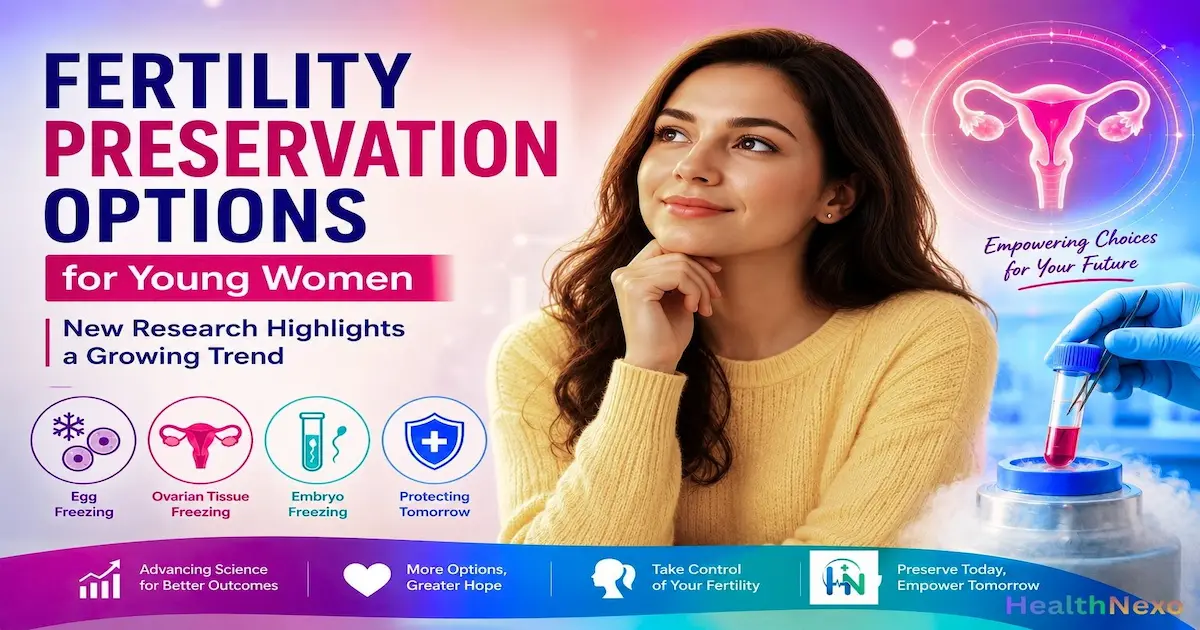
Preservation of fertility is slowly becoming a common practice in reproductive health care with increasing numbers of women seeking ways of protecting their fertility in the future. Fertility preservation options for young women are receiving increasing attention, with recent U.S. research showing a sharp rise in planned egg-freezing cycles. Research also shows that both age and number of eggs cryopreserved may influence future prospects.
A large-scale research performed in the United States indicates that the number of planned egg freezing procedures increased almost fourfold, from 4,153 in 2014 to 16,436 in 2021. Moreover, the average age at which women froze their eggs decreased from 36.0 to 34.9 years over the same time period.
This indicates the growing popularity of reproductive methods. However, it needs to be stated that egg freezing does not necessarily guarantee future pregnancy.
Key Takeaways
- The total number of U.S. egg-freezing cycles scheduled rose from 4,153 to 16,436 between 2014 and 2021.
- The mean age for egg freezing decreased from 36.0 to 34.9 years.
- It should be noted that younger age at egg freezing often correlates with successful reproductive results.
- The number of mature eggs cryopreserved also plays a role.
- Freezing eggs does not guarantee a future pregnancy or birth.
- Only around 5.7% of women participating in the United States study used their eggs back after 5–7 years.
- Fertility preservation becomes particularly vital before medical procedures affecting ovary functionality.
What Is Fertility Preservation?
Fertility preservation involves the various medical procedures employed in preserving the ability to reproduce in the future. Among the available methods in women are:
- Freezing of eggs (oocyte cryopreservation)
- Freezing of embryos
- Cryopreservation of ovarian tissues
- Various fertility preserving surgical or medical procedures
In the freezing of eggs, there is stimulation of the ovaries, egg retrieval, and freezing of the eggs for future use. In the freezing of embryos, fertilization is carried out prior to egg freezing.
According to the American Society for Reproductive Medicine (ASRM), mature oocyte and embryo cryopreservation are established fertility preservation techniques. Ovarian tissue cryopreservation is also an established option, particularly for selected patients who cannot delay treatment or who cannot undergo ovarian stimulation.
Fertility Preservation Options for Young Women: Who May Consider Them
Fertility preservation can be an option for young women who want to defer motherhood. Another scenario is when one opts for treatments that may affect their fertility potential. It all depends on certain variables like the age and health of the individual in question.
Egg Freezing Is Becoming More Common
In the U.S., planned oocyte cryopreservation increased nearly fourfold from 4,153 patients in 2014 to 16,436 in 2021, where the age when women freeze their eggs has been reduced by 1.1 years. However, not all women go farther to make use of the frozen eggs. Based on the same study, only 5.7% of women who froze their eggs from 2014 to 2016 have made use of them after 5 to 7 years.
This may be because they:
- Became pregnant naturally
- Decided not to have children
- Chose another fertility option
- Continued storing their eggs
- Had not yet needed to use them
Why Are Young Women Considering Fertility Preservation?
There is no one particular factor that determines women’s need for fertility preservation. Personal, medical, and age factors could influence this decision.
1. Planning Pregnancy Later
Women who wish to have kids yet are not prepared to form families might consider the possibility of egg freezing. However, the natural process of aging continues regardless of the procedure performed. It does not guarantee future fertility.
2. Before Medical Treatment
Fertility preservation is especially crucial when there are treatment options which might compromise the health of ovaries. There are some forms of chemotherapy and radiotherapy which might harm the eggs or fertility. The ASRM recommends appropriate fertility counseling to patients undergoing such threatening procedures.
3. Age-Related Fertility Changes
The female fertility levels decline with age due to a reduction in both quality and number of eggs. Age is a crucial aspect to consider when talking about future possibilities.
What Does Research Say About Success?
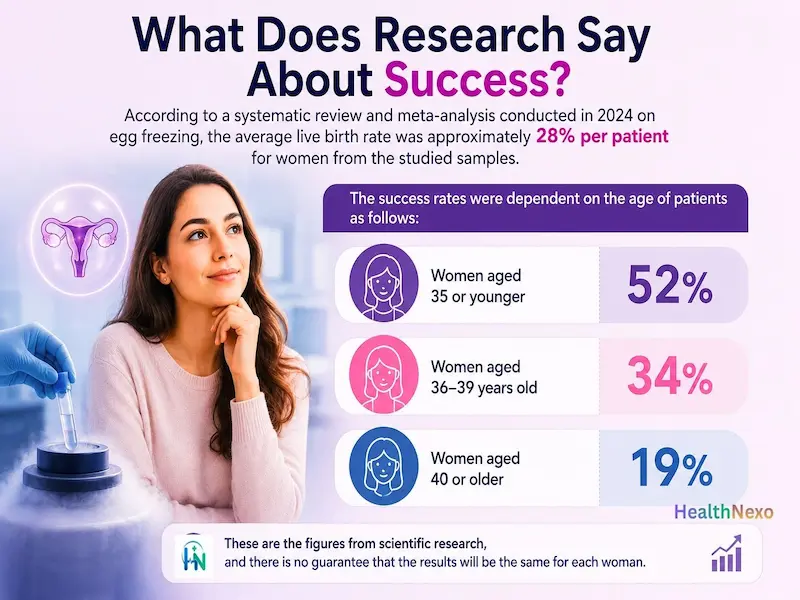
According to a systematic review and meta-analysis conducted in 2024 on egg freezing, the average live birth rate was approximately 28% per patient for women from the studied samples. The success rates were dependent on the age of patients as follows:
- 52% for women aged 35 or younger
- 34% for women aged 36–39 years old
- 19% for women aged 40 or older
These are the figures from scientific research, and there is no guarantee that the results will be the same for each woman.
The Number of Eggs Matters Too
Age is not the only determinant of future success. As shown by research conducted in 2024, the age of the female when she froze her eggs and the quantity of mature eggs thawed could affect the rate of cumulative birth outcomes. The average rate was 43%, while for those women that thawed 20 or more mature eggs before they were 38 years old, it exceeded 70%.
- This does not mean all women need to use 20 eggs.
- Egg collection outcomes differ individually.
Does Egg Freezing Guarantee Future Pregnancy?
No. Egg freezing provides another reproductive choice, yet various aspects have to function properly for there to be a pregnancy. The success rate depends on the following aspects:
- The age at which the eggs were frozen
- How many mature eggs were stored?
- Eggs’ survival after defrosting
- The fertilization process
- Reproductive health
- Quality of sperm
- IVF lab conditions
- This is why personalized counseling is critical.
Ovarian Tissue Freezing Is Another Option
Ovarian tissue cryopreservation is defined as the harvesting and freezing of the ovarian tissue containing immature eggs. The procedure can be suitable for women who need to start their therapy immediately without having enough time to go through the process of egg freezing.
ASRM 2026 guidelines indicate that ovarian tissue cryopreservation has already become an accepted form of fertility preservation.
- Access and Cost Issues
Fertility preservation requires several expenses, such as:
- Consultation and fertility tests
- Medicines
- Oocyte extraction
- Freezing in a laboratory
- Storage
- Thawing and IVF in the future
Expenses depend on a particular country, clinic, and patient requirements. Thus, access and costs can determine if fertility preservation is available for a particular woman.
What Should Women Consider?
For women contemplating fertility preservation, consultation with a fertility specialist is imperative. Questions to be asked:
- Which form of preservation will suit best?
- How will age influence the outcome?
- How many eggs can be preserved in mature form?
- What are the possible risks involved in the treatment?
- What are the overall cost implications of the treatment and egg storage?
- What are the clinic’s success rates for different ages?
- There is no specific age or number of eggs that ensures future pregnancy.
Bottom Line
The growing interest in Fertility Preservation Options for Young Women reflects changing approaches to reproductive health and family planning. Freezing of eggs is a growing trend. However, age and egg count will determine the outcome for the future. Younger females have to be aware of their objectives, health requirements, and possibilities. The specialist in fertility will explain all the choices that are possible.
References
- ASRM. Fertility Preservation in Patients With Medical Indications: A Committee Opinion. Fertility and Sterility, 2026. Official ASRM Guideline
- Doyle JO, et al. Planned Oocyte Cryopreservation: A Systematic Review and Meta-Regression Analysis. Human Reproduction Update, 2024;30(5):558–572. PubMed
- Cobo A, et al. The Effects of Age, Mature Oocyte Number, and Cycle Number on Cumulative Live Birth Rates After Planned Oocyte Cryopreservation. Journal of Assisted Reproduction and Genetics, 2024. PubMed
- SART Database Study. Elective Fertility Preservation: A National Database Study on Trends in Oocyte Cryopreservation and Oocyte Utilization. American Journal of Obstetrics & Gynecology, 2025. PubMed
- ASRM. Cryostorage of Reproductive Tissues in the IVF Laboratory: A Committee Opinion. Fertility and Sterility, 2020. Official ASRM Guidance
⚕️ Medical Disclaimer
The information provided in this article is for educational and informational purposes only. It is not intended to be a substitute for professional medical advice, diagnosis, or treatment. Always consult a qualified healthcare professional before making any medical decisions, starting any treatment, or changing your current healthcare plan.
Tags:

Md. Rakibul Hasan, BSc (Hons), MS (Thesis)
Biochemistry & Molecular Biology, University of Chittagong, Bangladesh
Senior Biochemist | Health Content Writer | Evidence-Informed Health Information Creator
Popular Diagnostic Centre Limited, Bangladesh.
He specializes in clinical biochemistry, laboratory diagnostics, and medical testing. Alongside his professional work, he is actively involved in health education and scientific communication.
As a Health Content Writer and Research-Based Health Information Creator, he simplifies complex medical and biochemical topics into clear, evidence-informed, and reader-friendly health information.