
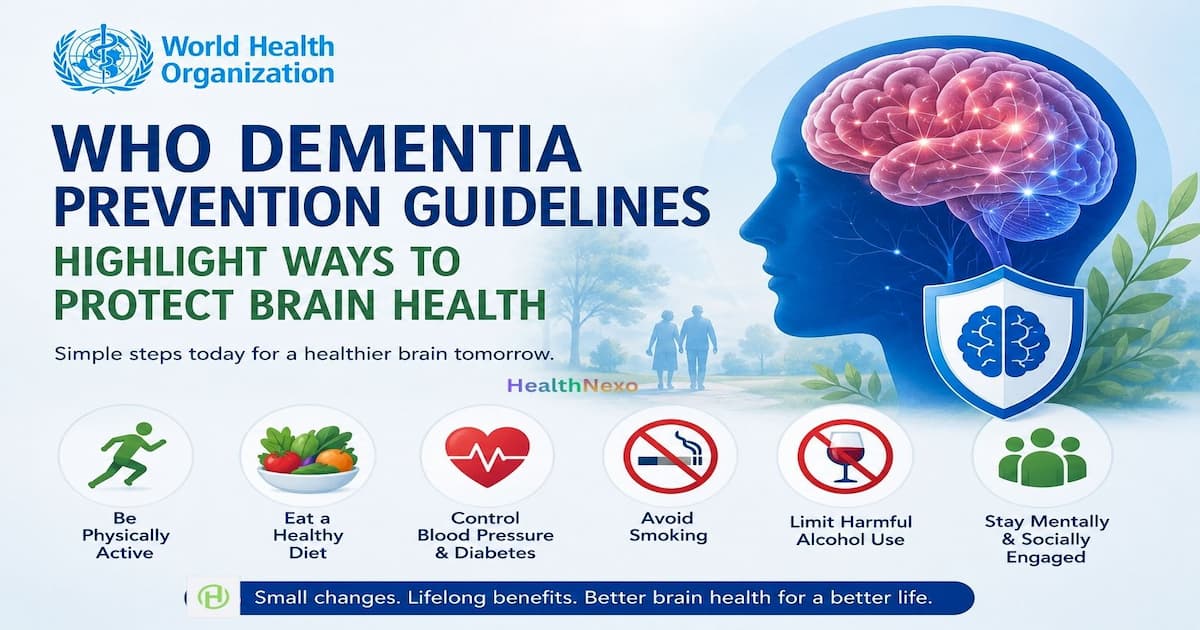
WHO guidelines on dementia prevention highlight healthy lifestyle changes that support lifelong brain health. They focus on reducing the risk of cognitive decline through evidence-based strategies. The WHO Dementia Prevention Guidelines recommend managing modifiable risk factors such as diabetes, smoking, physical inactivity, and long-term exposure to air pollution. These lifestyle changes may help maintain healthy brain function throughout life.
The WHO Dementia Prevention Guidelines encourage individuals, healthcare professionals, and policymakers to work together to reduce dementia risk and support healthy brain aging throughout life.
Dementia Prevention Guidelines: Key Facts
- Organization: World Health Organization (WHO)
- Guideline Focus: Dementia risk reduction and lifelong brain health
- People Living With Dementia: More than 57 million worldwide
- New Cases Each Year: Nearly 10 million
- Newly Highlighted Risk Factor: Air pollution exposure
- Main Approach: Healthy lifestyle habits, regular preventive care, and effective management of modifiable risk factors.
What About Dementia?
Dementia is not one illness; it’s a range of disorders of the brain. They can affect memory, thinking, communication, and even your ability to perform everyday tasks. The more advanced dementia becomes, the more help someone needs with daily activities.
Common Symptoms Include
- Memory loss and confusion
- Difficulty communicating
- Poor judgment and decision-making
- Problems with reasoning and daily tasks
Major Types of Dementia
- Alzheimer’s disease
- Vascular dementia
- Lewy body dementia
- Frontotemporal dementia
Research and Evidence Behind WHO Dementia Prevention Guidelines
The WHO Guidelines for Risk Reduction of Cognitive Decline and Dementia were developed using the best available scientific evidence. They looked at links between lifestyle, health conditions and environment with brain health and dementia risk.
Key Evidence Highlights
1. Life-course Approach
Disease prevention and healthy lifestyle choices support brain health. Managing chronic health conditions throughout life may also help protect cognitive function.
2. Risk Reduction Evidence
Researchers said that controlling the changeable risks may help reduce and avoid the risks of getting dementia.
3. Scientific Support
According to researchers, including those from The Lancet Commission on Dementia Prevention, Intervention and Care, addressing modifiable risk factors may help reduce the number of dementia cases.
4. Air Pollution and Brain Health
Long-term exposure to air pollution may increase inflammation and oxidative stress. It may also damage blood vessels in the brain and contribute to cognitive decline.
5. Integrated Prevention Strategy
According to the WHO, a healthy lifestyle, quality healthcare and a healthy environment all support brain health. Combined, these aspects may reduce dementia risk.
Scientific Mechanisms Behind Dementia Development
The development of dementia takes place in a series of steps in biological functions:
- Neuroinflammation → Persistent inflammation → Neuron damage → Disrupted brain signaling → Cognitive decline
- Oxidative Stress → Excess free radicals → Brain cell injury → Accelerated aging → Memory impairment.
- Vascular Damage → Reduced blood flow → Lower oxygen supply → Neuron dysfunction → Increased dementia risk.
- Protein Accumulation → Amyloid-beta and tau buildup → Neuron damage → Cognitive decline.
- Synaptic Dysfunction → Loss of neuron connections → Poor signaling → Memory and thinking problems.
- Lifestyle & Environmental Factors → Smoking, diabetes, physical inactivity, and air pollution → Increased brain stress → Higher dementia risk
Air Pollution Recognized as a Dementia Risk Factor
The guidelines, released in May, point to air pollution as a modifiable risk factor for dementia. Experts say that long-term exposure to polluted air may negatively affect brain health over time.
Potential Reasons Include:
- Increased brain inflammation
- Oxidative stress and cellular damage
- Blood vessel injury
- Reduced circulation to brain tissue
- Accelerated cognitive decline
The WHO has also recommended that exposure to air pollution should be reduced wherever possible.
Major Modifiable Dementia Risk Factors
There are several adjustable risk factors for dementia. This is good for everyone, because many of the risk factors for dementia are preventable or treatable. However, you can reduce your risk by following a healthy lifestyle and seeing a doctor for early diagnosis and treatment.
- High Blood Pressure: It may damage brain blood vessels and affect circulation.
- Diabetes: Poor blood sugar control may contribute to inflammation and vascular damage.
- Smoking: Increases oxidative stress and blood vessel injury.
- Physical Inactivity: Regular exercise supports brain and cardiovascular health.
- Obesity: Healthy weight management may reduce chronic disease risks.
- Hearing Loss: Early detection and treatment may support cognitive health.
- Depression and Social Isolation: Mental health care and social engagement may promote healthy aging.
- Harmful Alcohol Use: Excessive intake may impair brain function.
- Air Pollution Exposure: Reducing exposure may help protect cognitive health.
WHO Recommendations to Protect Brain Health
Following healthy lifestyle habits may help reduce dementia risk and support lifelong brain health.
- Stay Physically Active: Regular exercise promotes circulation and contributes to heart and brain health.
- Eat a Balanced Diet: Eat more fruits, vegetables, whole grains, fish, nuts, and healthy fats to support brain and cardiovascular health.
- Manage Blood Pressure and Diabetes: Better control over long-term conditions can protect blood vessels that support the brain.
- Avoid Smoking and Limit Alcohol: Smoking prevention and avoiding excessive alcohol intake may reduce the risk of developing dementia.
- Protect Hearing Health: Detecting and treating hearing problems early may benefit brain health.
- Reduce Air Pollution Exposure: Avoid exposure to polluted air, especially PM2.5, whenever possible to help preserve brain health.
- Stay Mentally and Socially Active: Activities that stimulate the mind and encourage social interaction may promote healthy cognitive aging.
- Maintain Healthy Sleep and Weight|: Get adequate sleep, follow a nutritious diet, and remain physically active to support brain health. These healthy habits may support lifelong brain health.
Why Dementia Prevention Matters Globally
Dementia is an increasing public health problem for individuals, families, and healthcare systems. As life expectancy continues to rise and populations age, the number of people living with dementia is expected to grow. WHO encourages governments and health systems to:
- Increase dementia awareness
- Improve early detection and diagnosis
- Support healthy aging initiatives
- Promote dementia risk reduction strategies
Expert Perspective
Dementia is caused by a mix of genetic, lifestyle, and environmental factors. According to WHO, managing modifiable risk factors throughout life may help reduce cognitive decline and support healthy brain aging.
Regular physical activity, a healthy diet, avoiding smoking, managing chronic diseases, and reducing exposure to air pollution may all help protect brain health.
Conclusion
However, managing modifiable risk factors may help reduce the risk of cognitive decline. Healthy lifestyle choices, preventive healthcare, and lifelong brain-healthy habits may support healthy aging and improve the overall quality of life.
Frequently Asked Questions (FAQs)
Q1. Can dementia be prevented?
Dementia cannot always be prevented. However, managing modifiable risk factors may lower the risk or delay cognitive decline.
Q2. What does WHO recommend reducing dementia risk?
WHO recommends staying physically active, eating a balanced diet, controlling blood pressure and diabetes, avoiding smoking, limiting harmful alcohol use, staying mentally and socially active, and reducing exposure to air pollution whenever possible.
Q3. Why is air pollution included in the WHO Dementia Prevention Guidelines?
Long-term exposure to PM2.5 air pollution may increase the risk of cognitive decline. Reducing exposure may help protect brain health throughout life.
References
- World Health Organization (WHO). Dementia.
- World Health Organization (WHO). Guidelines for Risk Reduction of Cognitive Decline and Dementia.
- The Lancet Commission on Dementia Prevention, Intervention, and Care.
⚕️ Medical Disclaimer
The information provided in this article is for educational and informational purposes only. It is not intended to be a substitute for professional medical advice, diagnosis, or treatment. Always consult a qualified healthcare professional before making any medical decisions, starting any treatment, or changing your current healthcare plan.
Tags:

Md. Rakibul Hasan, BSc (Hons), MS (Thesis)
Biochemistry & Molecular Biology, University of Chittagong, Bangladesh
Senior Biochemist | Health Content Writer | Evidence-Informed Health Information Creator
Popular Diagnostic Centre Limited, Bangladesh.
He specializes in clinical biochemistry, laboratory diagnostics, and medical testing. Alongside his professional work, he is actively involved in health education and scientific communication.
As a Health Content Writer and Research-Based Health Information Creator, he simplifies complex medical and biochemical topics into clear, evidence-informed, and reader-friendly health information.